
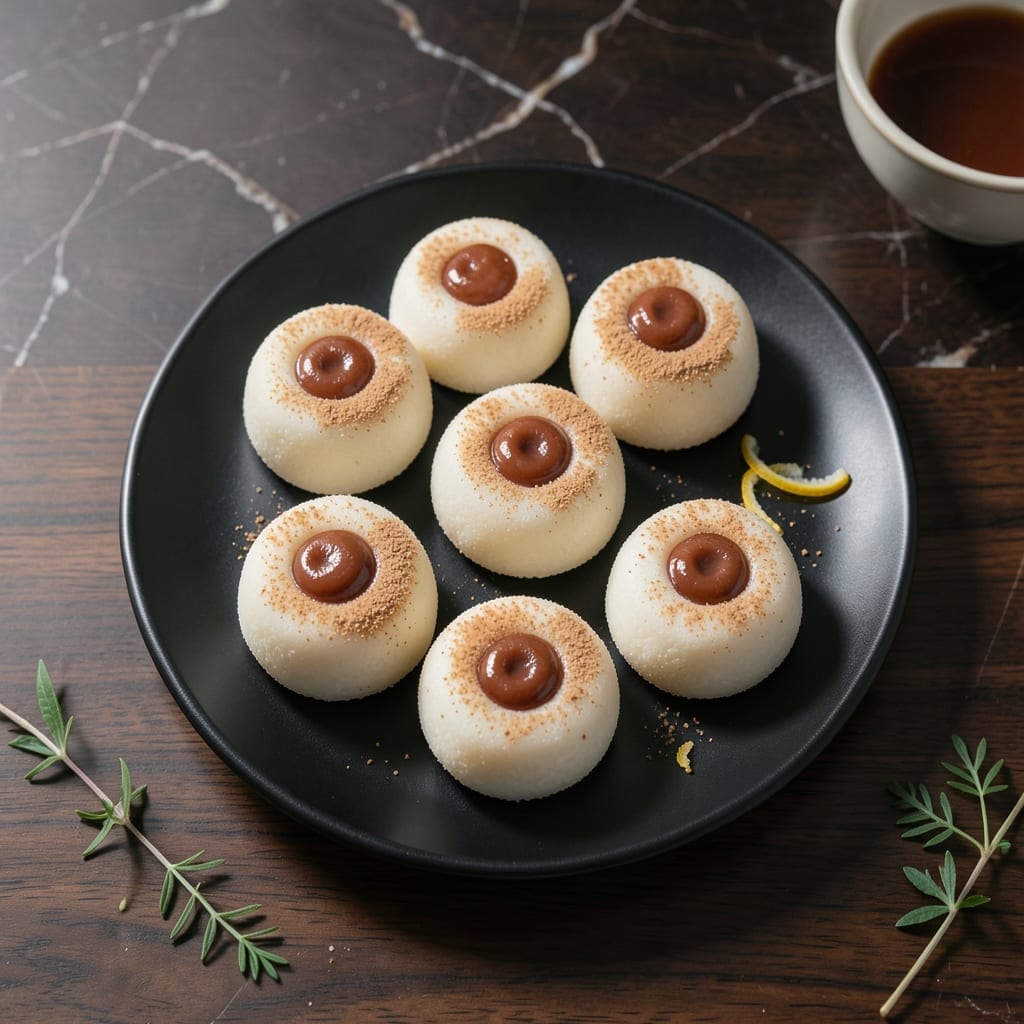
Making authentic Japanese sticky rice balls at home delivers a satisfying chew that store-bought versions can’t match. This traditional treat requires just a few simple ingredients and proper technique to achieve the perfect texture.
The key is using glutinous rice flour and working the dough while it’s hot to develop elasticity. I’ve refined this method to ensure consistently soft and perfectly chewy results every time without specialized equipment.
These pillowy balls can be filled with sweet red bean paste, dusted with kinako powder, or kept simple with a touch of sugar. The process is straightforward but demands attention to detail for the best outcome.
Whether served as a dessert or snack, this recipe captures the essence of traditional mochi with a homemade touch that’s worth the effort.
Ingredients for Japanese Sticky Rice Balls
A handful of plant-based ingredients transform into these pillowy, chewy traditional treats with ease.
| Ingredient | Amount | Notes |
|---|---|---|
| Glutinous Rice Flour 🌾 | 2 cups | Also called sweet rice flour |
| Granulated Sugar 🍚 | ⅓ cup | Adjust to taste preference |
| Water 💧 | 1 cup | Lukewarm for dough formation |
| Cornstarch 🌽 | ¼ cup | For dusting work surface |
| Sweet Red Bean Paste 🍡 | 1 cup | Store-bought or homemade anko |
| Kinako Powder 🟤 | ¼ cup | Roasted soybean flour for dusting |
| Coconut Milk 🥥 | 2 tbsp | Full-fat for richness |
| Matcha Powder 🍵 | 1 tsp | Optional for green tea flavor |
| Vanilla Extract 🌿 | ½ tsp | Pure extract preferred |
| Salt 🧂 | 0.125 tsp | Fine sea salt for balance |
Glutinous rice flour is non-negotiable here—regular rice flour won’t deliver the characteristic chew. Look for brands like Mochiko or Shiratamako at Asian markets or well-stocked grocery stores. The flour should be fine and white, not coarse. Sweet red bean paste (anko) can be found canned or in the refrigerated section of Japanese specialty stores. Kinako powder (toasted soybean flour) adds that authentic nutty finish—Mitoku is a reliable brand.
No kinako? Lightly toasted all-purpose flour works in a pinch, though the flavor won’t be the same. Swap red bean paste for sweetened black sesame paste or fruit preserves for variation. Coconut milk can be replaced with oat milk or almond milk for a lighter touch. If avoiding added sugar, maple syrup or agave can substitute, but adjust liquid ratios carefully.
Store glutinous rice flour in an airtight container for up to 6 months. Prepared mochi keeps for 3 days at room temperature in a sealed container—dust with cornstarch to prevent sticking. For longer storage, freeze for up to 1 month, thawing before serving.
Why You’ll Love This Recipe
- No Fuss Mixing: I just stir the glutinous rice flour, sugar, and water together—no fancy techniques or equipment needed.
- Sweet Surprise Inside: That first bite of warm, chewy dough with the sweet red bean paste center is pure magic.
- Party or Snack: I make a big batch for gatherings, but honestly, they’re just as good as a midnight treat for one.
- Budget Stretch: A bag of rice flour and some paste makes dozens, so I get a lot of joy for not a lot of cash.
Step-by-Step Instructions for Japanese Sticky Rice Balls
Master the technique for perfectly chewy mochi with a delicate balance of sweetness and texture.
Step 1: Prepare the Glutinous Rice Flour Dough
In a large mixing bowl, whisk together the 2 cups Glutinous Rice Flour, 0.33 cup Granulated Sugar, and 0.125 tsp Salt until evenly combined. This ensures the dry ingredients are distributed uniformly before adding liquid.
Gradually pour in the 1 cup Water and 0.5 tsp Vanilla Extract, mixing with a silicone spatula until a smooth, slightly sticky batter forms. The dough should resemble thick pancake batter—thick enough to hold its shape but still pliable. Avoid overmixing, as this can develop unwanted elasticity.
Step 2: Steam the Dough to Achieve the Perfect Texture
Line a steamer basket with parchment paper, leaving small gaps for steam to circulate. Transfer the dough into the prepared basket and smooth the top with a wet spatula. Steam over boiling water for 20 minutes, ensuring the lid is tightly sealed to trap steam.
The dough is done when it becomes translucent and stretchy, with a slightly glossy surface. Test by inserting a toothpick—it should come out clean with no raw batter clinging to it. Remove from the steamer and let it cool until safe to handle, about 5 minutes.
Step 3: Shape and Fill the Rice Balls
Lightly dust your work surface with 0.25 cup Cornstarch to prevent sticking. Divide the steamed dough into 8 equal portions. Flatten each portion into a thin circle, roughly ¼-inch thick, using your palms or a rolling pin.
Place 1 tablespoon Sweet Red Bean Paste in the center of each dough circle. Gently fold the edges upward, pinching to seal completely. Roll the filled ball between your palms to smooth the surface, ensuring no filling is exposed.
Step 4: Add Flavor and Final Coating
In a small bowl, combine the 2 tbsp Coconut Milk and 1 tsp Matcha Powder until smooth. This creates a vibrant green coating with a subtle coconut-matcha flavor. Brush this mixture lightly over each rice ball for an even layer.
Roll the coated balls in 0.25 cup Kinako Powder until fully dusted. The kinako adds a nutty aroma and prevents sticking while enhancing the traditional mochi experience. Let them rest for 10 minutes to allow the flavors to meld.
Serve at room temperature for the best chewy texture. The exterior should be slightly firm, giving way to a soft, elastic interior with a sweet, creamy filling.
Pro Tips For Making Japanese Sticky Rice Balls
- Knead While Warm: Work the dough right after mixing while it’s still warm—it’s softer and easier to shape, and the heat actually changes the texture for the better.
- Dust Generously: Coat your hands and surface with cornstarch, not flour, to prevent sticking. I learned this the hard way after too many rice balls tore apart in my hands.
- Seal Tightly: Press the edges of the dough firmly around the red bean paste filling to avoid cracks during cooking. Sounds obvious, but it’s the thing that matters most.
- Use Cold Fillings: Chill the sweet red bean paste for 20 minutes before wrapping—it holds its shape better and won’t ooze out when shaping.
Wine and Beer Pairings for japanese sticky rice balls
Tea Pairings
Japanese green tea is the classic choice, with sencha or genmaicha complementing the sweetness of the rice balls. The slight bitterness of tea balances the mochi’s sugary filling beautifully. Serve at 160-170°F to avoid overpowering delicate flavors. 🍵
Sake Selections
Try a lightly sweet nigori sake like Tyku Junmai Nigori for a creamy pairing. The unfiltered texture mirrors the chewy mochi, while the subtle fruit notes enhance the red bean paste. Serve chilled in small cups.
Beer Options
For beer lovers, a crisp Japanese lager such as Asahi Super Dry cuts through the richness. Its clean finish refreshes your palate between bites. Avoid hoppy IPAs that clash with the subtle flavors. 🍺
Fruit Infusions
Cold brewed hibiscus tea with a touch of honey offers a floral contrast. Or try yuzu-infused sparkling water for a refreshing citrus lift. Both options cleanse without competing with the mochi’s delicate taste.
Dessert Wines
A lightly sweet moscato d’asti from Italy provides a fun fusion pairing. Its bubbly texture and honeyed notes mirror the pillowy mochi while adding a sophisticated touch to your dessert experience.
Nutrition Facts
Frequently Asked Questions
Why is my dough too sticky to handle?
Dust your surface and hands with cornstarch before shaping. If still too sticky, steam the dough for an extra 3-5 minutes to fully cook the flour.
Can I make these without a steamer?
Yes! Use a microwave-safe bowl, cover with plastic wrap, and heat on high for 2 minutes. Stir, then repeat until translucent.
How do I prevent the balls from cracking?
Work quickly while the dough is warm and pliable. If it cools, re-steam for 1-2 minutes to restore elasticity.
What can I use instead of kinako powder?
Substitute with lightly toasted all-purpose flour or crushed roasted peanuts for texture. The flavor will differ but still taste great.

- Jamaican Jollof Rice Recipe: Island Spice in Every Bite - October 18, 2026
- Hamburger Rice Hot Dish Recipe: Midwest Comfort in One Pan - October 18, 2026
- Iranian Cabbage Rice Recipe: Aromatic Herbs and Spiced Layers - October 18, 2026