
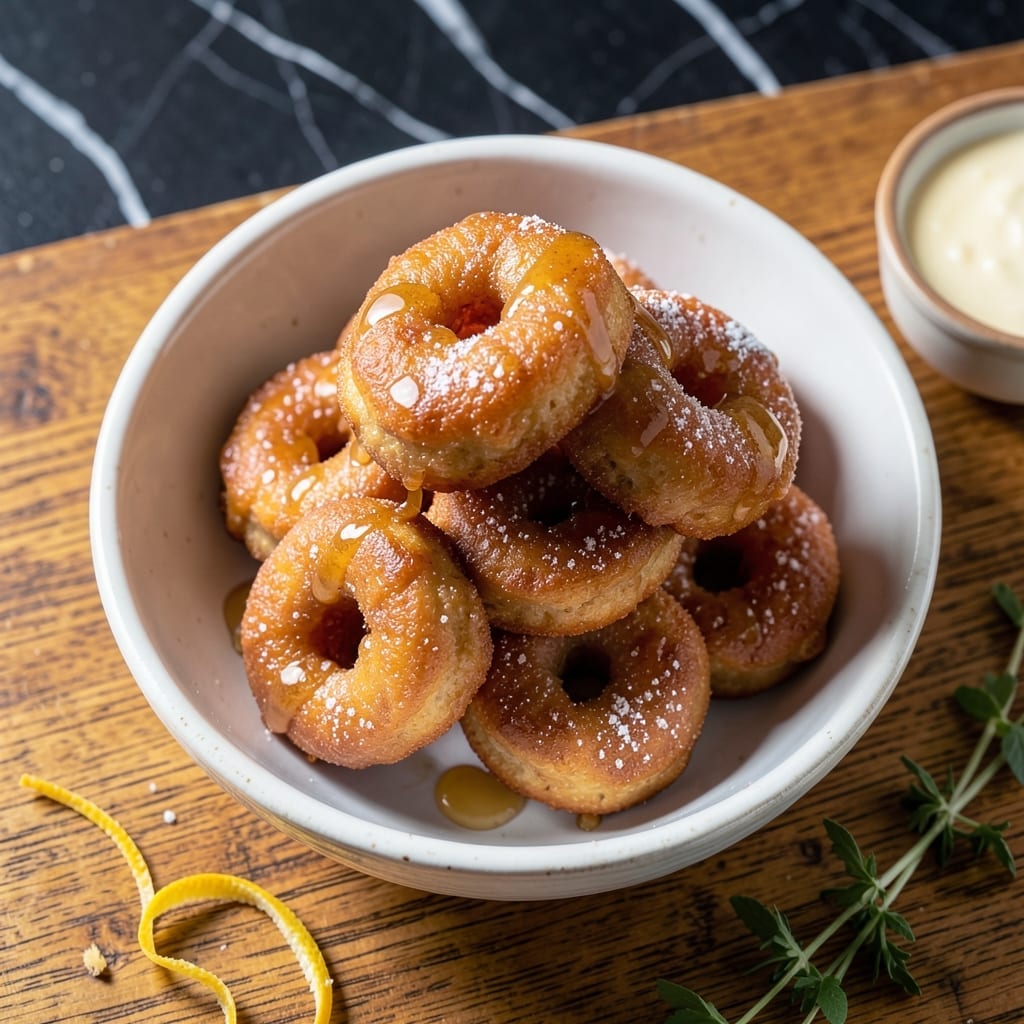
There’s a unique satisfaction in crafting donuts with the perfect chewy texture, and glutinous rice flour delivers just that. This recipe transforms simple ingredients into tender, pillowy bites with a delicate crumb.
Each donut emerges light yet substantial, coated in a smooth coconut glaze that complements their subtle sweetness. The process is straightforward, with precise steps to ensure consistent, professional-quality results every time.
Ingredients for Glutinous Rice Flour Donut
Transform simple pantry staples into chewy, pillowy donuts with a coconut glaze finish.
| Ingredient | Amount | Notes |
|---|---|---|
| Glutinous Rice Flour 🌾 | 2 cups | Also called sweet rice flour |
| Coconut Milk 🥥 | 1 cup | Full-fat, canned variety |
| Granulated Sugar 🍚 | ½ cup | Organic or fine granulated |
| Active Dry Yeast 🍞 | 2 ¼ tsp | One packet, checked for freshness |
| Warm Water 💧 | ¾ cup | 110°F, not hotter |
| Coconut Oil 🥥 | 2 tbsp | Melted, for frying |
| Vanilla Extract 🌿 | 1 tsp | Pure, not imitation |
| Salt 🧂 | ½ tsp | Fine sea salt preferred |
| Powdered Sugar 🍬 | 1 ½ cups | For coconut glaze |
| Coconut Extract 🥥 | 1 tsp | Optional, enhances flavor |
| Lime Juice 🍈 | 1 tbsp | Freshly squeezed for glaze |
| Cornstarch 🌽 | 1 tbsp | For dusting work surface |
Glutinous rice flour is non-negotiable for the signature chew—look for it in Asian markets or the international aisle at Whole Foods. The brand shouldn’t matter as long as it’s 100% glutinous rice flour (sometimes labeled sweet rice flour). Coconut milk must be full-fat canned for richness; light versions won’t deliver the same texture or flavor. Check your yeast expiration date—old yeast means flat donuts.
No glutinous rice flour? Mochiko flour is the same thing, just rebranded. For the coconut milk, coconut cream thinned with water works in a pinch. Vanilla can be swapped for almond extract at half the amount for a different profile. The lime juice in the glaze can be replaced with lemon, but lime’s brightness pairs better with coconut.
Store glutinous rice flour in an airtight container for up to 6 months. The glaze keeps 3 days refrigerated, but donuts are best eaten fresh. Freeze unglazed donuts for up to 1 month—reheat before glazing.
Why You’ll Love This Recipe
- One Bowl Wonder: I just dump everything in, mix, and let the yeast work its magic—no fancy techniques.
- Coconut Clouds: The coconut milk gives them this melt-in-your-mouth richness that’s honestly hard to resist.
- Breakfast or Dessert: I’ve served these for Sunday brunch and midnight snack attacks—both times, they disappeared fast.
- Pocket-Friendly Treat: Glutinous rice flour is cheap, and a batch makes enough to freeze for later cravings.
Step-by-Step Instructions for Chewy Glutinous Rice Flour Donuts
Master the technique for pillowy donuts with a crisp exterior and coconut-infused glaze.
Step 1: Activate the Yeast and Mix the Dough
In a small bowl, combine the 2.25 tsp Active Dry Yeast with the 0.75 cup Warm Water and the 0.5 cup Granulated Sugar. Stir gently and let it sit for 5-7 minutes until the mixture becomes frothy and doubled in volume. This confirms the yeast is active and ready to leaven your dough.
In a large mixing bowl, whisk together the 2 cups Glutinous Rice Flour and 0.5 tsp Salt. Create a well in the center and pour in the yeast mixture, 1 cup Coconut Milk, 1 tsp Vanilla Extract, and 2 tbsp Coconut Oil. Stir until a shaggy, sticky dough forms.
Step 2: Knead and First Rise
Dust your work surface lightly with the 1 tbsp Cornstarch to prevent sticking. Turn out the dough and knead for 8-10 minutes until smooth and elastic. The dough will remain slightly tacky—this is normal for glutinous rice flour.
Place the dough in a greased bowl, cover with a damp towel, and let it rise in a warm, draft-free place for 1.5 to 2 hours, or until nearly doubled in size. The dough should spring back slowly when poked with a finger.
Step 3: Shape and Second Rise
Punch down the risen dough to release air. Roll it out to a ½-inch thickness on a surface dusted with more cornstarch. Use a donut cutter or a 2.5-inch round cutter to shape the donuts, and a smaller cutter for the holes. Place them on a parchment-lined tray.
Cover and let rise for another 45-60 minutes until puffed and nearly doubled. The donuts should look slightly rounded and feel light when gently pressed. This second rise ensures a light, airy texture.
Step 4: Fry to Golden Perfection
Heat 2 inches of coconut oil in a deep pot to 350°F. Fry the donuts in batches for 2-3 minutes per side until deep golden brown and cooked through. Use a slotted spoon to transfer them to a paper towel-lined tray to drain.
Fry the donut holes for 1-2 minutes, turning occasionally, until uniformly golden brown. Maintain the oil temperature between 340°F and 350°F to ensure even cooking without burning.
Step 5: Glaze and Serve
While the donuts cool slightly, prepare the glaze. In a bowl, whisk together the 1.5 cups Powdered Sugar, 1 tsp Coconut Extract, and 1 tbsp Lime Juice until smooth. Adjust the consistency with a teaspoon of water if needed—it should coat the back of a spoon.
Dip the warm donuts into the glaze, letting the excess drip off. Place them on a wire rack to set for 5 minutes. The glaze should form a thin, glossy layer. Serve immediately for the best texture, as the donuts are most chewy when fresh.
Pro Tips For Making Glutinous Rice Flour Donut
- Proof the Yeast: Always dissolve the active dry yeast in warm water with a pinch of sugar first—if it doesn’t foam within 5-10 minutes, your donuts won’t rise. I learned this the hard way after a few flat, dense batches.
- Use Full-Fat Coconut Milk: Skip the light version; full-fat coconut milk gives the donuts that rich, tender texture. The extra fat actually changes the outcome, making them less crumbly and more luxurious.
- Rest the Batter: After mixing, let the batter sit for 15-20 minutes before shaping. This gives the glutinous rice flour time to hydrate fully, so your donuts hold together better during frying.
- Fry Low and Slow: Keep the oil at 325°F (160°C) and resist the urge to crank up the heat. Too hot, and the outside burns before the inside cooks—sounds weird, but it works for even, golden donuts every time.
Health Benefits of glutinous rice flour donut
Digestive Health Boost
Glutinous rice flour is naturally gluten-free, making these donuts easier to digest for many people. The resistant starch in this flour acts as a prebiotic, supporting gut health by feeding beneficial bacteria in your digestive tract.
Sustained Energy Source
This flour provides complex carbohydrates that break down slowly, giving you steady energy without the crash. One donut offers about 15-20g of carbs for lasting fuel—perfect for starting your day or powering through an afternoon.
Rich in Essential Minerals
You’ll get a healthy dose of magnesium and zinc from glutinous rice flour. These minerals support immune function and metabolism. Coconut milk adds iron and potassium to the nutritional profile. 💪
Vegan-Friendly Nutrition
This recipe uses entirely plant-based ingredients, making it suitable for vegan diets. The coconut milk provides medium-chain triglycerides (MCTs), which are quickly converted to energy by your body.
Low in Saturated Fat
Despite the coconut elements, each donut contains only about 3-4g of saturated fat. The coconut oil used for frying is more stable at high temperatures than many alternatives, reducing harmful compound formation.
Antioxidant Properties
The vanilla and lime in the glaze contain antioxidants that combat oxidative stress. Combined with the coconut’s natural compounds, these donuts offer more than just great taste—they contribute to your overall well-being. ✨
Nutrition Facts
Frequently Asked Questions
Can I bake these instead of frying?
Baking works but changes the texture. Use 375°F for 12-15 minutes, flipping halfway. The result will be cake-like rather than chewy. For best results, stick to frying.
Why is my dough too sticky to handle?
Glutinous rice flour dough is naturally tacky. Use cornstarch for dusting instead of regular flour. Light, frequent dusting helps prevent sticking during shaping.
How do I store leftovers?
Keep unglazed donuts in an airtight container at room temperature for 2 days. For longer storage, freeze unglazed for up to 1 month. Reheat before glazing.
Can I use regular rice flour?
No, regular rice flour lacks the sticky quality needed. Mochiko flour works as a perfect substitute since it’s the same as glutinous rice flour.

- Gobi Fried Rice Recipe: Spiced Cauliflower Wok Delight - October 8, 2026
- Glutinous Rice Roll Recipe: Chewy Pillows With Savory Fillings - October 8, 2026
- Garlic Jasmine Rice Recipe: Fragrant Grains with Aromatic Depth - October 8, 2026