
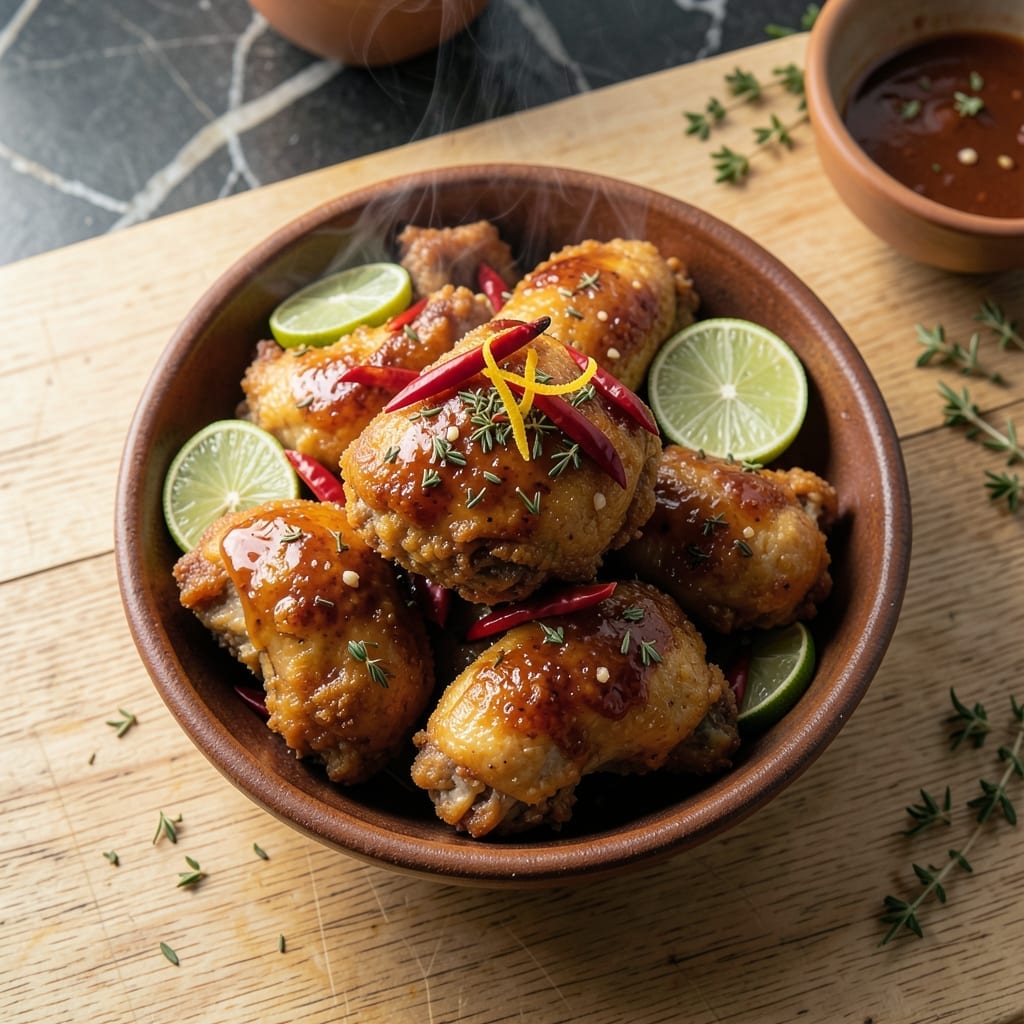
This Haitian fried chicken delivers an unforgettable crispy experience with every bite. The secret lies in a traditional marinade that infuses island flavors deep into the meat.
I’ve perfected this method to ensure the coating stays shatteringly crispy while keeping the chicken juicy inside. The blend of citrus, Scotch bonnet, and Haitian epis creates a bold, aromatic profile.
The double-frying technique guarantees a golden, crispy exterior that holds up against the bold seasoning. Each piece emerges from the oil with a satisfying crunch.
Serve with pikliz or a cool dipping sauce to balance the heat. This dish brings a taste of Haiti to your kitchen with professional results.
Ingredients for Haitian Fried Chicken
Bold Caribbean flavors meet shatteringly crisp chicken with these carefully selected ingredients.
| Ingredient | Amount | Notes |
|---|---|---|
| Chicken Thighs 🍗 | 2 ½ lb | Boneless, skin-on preferred |
| Lime Juice 🍈 | ½ cup | Freshly squeezed for acidity |
| Scotch Bonnet Pepper 🌶️ | 2 whole | Seeds removed for controlled heat |
| Haitian Epis Seasoning 🌿 | ½ cup | Homemade or store-bought blend |
| Garlic Cloves 🧄 | 6 cloves | Minced for marinade depth |
| Fresh Thyme 🍃 | ¼ cup | Chopped, stems discarded |
| All-Purpose Flour 🌾 | 2 cups | For crispy coating base |
| Cornstarch 🌽 | ½ cup | Ensures extra crunch |
| Baking Powder 🧂 | 2 tsp | For light, airy batter |
| Salt 🧂 | 2 tsp | Diamond Crystal kosher preferred |
| Black Pepper 🌶️ | 1 tsp | Freshly ground for best flavor |
| Vegetable Oil 🫒 | 6 cups | High smoke point for frying |
| Orange Juice 🍊 | ¼ cup | Freshly squeezed for citrus brightness |
| Scallions 🧅 | 4 whole | Thinly sliced for garnish |
The chicken thighs are non-negotiable here—bone-in, skin-on from Whole Foods or a trusted butcher ensures juicy meat under that crisp shell. Scotch bonnet peppers must be fresh (look for vibrant color, no soft spots). For Haitian epis, Trader Joe’s sometimes carries it, but most Latin markets will have it year-round. The citrus needs to be fresh—bottled won’t cut it for that bright, authentic punch.
No Scotch bonnet? Habanero peppers are the closest substitute (use the same amount). Out of epis? Blend garlic, thyme, bell peppers, and onions for a quick DIY version. The flour-cornstarch combo is key to the crunch—do not substitute self-rising flour. Vegetable oil is ideal for frying, but peanut oil works too if you prefer its flavor. The baking powder might seem odd, but it’s the secret to that airy, shatteringly crisp texture.
Marinate the chicken overnight for maximum flavor penetration—this step is worth the wait. Leftovers keep 3-4 days in the fridge (reheat in the oven to preserve crispiness). The epis blend freezes beautifully for up to 6 months, so make extra. Always bring oil to proper temperature before frying to avoid greasy results.
Why You’ll Love This Recipe
- One Pan Magic: I just toss the thighs with lime juice, epis, and garlic, then fry—no fancy steps.
- Flavor Explosion: That scotch bonnet heat with the citrusy epis? It’s the kind of taste that lingers in the best way.
- Weeknight Hero: Honestly, it’s my go-to for busy Tuesdays—crispy, juicy, and ready before the kids start asking for snacks.
- Budget Friendly: Chicken thighs stay cheap, and a little epis goes a long way—leftovers taste even better the next day.
Step-by-Step Instructions for Haitian Fried Chicken
Master the technique for achieving that signature crispy coating with vibrant island flavors.
Step 1: Marinate the Chicken Thighs
In a large bowl, combine the 2.5 lb Chicken Thighs with 0.5 cup Lime Juice, 0.5 cup Haitian Epis Seasoning, minced 6 cloves Garlic Cloves, 2 whole Scotch Bonnet Pepper with seeds removed, and 0.25 cup Fresh Thyme. Mix thoroughly to ensure every piece is well coated.
The acidity from the lime juice will begin tenderizing the meat immediately. I let this sit at room temperature for 30 minutes to allow the bold Haitian flavors to penetrate deeply. The epis seasoning contains aromatic herbs and spices that will infuse the chicken with authentic island character.
Step 2: Prepare the Crispy Coating
In a separate large bowl, whisk together 2 cups All-Purpose Flour, 0.5 cup Cornstarch, 2 tsp Baking Powder, 2 tsp Salt, and 1 tsp Black Pepper. The cornstarch is essential for that extra crunch, while the baking powder creates tiny air pockets for a lighter texture.
After marinating, remove the chicken from the liquid (discard the marinade) and pat it dry with paper towels. This step is crucial—excess moisture will prevent the coating from adhering properly and crisping up. Dredge each piece thoroughly in the flour mixture, pressing firmly to ensure full coverage.
Step 3: Double-Dip for Maximum Crisp
For an extra-crispy finish, I use a double-dipping method. After the initial dredge, dip each piece in 0.25 cup Orange Juice (this creates a sticky base), then dredge in the flour mixture once more. The orange juice adds a subtle citrus brightness that complements the Haitian spices beautifully.
Let the coated chicken rest for 10 minutes before frying. This allows the coating to set slightly, preventing it from falling off during cooking. You’ll notice the coating becomes slightly tacky—this is exactly what you want for optimal adhesion.
Step 4: Fry to Golden Perfection
Heat 6 cups Vegetable Oil in a deep, heavy-bottomed pot to 350°F. The high smoke point of vegetable oil makes it ideal for frying. Use a deep-fry thermometer to monitor the temperature—it should remain steady at 350-375°F throughout cooking.
Fry the chicken in batches to avoid crowding the pot, which would lower the oil temperature. Cook for 12-15 minutes until the coating is deep golden brown and the internal temperature reaches 165°F. The coating should be crispy enough to audibly crack when you bite into it. Drain on a wire rack to maintain crispness.
Step 5: Garnish and Serve Immediately
While the chicken is still hot, garnish with thinly sliced 4 whole Scallions. The fresh scallions add a bright, slightly pungent contrast to the rich, crispy chicken. The residual heat from the chicken will soften the scallions slightly without wilting them completely.
Serve immediately while the coating is at its crispest. The contrast between the shatteringly crisp exterior and the juicy, flavorful interior is what makes this dish exceptional. Each piece should boast that characteristic Haitian spice profile with a satisfying crunch in every bite.
Pro Tips For Making Haitian Fried Chicken
- Marinate Overnight: I learned this the hard way—give the chicken thighs at least 8 hours in the lime juice, epis, garlic, and scotch bonnet mix. The flavors actually penetrate deep when you don’t rush it.
- Pat Dry Thoroughly: Sounds tedious, but it works: blot the marinated thighs with paper towels before frying. Wet chicken steams instead of crisps, and nobody wants soggy skin.
- Watch the Oil Temp: After burning three batches, I finally figured out that 350°F is the sweet spot. Too hot and the outside burns before the inside cooks; too cool and you get greasy, sad chicken.
- Use a Meat Thermometer: My grandmother swore by this, and she was right: pull the chicken at 165°F internal. Guessing leads to dry thighs or undercooked meat—neither does justice to that epis seasoning.
Regional Styles of These Flavors
Port-au-Prince Street Style
In the capital, vendors serve this with a darker, spicier marinade—add 1 tbsp brown sugar and 1 tsp cayenne to your epis. The sugar caramelizes during frying, creating a mahogany crust. I tried this version at Marché de Fer and couldn’t stop at one piece. 🌶️
Cap-Haïtien Coastal Twist
Northern cooks often add 1 cup coconut milk to the marinade for a subtle tropical richness. The oil for frying is sometimes infused with citrus peels—try adding lime zest to your oil for 30 minutes before heating. This gives a bright, aromatic note.
Jérémie Mountain Approach
In the mountains, they use goat or chicken stock instead of orange juice for the double-dip. The stock adds a savory depth that pairs perfectly with the Scotch bonnet heat. I like using homemade stock reduced by half for maximum flavor concentration.
Les Cayes Southern Style
Southern cooks often add 1 tsp ground allspice to the flour mixture. The warm, woody note complements the citrus beautifully. They also prefer frying in peanut oil for its nutty undertone. Try it with 1 cup pikliz on the side for an authentic experience.
Port-de-Paix Citrus Burst
Here they amp up the citrus by adding 1 tbsp orange zest to the marinade. The oil is often seasoned with whole garlic cloves and thyme sprigs during frying. Remove these before adding the chicken to avoid burning. The result is intensely aromatic. ✨
Nutrition Facts
Frequently Asked Questions
Can I use chicken breasts instead of thighs?
Thighs work best because they stay juicier, but breasts can be used. Reduce frying time to 10-12 minutes to prevent dryness. Brining the breasts for 30 minutes beforehand helps maintain moisture.
How do I make this less spicy?
Remove all seeds from the Scotch bonnet and use just 1 pepper instead of two. You can also substitute with a milder habanero or skip the peppers entirely if preferred.
Can I bake this instead of frying?
Yes, but the texture will differ. Bake at 400°F for 25-30 minutes on a wire rack for air circulation. For extra crispiness, spray lightly with oil before baking.
How long should I marinate the chicken?
For deepest flavor, marinate overnight in the fridge. If short on time, 2-4 hours at room temperature works well. The acid in lime juice tenderizes quickly.

- Jollof Rice Sauce Recipe: West African Tomato and Spice Infusion - September 25, 2026
- Japanese Rice Soup Recipe: Umami-Rich Comfort in a Bowl - September 25, 2026
- Homemade Cream Of Rice Recipe: Silk-Smooth Breakfast in Minutes - September 25, 2026