
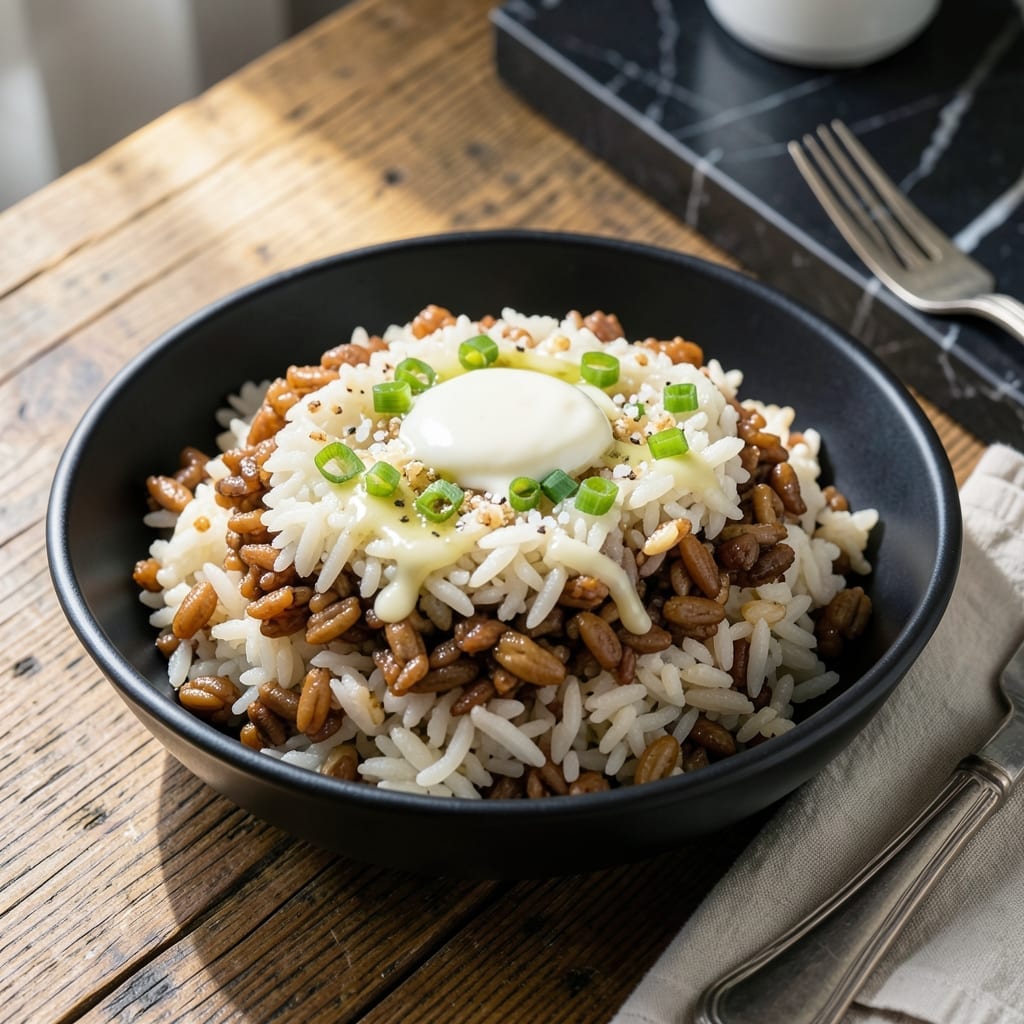
This blend of short grain and brown rice creates a perfectly balanced Hawaiian-style dish with satisfying texture.
The combination delivers the nutty depth of brown rice with the sticky chew of white rice, making it ideal for accompanying any protein or vegetable.
Ingredients for Hapa Rice
Short grain white and brown rice combine for authentic Hawaiian texture and nutty depth in this dish.
| Ingredient | Amount | Notes |
|---|---|---|
| Short Grain White Rice 🍚 | 1 cup | Rinsed until water runs clear |
| Brown Rice 🌾 | 1 cup | Long grain variety preferred |
| Water 💧 | 4 cups | Filtered for best results |
| Kosher Salt 🧂 | 1 tsp | Diamond Crystal preferred |
| Unsalted Butter 🧈 | 1 tbsp | Optional, for serving |
| Green Onions 🧅 | 2 whole | Thinly sliced for garnish |
| Garlic Cloves 🧄 | 2 cloves | Minced, for aroma |
| Sesame Seeds 🌿 | 1 tsp | Toasted, for garnish |
| Soy Sauce 🫒 | 1 tbsp | Low-sodium recommended |
| Rice Vinegar 🍚 | 1 tsp | For subtle acidity |
| Vegetable Oil 🫒 | ½ tsp | For toasting rice |
The rice quality matters here. Koshihikari or Calrose short grain white rice delivers authentic stickiness, while long grain brown rice provides the necessary chew. Whole Foods or Asian markets often carry these varieties fresh. Avoid pre-cooked or instant rice—they won’t achieve the right texture. Rinsing the rice thoroughly removes excess starch, which is crucial for the perfect bite.
No short grain white rice? Arborio can work in a pinch (though it’s creamier). Swap brown rice for black rice or wild rice if you want more drama. The soy sauce can be tamari for gluten-free, and the butter is optional—vegetable oil works too. For extra umami, a splash of oyster sauce (or vegan alternative) deepens the flavor beautifully.
Cooked rice keeps 4-5 days in the fridge, but it’s best fresh. Reheat with a splash of water to restore moisture. Freeze in portions for up to 3 months—perfect for quick meals. Toast the sesame seeds just before serving for maximum crunch.
Why You’ll Love This Recipe
- One Pot Magic: I love that I can combine white and brown rice in a single pot with just water, butter, and salt—no fuss, no extra dishes.
- Buttery Comfort: The butter melts into the grains, giving every bite a rich, savory warmth that’s hard to resist.
- Meal Prep Hero: It holds up perfectly in the fridge, so I make a big batch for busy weeks—great hot or cold.
- Budget Stretch: Short grain white and brown rice are affordable staples, and this recipe turns them into something special without breaking the bank.
Step-by-Step Instructions for Hawaiian-Style Short Grain and Brown Rice Blend
This method ensures perfectly cooked grains with distinct textures and balanced flavor in every bite.
Step 1: Rinse and Toast the Rice
Place the 1 cup Short Grain White Rice and 1 cup Brown Rice in a fine-mesh strainer and rinse under cold water until the water runs completely clear. This removes excess starch and prevents gummy texture.
Heat the 0.5 tsp Vegetable Oil in a medium saucepan over medium heat. Add the drained rice and toast for 2-3 minutes, stirring constantly, until the grains become slightly translucent and emit a nutty aroma. This step enhances the depth of flavor in the final dish.
Step 2: Cook the Rice with Aromatics
Add the 4 cups Water, 1 tsp Kosher Salt, and minced 2 cloves Garlic Cloves to the saucepan. Bring the mixture to a boil over high heat, then immediately reduce to low heat.
Cover the saucepan with a tight-fitting lid and simmer for 40-45 minutes. Avoid lifting the lid during this time, as the steam is crucial for even cooking. You’ll know it’s ready when all the water has been absorbed and the rice is tender with a slight bite.
Step 3: Rest and Fluff the Rice
Remove the saucepan from heat and let it sit, covered, for an additional 10 minutes. This resting period allows the grains to steam and soften uniformly. Resist the urge to peek—this ensures the rice finishes cooking perfectly.
After resting, gently fluff the rice with a fork to separate the grains. The short grain rice should appear plump and slightly sticky, while the brown rice maintains a subtle chew, creating the signature texture of this blend.
Step 4: Season and Garnish for Serving
Drizzle the 1 tbsp Soy Sauce and 1 tsp Rice Vinegar over the fluffed rice. Use a folding motion to distribute the liquids evenly without breaking the grains. Taste and adjust seasoning if needed.
Transfer the rice to a serving dish and top with 1 tbsp Unsalted Butter, thinly sliced 2 whole Green Onions, and 1 tsp Sesame Seeds. The butter adds a rich finish, while the green onions and sesame seeds provide freshness and crunch. Serve immediately while warm.
Pro Tips For Making Hapa Rice
- Rinse Both Rices: Soak the white and brown rice together for 10 minutes, then rinse until the water runs clear—this removes excess starch so your hapa rice stays fluffy instead of gummy.
- Toast the Grains: Melt the butter in the pot first, then add the drained rice and stir for 2 minutes on medium heat. I learned this the hard way—it adds a nutty depth that plain steamed rice lacks.
- Use More Water: Brown rice needs extra liquid, so go with a 1:2.5 rice-to-water ratio (not the usual 1:2). After burning three batches, I finally figured out this simple fix prevents dry, undercooked grains.
- Let It Steam: Once the water’s absorbed, turn off the heat and let it sit covered for 15 minutes—no peeking. Sounds weird, but it works: the residual heat finishes the cooking perfectly every time.
Regional Styles of This Recipe
Hawaiian Plate Lunch Style
In Honolulu, hapa rice often stars in plate lunch specials alongside kalua pork or teriyaki chicken. The rice blend soaks up sauces beautifully, making it perfect for gravy-heavy dishes. I love serving it with macaronut salad for the full local experience. 🌺
Spam Musubi Twist
For a quick snack, press warm hapa rice into a Spam musubi mold, top with a pan-fried Spam slice, and wrap with nori. The rice’s slight stickiness holds everything together perfectly. Use low-sodium soy sauce to season the Spam for balance.
Poke Bowl Base
This rice makes an excellent foundation for ahi or tako poke bowls. The nutty brown rice adds depth to the fresh fish, while the short grain keeps the bowl cohesive. I always add furikake on top for extra crunch.
Local Comfort Food
On the North Shore, families often mix leftover hapa rice with portuguese sausage and scrambled eggs for a hearty breakfast. The rice’s texture stands up well to bold flavors. A drizzle of shoyu ties it all together.
Vegetarian Adaptation
In Hilo, you’ll find this rice served with stir-fried tofu and local veggies. The blend works especially well with bok choy and mushrooms. I like to finish with a sprinkle of toasted sesame seeds.
Nutrition Facts
Frequently Asked Questions
Can I use a rice cooker for this?
Combine all ingredients in your rice cooker and use the standard setting. The cook time may be slightly longer due to the brown rice.
Why rinse the rice before cooking?
Rinsing removes excess starch, preventing a gummy texture. It ensures each grain stays separate and cooks evenly.
What if my rice is undercooked?
If the grains are still firm, add 2-3 tablespoons of water and let it steam for 5-10 minutes longer. Resist stirring to avoid mushiness.
How do I store leftovers?
Keep in an airtight container in the fridge for up to 4 days. Reheat with a splash of water to restore moisture.

- Jamaican Jollof Rice Recipe: Island Spice in Every Bite - October 18, 2026
- Hamburger Rice Hot Dish Recipe: Midwest Comfort in One Pan - October 18, 2026
- Iranian Cabbage Rice Recipe: Aromatic Herbs and Spiced Layers - October 18, 2026