
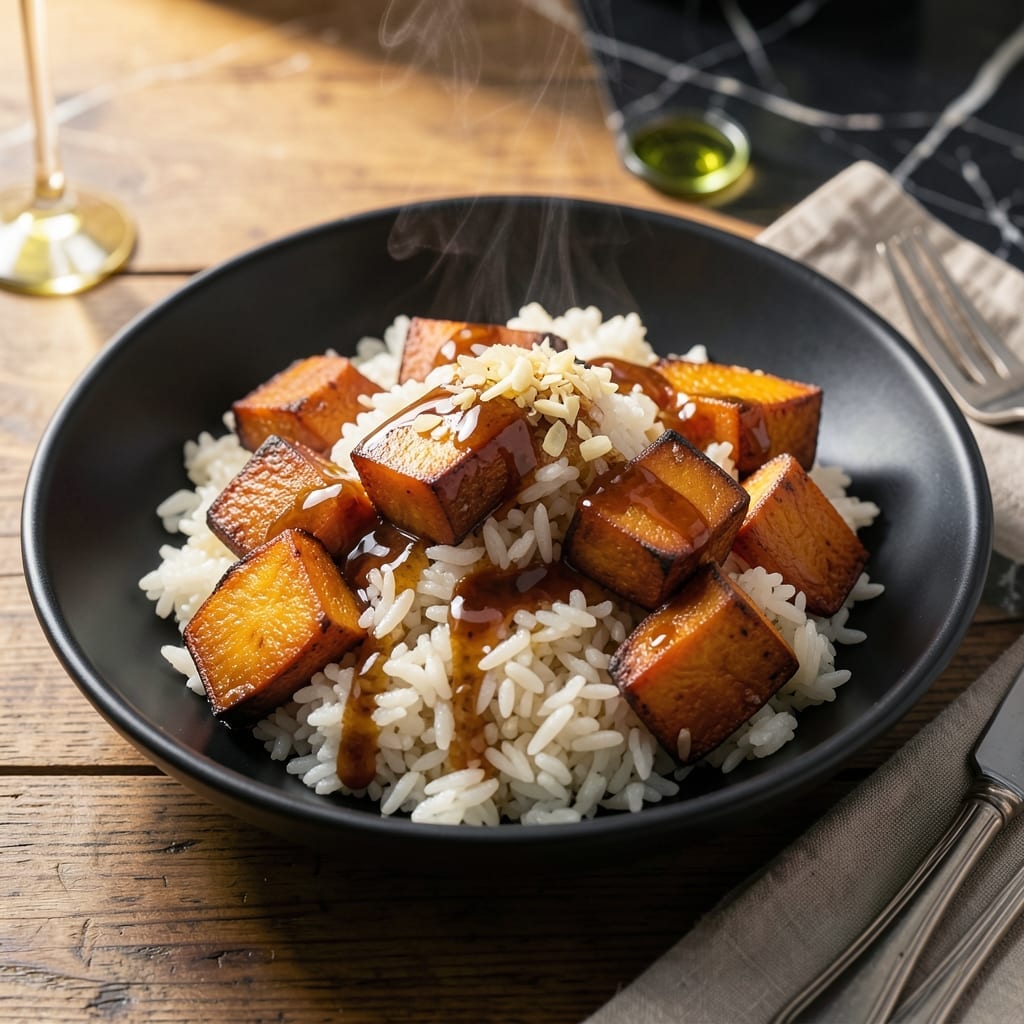
This dish brings warm, naturally sweet comfort to your table with minimal effort. The combination of tender Japanese sweet potatoes and fluffy rice creates a satisfying bowl that feels like a hug.
What makes this creation special is its simplicity—just a few ingredients come together to form a nutty, subtly sweet meal that’s perfect for any day of the week.
Ingredients for Japanese Sweet Potato Rice
A handful of pantry staples and fresh finds create this warm, comforting bowl.
| Ingredient | Amount | Notes |
|---|---|---|
| Japanese Sweet Potatoes 🍠 | 2 whole | Medium-sized, peeled and cubed |
| Jasmine Rice 🍚 | 1 ½ cups | Uncooked, rinsed well |
| Vegetable Broth 🥣 | 2 ½ cups | Low-sodium preferred |
| Coconut Oil 🥥 | 1 tbsp | Melted, or use neutral oil |
| Soy Sauce 🫕 | 2 tbsp | Tamari for gluten-free |
| Maple Syrup 🍁 | 1 tbsp | Pure, not pancake syrup |
| Sesame Oil 🫒 | 1 tsp | Toasted for depth of flavor |
| Green Onions 🧅 | 3 whole | Thinly sliced for garnish |
| Sesame Seeds 🌰 | 1 tbsp | Toasted, for topping |
| Garlic Cloves 🧄 | 2 cloves | Minced for aroma |
| Ginger Root 🌿 | 1 tbsp | Fresh, finely grated |
| Salt 🧂 | ½ tsp | Sea salt preferred |
The Japanese sweet potatoes are non-negotiable here—they’re the heart of the dish. Look for the purple-skinned variety (often labeled satsumaimo) at Asian markets or well-stocked grocers. Their natural sweetness and nutty flavor can’t be replicated with regular sweet potatoes. Jasmine rice adds a floral aroma, but short-grain white rice works in a pinch. Rinse it thoroughly to remove excess starch for fluffier results.
No coconut oil? Avocado oil or any neutral oil will do. Maple syrup can be swapped for agave or date syrup—just avoid refined sugar to keep the flavor clean. For gluten-free, ensure your soy sauce is labeled tamari. The sesame oil is key for that nutty finish, but if you’re out, a drizzle of toasted peanut oil adds a similar depth (just use sparingly).
This keeps well for 4 days in the fridge—reheat with a splash of water to restore moisture. Sweet potatoes oxidize quickly, so store unpeeled in a cool, dark place until ready to use. Leftovers taste even better the next day as the flavors meld.
Why You’ll Love This Recipe
- One Pot Wonder: I toss everything in a single pot—sweet potatoes, rice, broth—and let it simmer. No extra pans, no fuss.
- Sweet-Savory Magic: The coconut oil and soy sauce caramelize the sweet potatoes into these little pockets of umami goodness. Honestly, it’s the flavor combo I didn’t know I needed.
- Meal Prep Hero: Makes a big batch that reheats beautifully for lunch all week. Between us, I’ve stopped ordering takeout since I started making this.
- Budget Stretcher: A bag of jasmine rice and a couple sweet potatoes feed my family for days. I’ll be real: it’s cheaper than most side dishes I’ve tried.
Step-by-Step Instructions for Japanese Sweet Potato Rice
Here’s the method. Straightforward, tested, works every time.
Step 1: Prepare the Sweet Potatoes and Rice Base
Peel and cube the 2 whole Japanese Sweet Potatoes into ½-inch pieces for even cooking. Rinse the 1.5 cups Jasmine Rice thoroughly under cold water until the water runs clear—this removes excess starch and prevents gummy texture.
In a large pot, heat the 1 tbsp Coconut Oil over medium heat until melted and shimmering. Add the diced sweet potatoes and cook for 5 minutes, stirring occasionally, until the edges begin to soften and turn lightly golden.
Step 2: Toast Aromatics and Combine Ingredients
Add the 2 cloves Garlic Cloves (minced) and 1 tbsp Ginger Root (finely grated) to the pot. Stir constantly for 30 seconds until fragrant—this prevents burning and ensures the flavors bloom. Pour in the 2.5 cups Vegetable Broth, then add the rinsed jasmine rice, 2 tbsp Soy Sauce, 1 tbsp Maple Syrup, and 0.5 tsp Salt.
Stir well to combine, making sure the rice is fully submerged in the liquid. The broth should be slightly cloudy from the rice starch, which will help create a creamy texture as it cooks.
Step 3: Simmer Until Tender
Bring the mixture to a boil over medium-high heat, then reduce to low heat, cover with a tight-fitting lid, and let it simmer undisturbed for 18-20 minutes. You’ll know it’s ready when the liquid is fully absorbed and the rice is tender with a slight bite.
The sweet potatoes should be soft enough to pierce easily with a fork but still hold their shape. If the mixture looks dry before the rice is fully cooked, add ¼ cup of hot water and continue cooking.
Step 4: Finish and Rest
Remove the pot from heat and let it sit, covered, for 10 minutes. This resting period allows the rice to steam and become fluffier. Drizzle the 1 tsp Sesame Oil over the top and gently fold it in with a spatula to distribute the nutty flavor evenly.
The rice should now be tender and slightly sticky, with the sweet potatoes soft and caramelized from the maple syrup. The aromatics will have infused every bite with a warm, savory depth.
Step 5: Garnish and Serve
Transfer the rice to a serving bowl and top with the 3 whole Green Onions (thinly sliced) and 1 tbsp Sesame Seeds. The green onions add a fresh, crisp contrast, while the sesame seeds provide a delicate crunch.
Serve immediately while hot. The dish should have a balance of sweetness from the potatoes and maple syrup, umami from the soy sauce, and a nutty aroma from the sesame oil and toasted seeds.
Pro Tips For Making Japanese Sweet Potato Rice
- Par-cook the Sweet Potatoes: I learned this the hard way—raw cubes take forever to soften in the rice. Give them a 5-minute head start in the broth before adding rice.
- Rinse the Jasmine Rice: Skip this and your rice will turn gummy. A quick rinse until the water runs clear removes excess starch, guaranteeing separate grains.
- Use Warm Broth: After burning three batches, I finally figured out cold broth slows everything down. Heat it first for even cooking and better flavor absorption.
- Toast with Coconut Oil: Sounds weird, but it works: lightly toasting the rice in coconut oil for 2 minutes before adding liquid deepens the nutty flavor.
Pro Cooking Tips for Great japanese sweet potato rice
Sweet Potato Prep
Cut your Japanese sweet potatoes into uniform ½-inch cubes for even cooking. I soak mine in cold water for 5 minutes after peeling to prevent oxidation and maintain that vibrant purple hue. Pat them dry before cooking to avoid splattering. 💡
Rice Rinsing Technique
Rinse your jasmine rice under cold water until it runs completely clear—this removes excess starch. I use a fine-mesh sieve and swirl the rice with my hand for 30 seconds per rinse. Usually takes 4-5 rinses to get it right.
Layering Flavors
Toast your garlic and ginger in coconut oil for exactly 30 seconds before adding liquids. This blooms their aromas without burning. I minced my garlic extra fine for maximum flavor distribution throughout the dish.
Perfect Simmer
Use a heavy-bottomed pot to prevent scorching. When simmering, resist the urge to peek—every time you lift the lid, you lose 5-10°F and extend cooking time. I set a timer for the full 18-20 minutes and don’t touch it. 🔥
Resting Matters
That 10-minute rest is non-negotiable. It lets the rice absorb any remaining liquid and the sweet potatoes firm up slightly. I cover mine with a clean kitchen towel during this time for extra insulation.
Garnish Like a Pro
Toast your sesame seeds in a dry pan for 1-2 minutes until golden and fragrant before sprinkling. The difference between raw and toasted is night and day. I always garnish just before serving to maintain the crunch.
Nutrition Facts
Frequently Asked Questions
Can I use regular sweet potatoes instead?
Regular sweet potatoes lack the nutty depth of Japanese varieties. Their texture is different too—Japanese sweet potatoes stay firm when cooked, while others may turn mushy.
What if my rice turns out mushy?
Over-stirring or lifting the lid during cooking releases steam. Always use the exact 1.5 cups jasmine rice to 2.5 cups liquid ratio and resist peeking for perfect results.
How can I make this gluten-free?
Simply swap the soy sauce for tamari, which is naturally gluten-free. All other ingredients are already safe, but double-check your broth label for hidden gluten.
Can I prep this in advance?
Yes! Cook and store in the fridge for up to 4 days. Reheat with a splash of water to restore moisture. Flavors deepen overnight, making leftovers even tastier.

- Jamaican Jollof Rice Recipe: Island Spice in Every Bite - October 18, 2026
- Hamburger Rice Hot Dish Recipe: Midwest Comfort in One Pan - October 18, 2026
- Iranian Cabbage Rice Recipe: Aromatic Herbs and Spiced Layers - October 18, 2026