
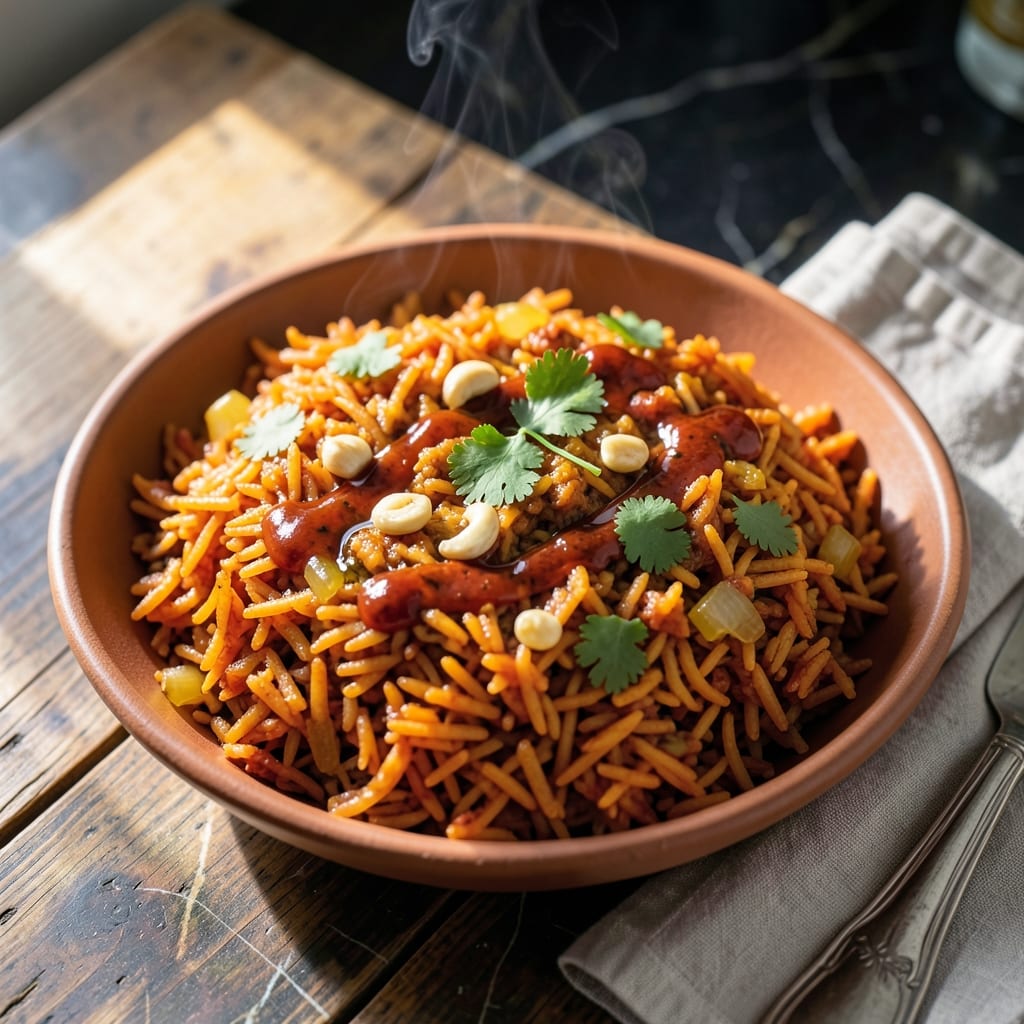
This North African-inspired dish brings bold, spicy harissa flavor to perfectly cooked, fluffy rice.
I developed this method to infuse every grain with the complex heat and smoky depth of harissa paste. The technique ensures the rice absorbs maximum flavor while maintaining its light, separate texture.
The result is a vibrant side dish that pairs beautifully with grilled proteins or roasted vegetables. The harissa adds warmth without overwhelming, creating a balanced, aromatic experience.
With just a handful of ingredients and about 30 minutes, you can achieve restaurant-quality rice that elevates any meal.
Ingredients for Harissa Rice
Bold North African spices meet perfectly fluffy basmati in this vibrant side dish.
| Ingredient | Amount | Notes |
|---|---|---|
| Basmati Rice 🌾 | 1 ½ cups | Rinsed until water runs clear |
| Harissa Paste 🌶️ | 2 tbsp | Adjust for heat preference |
| Vegetable Broth 💧 | 3 cups | Low-sodium preferred for control |
| Extra-Virgin Olive Oil 🫒 | 2 tbsp | Divided for toasting and finishing |
| Yellow Onion 🧅 | 1 whole | Finely diced for even distribution |
| Garlic Cloves 🧄 | 4 cloves | Minced for maximum flavor infusion |
| Ground Cumin 🌿 | 1 tsp | Freshly toasted enhances aroma |
| Ground Coriander 🍃 | 1 tsp | Complements harissa’s citrus notes |
| Sea Salt 🧂 | 1 tsp | Adjust to taste after cooking |
| Fresh Cilantro 🌿 | ½ cup | Chopped for garnish and brightness |
| Lemon Juice 🍋 | 1 tbsp | Freshly squeezed for acidity |
| Toasted Slivered Almonds 🥜 | ¼ cup | Optional for crunch and texture |
For the harissa paste, Mina or Dea brands offer authentic heat and depth—find them at Whole Foods or Middle Eastern markets. Basmati rice is non-negotiable here; its long grains stay separate and fluffy. Trader Joe’s or Lundberg are reliable options. Avoid pre-rinsed rice, as the starch helps absorb the spice-infused broth.
Short on harissa? Sriracha plus a pinch of smoked paprika mimics the heat and smokiness. No vegetable broth? Water with a bouillon cube works, but expect milder flavor. Fresh cilantro can be swapped for parsley (less citrusy but still bright). The almonds are optional, but toasted pine nuts add a similar crunch if you prefer.
Leftover rice keeps 4-5 days refrigerated in an airtight container. Freeze for up to 3 months—reheat with a splash of water to restore fluffiness. The harissa paste itself lasts 6 months unopened in a cool pantry.
Why You’ll Love This Recipe
- One Pot Wonder: I just toss everything in a single pot—rice, harissa, broth—and let it simmer. No fancy techniques, just hands-off cooking.
- Smoky Heat: That harissa paste brings this addictive North African kick, balanced by the sweetness of caramelized onions.
- Meal Prep Hero: Makes a big batch that tastes even better the next day. I pack it for lunches all week.
- Budget Friendly: Basmati rice and a spoonful of harissa stretch into a flavor-packed meal. Honestly, it feels like a restaurant dish for pocket change.
Step-by-Step Instructions for Harissa Rice
This method ensures perfectly fluffy grains infused with North African warmth and complexity.
Step 1: Toast Aromatics and Bloom Spices
Heat 1 tablespoon extra-virgin olive oil in a heavy pot over medium heat. Add the finely diced yellow onion and cook for 5-6 minutes until translucent and soft, stirring occasionally to prevent browning.
Add the minced garlic cloves, ground cumin, and ground coriander. Stir constantly for 30-45 seconds until fragrant and deeply aromatic. This blooming step unlocks the full potential of the spices and creates the flavor foundation.
Step 2: Build Flavor Base with Harissa
Stir in the 2 tbsp harissa paste and cook for 1-2 minutes, allowing it to meld with the onions and spices. The paste will darken slightly and become more fluid as it heats through—this is normal and desired.
Pour in the remaining 1 tablespoon extra-virgin olive oil to help distribute the harissa evenly throughout the mixture. The oil also prevents the paste from sticking to the pot and burning, which would introduce bitterness to your dish.
Step 3: Cook Rice with Broth to Perfection
Add the 1.5 cups basmati rice to the pot and stir to coat each grain with the spiced oil mixture. Toast the rice for 1-2 minutes until the grains appear slightly translucent at the edges.
Pour in the 3 cups vegetable broth and add the 1 tsp sea salt. Bring to a boil over high heat, then immediately reduce to low heat, cover, and simmer for 15-18 minutes until the liquid is absorbed and the rice is tender with no chalky center.
Step 4: Rest and Finish with Brightness
Remove the pot from heat and let the rice rest, covered, for 10 minutes. This crucial resting period allows the grains to steam and fluff up properly, ensuring they don’t stick together.
After resting, gently fluff the rice with a fork. Stir in the 1 tbsp lemon juice to add a bright, citrusy finish that balances the richness of the harissa. This final touch elevates the entire dish from good to exceptional.
Step 5: Garnish and Serve
Transfer the harissa rice to a serving dish. Sprinkle with the 0.5 cup fresh cilantro for a fresh, herbal contrast to the warm spices. The cilantro adds both color and a clean, bright flavor that cuts through the richness.
Finish with the 0.25 cup toasted slivered almonds for textural contrast and a subtle nuttiness that complements the North African profile. Serve immediately while the rice is hot and the flavors are at their peak.
Pro Tips For Making Harissa Rice
- Toast the Onion: Cook the yellow onion in olive oil until deeply golden—about 8-10 minutes—before adding anything else. I learned this the hard way: raw onion taste lingers if you rush it.
- Rinse the Rice: Give the basmati a quick rinse under cold water until the water runs clear. Skipping this leaves your rice gummy, and nobody wants that.
- Bloom the Harissa: Stir the harissa paste into the hot oil with the onions for 30 seconds before adding broth. Sounds weird, but it works: this wakes up the flavor.
- Use Less Broth: Cut the broth by about 1/4 cup from what you’d normally use for rice. Harissa thickens the cooking liquid, and you’ll avoid mushy rice if you don’t adjust.
Dietary Considerations for These Flavors
Vegan and Plant-Based
This dish is naturally 100% vegan, containing no animal products whatsoever. The harissa paste, rice, and all other ingredients are plant-derived, making it perfect for vegan diets. I’ve served this to vegan and non-vegan friends alike—everyone loves it. 🌱
Gluten-Free Friendly
Basmati rice is inherently gluten-free, and all other ingredients in this recipe are naturally free from gluten. Just ensure your harissa paste is certified gluten-free, as some brands may contain additives. Mina and Dea brands are safe options.
Nut Allergy Considerations
The recipe includes toasted slivered almonds as a garnish, which can be omitted entirely for nut-free preparation. The rest of the dish is nut-free, but always check harissa paste labels for potential cross-contamination warnings.
Low-Sodium Adaptation
To reduce sodium, use low-sodium vegetable broth and adjust the sea salt to taste after cooking. I often cut the salt by half when using low-sodium broth, then add more if needed. The harissa paste itself contains minimal sodium.
Spice Level Control
The 2 tbsp harissa paste provides moderate heat, but you can adjust to preference. For mild flavor, use 1 tbsp, or for extra heat, add up to 3 tbsp. Taste as you go and remember that harissa heat varies by brand. 🔥
Oil-Free Option
To make this dish oil-free, replace the extra-virgin olive oil with 1-2 tbsp water or vegetable broth when toasting the aromatics. The rice may be slightly less rich but will still absorb all the harissa flavor beautifully.
Nutrition Facts
Frequently Asked Questions
Can I use brown rice instead?
Yes, but increase liquid to 3.5 cups and simmer for 40-45 minutes. The texture will be chewier, and the harissa flavor may be slightly more muted.
How do I store leftovers?
Keep in an airtight container in the fridge for up to 5 days. Reheat with a splash of water to restore moisture.
Why does my rice turn mushy?
Lifting the lid during cooking releases steam, causing uneven texture. Also, avoid stirring while simmering. Always use the exact 1:2 rice-to-liquid ratio.
Can I make it in a rice cooker?
Sauté aromatics first, then add all ingredients to the cooker. Use the standard white rice setting.

- Jamaican Jollof Rice Recipe: Island Spice in Every Bite - October 18, 2026
- Hamburger Rice Hot Dish Recipe: Midwest Comfort in One Pan - October 18, 2026
- Iranian Cabbage Rice Recipe: Aromatic Herbs and Spiced Layers - October 18, 2026