
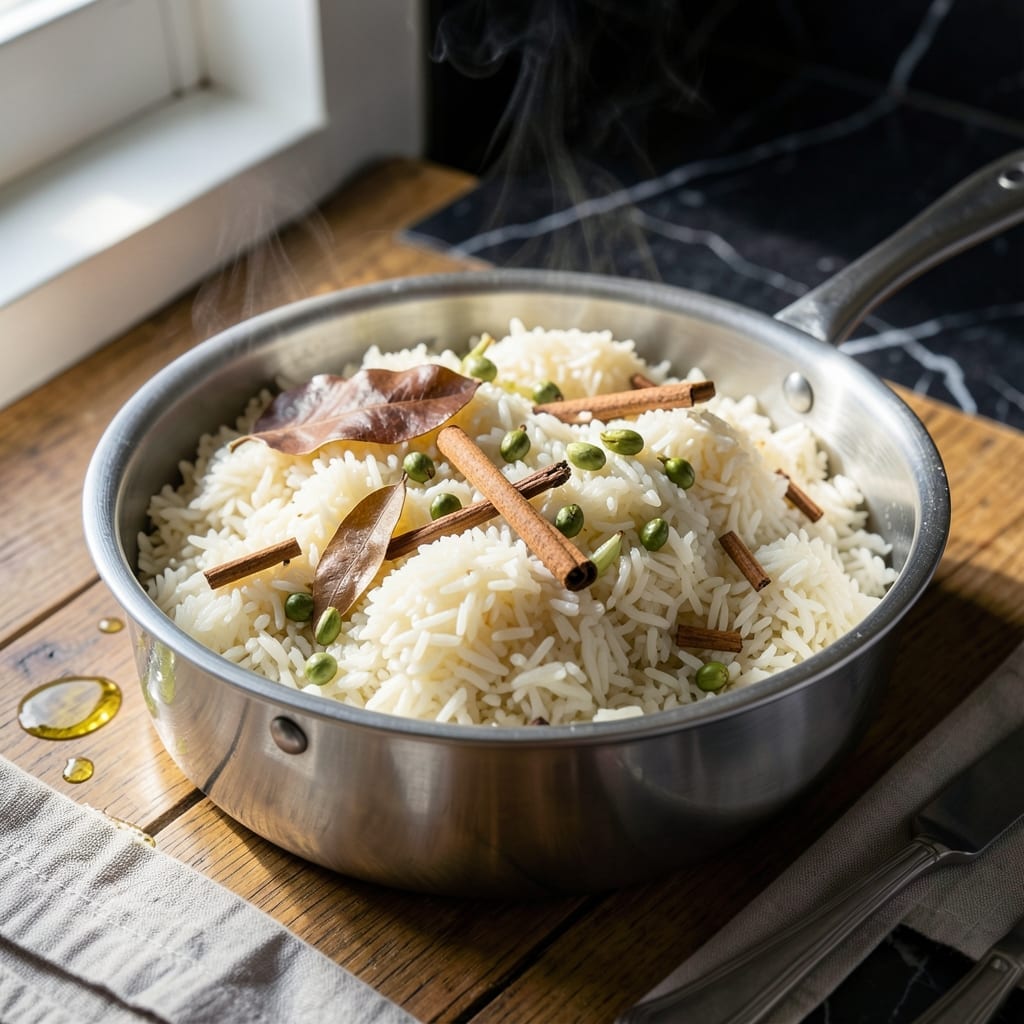
Achieving perfectly fluffy basmati rice with separate grains is simpler than you might think. The key lies in proper rinsing and precise water-to-rice ratios.
This method delivers light, airy results every time. Soaking the rice and letting it rest after cooking ensures each grain stays distinct and tender.
Ingredients for Fluffy Basmati Rice
A few simple ingredients transform into light, separate basmati rice with perfect texture every time.
| Ingredient | Amount | Notes |
|---|---|---|
| Basmati Rice 🌾 | 2 cups | Rinsed until water runs clear |
| Water 💧 | 3 ½ cups | Filtered preferred for best texture |
| Kosher Salt 🧂 | 1 tsp | Diamond Crystal preferred |
| Bay Leaf 🍃 | 1 whole | Optional for subtle aroma |
| Cardamom Pods 🌿 | 2 whole | Lightly crushed for infusion |
| Cinnamon Stick 🌰 | 1 whole | Optional whole spice addition |
| Clarified Butter 🧈 | 1 tbsp | Vegan substitute with coconut oil |
| Lemon Juice 🍋 | 1 tsp | Freshly squeezed for brightness |
The rice quality matters most here. Indian or Pakistani basmati (like Daawat or Tilda) has the ideal starch content for separate grains. Avoid parboiled or instant varieties—they won’t achieve the same fluffiness. Rinse until the water runs absolutely clear, which removes excess starch that causes clumping. Most specialty grocery stores or Amazon carry premium basmati if your regular supermarket selection seems limited.
No basmati? Jasmine rice at a one-to-one ratio works, though the grains won’t stay as distinct. For the clarified butter substitute, neutral coconut oil adds richness without dairy. Skip the whole spices if you prefer plain rice—they’re traditional in many recipes but entirely optional. The water ratio can be adjusted slightly (1:1.5 to 1:1.75) based on your pot’s heat retention and lid seal.
Uncooked basmati keeps in a sealed container for 12-18 months in a cool, dark place. Cooked rice stays fresh for 4-5 days refrigerated, though it’s best served immediately. For longer storage, freeze in airtight portions for up to 3 months (reheat with a splash of water).
Why You’ll Love This Recipe
- One Pot Wonder: I just rinse the rice, toss it in with water and spices, and let it simmer—hardly any active work.
- Aromatic Magic: The bay leaf and cardamom pods infuse every grain with a warm, fragrant depth that plain rice can’t touch.
- Pairs With Anything: It’s my go-to side for curries, grilled meats, or even just a fried egg on top when I’m too tired to cook.
- Budget Stretch: A pound of basmati costs pennies and makes enough fluffy rice to feed my family for two meals.
Step-by-Step Instructions for Fluffy Basmati Rice
Master the technique for perfectly light, separate grains every single time.
Step 1: Rinse and Soak the Basmati Rice
Place the 2 cups Basmati Rice in a fine-mesh strainer and rinse under cold water until the water runs completely clear. This removes excess starch, which is crucial for achieving separate, non-sticky grains.
Once rinsed, transfer the rice to a bowl and cover with cold water. Let it soak for 30 minutes. Soaking allows the grains to absorb moisture evenly and expand slightly before cooking, which prevents them from breaking and ensures uniform texture.
Step 2: Infuse the Water with Aromatics
In a medium saucepan, combine the 3.5 cups Water, 1 tsp Kosher Salt, 1 whole Bay Leaf, 2 whole Cardamom Pods, and 1 whole Cinnamon Stick. Lightly crush the cardamom pods to release their aroma.
Bring the mixture to a boil over high heat. The aromatics will infuse the water with subtle, warm flavors that complement the rice without overpowering it. Once boiling, reduce the heat to maintain a gentle simmer while you prepare the rice.
Step 3: Parboil the Rice
Drain the soaked rice thoroughly and add it to the simmering aromatic water. Stir once gently to distribute the grains, then let it cook undisturbed for 5-6 minutes. You’ll notice the rice grains start to float to the surface as they cook.
The rice should be just undercooked at this stage—slightly firm to the bite when tested. This parboiling step ensures the grains remain intact and absorb the aromatic flavors evenly. Do not stir during cooking, as this can cause the grains to break.
Step 4: Steam to Perfection
Drain the rice in a fine-mesh strainer, discarding the aromatics. Return the rice to the saucepan and add the 1 tbsp Clarified Butter and 1 tsp Lemon Juice. Stir gently to coat the grains evenly.
Cover the saucepan with a tight-fitting lid and let the rice steam over low heat for 10-12 minutes. The residual moisture will finish cooking the grains, and the butter and lemon juice will add richness and a subtle brightness to the final dish.
Step 5: Rest and Fluff
Remove the saucepan from heat and let the rice rest, covered, for an additional 5 minutes. This allows the grains to settle and absorb any remaining steam, ensuring they are fully cooked and fluffy.
Gently fluff the rice with a fork, separating any clumps without pressing down. The grains should be light, distinct, and tender, with no residual moisture at the bottom of the pot. Serve immediately for the best texture.
Pro Tips For Making Fluffy Basmati Rice
- Soak the Rice: I learned this the hard way—soak basmati rice for at least 30 minutes in cold water before cooking. It keeps the grains from cracking and guarantees that light, fluffy texture.
- Use Less Water: Basmati needs about 1.5 cups water per cup of rice, not the usual 2:1 ratio. Any more and you’ll end up with mushy rice instead of separate, airy grains.
- Skip the Stirring: Resist the urge to stir while cooking—it breaks the rice and releases excess starch. Just let it simmer undisturbed until the water’s absorbed.
- Rest Off Heat: After cooking, turn off the heat, cover the pot, and let it sit for 10 minutes. Sounds weird, but it works: the steam finishes the job and fluffs the grains perfectly.
Essential Equipment for Great fluffy basmati rice
Quality Rice Matters
I always start with premium basmati like Daawat or Tilda—their long grains and lower starch content ensure fluffiness. Avoid parboiled or instant varieties, as they won’t give you the same light, separate texture. A fine-mesh strainer is essential for thorough rinsing.
Precision Cookware
A heavy-bottomed saucepan (I use All-Clad) distributes heat evenly, preventing hot spots that can scorch the rice. A tight-fitting lid traps steam perfectly during the cooking and resting phases. This combo is non-negotiable for consistent results.
Infusion Tools
For the aromatics, I crush cardamom pods with a mortar and pestle to release their oils. If you don’t have one, a rolling pin works in a pinch. The bay leaf and cinnamon stick add subtle depth without overpowering the dish.
Finishing Touches
A wooden fork is my go-to for fluffing—it separates grains without crushing them. For the clarified butter, I use ghee (like Ancient Organics) for its rich, nutty flavor. A citrus juicer ensures you get every drop of lemon juice without seeds.
Pro Tip
Invest in a kitchen scale for precise measurements, especially for water-to-rice ratios. I also keep a timer handy for the soaking and steaming phases. These small tools make a big difference in nailing the texture every time. 💡
Nutrition Facts
Frequently Asked Questions
Why do I need to soak the rice first?
Soaking for 30 minutes allows the grains to absorb water evenly, preventing breakage during cooking. This ensures uniform texture and helps achieve that perfect fluffy result.
What if my rice turns out sticky?
Sticky rice usually means excess starch wasn’t rinsed off or the water ratio was too high. Always rinse until water runs clear and use exactly 1.75 cups water per 1 cup rice.
Can I make this in a rice cooker?
Yes! Use the same 1:1.75 rice-to-water ratio and soak first. Skip the parboiling step—just add everything to the cooker and use the standard white rice setting.
How long does cooked rice stay fresh?
Store in an airtight container in the fridge for 4-5 days. For longer storage, freeze for up to 3 months and reheat with a splash of water.

- Gambia Jollof Rice Recipe: West African One-Pot Spice Fusion - October 5, 2026
- Cream of Wild Rice Soup Recipe Minnesota: Northwoods Creaminess With Foraged Grains - October 5, 2026
- Frozen Cauliflower Fried Rice Recipe: Quick Low-Carb Wok Magic - October 5, 2026