
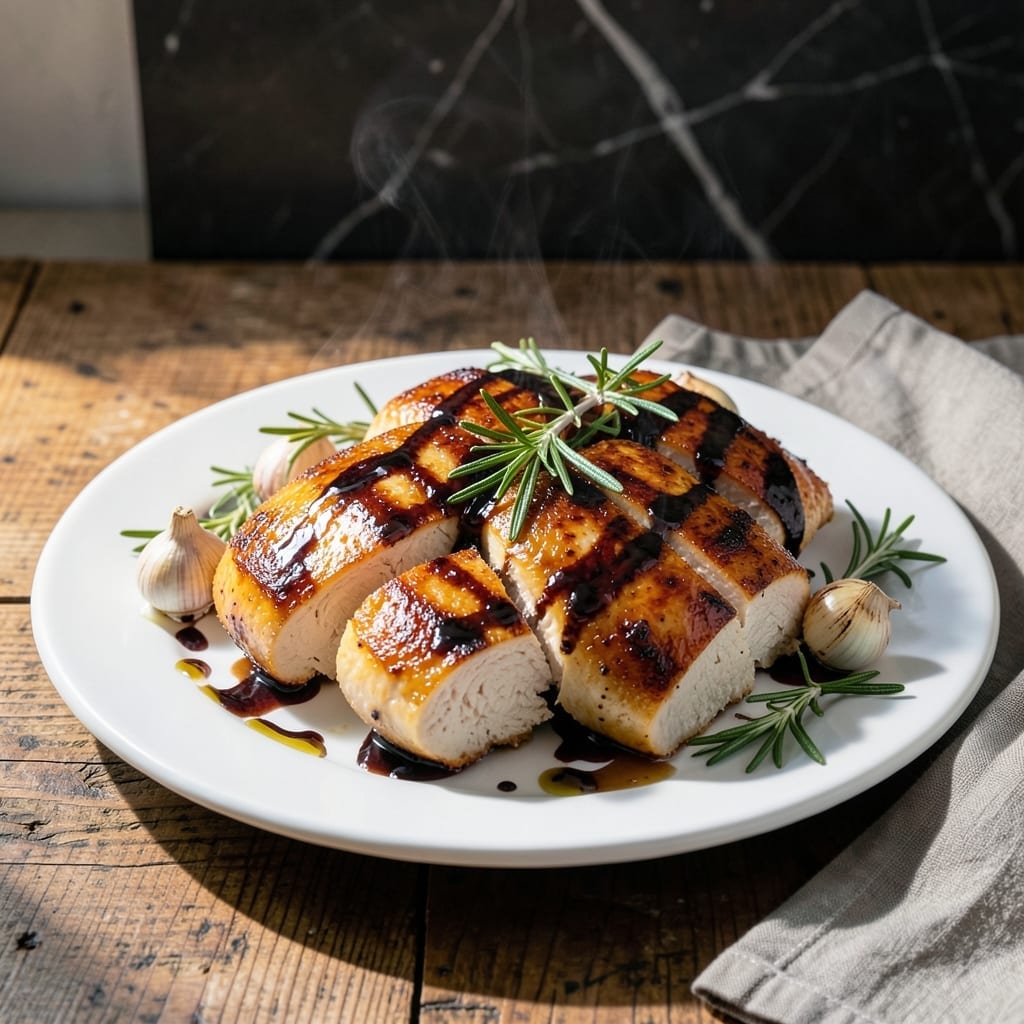
This recipe proves that healthy can be packed with flavor. A simple balsamic glaze transforms lean chicken into a tender, restaurant-quality dish that never sacrifices taste for nutrition.
I developed this method while working with heritage chicken breeds on my farm. The key is low heat and a precise reduction to create a thick, tangy glaze that coats every piece without drying the meat.
You’ll end up with juicy chicken breast with a glossy, caramelized coating that’s balanced by fresh herbs. The balsamic vinegar adds depth without excess sugar or fat.
Serve with roasted vegetables or a light salad for a complete, healthy meal. This dish is proof that good-for-you food can be extraordinary.
Ingredients for Healthy Balsamic Chicken
Lean chicken plus a few pantry staples create this flavor-packed dish.
| Ingredient | Amount | Notes |
|---|---|---|
| Boneless Skinless Chicken Breasts 🍗 | 1 ½ lb | Pounded to even thickness |
| Balsamic Vinegar 🍷 | ¾ cup | Aged for depth of flavor |
| Olive Oil 🫒 | 2 tbsp | Extra-virgin preferred |
| Honey 🍯 | 2 tbsp | Balances vinegar acidity |
| Garlic Cloves 🧄 | 3 cloves | Minced finely |
| Fresh Rosemary 🌿 | 2 tsp | Chopped, for herb infusion |
| Fresh Thyme 🍃 | 2 tsp | Chopped, for herb infusion |
| Dijon Mustard 🟡 | 1 tbsp | Adds tangy depth |
| Salt 🧂 | 1 tsp | Kosher or sea salt |
| Black Pepper 🌶️ | ½ tsp | Freshly ground |
| Chicken Broth 🥣 | ¼ cup | Low-sodium preferred |
| Cornstarch 🌾 | 1 tsp | For glaze thickening |
The chicken is the foundation here. Boneless, skinless breasts work best—look for even thickness so they cook uniformly. I source mine from local farms when possible, but standard grocery store chicken is fine too (just avoid those pre-marinated ones). The balsamic vinegar needs to be good quality—aged at least 12 years for that perfect balance of sweet and tangy.
No honey? Maple syrup works in a pinch (use the same amount). Fresh out of rosemary or thyme? Dried herbs at one-third the amount get you close. The Dijon mustard can be swapped for regular yellow mustard, but the flavor will be milder. For a deeper glaze, let it reduce a bit longer—just keep an eye on it so it doesn’t burn (worth the extra minute).
This keeps beautifully for 3-4 days in the fridge. Reheat gently to avoid drying out the chicken. The glaze thickens as it cools, so thin with a splash of broth if needed. Perfect for meal prep.
Why You’ll Love This Recipe
- One Pan Dinner: I just toss everything in a pan and let the balsamic and honey work their magic.
- Sweet and Tangy: That first bite of sticky garlic honey glaze with the vinegar’s sharpness? Ridiculously good.
- Meal Prep Hero: I make a big batch Sunday and it stays juicy and flavorful for days.
- Budget Stretch: A few chicken breasts and pantry staples feed my family for two nights easy.
Step-by-Step Instructions for Balsamic Chicken
Here’s the method I use for perfectly tender chicken with a glossy, tangy glaze.
Step 1: Prep and Season the Chicken
Start by pounding the 1.5 lb boneless skinless chicken breasts to an even ½-inch thickness using a meat mallet. This ensures they cook evenly and stay juicy throughout. I place the chicken between plastic wrap to prevent splattering.
Season both sides with the 1 tsp salt and 0.5 tsp black pepper, pressing the seasoning into the meat so it adheres well. The even thickness and proper seasoning are key to achieving that promised tenderness in every bite.
Step 2: Sear the Chicken to Golden Perfection
Heat the 2 tbsp olive oil in a large oven-safe skillet over medium-high heat until shimmering. Add the chicken and cook for 5-6 minutes per side until golden brown and cooked through. You’ll know it’s ready to flip when it releases easily from the pan.
Don’t move the chicken around too much—let it develop that beautiful golden crust. Transfer the chicken to a plate and tent with foil to keep it warm. The residual heat will continue cooking it slightly while you make the glaze.
Step 3: Create the Tangy Balsamic Glaze
In the same skillet, reduce heat to medium and add the 3 cloves minced garlic cloves, 2 tsp chopped fresh rosemary, and 2 tsp chopped fresh thyme. Sauté for 30 seconds until fragrant—don’t let the garlic burn.
Pour in the 0.75 cup balsamic vinegar, 2 tbsp honey, 1 tbsp dijon mustard, and 0.25 cup chicken broth. Stir to combine, scraping up any browned bits from the bottom of the pan. Bring to a simmer and let it reduce for 3-4 minutes.
Step 4: Thicken and Finish with Cornstarch Slurry
In a small bowl, mix the 1 tsp cornstarch with 1 tbsp water to create a slurry. Slowly whisk this into the simmering balsamic mixture. The glaze will start to thicken almost immediately—you’re looking for a consistency that coats the back of a spoon.
Let it simmer for another 1-2 minutes until it reaches your desired thickness. The cornstarch gives the glaze that perfect glossy finish that clings beautifully to the chicken.
Step 5: Combine and Serve
Return the chicken to the skillet and spoon the glaze over the top, turning to coat evenly. Let it warm through for 1-2 minutes so the flavors meld together. The glaze should be thick enough to cling to the chicken but still pourable.
Serve immediately while the glaze is still glossy. Each piece should have a beautiful sheen and the herbs should be visible throughout the sauce. The chicken will be tender and juicy with that perfect balance of sweet and tangy from the balsamic glaze.
Pro Tips For Making Healthy Balsamic Chicken
- Pound the Breasts: Even thickness means even cooking—pound the chicken to about ¾-inch so it cooks through without drying out. I learned this the hard way after too many dry, rubbery bites.
- Reduce the Balsamic: Simmer the balsamic vinegar, honey, and garlic for 3-4 minutes first to thicken it slightly—this keeps the sauce from being watery and helps it cling to the chicken.
- Skip the Overcrowding: Resist the urge to squeeze all the chicken into one pan; give each piece space so it sears instead of steams. After burning a few batches, I finally figured out this was the issue.
- Rest Before Serving: Let the chicken rest for 5 minutes under foil after cooking—it stays juicy and soaks up the last bits of that balsamic glaze. Sounds weird, but it works.
Regional Styles of This Dish
Italian Tradition
In Tuscany, they use balsamic vinegar di Modena for this dish, simmering it with white wine and a touch of juniper berries for complexity. The glaze is often finished with a drizzle of local olive oil from the region’s groves.
French Approach
Provençal cooks add herbes de Provence to the glaze instead of rosemary and thyme. They also include shallots in the reduction, creating a more aromatic base. The chicken is typically served with ratatouille as a side.
Mediterranean Style
Greek versions incorporate oregano and lemon zest into the glaze. The chicken is often marinated in the balsamic mixture for 2-4 hours before cooking, which deepens the flavor penetration. 💡
American South
In Georgia, we sometimes add peach preserves to the balsamic glaze for a sweet-tangy twist. The chicken is often grilled instead of pan-seared, giving it a smoky dimension. I learned this variation from a pitmaster friend in Atlanta.
Asian Fusion
For an Eastern twist, add 1 tbsp soy sauce and 1 tsp grated ginger to the glaze. This creates a beautiful umami depth that pairs wonderfully with the balsamic’s acidity. Serve with steamed jasmine rice.
This version reminds me of my time working in Charleston, where we experimented with fusion dishes. 🌟
Nutrition Facts
Frequently Asked Questions
Can I use chicken thighs instead of breasts?
Yes, boneless skinless thighs work beautifully and stay even juicier. Reduce cooking time to 4-5 minutes per side since thighs cook faster. The extra fat in thighs enhances the glaze’s richness.
How do I prevent the glaze from burning?
Keep heat at medium when reducing the sauce and stir frequently. If it starts to look too thick or dark, remove from heat immediately. A splash of broth can save an over-reduced glaze.
What should I serve with this dish?
Pair with simple sides like roasted asparagus or a fresh arugula salad. The glaze’s tanginess cuts through starchy sides like garlic mashed potatoes. For a lighter meal, serve over quinoa.
Can I make this ahead of time?
Cook the chicken fully, then store with glaze in an airtight container for up to 3 days. Reheat gently in a skillet with a splash of broth to restore the glaze’s shine.

- Jollof Rice Sauce Recipe: West African Tomato and Spice Infusion - September 25, 2026
- Japanese Rice Soup Recipe: Umami-Rich Comfort in a Bowl - September 25, 2026
- Homemade Cream Of Rice Recipe: Silk-Smooth Breakfast in Minutes - September 25, 2026