
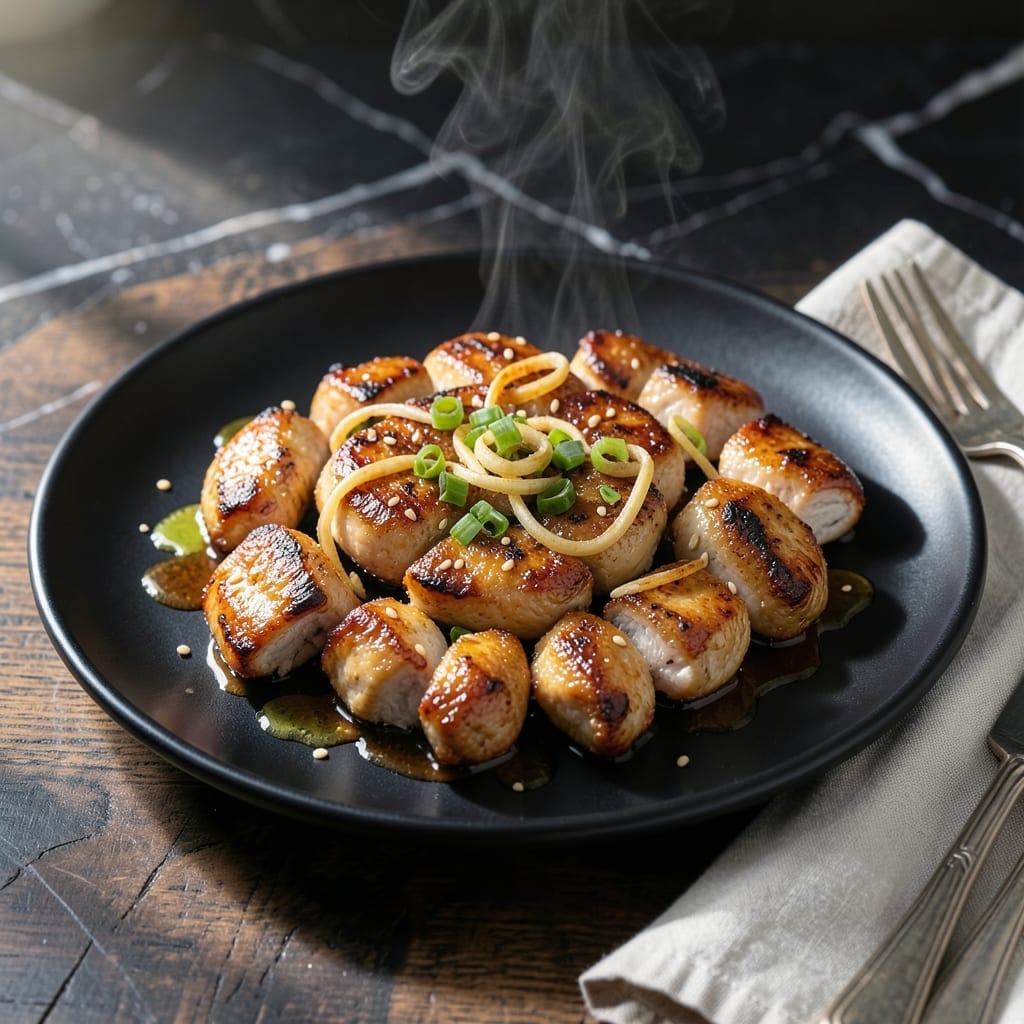
Teppanyaki-style chicken brings the sizzle of Japanese steakhouse cooking to your home kitchen. This version captures the signature flavors of Sarku Japan with its perfectly balanced teriyaki glaze and tender, juicy chicken.
The key is cooking the chicken at high heat to achieve that classic teppanyaki sear while keeping it moist inside. A simple homemade teriyaki sauce—soy sauce, mirin, and sugar—creates the sticky, sweet-savory coating that makes this dish irresistible.
What sets this apart is the technique: quick cooking in batches ensures each piece gets that restaurant-quality char. The sauce reduces to a glossy glaze that clings to every bite, delivering authentic flavor without complicated steps.
Serve with steamed rice and vegetables for a complete meal that rivals your favorite hibachi restaurant.
Ingredients for Sarku Japan Chicken
Everything you need for that signature teppanyaki flavor at home. Simple but authentic.
| Ingredient | Amount | Notes |
|---|---|---|
| Boneless Skinless Chicken Thighs 🍗 | 1 ½ lb | Cut into bite-sized pieces |
| Soy Sauce 🫒 | ½ cup | Low-sodium preferred |
| Mirin 🍶 | ¼ cup | Sweet rice wine essential |
| Granulated Sugar 🍚 | 2 tbsp | Balances teriyaki flavor |
| Fresh Garlic Cloves 🧄 | 3 cloves | Minced for sauce |
| Fresh Ginger 🌿 | 1 tbsp | Grated, peeled |
| Vegetable Oil 🫒 | 2 tbsp | High smoke point needed |
| Cornstarch 🌾 | 1 tbsp | For sauce thickening |
| Water 💧 | 2 tbsp | For cornstarch slurry |
| Green Onions 🧅 | 4 whole | Thinly sliced for garnish |
| Sesame Seeds 🌰 | 1 tsp | Toasted for garnish |
| Steamed White Rice 🍚 | 2 cups | Cooked, for serving |
| Mixed Vegetables 🥬 | 2 cups | Zucchini, mushrooms, onions |
The chicken matters most. Boneless skinless thighs stay juicier than breasts at teppanyaki temps—look for air-chilled if your store carries it (better texture). I grab mine from Whole Foods or local Asian markets; their turnover means fresher meat. Mirin is non-negotiable for authentic sweetness; find it in the international aisle or H Mart. Skip the ‘mirin-fu’ substitutes (they’re mostly corn syrup).
No mirin? Dry sherry plus 1/2 tsp sugar per tbsp gets you 80% there. Out of fresh ginger? Ground ginger at one-third the amount works, but fresh makes a difference. Soy sauce can be tamari for gluten-free. The veggies are flexible—broccoli, bell peppers, or snap peas all play well. Just cut them uniformly so they cook at the same rate as the chicken.
Sauce keeps 1 week in the fridge (great for meal prep). Cooked chicken holds 3-4 days—reheat gently to avoid drying it out. The sesame seeds toast in 30 seconds in a dry pan (worth the extra minute).
Why You’ll Love This Recipe
- One Pan Magic: I toss the chicken thighs with soy sauce, mirin, and sugar, then let the oven do the work—minimal cleanup, maximum flavor.
- Sweet-Savory Perfection: The garlic caramelizes with the sugar and soy, creating that sticky, salty-sweet glaze that makes me sneak bites straight from the pan.
- Weeknight Hero: Between us, this is my Tuesday night lifesaver—ready before the kids finish their homework and still impressive enough for guests.
- Budget Stretcher: Honestly, chicken thighs stay juicy and cheap, and the sauce is so bold I can stretch leftovers into rice bowls or wraps for days.
Step-by-Step Instructions for Teriyaki-Glazed Teppanyaki Style Chicken
This method delivers that signature Sarku Japan flavor with crisp-tender chicken and glossy sauce.
Step 1: Prepare the Chicken and Make the Teriyaki Sauce
Cut the 1.5 lb boneless skinless chicken thighs into uniform bite-sized pieces so they cook evenly. I keep them about 1-inch thick—any smaller and they dry out too quickly on the high heat we’ll be using.
In a bowl, whisk together the 0.5 cup soy sauce, 0.25 cup mirin, 2 tbsp granulated sugar, minced 3 cloves fresh garlic cloves, and grated 1 tbsp fresh ginger. Set this aside—the sugar will fully dissolve as it sits, creating that perfect balance of sweet and savory that defines teriyaki.
Step 2: Cook the Chicken and Vegetables on High Heat
Heat 1 tbsp of the 2 tbsp vegetable oil in a large skillet or wok over high heat until it just starts to shimmer. Add the chicken in a single layer, being careful not to overcrowd the pan. You should hear a satisfying sizzle the moment it hits the oil.
Cook undisturbed for 3-4 minutes until the bottoms develop a deep golden brown crust. Flip and add the 2 cups mixed vegetables (zucchini, mushrooms, onions). Stir-fry for another 4-5 minutes until the chicken is cooked through and the vegetables are tender-crisp. Transfer everything to a plate and keep warm.
Step 3: Create the Glossy Teriyaki Glaze
In the same skillet, add the remaining 1 tbsp vegetable oil and pour in the teriyaki sauce mixture. Bring to a boil, then reduce heat to medium. In a small cup, mix the 1 tbsp cornstarch with the 2 tbsp water until smooth, then whisk it into the sauce.
Simmer for 2-3 minutes, stirring constantly, until the sauce thickens to a glossy consistency that coats the back of a spoon. Watch for it to transform from thin and watery to rich and syrupy—that’s when you know it’s ready to cling beautifully to the chicken and vegetables.
Step 4: Coat and Garnish for Authentic Presentation
Return the chicken and vegetables to the skillet and toss everything in the thickened teriyaki glaze for 1-2 minutes until fully coated. The high heat will caramelize the sauce slightly, creating those beautiful charred edges you expect from teppanyaki-style dishes.
Transfer to a serving platter and immediately garnish with the thinly sliced 4 whole green onions and toasted 1 tsp sesame seeds. Serve hot over 2 cups steamed white rice, allowing guests to spoon the saucy chicken and vegetables over their individual portions. The sauce should pool slightly around the rice, ready for soaking up with every bite.
Pro Tips For Making Sarku Japan Chicken
- Sear First, Simmer Later: I learned this the hard way—browning the chicken thighs in a hot pan for 3-4 minutes per side before adding the soy-mirin mixture locks in way more flavor than just boiling them in the sauce.
- Mince Garlic Fine: fresh garlic burns fast in the sauce, so chop it to the size of a grain of rice to distribute the flavor evenly without bitter spots.
- Skip the Boil: After searing, keep the sauce at a gentle simmer, not a rolling boil, or the sugar will caramelize too fast and stick to the pan.
- Use Thighs, Not Breasts: Boneless skinless chicken thighs stay juicy through the longer cook time this dish needs—breasts turn dry and stringy, no matter how careful you are.
Flavor Customization for sarku japan chicken
Spicy Kick
Add 1-2 tsp sriracha or 1 tbsp gochujang to the teriyaki sauce for heat lovers. I like adding ½ tsp red pepper flakes while cooking the chicken for a subtle warmth that builds with each bite. The sweetness of the glaze balances the spice perfectly. 🌶️
Extra Garlicky
Double the garlic to 6 cloves for a more pronounced flavor. Alternatively, add 1 tsp garlic powder to the sauce for a deeper, toasted garlic note. I often do both when I want the garlic to really shine.
Ginger Boost
Increase the ginger to 2 tbsp for a zingier sauce. For a different twist, add 1 tsp ground ginger along with the fresh. This creates a multi-layered ginger experience that lingers on the palate.
Citrus Twist
Add 1 tbsp orange juice and 1 tsp orange zest to the sauce for a bright, citrusy note. A splash of yuzu juice (if available) adds an authentic Japanese touch. I find this works especially well with the green onion garnish.
Umami Depth
Stir in 1 tbsp miso paste or 1 tsp fish sauce to the teriyaki sauce for extra umami. A dash of dashi powder (about ¼ tsp) enhances the savory profile beautifully. These additions make the dish taste even more restaurant-authentic. 💡
Sweet Variation
Replace the granulated sugar with 3 tbsp honey or 3 tbsp brown sugar for a deeper, more complex sweetness. Pineapple juice can substitute for half the mirin if you want a tropical twist. Each option brings its own unique character to the dish.
Nutrition Facts
Frequently Asked Questions
Can I use chicken breast instead of thighs?
Yes, but thighs stay juicier. If using breasts, cut into 1-inch pieces and reduce cooking time to 2-3 minutes per side to prevent dryness.
What if I don’t have mirin?
Substitute with dry sherry plus ½ tsp sugar per tbsp of mirin. This mimics the sweetness and acidity well, though the flavor will differ slightly.
How do I avoid a thin, watery sauce?
Simmer the sauce for the full 2-3 minutes after adding the cornstarch slurry. Stir constantly until it thickens enough to coat a spoon.
Can I make this ahead of time?
Cooked chicken keeps 3-4 days refrigerated. Reheat gently with a splash of water to maintain moisture. The sauce can be made 1 week ahead.

- Jollof Rice Sauce Recipe: West African Tomato and Spice Infusion - September 25, 2026
- Japanese Rice Soup Recipe: Umami-Rich Comfort in a Bowl - September 25, 2026
- Homemade Cream Of Rice Recipe: Silk-Smooth Breakfast in Minutes - September 25, 2026