
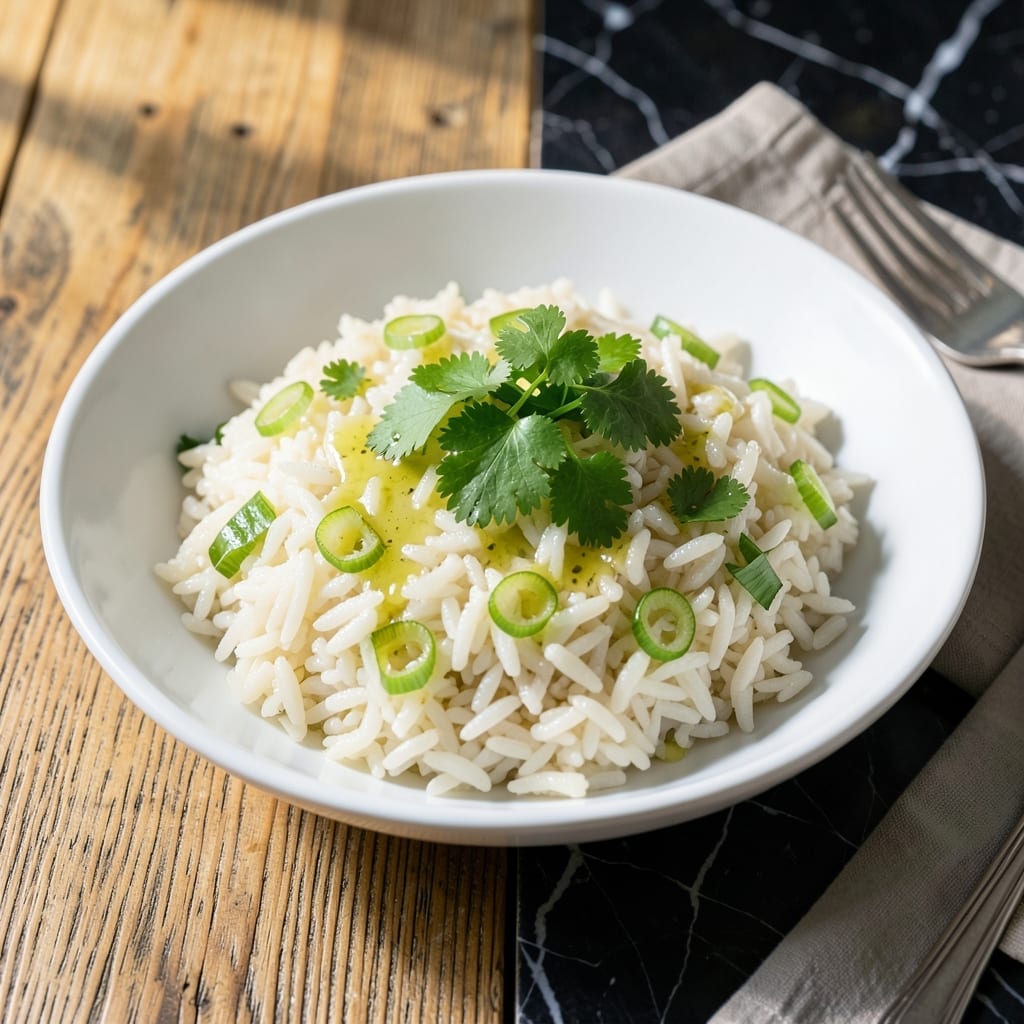
There’s a simple beauty in perfectly cooked jasmine rice—light, fragrant, and infinitely adaptable. I developed this method after testing countless ratios and techniques to achieve consistently fluffy results without added fats or unnecessary steps.
The key lies in precise water measurement and gentle cooking. Using a 1:1.25 rice-to-water ratio and letting it steam off-heat ensures each grain stays separate and tender. This approach transforms basic ingredients into a healthy side that complements any meal.
What emerges is rice with a delicate aroma and slight stickiness that holds up well to stir-fries or stands proudly beside grilled proteins. The texture remains perfect even when reheated, making it ideal for meal prep.
Between you and me, this became my go-to after one too many mushy rice disasters in my tiny Boston kitchen. It’s the kind of reliable technique that builds confidence in the kitchen.
Ingredients for Healthy Jasmine Rice
Basic pantry staples transform into fragrant, healthful jasmine rice with minimal effort.
| Ingredient | Amount | Notes |
|---|---|---|
| Jasmine Rice 🌾 | 2 cups | Rinsed until water runs clear |
| Water 💧 | 2 ½ cups | Filtered for best flavor |
| Sea Salt 🧂 | ½ tsp | Fine grain preferred |
| Fresh Lime Juice 🍈 | 1 tbsp | Optional for brightness |
| Fresh Cilantro 🌿 | ¼ cup | Chopped, for garnish |
| Green Onions 🧅 | 3 whole | Thinly sliced for topping |
| Garlic Cloves 🧄 | 2 cloves | Minced, optional for aroma |
| Sesame Oil 🫒 | 1 tsp | Toasted, for finishing |
| Vegetable Broth 🥕 | ½ cup | Low-sodium preferred |
| Lemon Zest 🍋 | 1 tsp | Finely grated for freshness |
The rice is everything here. Jasmine from Thailand (look for brands like Elephant or Three Ladies) has the best aroma and texture. I grab mine from Trader Joe’s or H Mart—their turnover is fast, so it’s always fresh. Rinse it until the water runs completely clear (this removes excess starch, preventing mushiness). The water ratio is non-negotiable: 1:1.25 rice to liquid every time.
No jasmine rice? Long-grain white rice works in a pinch, but it won’t have the same fragrance. Swap vegetable broth for water if you want extra depth (use low-sodium to control the salt). Fresh lime juice can be replaced with rice vinegar (use half the amount). Skip the cilantro if it tastes like soap to you—thinly sliced green onions add a similar fresh crunch.
Cooked rice keeps 4-5 days in the fridge, and the texture actually improves overnight. Freeze in portions for up to 3 months (thaw in the fridge before reheating). Always store in an airtight container—rice absorbs odors like a sponge. Pro tip: spread hot rice on a tray to cool quickly before storing.
Why You’ll Love This Recipe
- Ready in 20: I rinse the rice, add water, and let the rice cooker do the work—no babysitting required.
- Bright & Zesty: The lime juice and cilantro turn plain rice into something vibrant and fresh.
- Pairs with Anything: I serve it with grilled chicken one night and black beans the next—so adaptable.
- Budget Stretch: A pound of jasmine rice costs pennies and makes multiple meals for my family.
Step-by-Step Instructions for Jasmine Rice
Here’s my method for perfectly fluffy, aromatic jasmine rice with vibrant finishing touches.
Step 1: Rinse and Prepare the Rice
Place the 2 cups Jasmine Rice in a fine-mesh strainer and rinse under cold water, swishing with your hand, until the water runs completely clear. This removes excess starch that can make rice gummy.
Drain well and transfer to a medium saucepan. I’ve found that thorough rinsing takes about 3-4 minutes and is the secret to light, separate grains. Shake the strainer gently to remove any lingering water before proceeding.
Step 2: Cook with Broth and Seasoning
Add the 2.5 cups Water, 0.5 cup Vegetable Broth, and 0.5 tsp Sea Salt to the saucepan. The broth adds subtle depth without overpowering the rice’s natural fragrance.
Bring to a boil over high heat, then immediately reduce to low, cover tightly, and simmer for 15 minutes. Watch for the moment the surface just starts to bubble—that’s your cue to reduce the heat.
Step 3: Steam and Fluff
After 15 minutes, turn off the heat and let the rice steam, covered, for an additional 10 minutes. This crucial resting period allows the grains to absorb any remaining liquid and plump up fully.
Gently fluff with a fork, separating any clumps without pressing down. The rice should be tender with individual grains that glisten slightly. If it seems undercooked, add 2 tablespoons of hot water, cover, and steam for another 3-5 minutes.
Step 4: Add Aromatic Finishing Touches
Once fluffed, drizzle the 1 tsp Sesame Oil over the rice and fold in gently. Then add the 1 tsp Lemon Zest and 1 tbsp Fresh Lime Juice, stirring lightly to distribute the bright citrus notes evenly.
For the final garnish, sprinkle the 0.25 cup Fresh Cilantro and 3 whole Green Onions (thinly sliced) over the top. If using, stir in the 2 cloves Garlic Cloves (minced) while the rice is still hot to release their aroma.
Pro Tips For Making Healthy Jasmine Rice
- Rinse the Rice: Soak jasmine rice in cold water for 3-5 minutes, then rinse until the water runs clear—this removes excess starch and keeps the grains fluffy instead of gummy.
- Use the Right Ratio: For perfectly tender grains, stick to a 1:1.25 rice-to-water ratio (1 cup rice to 1.25 cups water)—I learned this the hard way after a few mushy batches.
- Salt the Water: Add sea salt to the cooking water (about ½ teaspoon per cup) before bringing it to a boil—this seasons the rice evenly instead of just on the surface.
- Rest Before Fluffing: Once cooked, let the rice sit covered for 5-10 minutes off the heat—this lets steam redistribute so the grains don’t clump when you add lime juice and cilantro.
Pro Cooking Tips for This Dish
Rinsing Technique
I always rinse my jasmine rice until the water runs completely clear—this removes excess starch that can make grains clump together. Use a fine-mesh strainer and swish the rice with your hand under cold water for 3-4 minutes. This step is non-negotiable for fluffy results. 💡
Water Ratio Precision
The magic ratio is 1:1.25 rice to liquid. For 2 cups rice, I use 2.5 cups water plus ½ cup vegetable broth for extra depth. Measure carefully—even ¼ cup off can affect texture. I learned this the hard way in my tiny Boston kitchen.
Bring to a boil over high heat, then immediately reduce to low and cover tightly. This prevents steam from escaping, which is crucial for even cooking.
Steaming Off Heat
After 15 minutes of simmering, turn off the heat and let it steam, covered, for an additional 10 minutes. This resting period allows grains to absorb remaining liquid and plump up fully. Resist the urge to peek—every bit of steam matters.
Fork Fluffing
Never stir rice with a spoon—it crushes the grains. I use a fork to gently separate and fluff. If it seems undercooked, add 2 tablespoons hot water, cover, and steam for another 3-5 minutes. The grains should glisten slightly when done.
Nutrition Facts
Frequently Asked Questions
How long should I rinse the rice?
Rinse until the water runs completely clear, about 3-4 minutes. This removes excess starch for fluffier grains. Use cold water and a fine-mesh strainer for best results.
Can I use a rice cooker instead of a saucepan?
Use the same 1:1.25 rice-to-liquid ratio and follow your cooker’s instructions. Most models automatically handle the steaming phase, making it even easier.
Why did my rice turn out mushy?
Overcooking or using too much water are the main culprits. Stick to 15 minutes of simmering plus 10 minutes of steaming off-heat, and always measure liquids precisely.
Can I make this ahead of time?
Yes! Cooked rice keeps well in the fridge for 4-5 days in an airtight container. The texture actually improves overnight, making it perfect for meal prep.

- Haitian Rice And Green Peas Recipe: Authentic Island Flavor in One Pot - October 17, 2026
- Ground Beef Spinach Rice Recipe: Savory One-Skillet Supper - October 17, 2026
- Healthy Jasmine Rice Recipe: Light and Fragrant Side Dish - October 17, 2026