
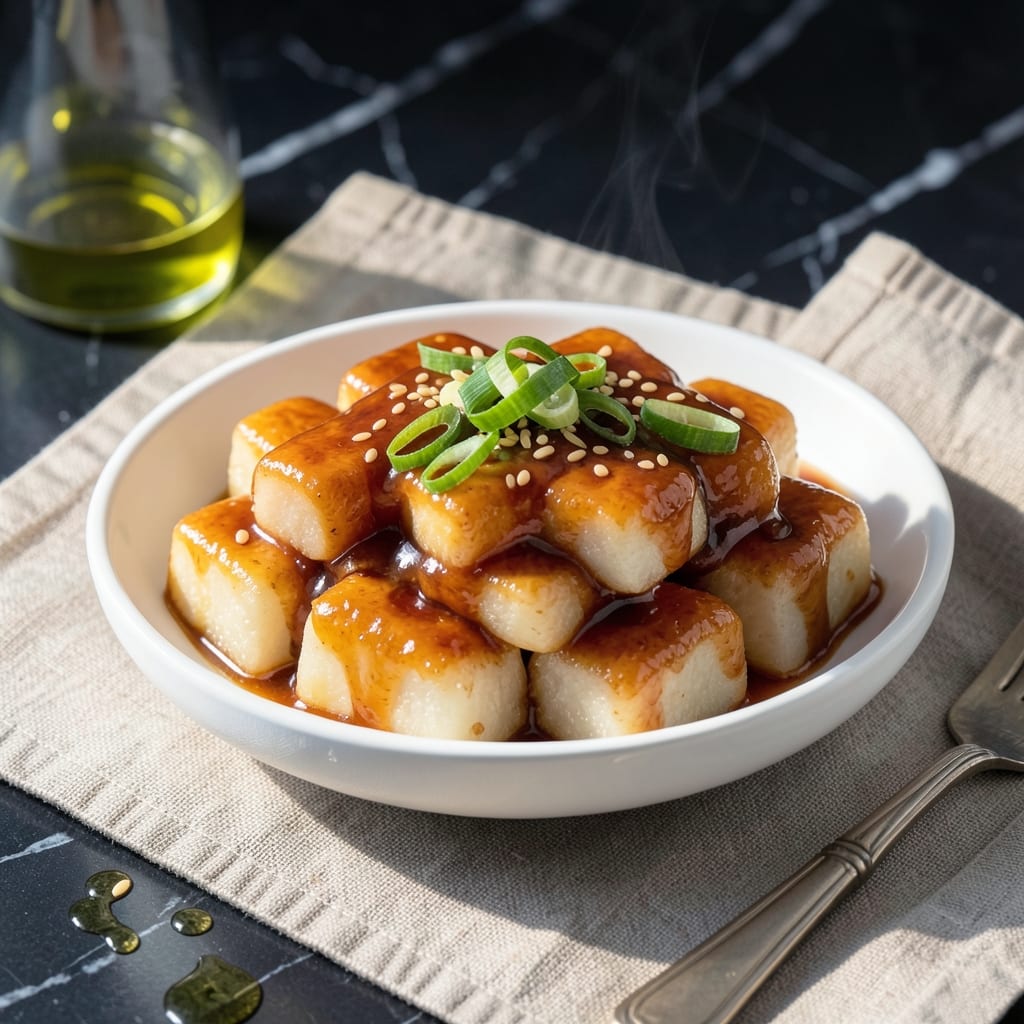
This Korean rice cake dish delivers chewy texture and bold flavors without compromising on health. The spicy gochujang sauce provides depth while keeping ingredients clean and wholesome.
I’ve refined this method to balance heat and sweetness, creating a satisfying meal that feels indulgent yet remains nutritious. The rice cakes absorb the sauce beautifully during cooking.
The process is straightforward: simmer rice cakes in a flavorful broth with vegetables until everything comes together. The result is a dish that’s both comforting and light.
Perfect for a quick weeknight dinner or meal prep. This creation proves healthy eating can be delicious and exciting.
Ingredients for Healthy Korean Rice Cake
Clean, wholesome ingredients create this vibrant Korean-inspired dish with bold, balanced flavors.
| Ingredient | Amount | Notes |
|---|---|---|
| Korean Rice Cakes 🍚 | 1 lb | Cylindrical or oval shape preferred |
| Gochujang 🌶️ | 3 tbsp | Korean fermented chili paste |
| Soy Sauce 🫒 | 2 tbsp | Low-sodium or regular |
| Rice Vinegar 💧 | 1 tbsp | White or apple cider works |
| Sesame Oil 🫒 | 1 tbsp | Toasted for best flavor |
| Maple Syrup 🍁 | 1 ½ tbsp | Balances spicy gochujang heat |
| Garlic Cloves 🧄 | 4 cloves | Minced for maximum flavor |
| Fresh Ginger 🌿 | 1 tbsp | Grated or minced fine |
| Carrot 🥕 | 1 whole | Julienned or thinly sliced |
| Zucchini 🥒 | 1 whole | Sliced into half-moons |
| Green Onions 🧅 | 4 whole | Thinly sliced on diagonal |
| Vegetable Broth 💧 | 2 cups | Low-sodium preferred for control |
| Sesame Seeds 🌰 | 1 tbsp | Toasted for garnish |
| Nori Sheets 🍱 | 2 sheets | Cut into strips for garnish |
| Red Pepper Flakes 🔥 | ½ tsp | Adjust for desired heat level |
The rice cakes are non-negotiable—look for the cylindrical or oval Korean variety (often labeled as tteok) at H Mart or Asian grocery stores. Avoid the flat, round mochi-style cakes; they won’t absorb the sauce properly. For the gochujang, Sempio or CJ brands offer consistent quality. Fresh ginger and garlic are essential here (the pre-minced stuff lacks punch). The maple syrup might seem unconventional, but it’s the perfect vegan-friendly sweetener to temper the chili heat.
No gochujang? Sriracha plus a splash of miso paste gets you in the ballpark, though the depth won’t be quite the same. Tamari instead of soy sauce keeps it gluten-free. Short on veggies? Bell peppers or mushrooms add great texture. The sesame oil is irreplaceable for that nutty aroma, so don’t skip it. For the broth, homemade is ideal but Better Than Bouillon vegetable base works perfectly.
Prepared rice cakes keep 3-4 days in the fridge submerged in water (change daily). The cooked dish reheats beautifully—actually improves as flavors meld. Store leftovers in an airtight container for up to 4 days. The gochujang mixture itself can be refrigerated for 1 week.
Why You’ll Love This Recipe
- One Pan Wonder: I just toss the rice cakes with gochujang and soy sauce in a skillet—minimal cleanup, maximum flavor.
- Umami Bomb: That first bite with sesame oil and rice vinegar? Ridiculously good, with a perfect sweet-spicy kick.
- Meal Prep Star: Honestly, it keeps beautifully for days, so I make a big batch for lunches all week.
- Budget Friendly: A bag of rice cakes and a few pantry staples feed my family for under ten bucks.
Step-by-Step Instructions for Korean Rice Cakes with Spicy Gochujang
This method ensures the rice cakes absorb maximum flavor while maintaining their signature chewy texture.
Step 1: Prepare Aromatics and Vegetables
Finely mince the 4 cloves Garlic Cloves and grate the 1 tbsp Fresh Ginger until you have a fine paste. I use a microplane for the ginger to achieve the smoothest texture, which distributes evenly throughout the dish.
Julienne the 1 whole Carrot into thin matchsticks and slice the 1 whole Zucchini into half-moons. Thinly slice the 4 whole Green Onions on a diagonal for visual appeal. This uniform cutting ensures even cooking and a professional presentation.
Set all prepared vegetables aside in separate piles to maintain organization during cooking.
Step 2: Create the Gochujang Sauce Base
In a large skillet or wok, combine the 3 tbsp Gochujang, 2 tbsp Soy Sauce, 1 tbsp Rice Vinegar, 1 tbsp Sesame Oil, and 1.5 tbsp Maple Syrup. The sesame oil adds a nutty depth that complements the spicy gochujang.
Add the minced garlic and grated ginger to the sauce. Stir well to incorporate all ingredients. The mixture should be thick and glossy, with the sweetness of the maple syrup balancing the heat from the gochujang.
Place the skillet over medium heat and cook for 2-3 minutes until the sauce begins to bubble slightly at the edges.
Step 3: Cook Vegetables and Rice Cakes
Add the julienned carrot and zucchini half-moons to the skillet with the sauce. Stir-fry for 3-4 minutes until the vegetables begin to soften but retain a slight crispness. The carrots should turn bright orange and the zucchini should develop light grill marks.
Pour in the 2 cups Vegetable Broth and bring to a gentle simmer. Carefully add the 1 lb Korean Rice Cakes to the skillet, stirring to coat them evenly with the sauce. The rice cakes will initially float to the top but will absorb liquid as they cook.
Simmer for 8-10 minutes, stirring occasionally, until the rice cakes are tender and the liquid has reduced to a thick, glossy consistency that clings to the vegetables.
Step 4: Finish and Garnish
Once the rice cakes are fully cooked and the sauce has thickened, remove the skillet from heat. The rice cakes should be chewy and translucent with a slight bounce when pressed. If the sauce is too thin, simmer for an additional 2-3 minutes to reach the desired consistency.
Sprinkle the 0.5 tsp Red Pepper Flakes over the dish, adjusting to taste for those who prefer more heat. Garnish with the 1 tbsp Sesame Seeds and strips from the 2 sheets Nori Sheets for added texture and visual contrast.
Stir gently to distribute the garnishes and serve immediately while hot, as the rice cakes are best enjoyed fresh from the pan.
Pro Tips For Making Healthy Korean Rice Cake
- Soak the Rice Cakes: I learned this the hard way—dry rice cakes turn rock-hard when cooked. Cover them with warm water for 10-15 minutes before using, or they’ll stay chewy in all the wrong ways.
- Bloom the Gochujang: Heat 1 tablespoon of sesame oil in the pan first, then cook the gochujang for 1-2 minutes until it darkens slightly. This takes the raw edge off and deepens the flavor.
- Skip the Overcrowding: After burning three batches, I finally figured out that rice cakes need space in the pan. Cook them in a single layer so they sear, not steam.
- Finish with Vinegar: My grandmother swore by this, and she was right: add the rice vinegar at the very end—about 1 teaspoon—so it stays bright and tangy instead of cooking off.
Health Benefits of This Dish
Low-Calorie Powerhouse
This dish centers on Korean rice cakes, which offer sustained energy with just 110 calories per 100g. The chewy texture comes from resistant starch, which digests slowly and keeps you full for hours. I find it perfect for active days. 💪
Vitamin-Rich Vegetables
The carrot and zucchini provide a powerhouse of vitamins A and C, while green onions add vitamin K. Each serving delivers about 30% of your daily vitamin A needs, supporting immune function and skin health.
Fermented Benefits
Gochujang is a fermented chili paste packed with probiotics that support gut health. The fermentation process also enhances nutrient absorption, making the vitamins and minerals in the vegetables more bioavailable to your body.
Healthy Fats Balance
Sesame oil provides heart-healthy monounsaturated fats, while sesame seeds add a boost of calcium and iron. The 1 tbsp sesame oil used here contains about 14g of good fats that help absorb fat-soluble vitamins.
Low Sodium Option
Using low-sodium soy sauce and vegetable broth keeps sodium in check. Each serving contains roughly 600mg sodium, well below the daily limit. I always recommend tasting before adding extra salt.
Antioxidant Boost
Garlic, ginger, and gochujang all contain powerful antioxidants that combat inflammation. The 4 cloves garlic alone provide allicin, which supports cardiovascular health. This dish truly nourishes from the inside out. ✨
Nutrition Facts
Frequently Asked Questions
Can I use frozen rice cakes?
Yes, but thaw them in cold water for 10-15 minutes first. Frozen rice cakes can become mushy if cooked directly from frozen.
How do I adjust the spice level?
Reduce or omit the red pepper flakes and use less gochujang. For extra heat, add 1/4 tsp more gochujang or a pinch of cayenne.
What if my sauce is too thick?
Thin it with 1/4 cup of water or vegetable broth. Simmer for 2-3 minutes to blend flavors.
Can I make this gluten-free?
Yes! Swap regular soy sauce for tamari or a certified gluten-free soy sauce. Ensure all other ingredients are certified gluten-free.

- Jollof Rice Sauce Recipe: West African Tomato and Spice Infusion - September 25, 2026
- Japanese Rice Soup Recipe: Umami-Rich Comfort in a Bowl - September 25, 2026
- Homemade Cream Of Rice Recipe: Silk-Smooth Breakfast in Minutes - September 25, 2026