
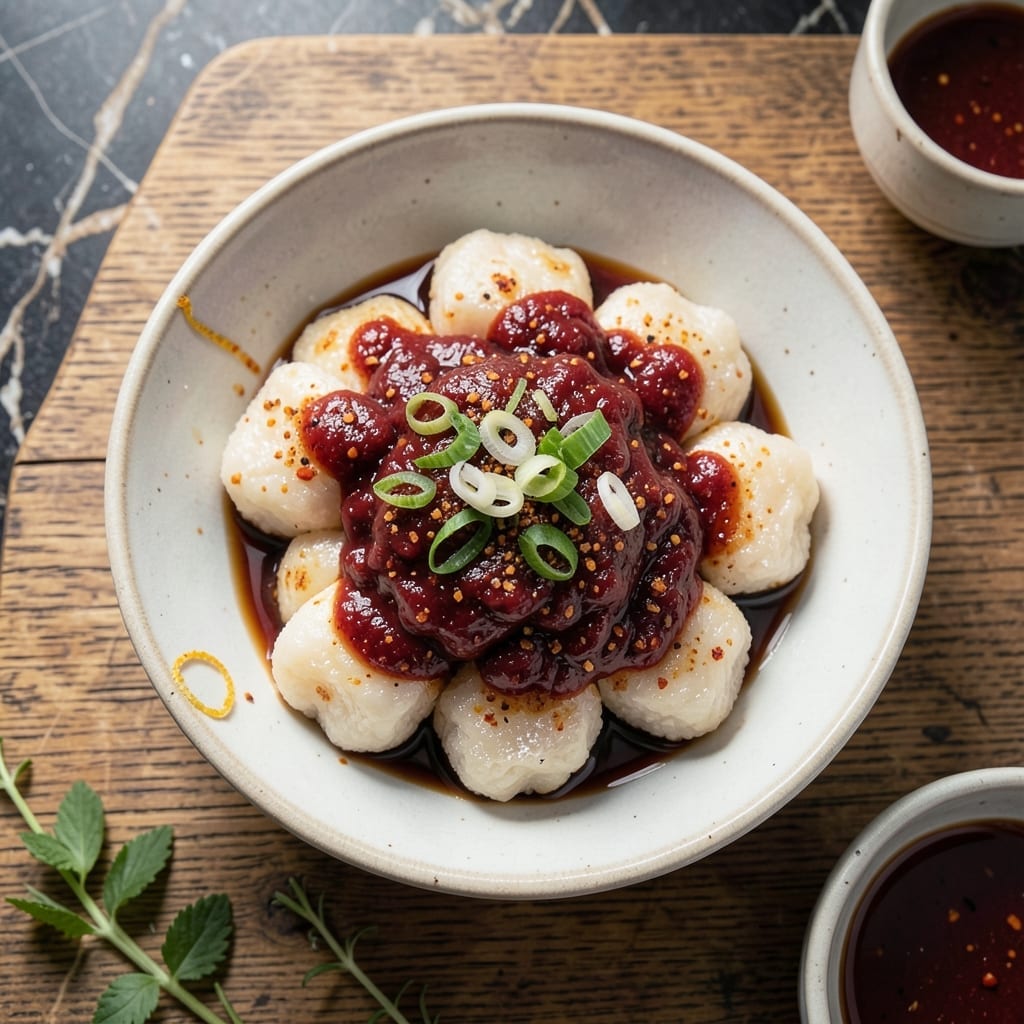
Making Korean rice cakes at home transforms simple rice flour into chewy, pillowy delights that outshine any store-bought version. This traditional method preserves authentic texture and flavor without shortcuts.
The process begins with steaming the batter until firm, then shaping into perfect cylinders. The key lies in the rice flour ratio and precise steaming time for that signature bounce.
A sweet-spicy glaze elevates these rice cakes from simple to extraordinary. The sauce clings beautifully, balancing heat with caramelized depth that makes each bite irresistible.
Serve warm for the best experience. This recipe delivers the satisfaction of creating a beloved Korean specialty from scratch with professional results.
Ingredients for Homemade Korean Rice Cake
Transform simple rice flour into chewy, pillowy delights with this traditional ingredient list.
| Ingredient | Amount | Notes |
|---|---|---|
| Glutinous Rice Flour 🌾 | 2 cups | Also called sweet rice flour |
| Water 💧 | 1 ½ cups | Warm, for batter consistency |
| Salt 🧂 | ½ tsp | Fine sea salt preferred |
| Sugar 🍚 | 2 tbsp | Granulated white sugar |
| Gochugaru 🌶️ | 2 tbsp | Korean red pepper flakes |
| Soy Sauce 🥢 | 2 tbsp | Low-sodium preferred |
| Rice Vinegar 🍶 | 1 tbsp | Mild and slightly sweet |
| Sesame Oil 🫒 | 1 tsp | Toasted for depth of flavor |
| Honey 🍯 | 2 tbsp | Or agave for vegan option |
| Garlic Cloves 🧄 | 3 cloves | Minced finely for glaze |
| Ginger 🌿 | 1 tbsp | Freshly grated for sauce |
| Cornstarch 🌽 | 1 tbsp | For dusting work surface |
| Toasted Sesame Seeds 🌰 | 1 tbsp | For garnish and texture |
| Green Onions 🧅 | 2 whole | Thinly sliced for topping |
The rice flour must be glutinous—look for sweet rice flour at Asian markets or well-stocked grocery stores like H Mart or Whole Foods. Avoid regular rice flour; it lacks the necessary elasticity. For the gochugaru, Korean brands like Sempio offer authentic heat and color. The texture of your rice cakes depends entirely on the flour quality, so don’t compromise here.
No gochugaru? Substitute cayenne plus paprika at half the amount, though the flavor won’t be identical. For a vegan version, swap honey for agave or maple syrup. Low-sodium soy sauce prevents the glaze from becoming too salty. The sesame oil adds depth, but skip it if you’re nut-free—the dish will still shine with the other flavors.
Fresh rice cakes keep 3-4 days in an airtight container at room temperature. Reheat by steaming or microwaving with a damp paper towel. The glaze can be made 1 week ahead and refrigerated. For best results, serve warm with extra sesame seeds and green onions sprinkled on top.
Why You’ll Love This Recipe
- Five-Minute Mix: I just stir glutinous rice flour, water, and a pinch of salt—no resting, no fuss.
- Sweet-Spicy Bite: The gochugaru gives a gentle heat that plays perfectly with the subtle sugar.
- Endless Possibilities: I’ve served these warm with soup, cold in lunchboxes, and even as a midnight snack.
Step-by-Step Instructions for Korean Rice Cakes
Master the technique for achieving that signature chewy texture with a glossy sweet-spicy finish.
Step 1: Prepare the Rice Cake Batter
In a large mixing bowl, whisk together the 2 cups glutinous rice flour, 0.5 tsp salt, and 2 tbsp sugar until fully combined. The fine texture of sweet rice flour is essential for that authentic chewy consistency.
Gradually add the 1.5 cups warm water while stirring continuously to prevent lumps. The batter should be smooth and slightly thick, like pancake batter. Let it rest for 5 minutes to allow the flour to fully hydrate.
Step 2: Steam the Rice Cakes
Lightly grease a steamer basket with a neutral oil or line it with parchment paper. Pour the batter into the prepared steamer, spreading it into an even layer about ½ inch thick.
Steam over boiling water for 20-25 minutes until the rice cakes are firm to the touch and slightly translucent. Cover with a lid and avoid peeking during the first 15 minutes to ensure even cooking. The surface should look matte, not sticky, when done.
Step 3: Create the Sweet-Spicy Glaze
In a small saucepan, combine the 2 tbsp gochugaru, 2 tbsp soy sauce, 1 tbsp rice vinegar, 1 tsp sesame oil, 2 tbsp honey, minced 3 cloves garlic cloves, and 1 tbsp ginger. Stir to form a smooth paste.
Cook over medium heat for 3-4 minutes, stirring constantly, until the mixture thickens slightly and becomes fragrant. Remove from heat immediately to prevent burning—gochugaru can scorch quickly. The glaze should coat the back of a spoon.
Step 4: Coat and Finish the Rice Cakes
Once the steamed rice cakes are cool enough to handle, cut them into 1-inch squares or rectangles. Dust your work surface with 1 tbsp cornstarch to prevent sticking during cutting.
Toss the warm rice cakes in the prepared glaze until each piece is evenly coated and glossy. The heat from the rice cakes will help the glaze adhere beautifully. Work quickly while both are warm for the best results.
Step 5: Garnish and Serve
Arrange the glazed rice cakes on a serving platter. Sprinkle with 1 tbsp toasted sesame seeds and thinly sliced 2 whole green onions for freshness and visual appeal.
Serve immediately while warm for the best texture—the rice cakes should be soft and stretchy with a slight resistance when bitten. The glaze should glisten, not absorb completely, maintaining its vibrant red color and balanced sweet-spicy flavor profile.
Pro Tips For Making Homemade Korean Rice Cake
- Steam Evenly: Spread the batter thin in the steamer—about 1/2 inch thick—and make sure the water is at a rolling boil before adding the tray. I learned this the hard way after ending up with gummy centers and dry edges more times than I’d like to admit.
- Use Hot Water: Mix the glutinous rice flour with hot water (not boiling) to kickstart the gelatinization. It sounds weird, but it works—your rice cakes will be chewier and less likely to crack.
- Skip Cold Flour: Let your glutinous rice flour sit at room temperature for 30 minutes before mixing. After burning a batch because the cold flour seized up, I finally figured out this small step prevents lumps and uneven texture.
- Rest the Dough: Give the mixed dough 10-15 minutes to hydrate fully before shaping or steaming. My grandmother swore by this, and she was right: it makes the rice cakes smoother and more pliable.
Perfect Pairings for These Flavors
Traditional Accompaniments
These rice cakes pair beautifully with kimchi for a classic Korean combination. The tangy, spicy fermented cabbage cuts through the sweetness of the glaze perfectly. I love serving ½ cup kimchi alongside each portion for balance. 🥗
Protein Pairings
For a heartier meal, add bulgogi beef or spicy pork as your protein. The savory, marinated meats complement the chewy texture wonderfully. I often prepare 1 lb of bulgogi when serving these to a crowd.
Vegetable Sides
Light, fresh vegetables balance the richness. Try spinach banchan or cucumber salad for contrast. A simple 1 cup spinach with sesame dressing adds color and nutrition without overpowering the dish.
Drink Pairings
Korean barley tea (boricha) is my top choice—the nutty, toasted flavor cleanses your palate between bites. For beer lovers, Hite or Cass lagers provide crisp refreshment. A cold 12 oz bottle pairs perfectly with the heat. 🍺
Soup Combinations
Serve with miso soup or doenjang jjigae for a comforting meal. The warm broth enhances the chewy texture. I recommend 1 bowl per person to complete the experience.
Dessert Follow-Up
End with bingsu (shaved ice dessert) or hotteok (sweet pancakes) for a traditional Korean feast. The cool, sweet bingsu contrasts beautifully after the spicy rice cakes. 💛
Nutrition Facts
Frequently Asked Questions
Why does my rice cake batter need to rest?
Letting the batter rest for 5 minutes allows the glutinous rice flour to fully hydrate. This ensures even texture and prevents gummy spots in your finished cakes.
Can I bake instead of steam the rice cakes?
Steaming is essential for the authentic chewy texture. Baking would make them dense and dry. If you lack a steamer, use a colander over boiling water with a tight lid for 20-25 minutes.
How do I fix glaze that’s too thin?
Simmer it longer over medium heat for 1-2 extra minutes. If it thickens too much, stir in 1 tsp warm water at a time. The glaze should coat the back of a spoon.
How long can I store leftover rice cakes?
Keep in an airtight container at room temperature for 3-4 days. Reheat by steaming or microwaving with a damp paper towel to restore chewiness.

- Jollof Rice Sauce Recipe: West African Tomato and Spice Infusion - September 25, 2026
- Japanese Rice Soup Recipe: Umami-Rich Comfort in a Bowl - September 25, 2026
- Homemade Cream Of Rice Recipe: Silk-Smooth Breakfast in Minutes - September 25, 2026