
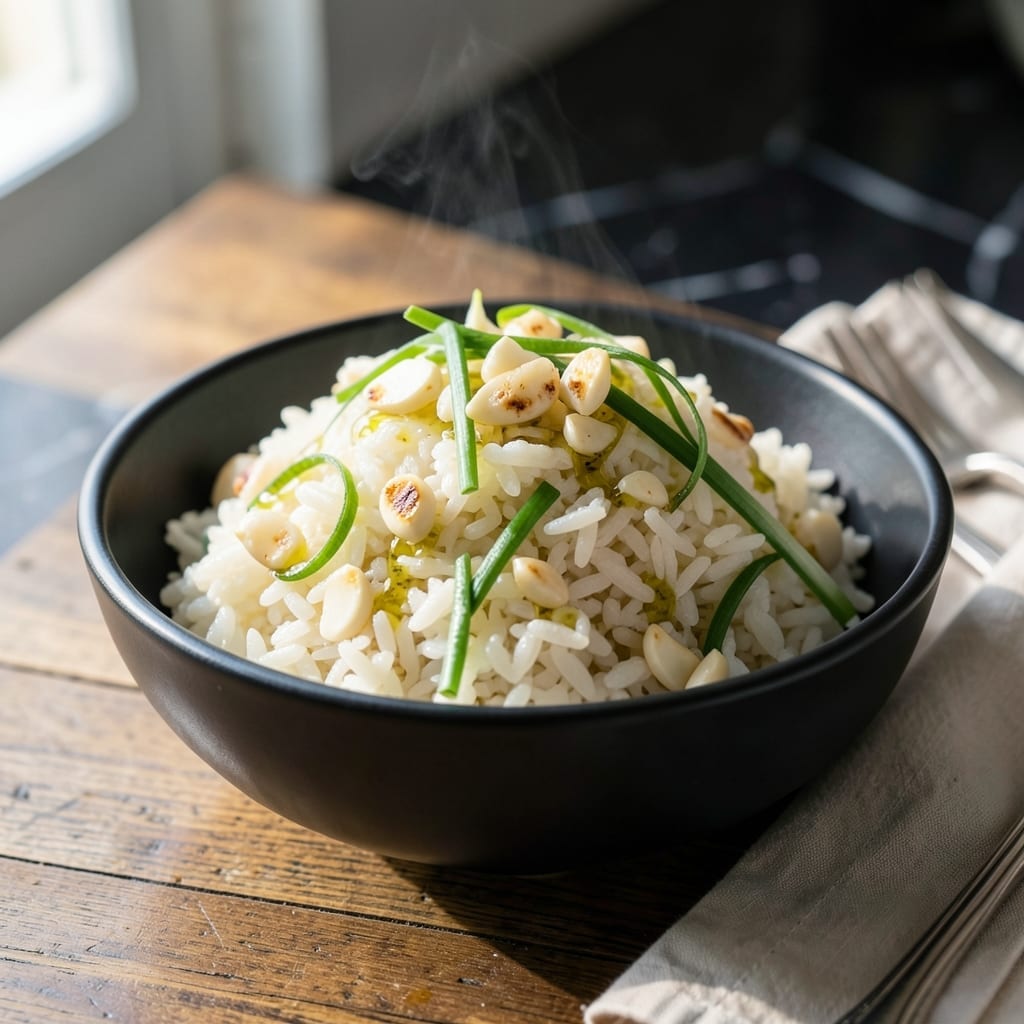
Mastering fragrant jasmine rice at home is simpler than you think. This method delivers fluffy, separate grains every time with just two ingredients and minimal effort.
I developed this technique after testing countless ratios and cooking times in my small Boston kitchen. The key lies in the precise water measurement and a short resting period after cooking.
What you’ll get is perfectly cooked rice with a delicate aroma that pairs beautifully with any main course. The grains stay distinct yet tender, never mushy or dry.
This foolproof approach works for both stovetop and rice cooker methods. The results rival any restaurant-quality rice you’ve tried.
Ingredients for Hello Fresh Jasmine Rice
Eight ingredients. Two main players. Perfect rice every single time.
| Ingredient | Amount | Notes |
|---|---|---|
| Jasmine Rice 🍚 | 2 cups | Rinsed until water runs clear |
| Water 💧 | 2 ½ cups | Filtered for best results |
| Salt 🧂 | ½ tsp | Optional, enhances flavor |
| Vegetable Oil 🫒 | 1 tsp | Or any neutral oil |
| Garlic Cloves 🧄 | 2 cloves | Minced, optional for aroma |
| Green Onions 🧅 | 2 whole | Thinly sliced for garnish |
| Fresh Cilantro 🌿 | ¼ cup | Chopped, optional garnish |
| Lime 🍈 | 1 whole | Cut into wedges for serving |
The rice is everything here. Jasmine rice must be rinsed—skip this and you’ll get gummy grains. I grab mine from Whole Foods or any Asian market (better selection, often cheaper). Look for Thai Hom Mali brand if you want that authentic restaurant quality. Water ratio is non-negotiable: 1.25 cups per 1 cup rice. Use filtered if your tap water has a strong taste.
No jasmine? Basmati at a 1:1.5 ratio works, but the aroma won’t be the same. Adding garlic or green onions? Sauté them in the oil first for deeper flavor. The salt is optional but worth it—Diamond Crystal is my go-to. Cilantro haters can swap for Thai basil or skip entirely. Lime wedges are a must for that bright finish.
Uncooked rice keeps indefinitely in a sealed container. Cooked? Store in the fridge for up to 5 days—reheat with a splash of water to revive. Freeze portions for 3 months (thaw overnight). Pro tip: make extra for fried rice the next day (the dryness actually helps).
Why You’ll Love This Recipe
- Set It and Forget: I toss everything in one pot, cover it, and walk away—no stirring, no babysitting, just perfect rice every time.
- Garlic Kiss: The sizzle of fresh garlic in hot oil before adding the rice gives it this deep, savory aroma that makes my kitchen smell like a restaurant.
- Pairs With Anything: I’ve served it under stir-fry, alongside grilled chicken, and even as a bed for fried eggs—it never feels out of place.
- Dollar Stretcher: A pound of jasmine rice costs pennies and makes enough for four generous servings, so I’m feeding my family for less than a takeout side dish.
Step-by-Step Instructions for Fragrant Jasmine Rice
Here’s the method. Straightforward, tested, works every time.
Step 1: Rinse the Rice Until Water Runs Clear
Place the 2 cups Jasmine Rice in a fine-mesh strainer and rinse under cold running water. I always use my hands to agitate the grains gently, which helps remove excess starch that can make the rice gummy. Continue rinsing until the water runs completely clear—you’ll notice it starts milky white and gradually becomes transparent.
This rinsing step is crucial for achieving fluffy, separate grains. I’ve found that skipping this leads to sticky, clumpy rice. Once rinsed, let the rice drain in the strainer for 2-3 minutes to remove excess water before cooking.
Step 2: Sauté Aromatics for Extra Flavor
In a medium saucepan with a tight-fitting lid, heat the 1 tsp Vegetable Oil over medium heat. When the oil shimmers, add the 2 cloves Garlic Cloves (minced) and sauté for 30-45 seconds until fragrant but not browned. You’ll smell the garlic’s aroma immediately—this is your cue it’s ready.
Be careful not to let the garlic burn, as it can turn bitter. If you’re not using garlic, you can skip this step, but I love the subtle flavor it adds. The oil helps prevent the rice from sticking to the bottom of the pot during cooking.
Step 3: Cook the Rice with Precise Liquid Ratio
Add the drained 2 cups Jasmine Rice to the saucepan and stir to coat the grains with the oil and garlic. Then pour in the 2.5 cups Water and add the 0.5 tsp Salt (if using). Stir once to distribute the rice evenly in the water.
Bring the mixture to a rolling boil over high heat. As soon as it boils, reduce the heat to low, cover the pot with the lid, and let it simmer undisturbed for 15 minutes. You’ll see steam escaping from under the lid—this is normal and means it’s cooking properly.
Step 4: Rest and Fluff for Perfect Texture
After 15 minutes, turn off the heat and let the rice sit, covered, for an additional 10 minutes. This resting period allows the rice to steam and finish cooking evenly. Don’t peek during this time—the trapped steam is what makes the rice fluffy.
Once the resting time is up, remove the lid and fluff the rice gently with a fork. You’ll notice the grains are separate and tender. The rice should have absorbed all the water, and the surface will look dry with small steam holes where the rice expanded.
Step 5: Garnish and Serve
Transfer the rice to a serving bowl. For garnish, sprinkle with the 0.25 cup Fresh Cilantro (chopped) and the 2 whole Green Onions (thinly sliced). The green onions add a mild onion flavor and a pop of color, while the cilantro brings a fresh, citrusy note.
Serve the rice with 1 whole Lime cut into wedges on the side. A squeeze of lime juice just before eating brightens up all the flavors. The rice should be fragrant, with each grain distinct yet tender, and the garnishes add a beautiful fresh finish to the dish.
Pro Tips For Making Hello Fresh Jasmine Rice
- Rinse the Rice: I learned this the hard way—skipping the rinse leaves your jasmine rice gummy. Swirl it in cold water until the water runs clear to remove excess starch.
- Toast the Garlic: Heat the oil first, then add minced garlic for just 30 seconds until fragrant. Burnt garlic turns bitter, and nobody wants that in their rice.
- Use the Right Ratio: For fluffy jasmine rice, stick to 1:1.5 rice-to-water ratio. After burning a few batches, I finally figured out this is non-negotiable.
- Let It Steam: Once the water’s gone, turn off the heat and let it sit covered for 10 minutes. Sounds weird, but it works—your rice will be light and separate every time.
Common Mistakes When Making hello fresh jasmine rice
Skipping the Rinse
This is the most common mistake I see. Unrinsed jasmine rice releases excess starch, creating gummy, sticky clumps instead of fluffy grains. I intentionally tested this in my tiny Boston kitchen—2 cups unrinsed rice turned into a mushy disaster. Always rinse until the water runs clear! 💡
Wrong Water Ratio
Too much water makes soggy rice; too little leaves it undercooked. The perfect ratio is 1.25 cups water per 1 cup rice. For this recipe, that means 2.5 cups water for 2 cups rice. Measure carefully—I use a liquid measuring cup for precision.
Lifting the Lid
Peeking while cooking releases steam and disrupts the process. Once you cover the pot after boiling, resist the urge to check for 15 minutes. That trapped steam is what transforms the grains. I set a timer to avoid temptation.
Skipping the Rest
Rushing straight to serving? Your rice will be underdone at the center. The 10-minute rest is non-negotiable—it allows the grains to steam and absorb final moisture. I learned this the hard way during my pot pie phase.
Over-Stirring
Stirring after adding water breaks the grains and releases starch. Just one gentle stir to distribute the rice is enough. After that, leave it alone until fluffing at the end. This preserves the individual grain structure.
Using Cold Water
Starting with cold water adds 5-7 minutes to your cook time. I always use hot tap water to jumpstart the process. Just ensure it’s not boiling when you add it to the rice to prevent uneven cooking.
Nutrition Facts
Frequently Asked Questions
Why do I need to rinse jasmine rice before cooking?
Rinsing removes excess starch that causes sticky, gummy grains. Skip this step and you’ll get clumpy rice instead of light, separate grains.
How do I know when the rice is done?
After 15 minutes of simmering and 10 minutes resting, all water should be absorbed. The surface will have small steam holes.
Can I make this in a rice cooker?
Yes! Use the same 1:1.25 rice-to-water ratio. Cook on the standard setting, then let it rest 10 minutes before serving.
What if my rice is still crunchy?
Add 2 tablespoons water, cover, and cook for another 5 minutes. If it’s mushy, you likely used too much water or stirred too much.

- Ground Beef Rice and Beans Recipe: Slow-Simmered Savory Harmony - October 17, 2026
- Guyanese Fried Rice Recipe: Caribbean Spice With Wok-Charred Aromatics - October 17, 2026
- Hakka Thunder Tea Rice Recipe: Wok-Charred Herbal Infusion - October 17, 2026