
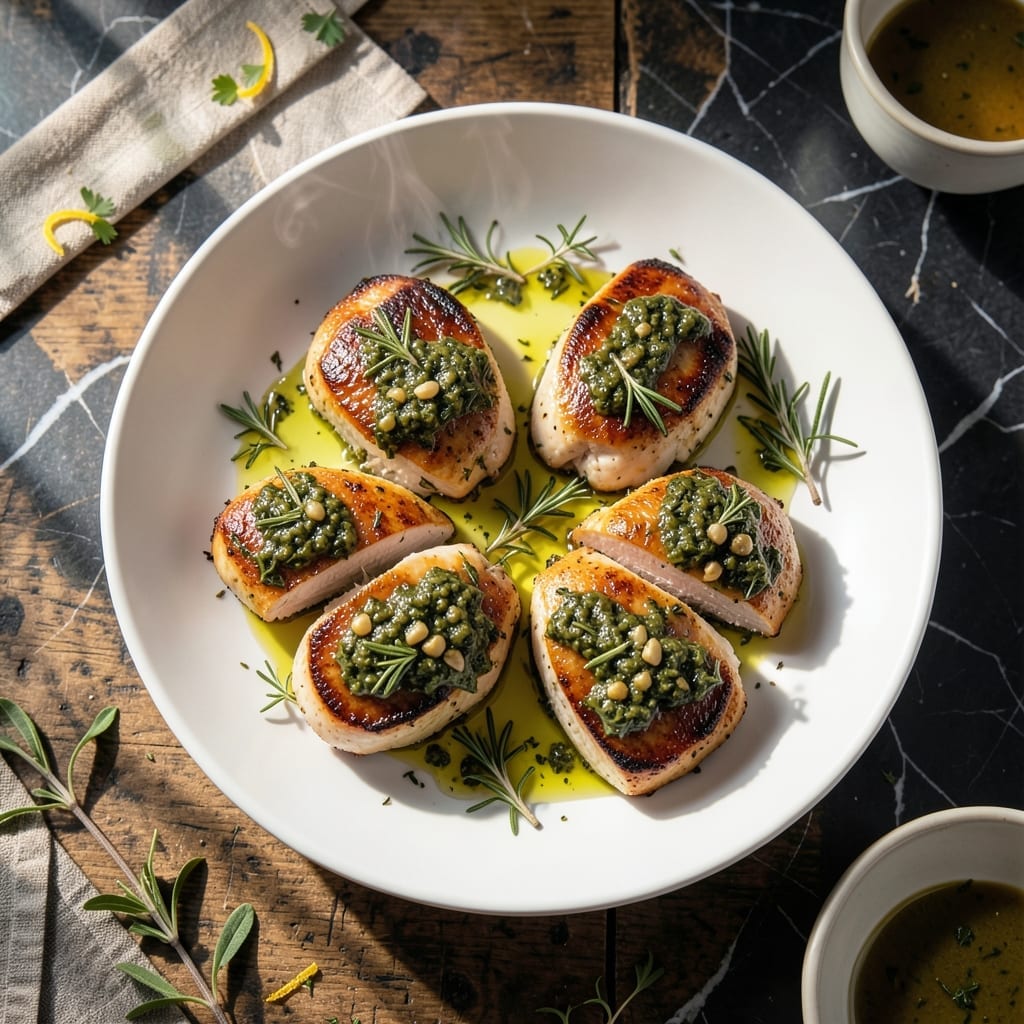
This herbal chicken recipe transforms simple ingredients into a dish with restaurant-quality flavor and aroma. The blend of fresh herbs and spices creates a succulent, tender result that’s hard to resist.
I’ve perfected this method to ensure the chicken stays juicy while absorbing the aromatic flavors. A quick sear locks in moisture, and a gentle finish in the oven guarantees even cooking every time.
The herbs form a crust that’s packed with fragrance, while the meat remains tender and flavorful. It’s a foolproof way to elevate everyday chicken into something special.
Serve it with roasted vegetables or a fresh salad for a complete, satisfying meal. Here’s how to make it at home.
Ingredients for Herbal Chicken
Transform everyday chicken with aromatic herbs and simple pantry staples for restaurant-quality results.
| Ingredient | Amount | Notes |
|---|---|---|
| Chicken Breast Cutlets 🍗 | 1 ½ lb | Boneless, skinless, pounded to even thickness |
| Fresh Rosemary 🌿 | 2 tbsp | Finely chopped, stems discarded |
| Fresh Thyme 🍃 | 2 tbsp | Leaves only, stems removed |
| Fresh Sage 🌿 | 1 tbsp | Finely minced for even distribution |
| Garlic Cloves 🧄 | 4 cloves | Peeled and minced |
| Extra-Virgin Olive Oil 🫒 | 3 tbsp | Divided for searing and finishing |
| Dijon Mustard 🥄 | 1 tbsp | For herb crust binding |
| Kosher Salt 🧂 | 1 ½ tsp | Diamond Crystal preferred |
| Freshly Ground Black Pepper 🌶️ | 1 tsp | Coarse grind for texture |
| Dry White Wine 🍷 | ½ cup | Sauvignon Blanc or Pinot Grigio |
| Chicken Stock 🍲 | ½ cup | Low-sodium preferred |
| Unsalted Butter 🧈 | 2 tbsp | For finishing sauce |
| Lemon Zest 🍋 | 1 tsp | Freshly grated for brightness |
| All-Purpose Flour 🌾 | ¼ cup | For light dredging |
The chicken quality is paramount for this preparation. Boneless, skinless chicken breast cutlets ensure even cooking and optimal tenderness. Source from Whole Foods or a trusted butcher for superior texture. Fresh herbs are non-negotiable—organic rosemary, thyme, and sage from the refrigerated section outperform dried by a significant margin.
Substitutions require careful consideration. Dried herbs at one-third the quantity may be used if fresh are unavailable, though the flavor profile will be less vibrant. Shallots can replace garlic for a milder allium note. For the wine, any dry white works, but avoid cooking wines with added salt. Vegetable stock substitutes adequately for chicken stock if needed.
Prep herbs just before cooking to preserve their aromatic oils. The finished dish holds well, covered, for up to 2 hours at room temperature. Refrigerate leftovers within 2 hours and consume within 3 days for optimal freshness.
Why You’ll Love This Recipe
- One Pan Wonder: I just toss the chicken with rosemary, thyme, sage and garlic on a single sheet pan—minimal cleanup, maximum flavor.
- Aroma Heaven: The smell of those fresh herbs and garlic roasting with the chicken is honestly intoxicating.
- Meal Prep Hero: It keeps beautifully for lunches all week—still juicy and packed with that herby punch.
- Budget Stretcher: Chicken breast cutlets stay affordable, and a little fresh herbs go a long way here.
Step-by-Step Instructions for Herbal Chicken
Master this technique for perfectly cooked chicken with an aromatic herb crust every time.
Step 1: Prepare the Herb Mixture and Season the Chicken
In a small bowl, combine the 2 tbsp fresh rosemary, 2 tbsp fresh thyme, 1 tbsp fresh sage, 4 cloves minced garlic, 1 tbsp Dijon mustard, 1.5 tsp kosher salt, and 1 tsp freshly ground black pepper. This creates a potent herb paste that will adhere beautifully to the chicken.
Pat the 1.5 lb chicken breast cutlets completely dry with paper towels. This is critical—moisture prevents proper browning. Rub each cutlet with 1 tbsp extra-virgin olive oil (reserving the remaining 2 tbsp for later), then spread the herb mixture evenly over all surfaces. Let the seasoned chicken sit at room temperature for 10-15 minutes while you preheat the pan.
Step 2: Sear the Chicken to Golden Perfection
Heat the remaining 2 tbsp extra-virgin olive oil in a large skillet over medium-high heat until it shimmers but doesn’t smoke. Add the chicken cutlets and cook undisturbed for 3-4 minutes per side until they develop a deep golden crust and release easily from the pan.
Resist the urge to move the chicken prematurely—this ensures proper caramelization. The cutlets are ready to flip when the edges look opaque and the bottom has formed a crisp, herb-flecked crust. Transfer the seared chicken to a plate and tent with foil to keep warm.
Step 3: Build the Pan Sauce with Wine and Stock
Reduce the heat to medium and add the 0.5 cup dry white wine to the same skillet. Use a wooden spoon to scrape up all the browned bits from the bottom—this is where the deep flavor develops. Let the wine reduce by half, which should take about 2-3 minutes.
Pour in the 0.5 cup chicken stock and bring to a gentle simmer. Add the 2 tbsp unsalted butter and 1 tsp lemon zest, whisking until the butter melts and the sauce emulsifies into a glossy consistency. Taste and adjust seasoning if needed.
Step 4: Finish and Serve with the Aromatic Sauce
Return the chicken cutlets to the skillet, spooning the sauce over them to coat evenly. Simmer for 1-2 minutes until the chicken is heated through and the sauce clings to the surface. The internal temperature should reach 165°F if you want to verify with a thermometer.
Transfer the chicken to serving plates, spooning any remaining sauce over the top. Garnish with additional fresh herbs if desired. The sauce should be rich and velvety, with bright herbal notes and a subtle tang from the wine and lemon zest. Serve immediately while hot for the best texture and flavor.
Pro Tips For Making Herbal Chicken
- Pound the Cutlets: Chicken breasts cook unevenly if left thick—pound them to an even ½-inch so they cook through without drying out. I learned this the hard way after too many dry, chewy bites.
- Bruise the Herbs: Gently crush the rosemary, thyme, and sage with the flat of your knife before chopping. Sounds weird, but it works: it releases way more flavor into the dish.
- Don’t Rush the Sear: Get your pan screaming hot before adding the chicken, then resist the urge to move it. A good sear locks in moisture and gives that golden crust—your future self will thank you.
- Mince Garlic Fine: For even flavor distribution, mince the garlic as fine as you can. Big chunks can burn and turn bitter, while fine pieces melt into the dish and taste the way they should.
Regional Styles of This Recipe
French Herbes de Provence
In Provence, this dish uses herbes de Provence—a blend of thyme, rosemary, savory, and lavender. I swap the sage for 1 tsp dried lavender and add 1 tsp fennel seeds for authenticity. Sear the chicken and finish with 1 tbsp pastis in the sauce. 🌿
Italian Tuscan Style
Tuscan cooks use rosemary and sage with garlic and lemon zest. I add 1 tbsp capers and ½ cup cherry tomatoes to the pan sauce. Serve with a drizzle of extra-virgin olive oil and crusty bread.
Mediterranean Greek
Greek versions incorporate oregano and marjoram. I use 2 tbsp fresh oregano and 1 tbsp fresh marjoram, adding ½ cup crumbled feta and 10 Kalamata olives to the sauce. The briny olives cut through the richness beautifully.
Asian Fusion
For an Asian twist, replace rosemary and sage with 1 tbsp fresh cilantro and 1 tbsp fresh mint. Add 1 tbsp grated ginger and 2 tsp soy sauce to the sauce. Finish with 1 tsp sesame oil and toasted sesame seeds. 🔥
Latin American Mojo
Cuban mojo style uses cilantro, garlic, and cumin. I mix 2 tbsp fresh cilantro, 1 tsp ground cumin, and juice of 1 orange with the herbs. The citrus brightens the dish and pairs well with black beans.
Nutrition Facts
Frequently Asked Questions
Can I use dried herbs instead of fresh?
Yes, but reduce the amount to 1/3 of fresh. Dried herbs are more concentrated, so 2 tsp dried rosemary replaces 2 tbsp fresh.
What if my chicken isn’t pounded evenly?
Thicker parts may not cook through before thinner parts dry out. Use a meat mallet to pound to ¼-inch thickness for even cooking.
How can I make this dairy-free?
Replace the 2 tbsp butter with 2 tbsp olive oil. The sauce will be just as flavorful, though slightly less rich.
Can I use chicken thighs instead?
Bone-in thighs need 5-6 minutes per side to reach 175°F. They stay juicier than breasts.

- Jollof Rice Sauce Recipe: West African Tomato and Spice Infusion - September 25, 2026
- Japanese Rice Soup Recipe: Umami-Rich Comfort in a Bowl - September 25, 2026
- Homemade Cream Of Rice Recipe: Silk-Smooth Breakfast in Minutes - September 25, 2026