
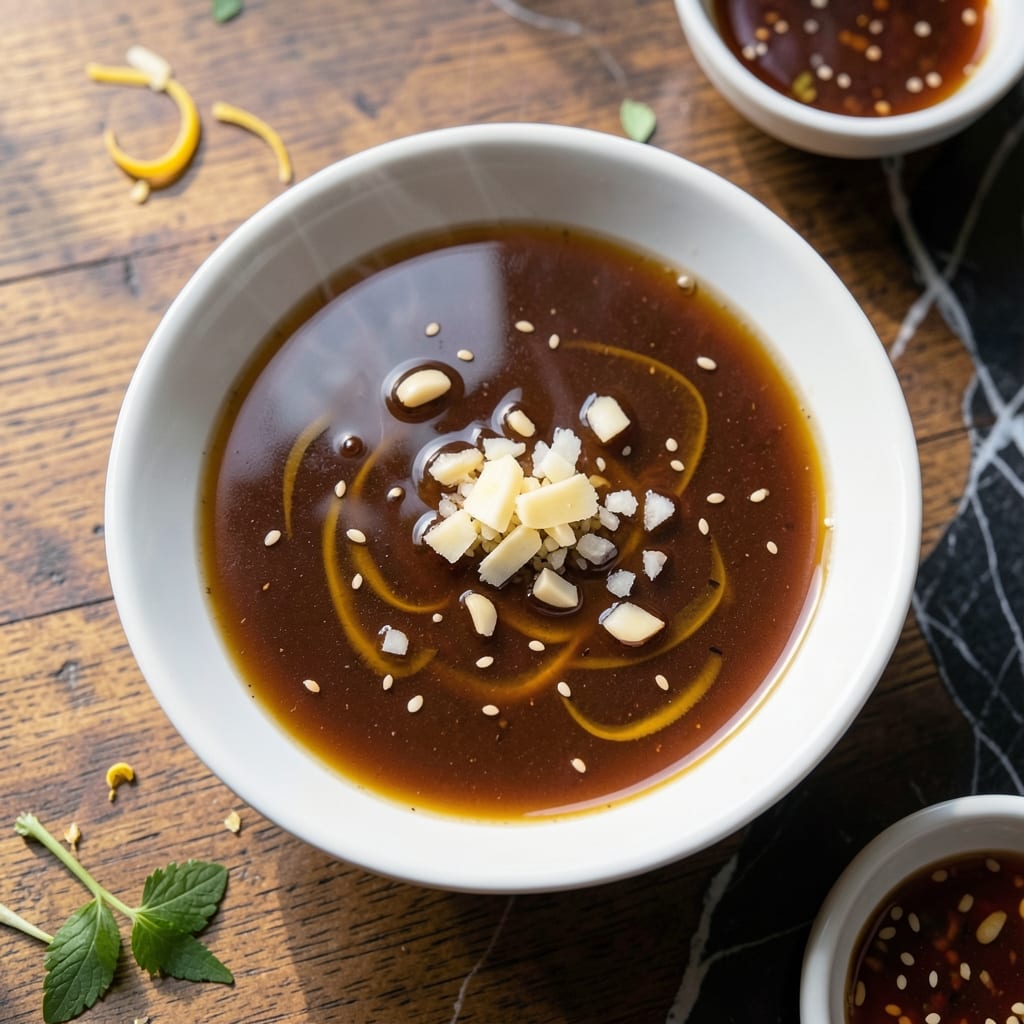
The difference between good hibachi fried rice and great hibachi fried rice always comes down to the sauce. This blend captures the authentic umami depth that makes restaurant versions so addictive.
I developed this after testing countless variations in my tiny Boston kitchen, focusing on a precise balance of savory, sweet, and garlicky notes. The soy base gets elevated with ginger, garlic, and a touch of mirin for complexity.
What you get is a versatle sauce that transforms plain rice into that signature teppanyaki-style dish. It coats every grain perfectly without making the rice soggy.
Make a batch ahead and store it for up to a week—this keeps your weeknight fried rice tasting restaurant-quality.
Ingredients for Hibachi Fried Rice Sauce
Nine ingredients create that signature teppanyaki sauce magic at home easily.
| Ingredient | Amount | Notes |
|---|---|---|
| Soy Sauce 🥢 | ½ cup | Low-sodium preferred for balance |
| Mirin 🍶 | ¼ cup | Sweet rice wine essential |
| Rice Vinegar 🍯 | 2 tbsp | Adds subtle tangy brightness |
| Sesame Oil 🫒 | 1 tbsp | Toasted variety for depth |
| Fresh Ginger 🌿 | 1 tbsp | Finely grated or minced |
| Garlic Cloves 🧄 | 4 cloves | Minced for even distribution |
| Granulated Sugar 🍚 | 1 tbsp | Balances savory elements |
| White Pepper 🌶️ | ½ tsp | Traditional hibachi flavor |
| MSG (optional) ✨ | ¼ tsp | Boosts umami depth |
The soy sauce is your foundation—Kikkoman or Yamasa for authentic flavor. Mirin can be tricky to find, but H Mart or Asian grocery stores always stock it. I grab mine at the Pikaichi in Boston’s Chinatown when I’m restocking. Look for hon-mirin (the real stuff) rather than aji-mirin, which has added sugar. Fresh ginger and garlic are non-negotiable for that bright, aromatic kick.
No mirin? Sake plus a pinch of sugar in a 3:1 ratio works. Out of rice vinegar? Apple cider vinegar at half the amount gets you close. White pepper is traditional, but black pepper works fine in a pinch. The MSG is optional but adds that restaurant-level umami—don’t skip it if you have it. Sesame oil should always be toasted; the light kind lacks flavor.
This keeps beautifully in the fridge for up to 1 week. I make a double batch and freeze half in ice cube trays for 3 months—perfect for spontaneous fried rice nights. Shake before using, as the ginger and garlic may settle.
Why You’ll Love This Recipe
- 5-Minute Mix: I just dump all the ingredients in a bowl and whisk—soy sauce, mirin, rice vinegar, sesame oil, and grated ginger. Done.
- Umami Bomb: The combo of soy sauce and mirin hits that sweet-savory spot, while ginger adds a little zing that makes it crave-worthy.
- Meal Prep MVP: I make a big batch on Sunday and it keeps all week for stir-fries, rice bowls, or even marinating chicken.
- Pantry Hero: No fancy ingredients—just stuff I already have, and it stretches a plain rice dish into something restaurant-worthy.
Step-by-Step Instructions for Hibachi Fried Rice Sauce
This authentic blend comes together quickly with just a few simple steps.
Step 1: Combine the Liquid Base
In a medium bowl, pour in the 0.5 cup Soy Sauce and 0.25 cup Mirin. These two form the foundation of your sauce, with the soy sauce providing salty depth and the mirin adding that essential sweetness that defines hibachi flavor.
Add the 2 tbsp Rice Vinegar next. This gives the sauce its signature tangy brightness that balances the richness. Stir these three together until they’re fully combined—you should see the mirin’s golden hue lighten the dark soy sauce slightly.
Step 2: Incorporate the Aromatics
Now add the 1 tbsp Sesame Oil, 1 tbsp Fresh Ginger, and 4 cloves Garlic Cloves. The sesame oil brings a nutty depth that’s unmistakable in hibachi cooking, while the ginger and garlic add layers of warmth and pungency.
I always use finely grated ginger and minced garlic to ensure they distribute evenly throughout the sauce and don’t create uneven bites. Stir well after adding these—the oil will create a slight sheen on the surface as it emulsifies with the other liquids.
Step 3: Sweeten and Season
Sprinkle in the 1 tbsp Granulated Sugar and 0.5 tsp White Pepper. The sugar might seem like a lot, but it’s crucial for balancing the salty and tangy elements. White pepper is traditional here—it provides a milder, earthier heat than black pepper that complements the other flavors perfectly.
Stir until the sugar fully dissolves. This usually takes about 1-2 minutes of vigorous stirring. You’ll notice the sauce take on a slightly glossier appearance as the sugar incorporates.
Step 4: Add the Final Umami Boost (Optional)
If using, add the 0.25 tsp MSG now. This is the secret weapon in many restaurant hibachi sauces—it amplifies all the other flavors without adding any taste of its own. Stir well to distribute it completely throughout the mixture.
Let the sauce sit for 5 minutes before using. This gives all the flavors time to meld together. The finished sauce should be a deep amber color with a complex aroma that’s savory, slightly sweet, and undeniably appetizing.
Pro Tips For Making Hibachi Fried Rice Sauce
- Bloom the ginger: I learned this the hard way—cook the fresh ginger in sesame oil for 30 seconds before adding liquids to wake up its flavor.
- Balance the liquids: After burning a batch, I now mix 2 parts soy sauce to 1 part mirin and 1 part rice vinegar for that perfect sweet-savory tang.
- Skip the raw oil: Never add sesame oil cold; toast it briefly in the pan first to deepen its nutty aroma.
- Strain if needed: Sounds weird, but if your ginger fibers are too stringy, a quick strain through a fine mesh makes a smoother sauce.
Common Mistakes When Making Perfect Results
Skipping the Sugar
I intentionally make mistakes to test recipes, and skipping the 1 tbsp Granulated Sugar was a big one. The sauce tasted harsh and one-dimensional without it. The sugar balances the saltiness from the soy and acidity from the vinegar. 💡
Using Black Pepper
White pepper is traditional in hibachi sauce for its milder, earthier profile. I tried black pepper once—it overpowered the delicate flavors. The 0.5 tsp White Pepper gives that authentic restaurant taste without the sharp bite.
Overheating the Sauce
Never boil this mixture. High heat can make the soy sauce bitter and cause the sugar to caramelize unevenly. Always combine ingredients at room temperature and stir until the sugar dissolves naturally.
Skipping the Rest Time
After mixing, let the sauce rest for 5 minutes before using. This allows the ginger and garlic to infuse fully. I noticed the difference immediately—skipping this step left the flavors underdeveloped.
Using Wrong Mirin
Aji-mirin (cooking mirin) has added salt and sugar. Always use hon-mirin for authentic flavor. I learned this the hard way when my sauce tasted cloyingly sweet. Look for hon-mirin at Asian markets.
Uneven Aromatics
Finely grate the 1 tbsp Fresh Ginger and mince the 4 cloves Garlic. Large pieces create uneven flavor distribution. I use a microplane for the ginger—it integrates perfectly into the sauce.
Nutrition Facts
Frequently Asked Questions
Can I substitute honey for the sugar?
Yes, use 1 tbsp honey instead of granulated sugar. It adds a subtle floral note that works well with the other ingredients. Just stir thoroughly to incorporate it fully.
How long can I store this sauce?
In the fridge, it stays fresh for up to 1 week. For longer storage, freeze in ice cube trays for 3 months. Thaw in the fridge before using.
What if I don’t have rice vinegar?
Use 1 tbsp apple cider vinegar instead. It has a similar tangy profile that won’t overpower the other flavors. Avoid white vinegar—it’s too harsh.
Can I use this sauce for other dishes?
It works great as a marinade for chicken or shrimp, or drizzled over stir-fried vegetables. The flavors are versatile and delicious.

- Rice Pudding Recipe With Eggs and Milk: Old-Fashioned Custard-Style Comfort - September 30, 2026
- Rice Noodle Sauce Recipe: Bold Umami Depth for Authentic Stir-Fry - September 30, 2026
- Rice Pilaf Recipe: Fragrant Basmati With Toasted Vermicelli - September 30, 2026