
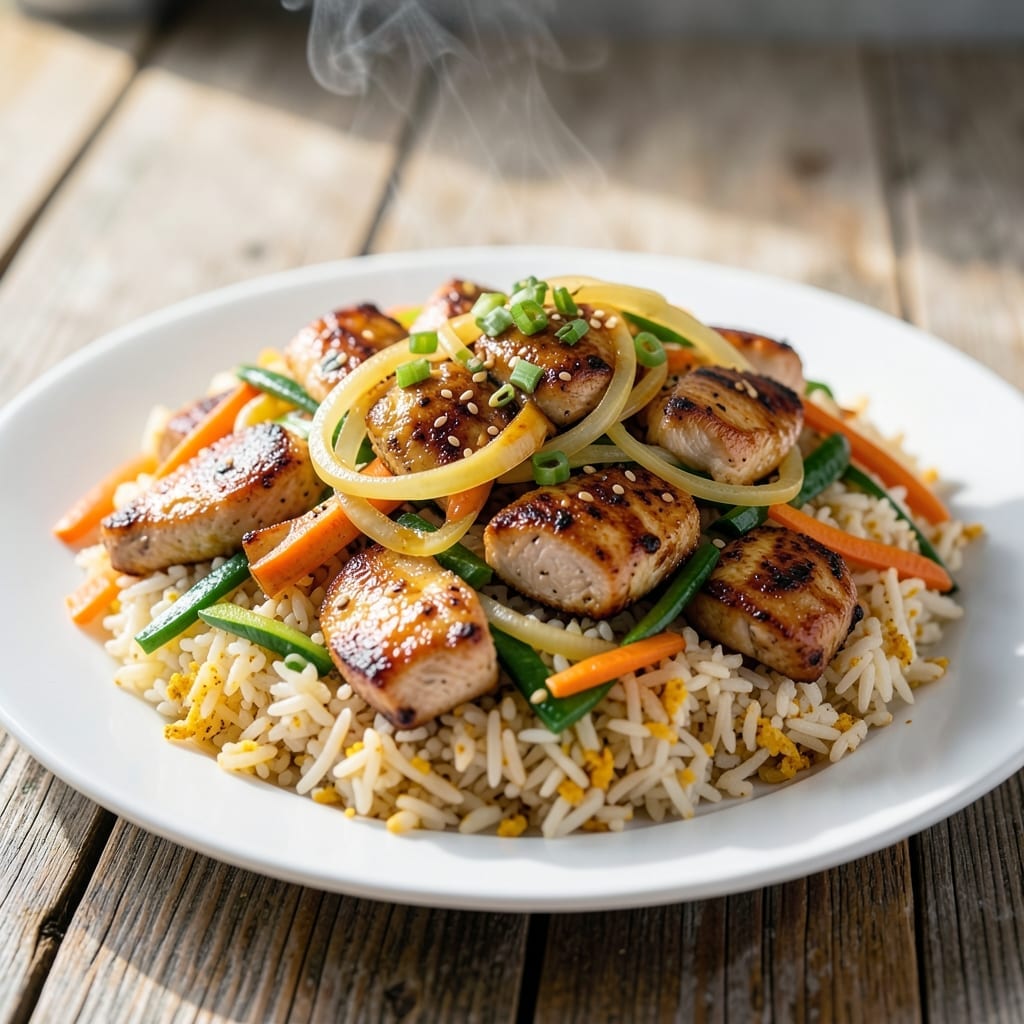
This recipe brings the smoky, charred flavors of a hibachi grill to your home kitchen. I developed this method after countless nights perfecting the technique at my restaurant, ensuring every grain of rice gets that signature wok-kissed taste.
The secret lies in high heat and precise timing. Cooking the chicken and vegetables separately before combining with day-old rice prevents sogginess while maximizing flavor. Each bite delivers that unmistakable smoky depth hibachi is known for.
You’ll achieve tender chicken pieces, crisp vegetables, and rice with just the right amount of char. The soy-based sauce ties everything together with a savory finish that’s both rich and balanced.
Serve this straight from the wok for an authentic experience. Here’s how to recreate that restaurant-quality dish at home.
Ingredients for Hibachi Style Chicken Fried Rice
Nothing exotic here—just bold flavors and a hot wok ready to shine.
| Ingredient | Amount | Notes |
|---|---|---|
| Boneless Skinless Chicken Thighs 🍗 | 1 ½ lb | Cut into bite-sized pieces |
| Day-Old Cooked White Rice 🍚 | 4 cups | Cold and dry, preferably leftover |
| Large Eggs 🥚 | 2 whole | Lightly beaten for scrambling |
| Yellow Onion 🧅 | 1 whole | Medium, finely diced |
| Carrots 🥕 | 2 whole | Medium, small diced |
| Zucchini 🥒 | 1 whole | Medium, small diced |
| Garlic Cloves 🧄 | 3 cloves | Minced for maximum flavor |
| Fresh Ginger 🌿 | 1 tbsp | Finely grated or minced |
| Soy Sauce 💧 | ⅓ cup | Low-sodium recommended for control |
| Sesame Oil 🫒 | 1 tbsp | Toasted for depth of flavor |
| Vegetable Oil 🫒 | 3 tbsp | High smoke point for wok frying |
| Green Onions 🧅 | 3 whole | Thinly sliced for garnish |
| Frozen Peas 🌱 | ½ cup | Thawed, for color contrast |
| Salt 🧂 | ½ tsp | Kosher or sea salt preferred |
| Black Pepper 🌶️ | ½ tsp | Freshly ground for best aroma |
The chicken is the star here. Thighs stay juicier than breasts in high heat—look for boneless, skinless at Costco or your butcher for the best texture. Day-old rice is non-negotiable (fresh gets mushy), so plan ahead or make extra the night before. The wok matters too—carbon steel gets the hottest (that smoky char comes from the Maillard reaction, not smoke flavor).
No chicken? Shrimp or tofu work great—just pat tofu dry first. Swap peas for edamame or corn if that’s what you’ve got. Out of sesame oil? Extra soy sauce plus a pinch of sugar mimics the depth. Fresh ginger is ideal but ground ginger at half the amount works in a pinch. The green onions? Skip if you must, but they add that fresh finish.
Cooked rice keeps 4-5 days in the fridge (perfect for fried rice later). Chicken freezes beautifully for 3 months—portion it raw for easy thawing. Leftovers? Reheat in a skillet with a splash of water to restore that wok-fried texture. Never microwave—it kills the char.
Why You’ll Love This Recipe
- One Pan Meal: I love that everything—chicken, rice, veggies—gets cooked in the same pan, so cleanup is a breeze.
- Umami Bomb: The chicken thighs bring this rich, savory depth that makes every bite taste like takeout.
- Meal Prep Hero: I make a big batch on Sunday and it reheats beautifully for lunches all week.
- Budget Stretcher: Honestly, using day-old rice and affordable thighs keeps this dish easy on the wallet without sacrificing flavor.
Step-by-Step Instructions for Hibachi Chicken Fried Rice
Here’s the method. Straightforward, tested, works every time.
Step 1: Prep Chicken and Aromatics
Cut the 1.5 lb boneless skinless chicken thighs into bite-sized pieces. Season with ½ tsp salt and ½ tsp black pepper, then toss to coat evenly. I like to do this first so the chicken has a few minutes to absorb the seasoning while I prep the rest.
Finely dice the yellow onion, 2 carrots, and zucchini into small, uniform pieces for even cooking. Mince the 3 cloves garlic cloves and grate the 1 tbsp fresh ginger. Thinly slice the 3 green onions, separating the whites and greens. Thaw the ½ cup frozen peas under running water and drain well.
Step 2: Scramble Eggs and Cook Chicken
Heat 1 tbsp vegetable oil in a wok or large skillet over high heat until shimmering. Add the 2 lightly beaten large eggs and scramble quickly until just set but still slightly runny. Remove the eggs and set aside—they’ll finish cooking when added back later.
Add the remaining 2 tbsp vegetable oil to the same pan. Once hot, add the seasoned chicken in a single layer. Cook undisturbed for 2-3 minutes until golden brown on the bottom. Stir-fry for another 2 minutes until cooked through. Transfer to the bowl with the eggs.
Step 3: Stir-Fry Vegetables and Rice
In the same pan, add the diced yellow onion, carrots, and zucchini. Stir-fry over high heat for 4-5 minutes until the vegetables soften and develop slight char. Add the minced garlic and grated ginger, then cook for 30 seconds until fragrant.
Add the cold 4 cups day-old cooked white rice, breaking up any clumps with your spatula. Stir-fry for 2-3 minutes to toast the rice slightly. This step is crucial—it prevents the dish from turning mushy.
Step 4: Combine and Finish with Sauce
Return the chicken and eggs to the pan. Drizzle in the ⅓ cup soy sauce and 1 tbsp sesame oil. Add the green onion whites and thawed peas. Stir-fry for 2-3 minutes until everything is heated through and the rice has absorbed the sauce.
Taste and adjust seasoning if needed. The rice should have a light char and a glossy sheen from the sauce. Garnish with the green onion greens and serve immediately while hot. The smoky wok flavor and tender chicken make this irresistible.
Pro Tips For Making Hibachi Style Chicken Fried Rice
- Crank the Heat: Hibachi rice needs screaming-hot surfaces—get your pan or griddle ripping hot before adding oil, then keep it there. I learned this the hard way after too many batches of soggy, sad fried rice.
- Dry the Rice: Day-old rice is non-negotiable, but give it a quick spread on a tray for 10 minutes before cooking to evaporate any lingering moisture. Sounds weird, but it works: your rice will fry, not steam.
- Salt the Chicken Twice: Season the thighs before cooking, then hit them with another pinch of salt after chopping—this keeps every bite flavorful, not just the surface. My grandmother swore by this, and she was right.
- Push Eggs to the Side: Scramble the eggs in the same pan, but shove them to one side while they cook so they stay soft and distinct. Skip the crowding, or you’ll end up with rubbery bits instead of those perfect, fluffy curds.
Dietary Considerations for This hibachi style chicken fried rice
Gluten-Free Adaptations
Swap regular soy sauce for tamari or a certified gluten-free soy alternative like San-J brand. Double-check all labels, as some sesame oils contain additives. I keep a separate wok for gluten-free cooking to prevent cross-contamination. 💪
Lower Sodium Options
Use low-sodium soy sauce and reduce to ¼ cup. Boost flavor with extra garlic and ginger instead of salt. Fresh herbs like cilantro or Thai basil add brightness without sodium. I find this keeps the dish just as satisfying.
Dairy-Free and Egg-Free
Omit the eggs entirely or replace with ½ cup crumbled tofu for similar texture. The dish won’t suffer—hibachi’s smoky char shines through. For vegan versions, use chickpeas or tempeh instead of chicken.
Vegetable Variations
Add bell peppers or broccoli for extra fiber and color. These hold up well to high heat. For a low-carb option, substitute cauliflower rice for white rice, but cook it quickly to avoid mushiness.
Protein Swaps
Try shrimp (peeled and deveined) or thinly sliced beef like flank steak. Cook shrimp just until pink, 2-3 minutes. For beef, slice against the grain for tenderness. Both absorb the hibachi flavors beautifully.
Allergen Awareness
For nut allergies, confirm your sesame oil is processed in a nut-free facility. Avocado oil makes a safe substitute with a high smoke point. Always ask guests about allergies—hibachi often includes hidden soy or sesame. 💡
Nutrition Facts
Frequently Asked Questions
Why use day-old rice?
Fresh rice contains too much moisture, which turns fried rice mushy. Day-old rice is drier and absorbs flavors better while achieving that desired light char.
Can I use chicken breast instead of thighs?
Yes, but thighs stay juicier in high heat. If using breast, cut into small pieces and cook for 1-2 minutes less to prevent dryness.
How do I get that smoky hibachi flavor at home?
Use high heat and a carbon steel wok. Let ingredients sit undisturbed for 30-60 seconds to develop char. The Maillard reaction creates that signature taste.
What if my rice turns out soggy?
Spread it on a baking sheet and refrigerate uncovered for 10-15 minutes to dry out. Next time, use cold rice and cook in smaller batches.

- Jollof Rice Sauce Recipe: West African Tomato and Spice Infusion - September 25, 2026
- Japanese Rice Soup Recipe: Umami-Rich Comfort in a Bowl - September 25, 2026
- Homemade Cream Of Rice Recipe: Silk-Smooth Breakfast in Minutes - September 25, 2026