
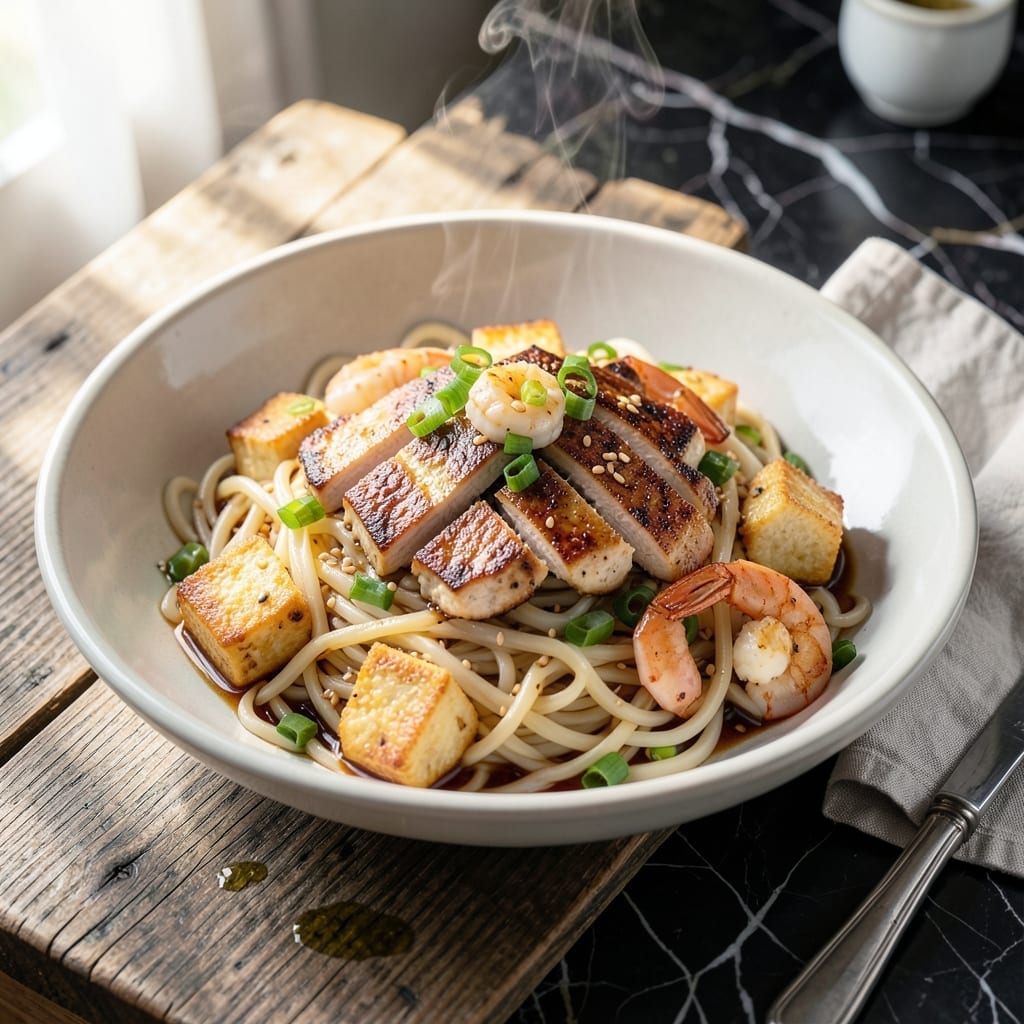
I developed this dish after testing countless variations in my small Boston kitchen, seeking a high-protein meal that didn’t sacrifice flavor.
The secret lies in the wok-tossed method, which allows the rice noodles and lean protein to absorb maximum flavor while maintaining perfect texture.
This recipe combines quick-cooking noodles with your choice of protein—chicken, shrimp, or tofu—all brought together with a savory sauce that clings to every strand.
What you get is a satisfying, balanced meal that’s ready in 20 minutes and packed with protein to keep you full for hours.
Ingredients for High Protein Rice Noodle
Lean protein, chewy noodles, and a sauce that clings to every bite. Simple enough.
| Ingredient | Amount | Notes |
|---|---|---|
| Rice Noodles 🍜 | 8 oz | Flat pad thai style preferred |
| Boneless Skinless Chicken Breast 🍗 | 1 lb | Thinly sliced for quick cooking |
| Shrimp 🍤 | ½ lb | Peeled and deveined, optional |
| Firm Tofu 🧈 | 14 oz | Pressed and cubed, optional |
| Soy Sauce 🫒 | ⅓ cup | Low-sodium preferred for balance |
| Oyster Sauce 🫒 | 2 tbsp | Or vegetarian oyster sauce |
| Fish Sauce 🐟 | 1 tbsp | Or soy sauce for vegetarian |
| Sesame Oil 🫒 | 1 tbsp | Toasted for depth of flavor |
| Rice Vinegar 🍋 | 2 tbsp | Or lime juice for brightness |
| Brown Sugar 🧈 | 2 tbsp | Packed for sweetness balance |
| Garlic Cloves 🧄 | 4 cloves | Minced for sauce base |
| Ginger Root 🌿 | 1 tbsp | Freshly grated for aroma |
| Green Onions 🧅 | 4 whole | Thinly sliced for garnish |
| Peanuts 🥜 | ½ cup | Crushed for texture, optional |
| Lime 🍈 | 1 whole | Cut into wedges for serving |
The protein choice is yours—chicken breast from Market Basket is my go-to (slices thin for even cooking), but shrimp from Whole Foods adds sweetness, and extra-firm tofu works great if you press it well (the good stuff, not the watery kind). For noodles, pad thai rice sticks are standard, but any flat rice variety does the trick. Look for ones labeled “stir-fry” or “pad thai” at Trader Joe’s.
No oyster sauce? Vegetarian oyster sauce or hoisin works fine. Fish sauce can be swapped for more soy sauce (use half the amount to avoid over-salting). Brown sugar can be coconut sugar, but avoid granulated—it doesn’t dissolve as smoothly. The peanuts are optional but add great crunch. If allergies are a concern, cashews or sesame seeds make good stand-ins.
Leftovers keep 3-4 days in the fridge, but the noodles soften over time (worth the extra minute to reheat in a skillet). Sauce components can be mixed ahead—just combine and store for up to 1 week. Protein cooks fresh, though.
Why You’ll Love This Recipe
- One Pot Wonder: I just toss the chicken, shrimp, and tofu into the same pan with the rice noodles—minimal cleanup, maximum protein.
- Umami Bomb: The soy sauce soaks into every strand of noodle while the chicken and shrimp add that rich, savory depth I crave.
- Meal Prep Hero: Honestly, this tastes even better the next day, and I can swap proteins based on what’s in my fridge.
- Budget Stretcher: A little chicken and tofu go a long way here, and rice noodles are dirt cheap—feeds my family for pennies per serving.
Step-by-Step Instructions for Wok-Tossed High Protein Noodles
Here’s my proven method for achieving that perfect balance of lean protein and vibrant flavors.
Step 1: Prepare the Rice Noodles and Protein Base
Soak the 8 oz Rice Noodles in warm water for 15-20 minutes until pliable but still slightly firm. Drain and set aside. Meanwhile, thinly slice the 1 lb Boneless Skinless Chicken Breast against the grain into ¼-inch strips. If using, peel and devein the 0.5 lb Shrimp, and press and cube the 14 oz Firm Tofu.
This prep work ensures even cooking and optimal texture. The noodles should be flexible but not mushy—they’ll finish cooking in the wok. Pat all proteins dry with a paper towel to promote better browning.
Step 2: Create the Flavor Foundation
In a small bowl, whisk together the 0.33 cup Soy Sauce, 2 tbsp Oyster Sauce, 1 tbsp Fish Sauce, 1 tbsp Sesame Oil, 2 tbsp Rice Vinegar, and 2 tbsp Brown Sugar until the sugar dissolves. Mince the 4 cloves Garlic Cloves and grate the 1 tbsp Ginger Root.
The sauce should be glossy and well-combined. Taste and adjust the balance if needed—this is your flavor backbone. The garlic and ginger will bloom in the next step, releasing their aromatic compounds.
Step 3: Stir-Fry the Protein and Aromatics
Heat a wok or large skillet over high heat until smoking. Add a neutral oil, then the chicken in a single layer. Sear undisturbed for 1-2 minutes until lightly browned, then stir-fry until just cooked through. Remove and set aside.
In the same pan, add the shrimp and tofu (if using) and repeat the process. Then add the minced garlic and grated ginger, stir-frying for 30 seconds until fragrant—don’t let them burn. Return all proteins to the wok.
Step 4: Combine and Finish
Add the drained rice noodles and the prepared sauce to the wok. Toss everything together over high heat for 2-3 minutes until the noodles are tender and coated in the glossy sauce. The noodles should absorb most of the liquid but still glisten.
Add the thinly sliced 4 whole Green Onions and toss to combine. The green onions should soften slightly but retain their bright color and crisp texture.
Step 5: Garnish and Serve
Transfer to serving plates and top with the crushed 0.5 cup Peanuts. The peanuts add a satisfying crunch and nutty depth. Serve immediately with lime wedges from the 1 whole Lime on the side for a bright, citrusy finish.
Each serving should have a generous mix of protein and noodles, all glistening with sauce. The lime juice will cut through the richness and enhance all the flavors—squeeze it over just before eating.
Pro Tips For Making High Protein Rice Noodle
- Parboil the Noodles: Soak rice noodles in hot water for 3-4 minutes until pliable but still firm, then drain—I learned this the hard way after ending up with mushy noodles that turned to paste in the wok.
- Velvet Your Chicken: Toss sliced chicken breast with 1 tsp cornstarch and 1 tbsp soy sauce before cooking; it keeps the lean meat juicy instead of dry and stringy.
- Shrimp Last: Add shrimp to the pan only in the final 2-3 minutes of stir-frying, or they’ll turn rubbery while you’re still cooking the tofu and chicken.
- Press the Tofu: Wrap firm tofu blocks in a clean towel, place a heavy pan on top for 15 minutes to squeeze out excess water—this is the only way to get it to brown properly instead of steam.
Creative Variations of This high protein rice noodle
Thai Peanut Twist
Add ¼ cup creamy peanut butter to your sauce mixture for a rich, nutty flavor. Thin it with 2-3 tbsp hot water to maintain the perfect consistency. I love how this variation adds extra protein and a velvety texture that clings to the noodles. 🌟
Spicy Sriracha Boost
For heat lovers, stir in 1-2 tbsp sriracha or 1 tsp chili garlic sauce into the sauce. This adds a kick without overpowering the dish. I tested this in my Boston kitchen and found it pairs especially well with shrimp.
Vegetable-Packed Version
Add 2 cups mixed veggies like bell peppers, snap peas, or carrots when stir-frying the aromatics. This boosts fiber and nutrients while keeping the dish light. My Irish-Italian family loves this for a more balanced meal.
Teriyaki Glaze Style
Replace the rice vinegar with 2 tbsp mirin and add 1 tbsp honey to the sauce for a sweeter profile. This creates a glossy teriyaki-like glaze that’s irresistible. I get my mirin from the local Asian market near my triple-decker.
Coconut Curry Fusion
Swap the soy sauce for ½ cup coconut milk and add 1 tbsp red curry paste. This Thai-inspired version is creamy and aromatic. The coconut milk adds healthy fats while complementing the lean protein beautifully.
Lemon-Garlic Light
For a brighter flavor, reduce the brown sugar to 1 tbsp and add zest of 1 lemon to the sauce. This lighter version lets the protein shine while keeping all the satisfaction. Perfect for those watching their sugar intake. 💡
Nutrition Facts
Frequently Asked Questions
Can I use other noodles instead of rice?
Yes, but texture will differ. Try whole wheat or chickpea noodles for extra protein. Rice noodles have the best chew for this dish.
How do I prevent the noodles from sticking?
Use high heat and keep everything moving. A well-seasoned wok helps too. Stir-fry in small batches if needed.
Is this dish gluten-free?
Use tamari instead of soy sauce and check oyster sauce labels. Rice noodles are naturally gluten-free.
Can I meal prep this?
Store components separately for best texture. Keeps 3-4 days in fridge. Reheat in skillet with splash of water.

- Ground Beef Rice and Beans Recipe: Slow-Simmered Savory Harmony - October 17, 2026
- Guyanese Fried Rice Recipe: Caribbean Spice With Wok-Charred Aromatics - October 17, 2026
- Hakka Thunder Tea Rice Recipe: Wok-Charred Herbal Infusion - October 17, 2026