
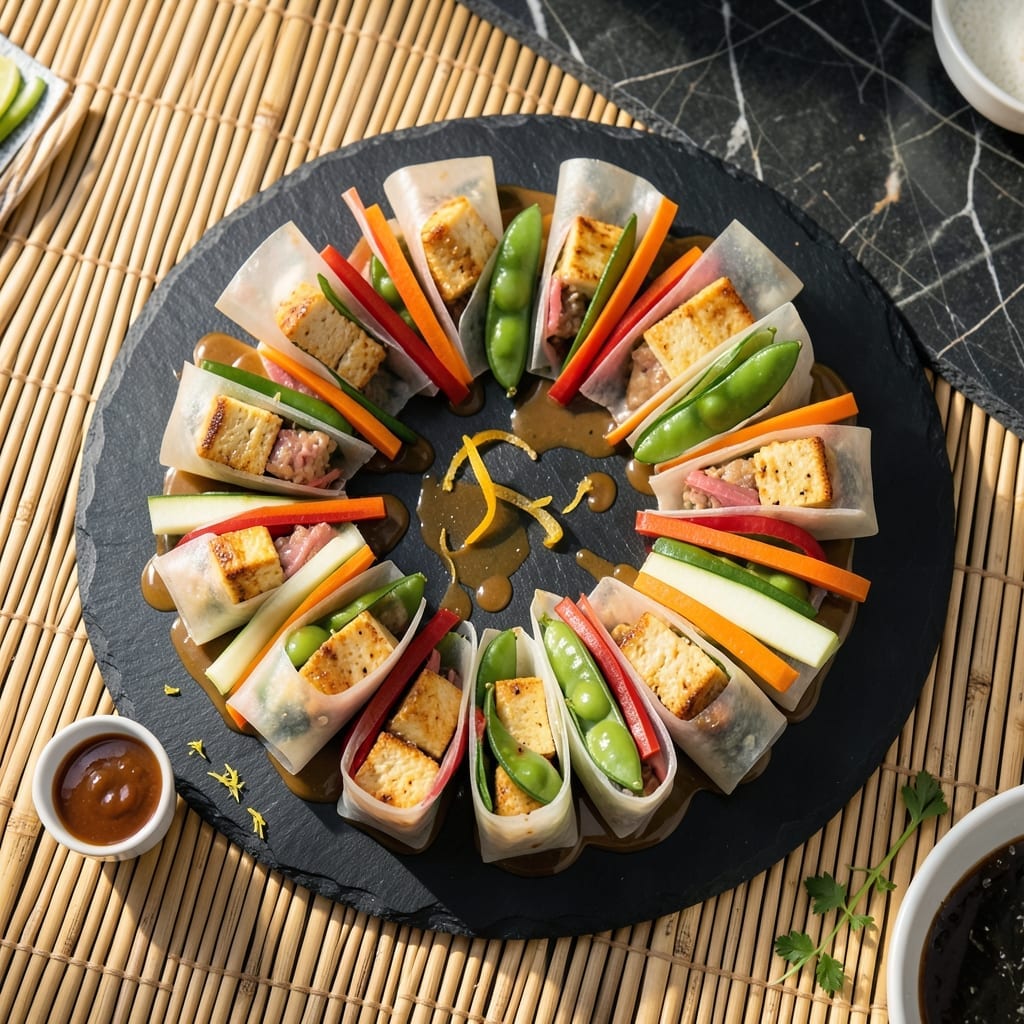
I developed this recipe after testing countless variations in my small Boston kitchen, seeking the perfect balance of texture and protein.
What sets these rolls apart is the combination of fresh herbs, crisp vegetables, and protein-rich additions like tofu or edamame. The peanut satay sauce adds a creamy, nutty element that ties everything together.
You’ll create vibrant, restaurant-quality rolls packed with flavor and nutrition. Each bite delivers a satisfying mix of crunch, freshness, and protein.
Ideal for meal prep or serving as a light yet filling main course.
Ingredients for High Protein Rice Paper Rolls
Vibrant herbs, crisp veggies, and protein-packed tofu come together in these fresh rolls.
| Ingredient | Amount | Notes |
|---|---|---|
| Rice Paper Wrappers 🌯 | 8 sheets | 22cm diameter, spring roll variety |
| Extra-Firm Tofu 🧈 | 14 oz | Pressed, drained, and cubed |
| Edamame 🫛 | 1 cup | Shelled, blanched, and cooled |
| Red Bell Pepper 🌶️ | 1 whole | Thinly julienned for crunch |
| Carrots 🥕 | 2 whole | Peeled and julienned |
| Cucumber 🥒 | 1 whole | Seeds removed, matchstick cut |
| Fresh Mint Leaves 🌿 | ½ cup | Loosely packed, torn |
| Fresh Cilantro Leaves 🌿 | ½ cup | Loosely packed, stems removed |
| Fresh Thai Basil 🌿 | ¼ cup | Loosely packed, torn |
| Rice Vermicelli Noodles 🍜 | 3 oz | Cooked and cooled |
| Peanut Butter 🥜 | ½ cup | Natural, unsweetened, creamy |
| Soy Sauce 🫒 | 3 tbsp | Low-sodium preferred |
| Lime Juice 🍋 | 2 tbsp | Freshly squeezed |
| Maple Syrup 🍁 | 1 tbsp | Grade A or B |
| Garlic Cloves 🧄 | 2 cloves | Minced finely |
The tofu is your protein anchor here. Wildwood or Nasoya extra-firm holds its shape best after pressing—look for the water-packed kind, not vacuum-sealed. For rice paper, Three Ladies Brand is my go-to (found at most Asian markets or Amazon). Edamame adds a nice pop of protein too—Seapoint Farms makes a great frozen organic version. Fresh herbs are non-negotiable for that bright, restaurant-quality flavor (Boston’s Copley Square Farmers Market has amazing Thai basil in summer).
No tofu? Tempeh or seitan work great—just slice thin and blanch to soften. Peanut allergy? Sunflower seed butter at a 1:1 ratio makes a solid satay swap (add a pinch of salt since it’s less salty). The vermicelli can be skipped if you’re going low-carb, but it adds a nice chew. For the peanut sauce, Smucker’s Natural is a reliable grocery store option—just stir well before measuring.
Rice paper keeps 6-12 months in a cool, dry pantry. Prep all your fillings ahead—2-3 days in the fridge is fine (store herbs wrapped in damp paper towels). The satay sauce thickens as it chills, so thin with a splash of warm water before serving. Rolls are best fresh but hold 1 day wrapped tightly in the fridge.
Why You’ll Love This Recipe
- No-Cook Assembly: I just soak, stuff, and roll—no oven or stove needed. Honestly, it’s the laziest way to pack in protein.
- Crunchy Freshness: The edamame and bell pepper stay crisp, and that tofu gives it a satisfying bite. Here’s what sold me—the texture combo is spot-on.
- Meal Prep Hero: I make a batch Sunday and they keep beautifully for three days. My go-to for desk lunches that don’t get soggy.
- Budget Stretcher: Extra-firm tofu and frozen edamame are cheap protein powerhouses. I’ll be real: this feeds four for less than a takeout salad.
Step-by-Step Instructions for High Protein Rice Paper Rolls
Here’s the method. Straightforward, tested, works every time.
Step 1: Prepare the Filling Components
Start by pressing the 14 oz Extra-Firm Tofu between paper towels for 15 minutes to remove excess moisture, then cube it into ½-inch pieces. Meanwhile, blanch the 1 cup Edamame in boiling water for 2 minutes, then shock in ice water to preserve the bright green color.
Julienne the 1 whole Red Bell Pepper, 2 whole Carrots, and 1 whole Cucumber (with seeds removed) into matchstick-sized pieces. These need to be thin enough to roll easily but thick enough to provide satisfying crunch. Tear the 0.5 cup Fresh Mint Leaves, 0.5 cup Fresh Cilantro Leaves, and 0.25 cup Fresh Thai Basil by hand to release their aromatic oils.
Soak the 3 oz Rice Vermicelli Noodles in hot water for 5-7 minutes until tender, then drain and rinse under cold water. Cut them into 3-inch lengths for easier rolling. All fillings should be at room temperature before assembling to prevent the rice paper from tearing.
Step 2: Make the Peanut Satay Sauce
In a small bowl, whisk together the 0.5 cup Peanut Butter, 3 tbsp Soy Sauce, 2 tbsp Lime Juice, 1 tbsp Maple Syrup, and 2 cloves minced Garlic Cloves until completely smooth. The sauce should be thick but pourable—add a teaspoon of warm water if needed to achieve the right consistency.
This satay sauce is the protein powerhouse of your dish, adding both flavor and staying power. I always let it sit for 5 minutes after mixing to allow the flavors to meld. The garlic should be finely minced so it distributes evenly throughout the sauce without overpowering any single bite.
Step 3: Soften and Fill the Rice Paper Wrappers
Fill a shallow dish with warm water. Submerge one Rice Paper Wrapper at a time for 10-15 seconds until pliable but still slightly firm—it will continue to soften as you work. Lay it flat on a clean surface and arrange a small portion of each filling in the lower third: a few cubes of tofu, some noodles, edamame, and a mix of vegetables and herbs.
Don’t overfill—this is the most common mistake. The fillings should form a neat line about 4 inches long and 1 inch high. Overfilling makes rolling difficult and often leads to tearing. The herbs should be distributed evenly so every bite has that fresh, aromatic punch.
Step 4: Roll and Seal the Wraps
Fold the sides of the wrapper inward over the fillings, then roll tightly from the bottom up, similar to a burrito. The rice paper should be taut but not stretched. Place each finished roll seam-side down on a serving platter to help it hold its shape.
Work quickly but carefully—rice paper dries out fast. If it tears slightly, don’t worry; just patch it with a small piece of dry wrapper moistened with water. The rolls should be firm enough to hold their shape but still slightly springy to the touch.
Cover the finished rolls with a damp towel to prevent drying while you work. This also keeps them from sticking together. Once all 8 sheets are rolled, you’re ready to serve.
Step 5: Serve with Satay Sauce
Arrange the rolls on a platter with the peanut satay sauce on the side for dipping. For best presentation, cut each roll in half diagonally to reveal the colorful fillings inside. The sauce should be at room temperature for optimal dipping consistency.
These rolls are best served immediately while the rice paper is still slightly tacky and the fillings are fresh. If you need to store them, wrap tightly in plastic and refrigerate for up to 4 hours, but be aware the rice paper will toughen slightly. Serve with extra herbs and lime wedges for garnish.
Pro Tips For Making High Protein Rice Paper Rolls
- Press the Tofu: Use a clean kitchen towel to squeeze out every drop of water from the extra-firm tofu before cooking—20 minutes under a heavy pan works best. I learned this the hard way after my first few batches turned to mush.
- Soften the Wrappers: Dip each rice paper wrapper in warm water for exactly 5-7 seconds, then lay flat on a damp towel. Any longer and they’ll tear when you try to roll them.
- Julienne the Veggies: Cut the carrots and red bell pepper into thin, matchstick strips—about 2 inches long. Sounds tedious, but it makes rolling tighter and every bite more balanced.
- Skip Raw Edamame: Blanch the edamame in boiling water for 2 minutes first. Raw beans can be tough and ruin the texture, and I was skeptical until I tried it.
Essential Equipment for high protein rice paper rolls
Rice Paper Essentials
For perfect rolls every time, use a shallow glass dish (like a pie plate) for soaking—it gives you the right surface area. I found mine at a Boston thrift store for $3. Fill it with warm water, about 90°F, so the wrappers soften without cooking. 💡
Cutting Tools
A sharp chef’s knife and cutting board are non-negotiable for julienning veggies into thin, even strips. I swear by my 8-inch Wüsthof—it’s handled every herb and vegetable in my tiny kitchen. Keep a damp towel under your board to prevent slipping.
Pressing Tofu
Tofu needs proper pressing to absorb flavors. Use a tofu press or improvise with a cast iron skillet on top of wrapped tofu. I pressed my first block between two Boston Public Library books—worked like a charm! Aim for 15-20 minutes of pressing time.
Mixing Bowls
Have at least 3 mixing bowls ready: one for sauce, one for noodles, and one for prepped veggies. I use stainless steel from IKEA—they nest for storage in my compact space. This keeps your workflow organized and efficient.
Serving Platters
A large, flat platter is ideal for displaying rolls. I use a bamboo sushi tray that also doubles as a serving piece. Line it with butter lettuce leaves to prevent sticking and add visual appeal. The rolls look restaurant-worthy every time. 🌟
Damp Towels
Keep 2-3 clean kitchen towels damp and ready. They’re essential for covering rice paper to prevent drying and for wrapping finished rolls. I learned this trick after too many dried-out wrappers in my early testing days.
Nutrition Facts
Frequently Asked Questions
Can I make these rolls ahead of time?
Yes, but they’re best fresh. Wrap tightly in plastic and refrigerate for up to 4 hours. The rice paper will toughen slightly, so serve at room temperature.
What can I use instead of tofu?
Try tempeh, seitan, or shrimp for non-vegan options. For extra crunch, add 1 cup of blanched snap peas or bean sprouts.
Why did my rice paper tear?
Overfilling or over-soaking are common culprits. Soak for only 10-15 seconds and keep fillings to 1 inch high. Work on a damp surface to prevent sticking.
Can I use another sauce?
Hoisin, sweet chili, or a spicy sriracha-lime sauce pair well. For a lighter option, try a ginger-soy dipping sauce.

- Ground Beef Rice and Beans Recipe: Slow-Simmered Savory Harmony - October 17, 2026
- Guyanese Fried Rice Recipe: Caribbean Spice With Wok-Charred Aromatics - October 17, 2026
- Hakka Thunder Tea Rice Recipe: Wok-Charred Herbal Infusion - October 17, 2026