
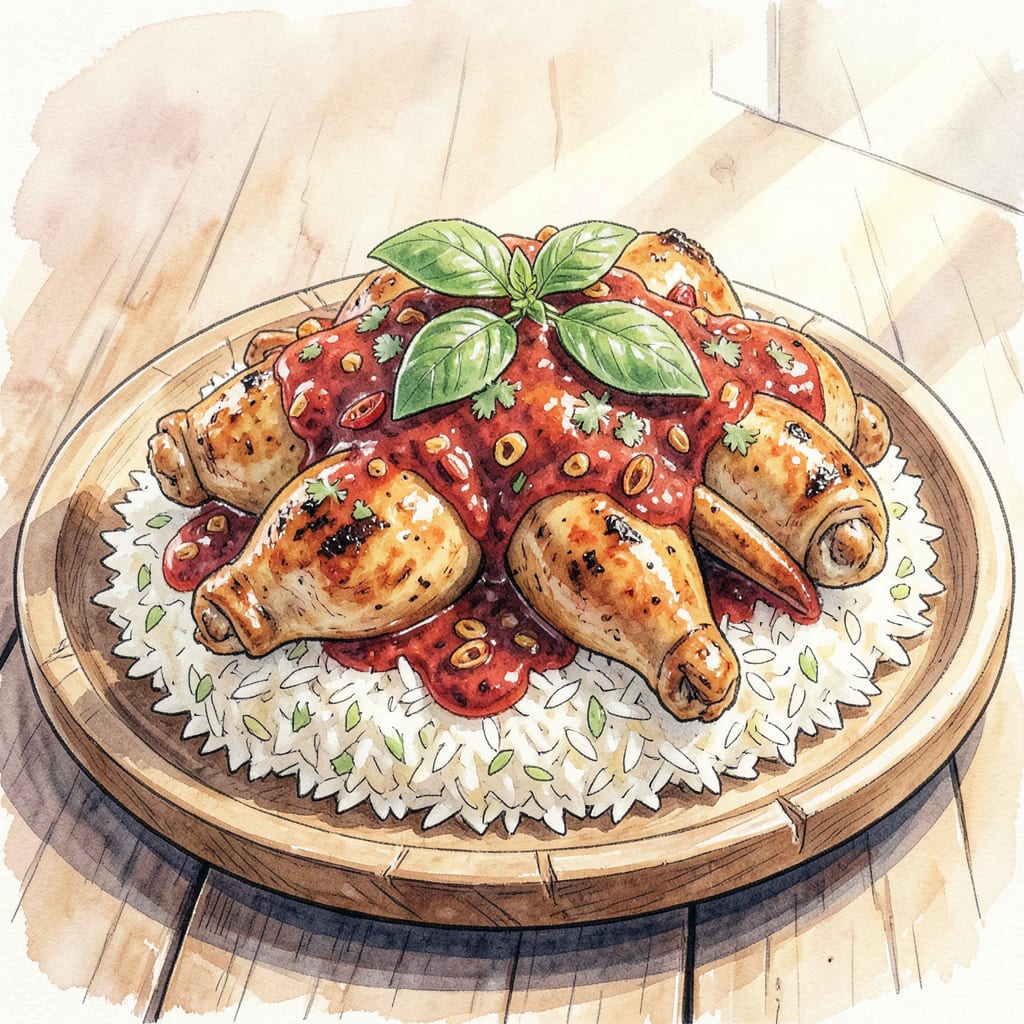
I’ve fallen in love with the bold flavors of Hmong cuisine, particularly their signature spicy chicken dish. This recipe brings authentic Southeast Asian flavors to your table with marinated chicken cooked to perfection.
The combination of chilies, garlic, and herbs creates a complex flavor profile that’s both spicy and aromatic. Serve with steamed rice to balance the heat and enjoy a truly satisfying meal that’s ready in under an hour.
Ingredients for Hmong Chicken
Simple ingredients, bold flavors. This Hmong chicken dish comes together quickly.
| Ingredient | Amount | Notes |
|---|---|---|
| Chicken Thighs 🍗 | 1 ½ lb | Boneless, skinless preferred |
| Chilies 🌶️ | 4 whole | Thai bird's eye or similar |
| Garlic Cloves 🧄 | 6 cloves | Peeled, minced |
| Fresh Cilantro 🌿 | 1 cup | Chopped, for garnish |
| Fresh Basil 🌿 | ½ cup | Chopped, adds freshness |
| Fish Sauce 🧂 | 2 tbsp | Adds umami flavor |
| Soy Sauce 🧂 | 2 tbsp | Use low-sodium |
| Lime Juice 🍋 | 2 tbsp | Freshly squeezed |
| Brown Sugar 🍮 | 1 tbsp | Balances heat |
| Vegetable Oil 🫒 | ¼ cup | For frying chicken |
| Salt 🧂 | 1 tsp | Kosher or sea salt |
| Black Pepper 🌶️ | ½ tsp | Freshly ground |
The chilies make this dish spicy. Thai bird’s eye are traditional, but any hot chili works. I grab mine from Asian markets or the international section at Whole Foods. Fresh herbs matter—cilantro and basil add brightness. Don’t skip the fish sauce; it adds depth.
No fish sauce? Nama shoyu or tamari can substitute, though the flavor will be slightly different. Want less heat? Reduce chilies to 2 or remove seeds. The marinade keeps for up to 3 days in the fridge, so prep ahead. If using low-sodium soy sauce, adjust salt to taste.
Leftovers store well—keeps for 3-4 days in the fridge. Reheat gently to preserve flavors. Freeze for 3 months if needed. I portion into containers for easy lunches throughout the week.
Step-by-Step Instructions for Hmong Chicken
Let’s bring this vibrant Hmong chicken dish to life with simple, effective steps.
Step 1: Prepare the Spice Paste
Start by combining the 6 cloves garlic cloves and 4 whole chilies in a food processor. Process until you get a smooth, slightly chunky paste. You’ll notice the aroma of garlic filling the air as they break down—this is where the magic begins. Be careful not to overprocess; you want to maintain some texture.
Transfer the paste to a bowl and set it aside. The mixture will be quite pungent, so be prepared for a flavorful dish.
Step 2: Marinate the Chicken
In a large bowl, whisk together 2 tbsp Fish Sauce, 2 tbsp Soy Sauce, 2 tbsp Lime Juice, and 1 tbsp Brown Sugar. Add the garlic-chili paste you prepared earlier and mix until well combined. The marinade should be tangy, salty, and slightly sweet.
Add the 1.5 lb Chicken Thighs to the marinade, ensuring they’re fully coated. Cover the bowl with plastic wrap and refrigerate for at least 30 minutes. The longer it marinates, the deeper the flavors will penetrate the chicken.
Step 3: Cook the Chicken
Heat 0.25 cup Vegetable Oil in a large skillet over medium-high heat. Once the oil is hot and shimmering, add the marinated chicken thighs. Cook for 5-7 minutes per side until they reach an internal temperature of 165°F. You’ll notice the chicken developing a nice crust on the outside while staying juicy within.
Transfer the cooked chicken to a plate and let it rest for a few minutes before slicing. This resting period allows the juices to redistribute, making the chicken even more tender.
Step 4: Finish with Fresh Herbs
Slice the rested chicken into bite-sized pieces. Garnish with 1 cup Fresh Cilantro and 0.5 cup Fresh Basil. The freshness of the herbs will balance the spiciness and savory flavors of the dish. Season with 1 tsp Salt and 0.5 tsp Black Pepper to taste.
Serve immediately and enjoy the explosion of flavors in every bite.
Flavor Customization for This hmong chicken
Spice Level Adjustments
The beauty of Hmong cuisine lies in its bold flavors, particularly the heat from chilies. For a milder version, reduce the number of chilies to 2 or remove their seeds where most of the heat resides. I often start with 2 chilies and add more to taste.
Herb Variations
While traditional Hmong recipes call for cilantro and Thai basil, you can experiment with other herbs to create different flavor profiles. Try adding mint leaves for a refreshing twist or culantro for a stronger, earthier taste. I like to mix and match herbs based on what’s fresh in my garden.
Marinade Customization
The marinade is where you can get creative with this recipe. For a deeper flavor, add 1 tablespoon of grated ginger or 1 minced lemongrass stalk. If you prefer a sweeter dish, increase the brown sugar to 2 tablespoons. I’ve found that a splash of rice vinegar adds a nice tanginess.
Protein Alternatives
While chicken is traditional, you can easily substitute it with other proteins to suit your taste. Pork shoulder works beautifully when marinated and cooked slowly, while tofu makes a great vegetarian option. Adjust cooking times accordingly based on your chosen protein.
Regional Twists
Hmong cuisine varies between different regions, and you can capture these variations in your cooking. For a more authentic touch, try adding dried chilies for a smokier flavor or fermented bean paste for umami depth. I discovered that a bit of MSG enhances the overall flavor, though it’s entirely optional.
Serving Suggestions
To make this dish a complete meal, serve with steamed jasmine rice or sticky rice to help cool down the palate. For added texture, top with crushed peanuts or fried shallots. I like to garnish with additional fresh herbs and a squeeze of fresh lime juice just before serving.
Nutrition Facts

- Jollof Rice Sauce Recipe: West African Tomato and Spice Infusion - September 25, 2026
- Japanese Rice Soup Recipe: Umami-Rich Comfort in a Bowl - September 25, 2026
- Homemade Cream Of Rice Recipe: Silk-Smooth Breakfast in Minutes - September 25, 2026