
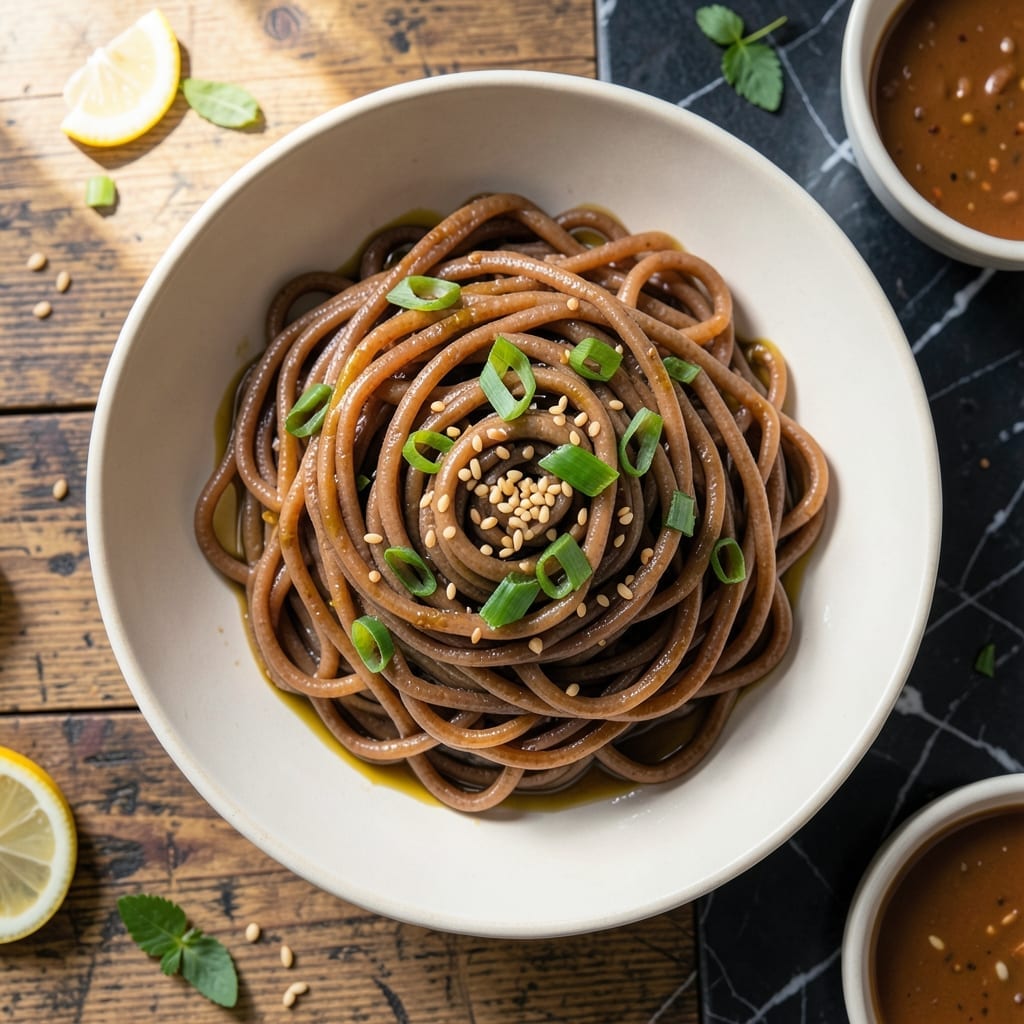
I developed this recipe after years of testing store-bought versions that never quite delivered on texture. These homemade noodles bring chewy resilience and nutty depth that mass-produced brands can’t match.
Brown rice flour creates a naturally sweet, earthy base that pairs beautifully with savory dishes. The dough comes together with just two ingredients and requires no special equipment—just patience and a rolling pin.
After resting, the noodles roll out smooth and cut into perfect strands. They cook in minutes, emerging with that ideal al dente bite that holds up to stir-fries or soups.
This technique transforms simple ingredients into something extraordinary. The process rewards attention to detail, and the results speak for themselves.
Ingredients for Homemade Brown Rice Noodles
Minimal ingredients yield extraordinary results with these homemade noodles featuring chewy resilience and nutty depth.
| Ingredient | Amount | Notes |
|---|---|---|
| Brown Rice Flour 🌾 | 2 cups | Fine grind for smooth texture |
| Water 💧 | ¾ cup | Warm, about 110°F |
| Salt 🧂 | ½ tsp | Fine sea salt preferred |
| Tapioca Starch 🌾 | 2 tbsp | For elasticity and chew |
| Xanthan Gum 🧪 | ¼ tsp | Optional for extra resilience |
| Olive Oil 🫒 | 1 tsp | For dough supple texture |
| Cornstarch 🌽 | ¼ cup | For dusting and prevention of sticking |
Brown rice flour is the foundation here. Bob’s Red Mill offers a consistent fine grind ideal for smooth dough. Whole Foods or Natural Grocers also carry high-quality options. Avoid coarse or gritty flours—they produce grainy noodles. Tapioca starch adds the signature chew, and while xanthan gum is optional, it significantly improves elasticity (especially for gluten-free baking).
No tapioca starch? Arrowroot powder at equal amount works well. For a nutty boost, swap ¼ cup brown rice flour for almond flour (adjust water as needed). Xanthan gum can be omitted, but the noodles may be slightly less resilient. Ensure water is warm—not hot—to activate the starches properly without cooking the flour.
Store brown rice flour in an airtight container in a cool, dark place for up to 3 months. The dough rests best at room temperature, covered, for 30 minutes. Cooked noodles keep in the fridge for 3 days or freeze uncooked strands on a tray before transferring to bags for 2 months.
Why You’ll Love This Recipe
- Five Ingredients Only: I just mix brown rice flour, tapioca starch, xanthan gum, salt, and water—no hunting for weird pantry items.
- Nutty Chew: The brown rice flour gives these noodles a toasty depth that plain rice noodles just can’t match.
- Meal Prep Hero: I cook a big batch on Sunday and they keep beautifully for stir-fries or soups all week.
Step-by-Step Instructions for Homemade Brown Rice Noodles
Follow this precise method to achieve perfectly chewy noodles with a distinct nutty flavor every time.
Step 1: Combine and Hydrate the Dry Ingredients
In a large mixing bowl, whisk together the 2 cups Brown Rice Flour, 2 tbsp Tapioca Starch, 0.5 tsp Salt, and 0.25 tsp Xanthan Gum until fully combined. The xanthan gum acts as a binder, ensuring the noodles hold their shape during rolling and cutting.
Create a well in the center of the dry mixture. Slowly pour in the 0.75 cup Water (warm to 110°F) and 1 tsp Olive Oil. Use a fork to gradually incorporate the wet ingredients into the dry, mixing until a shaggy dough begins to form.
Step 2: Knead the Dough to Develop Elasticity
Turn the dough onto a clean surface dusted lightly with 0.25 cup Cornstarch. The cornstarch prevents sticking while maintaining the dough’s integrity. Knead the dough for 8-10 minutes, pressing and folding repeatedly until it becomes smooth and slightly elastic.
You’ll notice the dough transition from crumbly to cohesive as the tapioca starch and xanthan gum activate. If it feels too dry, add warm water 1 tsp at a time—but avoid over-hydrating, as this can make the noodles gummy. The final dough should be firm yet pliable.
Step 3: Roll and Shape the Noodles
Divide the dough into 4 equal portions for manageable handling. Working with one portion at a time (keep the rest covered with a damp towel), flatten it into a rough rectangle. Dust both sides generously with cornstarch to prevent sticking.
Using a pasta machine or rolling pin, roll the dough to your desired thickness—aim for ⅛-inch for traditional noodles. For uniform strands, feed the sheet through the pasta machine’s linguine or fettuccine cutter. Alternatively, slice by hand into ¼-inch wide strips. Dust the cut noodles with additional cornstarch to maintain separation.
Step 4: Cook the Noodles to Al Dente Perfection
Bring a large pot of salted water to a rolling boil. Add the noodles in small batches to avoid overcrowding. Stir gently to prevent sticking. Cook for 2-3 minutes—brown rice noodles cook faster than wheat-based varieties.
Test for doneness by fishing out a strand and tasting it. The noodles should be tender yet retain a slight chew. Drain immediately using a colander and rinse under cold water to halt cooking. Toss with a bit of olive oil to prevent clumping if not serving immediately.
Pro Tips For Making Homemade Brown Rice Noodles
- Knead Longer: I learned this the hard way—brown rice dough needs at least 8-10 minutes of kneading to develop the right elasticity, especially with xanthan gum in the mix.
- Use Hot Water: Sounds weird, but it works: start with water at about 160°F to help the tapioca starch activate faster and bind the flour properly.
- Skip Dry Flour: Resist the urge to dust with extra brown rice flour—it’ll make the noodles gummy. Use a light dusting of tapioca starch instead for rolling.
- Rest Before Cutting: Give the dough a solid 30-minute rest under a damp towel—yes, even if you’re impatient like me—so the xanthan gum can fully hydrate and the noodles won’t snap.
Common Mistakes When Making This Dish
Overworking the Dough
Kneading beyond 10 minutes develops too much elasticity, making the noodles tough and rubbery. Stop when the dough is smooth and slightly springy—this took me 3 failed batches to learn in my tiny Boston kitchen. Trust the process. 💪
Skipping the Rest
Rushing to roll without letting the dough rest for 30 minutes causes shrinking and cracking. Cover with a damp towel and set a timer. I tested this with my Nonna’s old rolling pin—patience pays off.
Insufficient Dusting
Using too little cornstarch leads to sticking during rolling and cutting. Dust generously on both sides of the dough and your work surface. Reapply as needed—it’s better to have extra than to fight sticky dough.
Water Temperature
Using cold or hot water prevents proper starch activation. Aim for 110°F—warm to the touch but not scalding. A kitchen thermometer ensures accuracy, but I often just test with my wrist like my Irish-Italian family taught me. 🌡️
Uneven Rolling
Inconsistent thickness results in uneven cooking. Roll to a uniform ⅛-inch thickness for best results. If hand-rolling, use spacers or guide sticks to maintain consistency.
Overcrowding the Pot
Adding too many noodles at once causes sticking and uneven cooking. Cook in small batches, stirring gently. Brown rice noodles cook fast—just 2-3 minutes—so don’t walk away from the stove.
Nutrition Facts
Frequently Asked Questions
Can I use white rice flour instead of brown?
Yes, but the texture and flavor will differ. White rice flour makes lighter, less chewy noodles with a milder taste. For best results with brown rice’s nutty flavor, stick to the original recipe.
Why do my noodles fall apart when cooking?
This usually happens if the dough wasn’t kneaded enough or rested properly. Ensure you knead for 8-10 minutes and let it rest for 30 minutes before rolling.
How do I store fresh noodles before cooking?
Dust uncooked noodles with cornstarch and refrigerate in an airtight container for up to 2 days. For longer storage, freeze on a tray first, then transfer to bags for up to 2 months.

- Ground Beef Rice and Beans Recipe: Slow-Simmered Savory Harmony - October 17, 2026
- Guyanese Fried Rice Recipe: Caribbean Spice With Wok-Charred Aromatics - October 17, 2026
- Hakka Thunder Tea Rice Recipe: Wok-Charred Herbal Infusion - October 17, 2026