
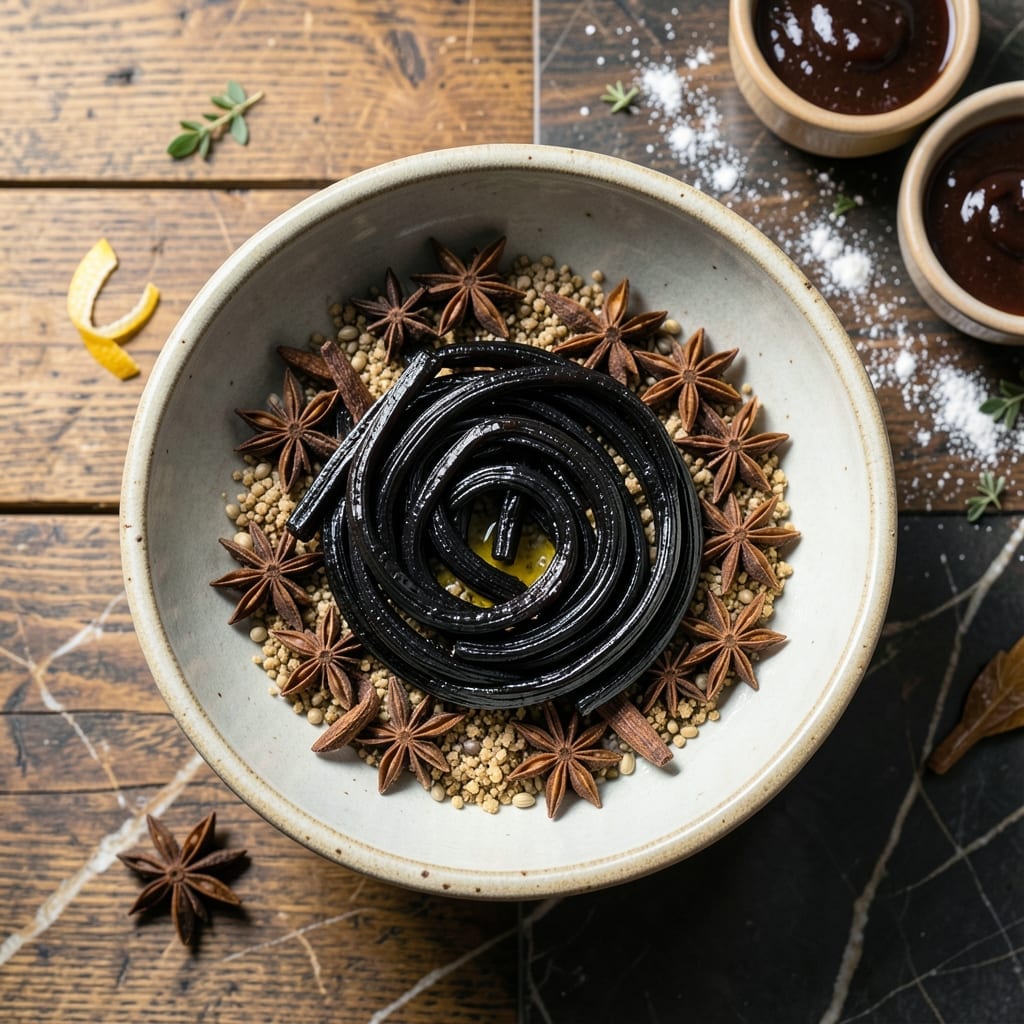
Crafting homemade liquorice delivers a bold anise flavor and satisfying chew that store-bought versions can’t match. This recipe brings old-world tradition into modern kitchens with simple ingredients and precise techniques.
I developed this method through careful testing to achieve the perfect balance of sweetness and herbal intensity. The process transforms basic components into a candy with restaurant-quality texture and taste.
The result is a chewy, aromatic treat with deep licorice notes. Each bite offers the authentic flavor profile that defines great liquorice, without artificial additives or preservatives.
Whether you’re making it for gifts or personal enjoyment, this recipe proves that homemade candy can rival commercial products. The technique ensures consistent, professional results every time.
Ingredients for Homemade Liquorice
Old-world spices meet modern precision for a candy that rivals commercial products in flavor and chew.
| Ingredient | Amount | Notes |
|---|---|---|
| Anise Seeds 🌿 | 2 tbsp | Whole, for infusion |
| Molasses 🍯 | ¾ cup | Unsulphured for purity |
| Coconut Oil 🥥 | ¼ cup | Melted, for binding |
| All-Purpose Flour 🌾 | 2 cups | Sifted for smoothness |
| Cornstarch 🌾 | ¼ cup | For chewy texture |
| Water 💧 | ½ cup | Filtered preferred |
| Sugar 🍚 | 1 ½ cups | Granulated, organic if possible |
| Star Anise Pods ✨ | 3 pieces | Whole, for depth |
| Fennel Seeds 🌿 | 1 tsp | Lightly crushed |
| Salt 🧂 | ¼ tsp | Fine sea salt |
| Lemon Juice 🍋 | 1 tbsp | Freshly squeezed |
| Vanilla Extract 🌿 | 1 tsp | Pure, not imitation |
Anise seeds are non-negotiable here—bulk spice shops or Middle Eastern markets often carry the freshest (smell them before buying; they should be fragrant, not dull). Star anise pods add depth, but don’t skip the fennel seeds (they round out the licorice profile). For molasses, unsulphured brands like Grandma’s ensure a clean, bittersweet base without chemical aftertastes.
No anise seeds? Anise extract at one-fourth the amount works, but the texture won’t be as complex. Swap coconut oil for vegan butter if preferred, though the latter can soften the candy faster. For flour, all-purpose is ideal, but gluten-free 1:1 blends can substitute (add 1 extra tbsp cornstarch for structure). The sugar amount is flexible—reduce by one-quarter cup for a less sweet, more herbal profile.
Store wrapped in parchment and foil at room temperature for up to 2 weeks, or freeze for 3 months. Humidity is the enemy—keep in a cool, dry place. The flavors deepen after 48 hours, so resist the urge to taste immediately.
Why You’ll Love This Recipe
- One Bowl Wonder: I just dump the molasses, anise seeds, and dry ingredients in a single bowl—no fancy equipment, no fuss.
- Deep, Earthy Sweetness: The molasses and anise create this rich, almost spicy flavor that’s nothing like store-bought.
- Gift in a Tin: I package these in little tins for teachers, neighbors, even my picky nephew. Everyone loves them.
- Pantry Staples Only: Honestly, I already had all these ingredients—flour, cornstarch, coconut oil—so it costs me almost nothing to make.
Step-by-Step Instructions for Homemade Liquorice
This professional method ensures bold anise flavor and the ideal chewy texture every time.
Step 1: Infuse the Liquid Base
In a small saucepan, combine the 0.75 cup Molasses, 0.5 cup Water, 2 tbsp Anise Seeds, 3 pieces Star Anise Pods, and 1 tsp Fennel Seeds. Heat over medium-low heat until the mixture reaches 180°F—just below simmering.
This gentle heating extracts the essential oils from the spices without boiling, which would make the flavors harsh. Let it steep off heat for 15 minutes until deeply fragrant. Strain through a fine-mesh sieve to remove the whole spices, pressing gently to extract all liquid.
Step 2: Combine Dry Ingredients
In a large bowl, whisk together the 2 cups All-Purpose Flour, 0.25 cup Cornstarch, 1.5 cups Sugar, and 0.25 tsp Salt. The cornstarch is critical—it creates that signature chewy texture by interrupting gluten formation.
Sift the mixture if your flour isn’t pre-sifted. This ensures a smooth, lump-free dough. The sugar’s coarse texture helps create the slightly grainy mouthfeel authentic liquorice is known for.
Step 3: Create the Dough
In a separate bowl, combine the 0.25 cup Coconut Oil (melted but cooled slightly), 1 tbsp Lemon Juice, and 1 tsp Vanilla Extract. Slowly pour this into the infused molasses mixture while stirring. The coconut oil adds richness without overpowering the anise.
Gradually add the dry ingredients to the wet mixture, stirring until a thick, slightly sticky dough forms. If it feels too dry, add 1 teaspoon of water at a time until it comes together. The dough should be pliable but not sticky to the touch.
Step 4: Shape and Set
Turn the dough onto a lightly floured surface and knead briefly—just until smooth, about 2-3 minutes. Overworking will make the liquorice tough. Divide the dough into 4 equal portions for consistent serving sizes.
Roll each portion into a ½-inch thick rope, about 12 inches long. Wrap each rope in parchment paper and twist the ends to seal. Let them rest at room temperature for 24 hours to allow the flavors to meld and the texture to develop.
Step 5: Slice and Serve
After resting, unwrap the ropes and slice into ½-inch pieces using a sharp knife. For clean cuts, wipe the blade with a damp cloth between slices to prevent sticking.
Store in an airtight container at room temperature for up to 2 weeks. The flavor intensifies over time. For the best experience, let each piece sit on your tongue for a moment—the anise and molasses notes will unfold gradually, delivering that bold, authentic liquorice taste.
Pro Tips For Making Homemade Liquorice
- Toast Anise First: Lightly toast the anise seeds in a dry pan for 1-2 minutes until fragrant—this wakes up their flavor way more than using them raw.
- Warm the Molasses: Heat the molasses slightly (about 30 seconds in the microwave) before mixing—it blends smoother with the coconut oil and prevents clumping.
- Skip the Overmixing: Once the dough comes together, stop kneading. Overworking it makes the liquorice tough instead of that perfect chewy texture.
- Chill Before Cutting: Pop the rolled dough in the fridge for 20-30 minutes before slicing—this keeps the pieces from sticking and gives cleaner edges.
Serving Suggestions for This homemade liquorice
Plating for Gifts
Layer pieces in parchment-lined tins with crinkle-cut paper on top for a boutique look. I tie each with twine and a small card noting the date—homemade liquorice makes thoughtful hostess gifts. The black ropes against white paper look stunning. 💛
Tea Pairing
Serve with Earl Grey tea—the bergamot complements anise beautifully. Brew 1 tsp loose leaves in 8 oz hot water for 3 minutes. The citrus notes cleanse your palate between chewy bites.
Dessert Board
Create a candy charcuterie board with sliced liquorice, dark chocolate, and dried apricots. The bittersweet contrast enhances the anise. I add almonds for crunch—perfect for after-dinner nibbling.
Coffee Accompaniment
Pair with espresso or cappuccino for an Italian-inspired treat. The bold coffee cuts through the sweetness. I serve mine with a demitasse spoon for easy handling. ✨
Ice Cream Topping
Chop into ¼-inch pieces and sprinkle over vanilla ice cream. The warm-cold contrast is divine. I add a drizzle of honey for extra richness—like a grown-up sundae.
Storage Display
Keep in a glass jar on your counter for easy access. The black ropes look beautiful through clear glass. I use mason jars with chalkboard labels for a farmhouse touch.
Nutrition Facts
Frequently Asked Questions
Why does my liquorice turn out too hard?
Over-kneading or too much flour can make it tough. Stick to 2-3 minutes of gentle kneading and measure ingredients precisely. The dough should be pliable, not stiff.
Can I substitute molasses with honey?
Honey lacks the deep, bittersweet complexity of molasses. For best results, use at least 50% molasses. If substituting fully, add 1 tsp blackstrap molasses for depth.
How long does homemade liquorice stay fresh?
Stored in an airtight container at room temperature, it lasts 2 weeks. For longer storage, freeze for up to 3 months. The flavor actually improves after 48 hours.
What if I don’t have star anise?
Use ½ tsp ground anise or 1 additional tbsp anise seeds. Star anise adds depth, but the recipe works without it. Avoid imitation anise extract—it tastes artificial.

- Jollof Rice Sauce Recipe: West African Tomato and Spice Infusion - September 25, 2026
- Japanese Rice Soup Recipe: Umami-Rich Comfort in a Bowl - September 25, 2026
- Homemade Cream Of Rice Recipe: Silk-Smooth Breakfast in Minutes - September 25, 2026