
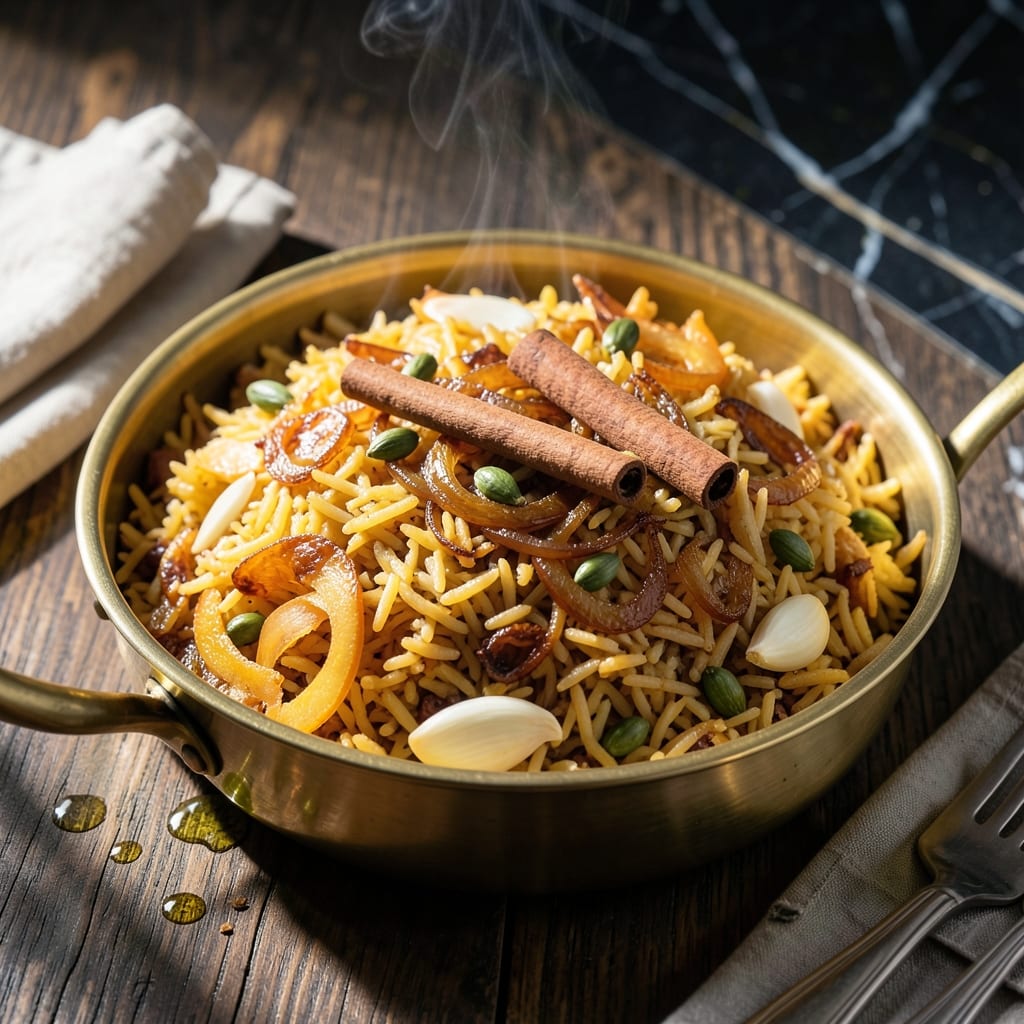
This biriyani rice delivers perfectly layered flavors with every fragrant bite. The blend of whole spices and basmati rice creates an aromatic experience that’s both rich and balanced.
I’ve refined this method to ensure each grain stays separate while absorbing the bold, complex seasonings. The result is a dish that’s as impressive as it is satisfying.
Ingredients for Biriyani Rice
Whole spices, basmati rice, and aromatic layers create a dish worth savoring.
| Ingredient | Amount | Notes |
|---|---|---|
| Basmati Rice 🌾 | 2 cups | Rinsed until water runs clear |
| Onion 🧅 | 1 whole | Large, thinly sliced |
| Garlic Cloves 🧄 | 6 cloves | Minced for deep flavor |
| Ginger Root 🌿 | 1 whole | 1-inch piece, grated |
| Green Cardamom Pods 🌿 | 6 pieces | Lightly crushed |
| Cinnamon Stick 🌿 | 1 piece | 2-inch length |
| Cloves 🌿 | 4 pieces | Whole, for aroma |
| Bay Leaves 🍃 | 2 pieces | Dried or fresh |
| Cumin Seeds 🌿 | 1 tsp | Toasted briefly |
| Plain Yogurt 🥛 | ½ cup | Whole milk for creaminess |
| Chicken Stock 🍲 | 2 ½ cups | Low-sodium preferred |
| Ghee 🧈 | 3 tbsp | Or substitute vegetable oil |
| Turmeric Powder 🌶️ | ½ tsp | For golden color |
| Red Chili Powder 🌶️ | 1 tsp | Adjust to spice preference |
| Salt 🧂 | 1 ½ tsp | Divided to taste |
The spices are non-negotiable for authentic flavor. Indian grocery stores carry the best whole cardamom, cinnamon, and cloves—look for vibrant color and strong aroma. Basmati rice should be aged for best texture; Tilda or Daawat are reliable brands. Ghee adds richness, but if unavailable, clarified butter or coconut oil work as substitutes. Always rinse the rice thoroughly to remove excess starch.
No whole spices? Ground versions at half the amount will work in a pinch, though they lack depth. Yogurt can be Greek for thickness, but avoid non-fat—full-fat delivers the right creaminess. Chicken stock can be swapped for vegetable stock for a lighter version. The turmeric is mostly for color, so skip it if you prefer a paler rice. Fresh ginger and garlic are ideal, but paste works at one-third the quantity.
Store whole spices in airtight containers away from light—they stay potent for 6-12 months. Basmati rice keeps indefinitely in a cool, dry place. Leftover biriyani reheats well, covered, for up to 3 days in the fridge.
Why You’ll Love This Recipe
- One Pot Wonder: Honestly, I just dump everything in and let the basmati soak up all the garlic, ginger, and cardamom goodness.
- Aroma Overload: The smell of those green cardamom pods toasting with onions? It fills my whole kitchen before the rice even hits the pot.
- Feeds a Crowd: I made this for my book club last month and everyone asked for the recipe—even the picky eaters went back for seconds.
- Leftovers Win: Between us, it tastes even better the next day when the spices really sink into the rice.
Step-by-Step Instructions for Biriyani Rice
Master these layers of spiced rice and you’ll achieve perfectly fragrant, fluffy results every time.
Step 1: Rinse and Soak the Basmati Rice
Place the 2 cups Basmati Rice in a fine-mesh strainer and rinse under cold water until the water runs completely clear. This removes excess starch and prevents the grains from sticking together during cooking.
Transfer the rinsed rice to a bowl and cover with cold water by 1 inch. Let it soak for 30 minutes—this step ensures the grains expand evenly and cook to a perfect fluffy texture without breaking.
Step 2: Bloom Whole Spices and Aromatics
In a large, heavy-bottomed pot, heat the 3 tbsp Ghee over medium heat until it shimmers. Add the 1 whole Onion (thinly sliced), 6 cloves Garlic Cloves (minced), and 1 whole Ginger Root (grated). Sauté for 6-8 minutes until the onions turn deep golden brown and the raw aroma of ginger and garlic subsides.
Add the 6 pieces Green Cardamom Pods (lightly crushed), 1 piece Cinnamon Stick, 4 pieces Cloves, and 2 pieces Bay Leaves. Toast for 1-2 minutes until fragrant—this releases their essential oils and builds the foundation of flavor for your dish.
Step 3: Toast Cumin and Add Wet Ingredients
Stir in the 1 tsp Cumin Seeds and cook for 30 seconds until they sizzle and turn slightly darker. Immediately add the 0.5 cup Plain Yogurt, 0.5 tsp Turmeric Powder, 1 tsp Red Chili Powder, and 1 tsp Salt. Cook for 2-3 minutes, stirring constantly, until the yogurt thickens slightly and the spices are fully incorporated.
Pour in the 2.5 cups Chicken Stock and the remaining 0.5 tsp Salt. Bring the mixture to a gentle boil, then reduce the heat to low and let it simmer for 5 minutes to allow the flavors to meld together deeply.
Step 4: Layer and Cook the Rice
Drain the soaked Basmati Rice and gently fold it into the simmering spice mixture, ensuring each grain is coated with the aromatic liquid. Spread the rice evenly across the pot, but do not press down—this maintains the fluffy texture.
Cover the pot with a tight-fitting lid and cook on the lowest heat setting for 15-18 minutes. Avoid lifting the lid during this time to trap steam, which is essential for even cooking. You’ll know it’s done when the liquid has been fully absorbed and the rice is tender with no hard center.
Step 5: Rest and Fluff for Perfect Texture
Turn off the heat and let the biriyani rice rest, covered, for 10 minutes. This resting period allows the grains to steam in their own moisture, ensuring they are fully cooked and evenly fluffy.
Gently fluff the rice with a fork, taking care not to break the grains. The result should be light, separate grains with a vibrant golden hue and an intoxicating aroma from the layered spices. Serve warm with your choice of protein or vegetables.
Pro Tips For Making Biriyani Rice
- Soak the Basmati: Give the rice a 30-minute soak in cold water before cooking—it prevents the grains from breaking and guarantees that fluffy, separate texture biriyani is known for.
- Toast Whole Spices: Lightly dry-toast the green cardamom pods in the pot for 20-30 seconds before adding anything else; it wakes up their aroma and infuses the oil with way more flavor.
- Skip Pre-Chopped Aromatics: I learned this the hard way—freshly grated ginger and minced garlic cloves release way more juice and fragrance than the jarred stuff, and it actually changes the outcome in biriyani.
- Layer with Care: When assembling, spread the rice in an even layer over the onions and aromatics—don’t press down, or you’ll end up with dense, sticky clumps instead of light, fragrant grains.
Regional Styles of biriyani rice
Hyderabadi Style
This version layers rice with marinated meat and caramelized onions, called kaccha style. The meat cooks with the rice, infusing every grain with rich, spiced juices. I use goat meat for authenticity, but chicken works too. 🔥
Lucknowi Aroma
The dum cooking method seals the pot with dough to trap steam. Lucknowi biriyani uses kewra water and saffron for a floral, luxurious finish. The rice is parboiled separately before layering to maintain distinct grains.
Calcutta Version
Here, potatoes and boiled eggs often join the meat, creating a heartier dish. The rice takes on a deeper color from extra turmeric and red chili powder. I add 1 tsp sugar to balance the heat, a Bengali tradition.
Malabar Coast
Seafood replaces meat in this coastal variation. I use shrimp or fish marinated in coconut milk and spices. The rice gets its distinctive flavor from fennel seeds and curry leaves tempered in coconut oil.
Short-grained Jeerakasala rice is traditional here, giving a slightly stickier texture.
Sindhi Style
This version skips meat entirely, focusing on vegetables like potatoes, carrots, and peas. The spices include plum powder for a unique tang. I love how the vegetables absorb the spiced rice flavors beautifully. ✨
Nutrition Facts
Frequently Asked Questions
Can I use regular rice instead of basmati?
Basmati’s long grains stay separate when cooked, which is key. Regular rice can turn mushy. If you must, use jasmine rice and reduce water by 1/4 cup.
Why do I need to soak the rice first?
Soaking for 30 minutes lets grains absorb water evenly. This prevents breaking and ensures uniform cooking. Skip this and you risk uneven texture.
How do I fix biriyani that’s too wet?
Uncover the pot and cook on medium heat for 3-5 minutes to evaporate excess moisture. Stir gently to avoid mashing the grains.
Can I make this in a rice cooker?
Yes! Sauté spices in the pot first, then add rice and liquid as directed. Use the standard setting. Let it rest 10 minutes after cooking.

- Rice Cake Cereal Recipe: Crunchy Homemade Breakfast Delight - September 25, 2026
- Pancake Recipe Using Rice Flour: Light and Airy Gluten-Free Stacks - September 25, 2026
- Japanese Rice Porridge Recipe: Silky Congee With Umami Depth - September 25, 2026