
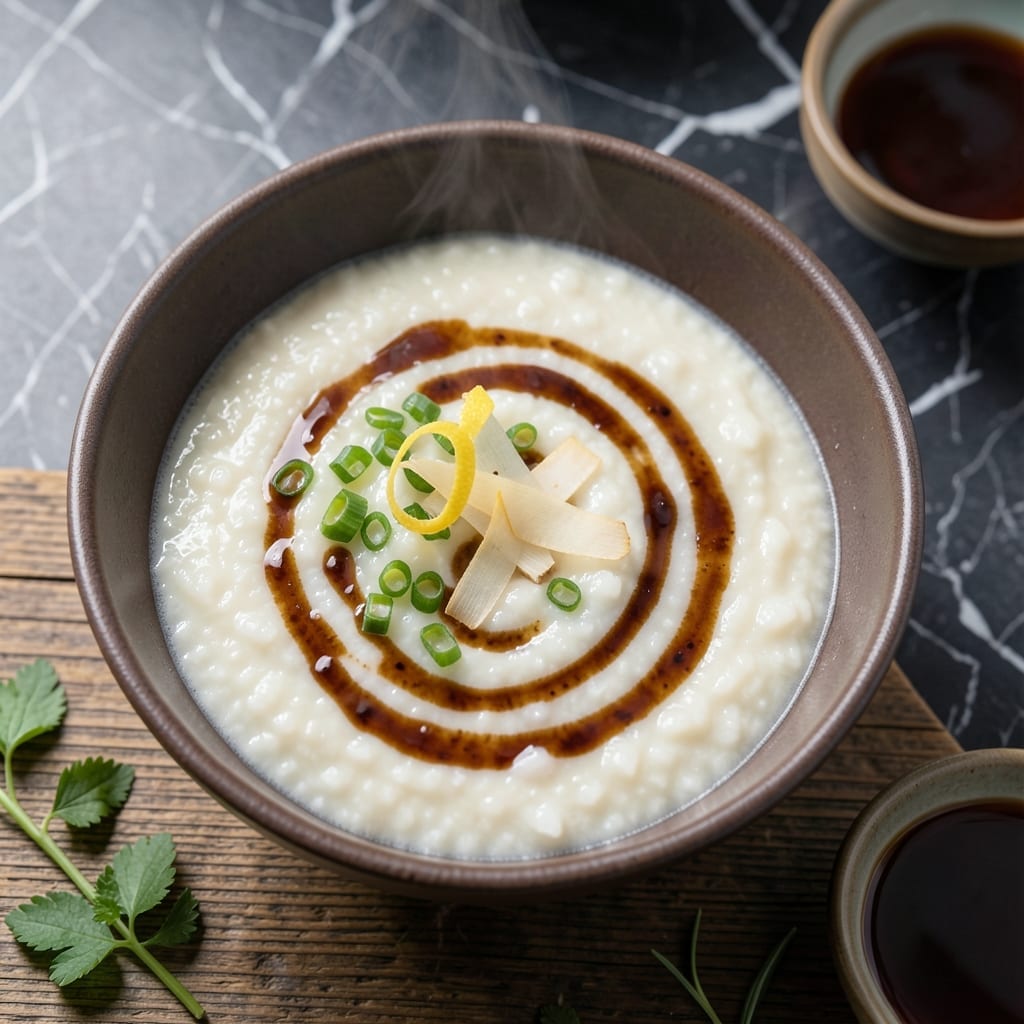
There’s something deeply comforting about a bowl of silky Japanese rice porridge on a chilly morning. This humble dish transforms simple ingredients into a velvety, nourishing meal that’s both gentle on the stomach and rich in flavor.
Traditional okayu relies on a higher water-to-rice ratio and slow cooking to break down the grains, creating its signature creamy texture. A touch of dashi or soy sauce adds subtle umami depth, while ginger or green onions brighten each spoonful.
The beauty of this recipe lies in its versatility—serve it plain for a soothing base or customize with toppings like soft-cooked egg, pickled vegetables, or even sweet red bean paste for dessert.
Ready in about 45 minutes, it’s the kind of dish that feels like a warm hug in culinary form.
Ingredients for Japanese Rice Porridge
Simple ingredients transform into a velvety, nourishing bowl of comfort with umami depth and creamy texture.
| Ingredient | Amount | Notes |
|---|---|---|
| Japanese Short-Grain Rice 🍚 | 1 cup | Rinsed until water runs clear |
| Water 💧 | 8 cups | For silky porridge texture |
| Dashi Stock 🍜 | 2 cups | Homemade or instant granules |
| Soy Sauce 🫒 | 2 tbsp | Low-sodium preferred for control |
| Fresh Ginger 🌿 | 1 piece | 2-inch knob, julienned |
| Green Onions 🧅 | 3 whole | Thinly sliced for garnish |
| Soft-Cooked Egg 🥚 | 4 whole | Optional for topping |
| Pickled Vegetables 🥒 | ½ cup | Assorted, for serving |
| Red Bean Paste 🍡 | ¼ cup | Sweet, optional for dessert version |
| Sesame Oil 🫒 | 1 tsp | Toasted, for finishing |
| Salt 🧂 | ½ tsp | Adjust to taste |
| Mirin 🍶 | 1 tbsp | For subtle sweetness |
The rice is non-negotiable—Japanese short-grain (like Koshihikari or Nishiki) breaks down beautifully into that signature creamy consistency. Asian markets or Trader Joe’s carry it, but avoid long-grain or jasmine varieties. Dashi stock adds authentic depth; instant granules from Kikkoman or Honda work perfectly. The ginger should be fresh, not powdered—its bright zing cuts through the richness.
No dashi? Chicken or vegetable broth with a splash of soy sauce gets you close. Mirin can be swapped with 1 tsp sugar plus 2 tsp water. For a vegetarian version, use kombu dashi (simmered seaweed). The egg topping is optional but traditional—soft-boil for 7 minutes. Pickled veggies can be store-bought beni shoga (red pickled ginger) or any quick-pickled cucumbers.
Leftover porridge thickens as it cools. Stir in a splash of water or dashi when reheating. Stores 3-4 days in the fridge, freezes for 1 month. The rice grains absorb liquid over time, so expect a thicker texture after storage (worth the extra minute).
Why You’ll Love This Recipe
- One-Pot Simplicity: I just dump rice, water, and dashi in a pot—no fancy steps, and the ginger does all the flavor work.
- Umami Bomb: The dashi and soy sauce blend into this savory depth that’s way more interesting than plain porridge.
- Breakfast or Dinner: Honestly, I serve it for lazy Sunday breakfasts or pair it with a soft-boiled egg for a cozy weeknight meal.
- Stretches for Days: Leftovers reheat beautifully with a splash of water, and a single cup of rice feeds us for two meals.
Step-by-Step Instructions for Japanese Rice Porridge
Master this technique for perfectly silky texture and layered umami flavor every time.
Step 1: Rinse and Prepare the Japanese Short-Grain Rice
Place the 1 cup Japanese Short-Grain Rice in a fine-mesh strainer and rinse under cold running water. Continue rinsing and gently agitating the grains with your fingers until the water runs completely clear—this removes excess starch and prevents a gummy texture.
This step typically takes 3-4 minutes and is non-negotiable for authentic congee. Drain the rice thoroughly, then let it sit in the strainer for 5 minutes to remove any residual moisture. Properly rinsed rice ensures a clean, silky porridge base.
Step 2: Simmer Rice with Water and Dashi Stock
Combine the drained rice, 8 cups Water, and 2 cups Dashi Stock in a heavy-bottomed pot. Bring to a boil over medium-high heat, then immediately reduce to low heat to maintain a gentle simmer. Stir occasionally to prevent sticking.
The liquid should just barely bubble—too vigorous a boil will make the porridge rough. After 30 minutes, the rice grains will begin to break down. Add the 1 piece Fresh Ginger (julienned) and 0.5 tsp Salt at this point for balanced seasoning from the start.
Step 3: Develop Depth of Flavor with Seasonings
Once the mixture has thickened significantly—after about 1 hour of total simmering—stir in the 2 tbsp Soy Sauce and 1 tbsp Mirin. These add umami and subtle sweetness that define the porridge’s character.
Taste and adjust seasoning if needed, though the soy sauce and dashi should provide sufficient saltiness. The porridge should have a creamy, almost risotto-like consistency at this stage. If it thickens too much before the rice is fully broken down, add warm water 1 cup at a time.
Step 4: Finish and Serve with Traditional Garnishes
After 1 hour 15 minutes to 1 hour 30 minutes of total cooking, the rice should have completely dissolved into a smooth, velvety porridge. Remove from heat and discard the ginger pieces. Stir in the 1 tsp Sesame Oil for a nutty aroma.
Ladle the porridge into bowls and garnish with thinly sliced Green Onions. Serve with optional toppings: a soft-cooked egg, pickled vegetables, or red bean paste for a sweet variation. The contrast of textures and flavors makes each bite complete.
Pro Tips For Making Japanese Rice Porridge
- Stir Often: Japanese rice porridge sticks easily, so stir every 5-7 minutes—especially once it starts thickening. I learned this the hard way after scraping burnt bits off the pot.
- Rinse the Rice: Wash the short-grain rice until the water runs clear to remove excess starch. Skipping this makes the porridge gummy instead of creamy.
- Use Fresh Dashi: Instant dashi works in a pinch, but fresh kombu and bonito flakes add depth you just can’t fake. My grandmother swore by it, and she was right.
- Add Ginger Late: Stir in the grated fresh ginger in the last 10 minutes of cooking to keep its bright, zesty flavor. Adding it too early makes the porridge taste harsh.
Creative Variations of This Dish
Savory Umami Bowl
For a deeper flavor, add 1 tbsp miso paste along with the soy sauce. Stir in ½ cup shredded chicken and top with a soft-boiled egg for extra protein. I love the richness this version brings. 🔥
Vegetarian Delight
Swap dashi for combined kombu and shiitake dashi. Add ½ cup cubed tofu and ¼ cup shredded carrots for texture. The umami from mushrooms keeps it satisfying.
Spicy Kick
Stir in 1 tsp sriracha or chili crisp at the end. Top with thinly sliced jalapeños and a drizzle of chili oil. This wakes up the dish with a bold heat.
Sweet Red Bean
Omit soy sauce and ginger. Stir in ½ cup sweet red bean paste and a pinch of salt to balance. Serve warm for a comforting dessert-style porridge. 💛
Seafood Twist
Add ½ cup cooked shrimp and 2 tbsp chopped nori during the last 10 minutes of cooking. The seafood absorbs the porridge’s creaminess beautifully.
Breakfast Style
Top with a fried egg, crispy fried shallots, and a sprinkle of furikake seasoning. This hearty version is my go-to morning meal.
Nutrition Facts
Frequently Asked Questions
Can I use a rice cooker instead of a pot?
Yes! Most modern rice cookers have a porridge setting. Use the same 1:10 rice-to-liquid ratio and let it cook automatically. The texture may be slightly less silky than stovetop but still delicious.
Why did my porridge turn out too thin?
This usually happens with insufficient cooking time. Let it simmer uncovered for the full 1 hour 15 minutes to 1 hour 30 minutes. If still thin, cook longer until it reaches your preferred thickness.
What’s the best rice substitute?
Arborio or other short-grain rice works in a pinch, though the texture won’t be as smooth. Avoid long-grain varieties like basmati or jasmine—they won’t break down properly.

- Japanese Rice Porridge Recipe: Silky Congee With Umami Depth - September 25, 2026
- Rice Bagel Recipe: Chewy Pillows With a Twist - September 25, 2026
- Rice Cheela Recipe: Savory Indian Pancakes With Fresh Herbs - September 25, 2026