
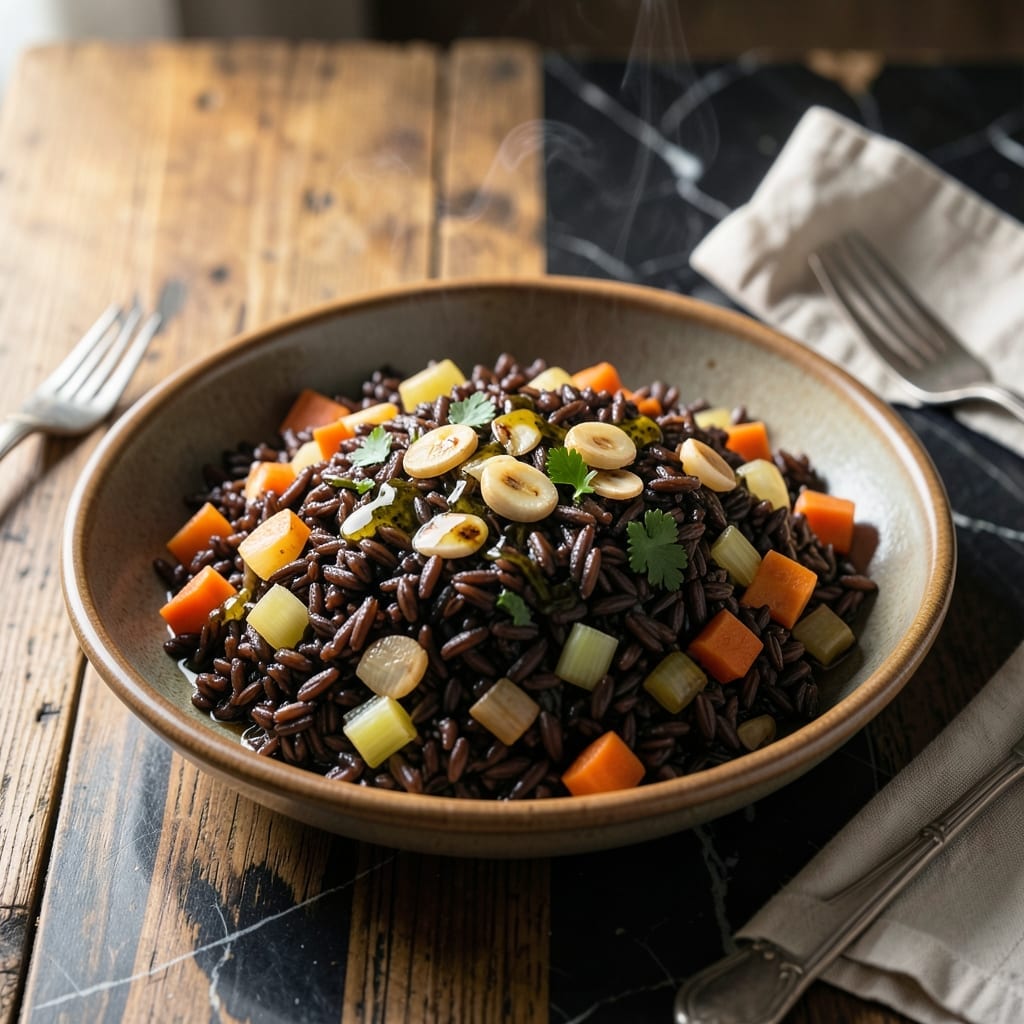
There’s a reason wild rice has been a staple for generations—its nutty depth and chewy texture elevate any meal. This method brings out its natural richness without complicated techniques.
I’ve refined this approach over years, focusing on the perfect water-to-rice ratio and cooking time. The result is consistently tender grains with that signature bite, whether served as a side or the star of the plate.
The process is straightforward: simmer with aromatics, then let it rest. That final step is what ensures every grain cooks evenly and absorbs maximum flavor.
What you get is homemade wild rice that tastes far better than store-bought versions. It pairs beautifully with meats, fish, or simply as part of a vegetarian bowl.
Ingredients for Homemade Wild Rice
Simple ingredients with bold flavor. Wild rice plus aromatics and you’re set for perfection.
| Ingredient | Amount | Notes |
|---|---|---|
| Wild Rice 🌾 | 1 ½ cups | Uncooked, rinsed thoroughly |
| Water 💧 | 4 ½ cups | Or vegetable broth for extra flavor |
| Yellow Onion 🧅 | 1 whole | Medium, finely diced |
| Garlic Cloves 🧄 | 3 cloves | Minced for depth of flavor |
| Carrots 🥕 | 2 whole | Medium, finely diced |
| Celery Stalks 🌿 | 2 whole | Finely diced for texture |
| Extra-Virgin Olive Oil 🫒 | 2 tbsp | For sautéing aromatics |
| Bay Leaf 🍃 | 1 whole | Dried, for subtle earthiness |
| Dried Thyme 🌿 | 1 tsp | Crushed for better infusion |
| Sea Salt 🧂 | 1 tsp | Adjust to taste after cooking |
| Freshly Ground Black Pepper 🌶️ | ½ tsp | To finish the dish |
| Fresh Parsley 🌿 | ¼ cup | Chopped, for garnish |
The wild rice is the star here—look for Minnesota-grown at Whole Foods or online (it’s the real deal, not those blends with brown rice). The ratio of rice to liquid is critical: 1 part rice to 3 parts water. I’ve tried various brands, but the stuff from Lundberg Family Farms consistently delivers that signature chew. Don’t skip rinsing the grains first (gets rid of excess starch).
No wild rice? Black rice or farro work, but the flavor and texture will differ. Swap vegetable broth for water if you want extra depth. The onion, carrot, and celery (aka the holy trinity) can be pre-diced from the grocery store (frozen works in a pinch). Skip the bay leaf if you must, but it adds a subtle background note worth keeping.
Cooked rice keeps 5 days in the fridge, or freeze for 3 months. Reheat with a splash of water or broth to revive the texture. Leftovers make killer stuffed peppers or grain bowls—trust me on that one.
Why You’ll Love This Recipe
- Minimal Chopping Required: I just dice the onion, mince the garlic, and slice the carrots—no fancy knife skills needed.
- Savory Depth: The garlic and onions caramelize slightly in the pot, giving the wild rice that rich, earthy flavor I crave.
- Meal Prep Hero: I make a big batch on Sunday and it keeps perfectly for lunches all week—hot or cold.
- Budget Stretcher: Honestly, wild rice seems fancy but costs pennies per serving, especially with these simple veggies.
Step-by-Step Instructions for Homemade Wild Rice
This foolproof method delivers perfectly tender wild rice with rich, nutty flavor every time.
Step 1: Rinse and Soak the Wild Rice
Place the 1.5 cups Wild Rice in a fine-mesh strainer and rinse thoroughly under cold running water. I find this removes excess starch and any residual debris. Continue rinsing until the water runs completely clear—this prevents the rice from becoming gummy during cooking.
After rinsing, transfer the wild rice to a bowl and cover with 2 cups of the 4.5 cups Water. Let it soak at room temperature for 30 minutes. This soaking step jumpstarts the cooking process, ensuring even hydration and reducing the total cooking time.
Step 2: Sauté the Aromatics for Maximum Flavor
While the rice soaks, finely dice the 1 whole Yellow Onion, 2 whole Carrots, and 2 whole Celery Stalks. Heat the 2 tbsp Extra-Virgin Olive Oil in a large pot or Dutch oven over medium heat until it shimmers.
Add the diced onion, carrots, and celery, then cook for 5-6 minutes until the vegetables soften and the onion becomes translucent. Stir in the minced 3 cloves Garlic Cloves and cook for an additional 30 seconds until fragrant. This builds a flavor foundation that infuses the rice as it cooks.
Step 3: Toast the Rice and Add Liquids
Drain the soaked wild rice and add it to the pot with the sautéed vegetables. Stir to coat the rice in the oil and aromatics, then toast for 2-3 minutes until the grains become slightly opaque at the edges. This toasting step enhances the nutty flavor wild rice is known for.
Pour in the remaining 2.5 cups Water, then add the 1 whole Bay Leaf, 1 tsp Dried Thyme, and 1 tsp Sea Salt. Stir well to combine and bring the mixture to a boil over high heat.
Step 4: Simmer Until Tender
Once boiling, reduce the heat to low, cover the pot with a tight-fitting lid, and let it simmer for 45-50 minutes. Resist the urge to stir during cooking—this can break the rice grains and release excess starch. Instead, check the rice at the 45-minute mark by tasting a few grains.
The wild rice is done when the grains are tender but still retain a slight chew, and most of the liquid has been absorbed. If it’s still too firm, cover and cook for another 5-10 minutes, checking occasionally.
Step 5: Rest and Finish
Remove the pot from heat and let it sit, covered, for 10 minutes. This resting period allows the rice to steam and absorb any remaining liquid, ensuring even tenderness. Discard the bay leaf, then fluff the rice gently with a fork.
Season with the 0.5 tsp Freshly Ground Black Pepper and adjust salt if needed. Stir in the chopped 0.25 cup Fresh Parsley just before serving to add a burst of freshness. The rice should be tender with a slight bite, and the grains should be distinct but fully cooked.
Pro Tips For Making Homemade Wild Rice
- Soak the Wild Rice: I learned this the hard way—wild rice needs a good 30-minute soak before cooking to soften it and cut the cooking time nearly in half.
- Toast Before Simmering: Toss the wild rice in a dry pan for 2-3 minutes until it smells nutty, then add your liquid. Sounds weird, but it works: it deepens the flavor and prevents mushiness.
- Don’t Overcrowd the Pot: Wild rice expands a lot, so use at least 4 cups of water per 1 cup of rice, and make sure your pot is big enough—otherwise it’ll boil over.
- Sauté the Aromatics: Cook the onion, garlic, and diced carrots in a little oil until soft before adding the rice and water—about 5 minutes on medium heat. This builds a flavor base that plain water just can’t match.
Dietary Considerations for This Recipe
Gluten-Free Naturally
This dish is inherently gluten-free, making it perfect for anyone with celiac disease or gluten sensitivity. Unlike processed grains, wild rice contains no wheat, barley, or rye. I always double-check labels on broth if using it instead of water to avoid hidden gluten. 🌾
Vegan and Vegetarian
With its plant-based ingredients, this recipe fits beautifully into vegan and vegetarian diets. The combination of wild rice, vegetables, and herbs provides complete protein and fiber. For extra richness, I sometimes add toasted nuts or seeds.
Low Sodium Option
To reduce sodium, cut the sea salt in half or eliminate it entirely. The natural flavors of wild rice and aromatics shine through without it. I often use low-sodium vegetable broth instead of water for depth without excess salt.
Allergen Considerations
Wild rice is free from common allergens like nuts, dairy, and eggs. However, always verify your wild rice brand for potential cross-contamination if allergies are severe. I trust Lundberg Family Farms for their dedicated processing facilities.
Diabetic Friendly
With a low glycemic index, wild rice helps maintain steady blood sugar levels. One ½ cup serving contains about 15g net carbs. I pair it with protein-rich foods to further stabilize glucose response. 💪
Nutrient Dense
This creation packs fiber, B vitamins, and minerals like magnesium and phosphorus. It’s an excellent choice for those focusing on nutrient-dense meals. The 30-minute soak helps maximize nutrient retention during cooking.
Nutrition Facts
Frequently Asked Questions
Why soak wild rice before cooking?
Soaking for 30 minutes jumpstarts hydration and reduces cooking time. It also helps prevent the grains from splitting during simmering.
Can I use a rice cooker for this?
Yes, but use the 1:3 rice-to-water ratio and cook on the standard setting. Check at 40 minutes since cookers vary.
How do I fix undercooked grains?
Add ½ cup hot water, cover, and simmer for another 10-15 minutes. Test again before adding more liquid.
What’s the best way to store leftovers?
Keep in an airtight container in the fridge for up to 5 days. Freeze for longer storage, up to 3 months.

- Jamaican Jollof Rice Recipe: Island Spice in Every Bite - October 18, 2026
- Hamburger Rice Hot Dish Recipe: Midwest Comfort in One Pan - October 18, 2026
- Iranian Cabbage Rice Recipe: Aromatic Herbs and Spiced Layers - October 18, 2026