
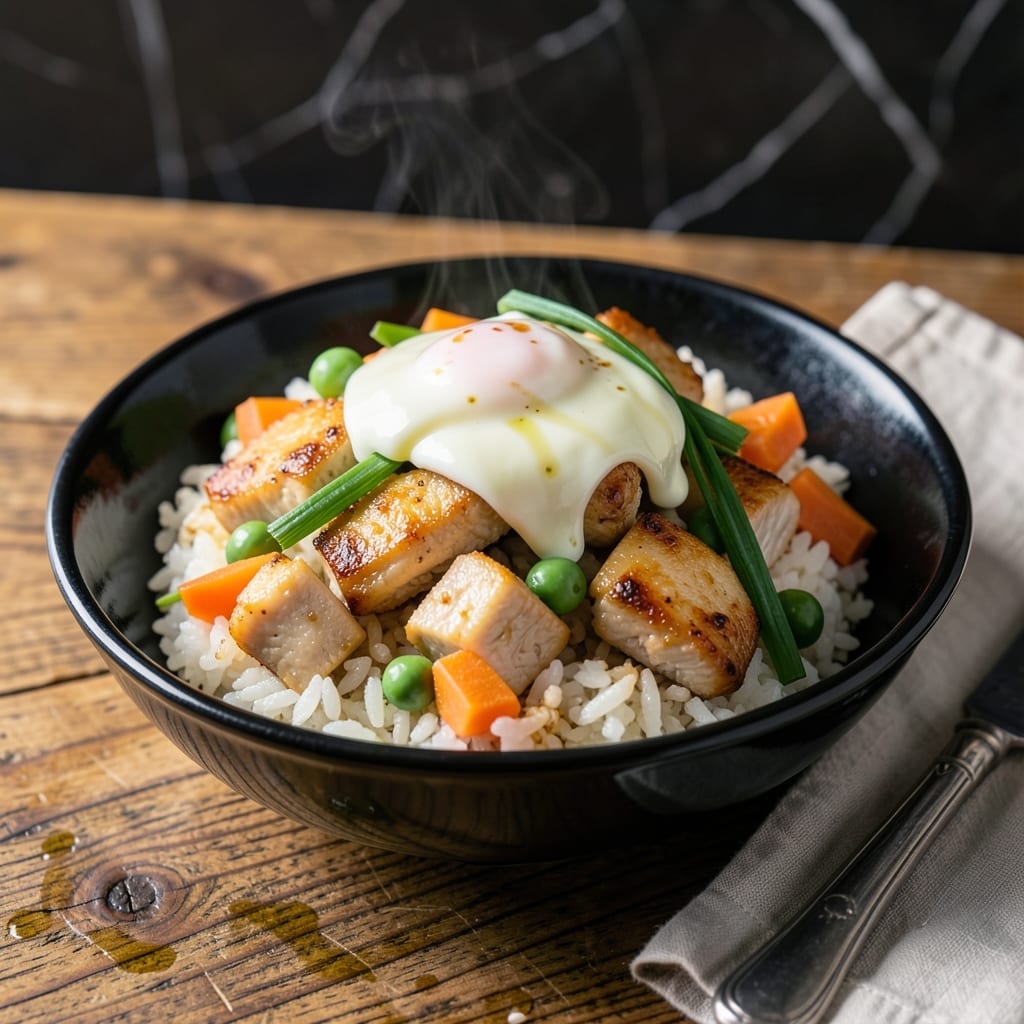
This Japanese stir-fried rice delivers tender bites with wok-charred depth in every grain. The secret lies in day-old rice and high heat, creating that signature smoky aroma and slightly crispy texture.
I’ve perfected this method to balance simplicity with authentic flavor, using just a handful of pantry staples. The umami comes from soy sauce, while a touch of sesame oil adds richness without overpowering the dish.
Each bite combines soft rice, tender vegetables, and your choice of protein, all coated in a savory sauce. The result is a dish that’s satisfying yet light, with layers of flavor in every forkful.
Ready in under 30 minutes, this recipe turns leftovers into a meal worth savoring. Here’s how to make it at home.
Ingredients for Japanese Stir Fry Rice
Day-old rice, crisp vegetables, and savory protein come together with authentic Japanese flavors in every bite.
| Ingredient | Amount | Notes |
|---|---|---|
| Day-Old Cooked White Rice 🍚 | 4 cups | Cold, dry, preferably jasmine or short-grain |
| Neutral Oil 🫒 | 3 tbsp | High smoke point, like vegetable or canola |
| Large Eggs 🥚 | 2 whole | Lightly beaten for scrambling |
| Carrots 🥕 | 1 whole | Medium, finely diced |
| Green Onions 🧅 | 3 whole | Thinly sliced, whites and greens separated |
| Frozen Green Peas 🌱 | ¾ cup | Thawed, no need to cook |
| Soy Sauce 💧 | 3 tbsp | Low-sodium preferred for balance |
| Sesame Oil 🫒 | 1 tsp | Toasted, for finishing aroma |
| Garlic Cloves 🧄 | 2 cloves | Minced for even distribution |
| Fresh Ginger 🌿 | 1 tbsp | Finely grated, peeled |
| Boneless Chicken Thighs 🍗 | ¾ lb | Cut into small cubes, skinless |
| Kosher Salt 🧂 | ½ tsp | Adjust to taste after cooking |
| Ground White Pepper 🌶️ | ¼ tsp | Subtle heat, authentic touch |
The rice is critical here—day-old, cold, and dry is non-negotiable for achieving that signature wok-charred texture. Jasmine or short-grain varieties work best; avoid freshly cooked rice as it will turn mushy. For the neutral oil, vegetable or canola oil with a high smoke point is essential. The chicken thighs should be skinless and boneless, cut into small, even cubes for quick cooking. Most Asian markets carry excellent pre-cut options if you’re short on time.
Need to swap proteins? Shrimp or firm tofu work beautifully—just adjust cooking time accordingly. Low-sodium soy sauce keeps the dish from becoming overwhelmingly salty. If you don’t have white pepper, black pepper at half the amount is acceptable, though the flavor profile will shift slightly. Frozen peas can be swapped for edamame or corn (no need to thaw). For extra umami, add 1 tsp of fish sauce if dietary restrictions allow.
Leftovers keep well in the fridge for 3-4 days and actually improve in flavor. Store in an airtight container once completely cooled. This dish doesn’t freeze well due to the rice texture, so it’s best enjoyed fresh. Reheat gently in a skillet with a splash of water to restore moisture.
Why You’ll Love This Recipe
- One Pan Wonder: I toss everything into a single skillet—day-old rice, eggs, and veggies—no fancy tools or extra dishes.
- Umami Richness: The carrots and green onions caramelize in the oil, giving that deep, savory taste I crave.
- Leftover Magic: Day-old rice actually works better, so I’m using up leftovers instead of wasting them.
- Budget Stretch: A handful of ingredients, most of which I already have, and it feeds my family for pennies.
Step-by-Step Instructions for Japanese Stir Fry Rice
Master the wok technique for perfectly charred grains with tender chicken and vegetables.
Step 1: Prep and Season the Chicken and Aromatics
Cut the 0.75 lb boneless chicken thighs into ½-inch cubes and season with 0.5 tsp kosher salt and 0.25 tsp ground white pepper. This small cut ensures quick, even cooking without toughness.
Finely dice the 1 whole carrot, mince the 2 cloves garlic cloves, and grate the 1 tbsp fresh ginger. Thinly slice the 3 whole green onions, keeping whites and greens separate. Proper prep prevents burning during the high-heat stir-fry.
Step 2: Scramble the Eggs and Cook the Chicken
Heat 1 tbsp neutral oil in a wok or large skillet over high heat until shimmering. Add the lightly beaten 2 whole large eggs and scramble quickly with a spatula until just set but still slightly runny. Remove and set aside.
Add the remaining 2 tbsp neutral oil to the wok. When nearly smoking, add the seasoned chicken in a single layer. Cook undisturbed for 1-2 minutes until the bottoms develop a golden crust, then stir-fry until no longer pink. Transfer to the plate with eggs.
Step 3: Stir-Fry the Vegetables and Rice
In the same wok, add the diced carrot, minced garlic, and grated ginger. Stir-fry for 1-2 minutes until the garlic is fragrant and carrots begin to soften. Add the white parts of the green onions and the thawed 0.75 cup frozen green peas.
Break up the 4 cups day-old cooked white rice with your hands and add it to the wok. Stir-fry for 2-3 minutes until the rice is heated through and begins to develop a slight char. The cold, dry rice is essential for achieving that characteristic wok hei (breath of the wok).
Step 4: Combine and Finish with Sauce
Return the chicken and scrambled eggs to the wok. Drizzle the 3 tbsp soy sauce evenly over the mixture. Stir-fry for another 1-2 minutes until everything is well combined and heated through.
Remove from heat and stir in the 1 tsp sesame oil. Garnish with the reserved green onion greens. The sesame oil adds a nutty aroma that blooms in the residual heat, so add it last to preserve its delicate flavor. Serve immediately while the rice is still sizzling.
Pro Tips For Making Japanese Stir Fry Rice
- Chill the Rice: Use day-old rice straight from the fridge—it’s drier and fries up with that perfect chewy texture instead of turning mushy. I learned this the hard way after my first few batches came out like porridge.
- High Heat Only: Crank the heat to medium-high and keep it there. Sounds obvious, but low heat steams the rice instead of frying it, and nobody wants soggy stir-fry.
- Prep Veggies Small: Dice the carrots and green onions into tiny, uniform pieces—about ¼-inch—so they cook through fast and don’t leave you with crunchy bits in an otherwise soft dish.
- Scramble Eggs First: Push the scrambled eggs to one side of the pan before adding the rice and veggies. This keeps them from overcooking and guarantees you’ll have soft, distinct bits of egg in every bite.
Dietary Considerations for These Flavors
Gluten-Free Option
Swap regular soy sauce for tamari or a certified gluten-free soy sauce like San-J. This small change keeps all the umami flavor while making the dish safe for those avoiding gluten. 💡
Vegetarian Adaptation
Replace 0.75 lb chicken thighs with 14 oz extra-firm tofu, pressed and cubed. Cook the tofu first in 1 tbsp oil until golden before proceeding with the recipe. The tofu soaks up the sauce beautifully.
Lower Sodium Version
Use low-sodium soy sauce and reduce to 2 tbsp, then boost flavor with 1 tsp fish sauce (if dietary restrictions allow) or 1 tbsp coconut aminos. This cuts sodium by nearly 40% without sacrificing taste.
Egg-Free Variation
Simply omit the 2 eggs and add ¼ cup diced firm tofu for protein. The texture remains similar, and you won’t miss the egg’s richness. I often make this version for friends with egg allergies.
Extra Veggie Boost
Add 1 cup diced bell peppers or 1 cup broccoli florets when stir-frying the carrots. These hold up well to high heat and add color. Just increase oil by 1 tsp to compensate for the extra volume.
Nut Allergy Note
Skip the 1 tsp sesame oil or replace with 1 tsp toasted sunflower oil. Always check labels on soy sauce for cross-contamination warnings. This keeps the dish safe for nut-sensitive diners. 🌱
Nutrition Facts
Frequently Asked Questions
Why use day-old rice?
Day-old rice is drier, preventing mushiness in stir-fry. Fresh rice contains too much moisture, making it clump instead of char.
Can I substitute shrimp for chicken?
Yes! Use 0.75 lb peeled shrimp and cook for 2-3 minutes until pink. Add shrimp at the same step as chicken.
What if my wok isn’t hot enough?
You won’t get that signature char. Heat the wok until oil shimmers or nearly smokes before adding ingredients.
How do I prevent soggy rice?
Cook in small batches and spread rice in the wok. Overcrowding steams the rice instead of frying it.

- Jamaican Jollof Rice Recipe: Island Spice in Every Bite - October 18, 2026
- Hamburger Rice Hot Dish Recipe: Midwest Comfort in One Pan - October 18, 2026
- Iranian Cabbage Rice Recipe: Aromatic Herbs and Spiced Layers - October 18, 2026