
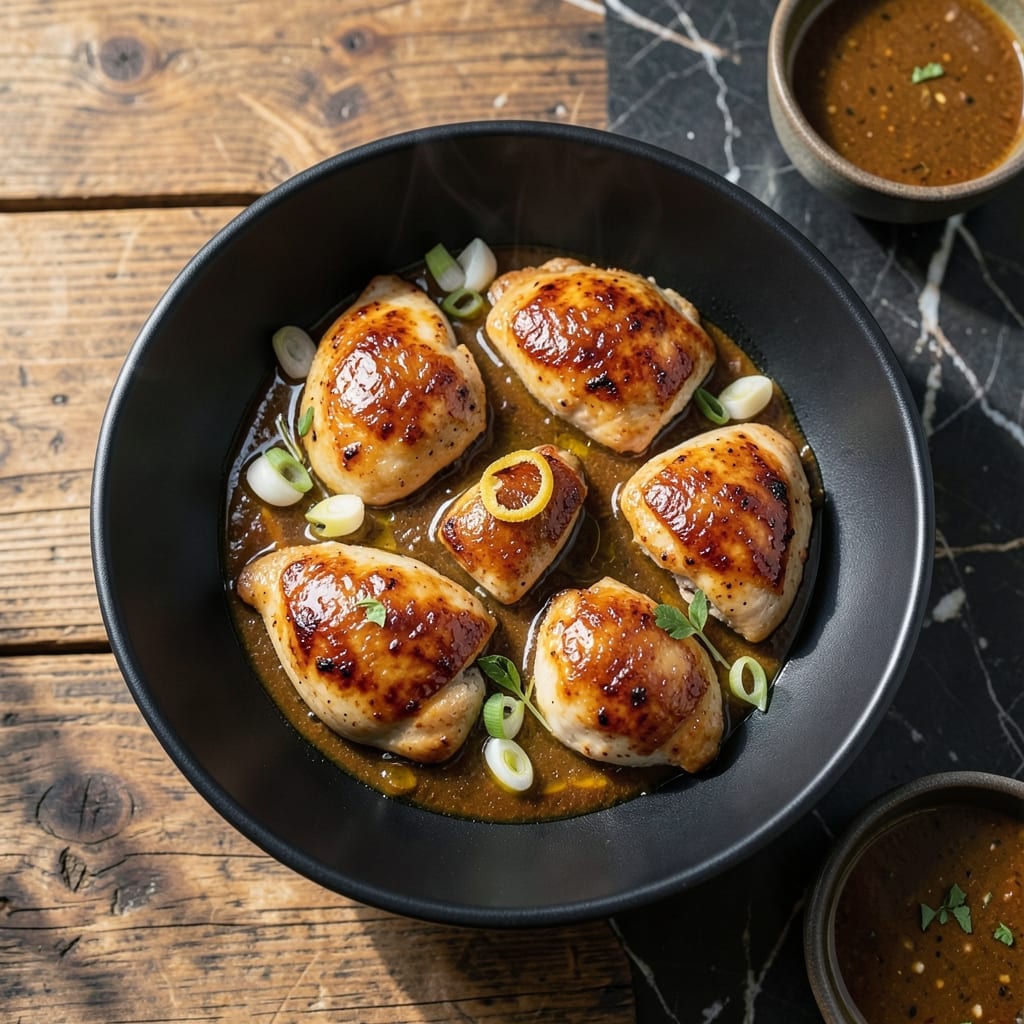
This recipe delivers perfectly balanced sweet and tangy flavors with minimal effort. The honey Dijon glaze transforms ordinary chicken into a restaurant-worthy dish.
I developed this method while catering events at The Smoky Pig, where guests consistently requested seconds. The key is letting the glaze caramelize slightly under high heat.
You’ll achieve juicy, tender chicken with a glossy coating that’s sticky and finger-licking good. The combination of smooth honey and sharp Dijon creates a complexity that’s anything but ordinary.
Serve with roasted vegetables or mashed potatoes to complete the meal.
Ingredients for Honey Dijon Chicken
Transform ordinary chicken with this balanced sweet and tangy ingredient lineup for restaurant-worthy results.
| Ingredient | Amount | Notes |
|---|---|---|
| Boneless Skinless Chicken Breasts 🍗 | 1 ½ lb | Pounded to even thickness |
| Honey 🍯 | ⅓ cup | Pure, unprocessed preferred |
| Dijon Mustard 🟡 | ⅓ cup | Smooth, sharp variety |
| Extra-Virgin Olive Oil 🫒 | 2 tbsp | Divided for cooking and glaze |
| Garlic Cloves 🧄 | 3 cloves | Minced finely |
| Soy Sauce 🥢 | 2 tbsp | Low-sodium preferred |
| Apple Cider Vinegar 🍏 | 1 tbsp | For acidity balance |
| Dried Thyme 🌿 | 1 tsp | Crushed between fingers |
| Kosher Salt 🧂 | 1 tsp | Diamond Crystal preferred |
| Freshly Ground Black Pepper 🌶️ | ½ tsp | Coarse grind |
| Unsalted Butter 🧈 | 2 tbsp | For finishing glaze |
| Fresh Parsley 🌿 | ¼ cup | Chopped, for garnish |
The chicken quality is non-negotiable for professional results. Air-chilled, free-range breasts from Whole Foods or Costco yield superior texture and flavor. Pound them to an even 3/4-inch thickness to ensure even cooking and maximum glaze adhesion. The honey should be raw and unfiltered—local farmers markets often have the best selection, with more complex floral notes than grocery store varieties.
No Dijon mustard? Whole-grain mustard at a 1:1 ratio works, though the texture will be slightly coarser. Substitute rice vinegar or white wine vinegar for the apple cider vinegar if needed. For a gluten-free version, tamari replaces soy sauce seamlessly. The thyme can be fresh at double the quantity (strip leaves from stems), and fresh rosemary offers a piney alternative.
The glaze can be prepared 2 days ahead and refrigerated. Cooked chicken holds well for 4 days in the fridge, though the glaze may thicken—reheat gently with a splash of water. For freezing, store chicken and glaze separately for up to 3 months.
Why You’ll Love This Recipe
- One Pan Wonder: I just toss the chicken with honey, Dijon, and garlic in a single pan—minimal cleanup, maximum flavor.
- Sweet & Tangy: That perfect balance of honey’s warmth and Dijon’s sharp kick makes every biteridiculously good.
- Meal Prep Hero: I make a big batch on Sunday and it stays juicy for days—great hot or cold in salads.
- Budget Stretcher: Chicken breasts are affordable, and this recipe turns them into something special without fancy ingredients.
Step-by-Step Instructions for Honey Dijon Chicken
Here’s the method I use to achieve that perfect glaze and juicy chicken every single time.
Step 1: Prepare and Season the Chicken
Begin by pounding the 1.5 lb boneless skinless chicken breasts to an even ½-inch thickness between sheets of plastic wrap. This ensures uniform cooking and prevents dry spots. Season both sides generously with the 1 tsp kosher salt and 0.5 tsp freshly ground black pepper.
I always press the seasoning into the meat slightly so it adheres well during cooking. The even thickness and proper seasoning at this stage are crucial for both texture and flavor development. Let the seasoned chicken sit at room temperature for 10 minutes while you prepare the glaze.
Step 2: Create the Honey Dijon Glaze
In a medium bowl, whisk together the 0.33 cup honey, 0.33 cup Dijon mustard, 2 tbsp soy sauce, 1 tbsp apple cider vinegar, and 1 tsp dried thyme crushed between your fingers. The vinegar adds essential acidity to balance the sweetness of the honey.
Add the 3 cloves minced garlic cloves and stir to combine. This glaze should be thick but pourable. I’ve found that whisking for 30 seconds ensures all ingredients are fully incorporated and the thyme is evenly distributed throughout the mixture.
Step 3: Sear and Glaze the Chicken
Heat 1 tbsp extra-virgin olive oil in a large oven-safe skillet over medium-high heat. When the oil shimmers, add the chicken breasts and sear for 4-5 minutes per side until golden brown and the internal temperature reaches 160°F.
Reduce heat to medium-low and pour the glaze over the chicken. Add the remaining 1 tbsp extra-virgin olive oil and the 2 tbsp unsalted butter, then baste the chicken with the sauce for 2-3 minutes until the glaze thickens and becomes glossy.
Step 4: Rest and Garnish
Transfer the chicken to a serving platter and let it rest for 5 minutes. This allows the juices to redistribute for maximum tenderness. Spoon any remaining glaze from the pan over the chicken.
Garnish with the 0.25 cup chopped fresh parsley just before serving. The parsley adds a bright, fresh contrast to the rich, sweet-tangy glaze. Serve immediately while the glaze is still warm and fluid, coating each piece of chicken beautifully.
Pro Tips For Making Honey Dijon Chicken
- Pound the Chicken: I learned this the hard way—uneven chicken breasts cook unevenly. Pound them to an even 1/2-inch thickness so every bite is perfectly done, not dry on the ends and raw in the middle.
- Bloom the Garlic: Cook the minced garlic in the olive oil for 30 seconds before adding other ingredients. Sounds simple, but it removes that harsh raw bite and fills your kitchen with an aroma that means dinner’s almost ready.
- Skip the Boil: Resist the urge to boil the honey and Dijon together—it’ll turn bitter and separate. Instead, warm them gently over low heat, stirring just until smooth.
- Rest Before Serving: Give the chicken 5 minutes under foil after cooking. I used to skip this, and the juices would run all over the plate instead of staying in the meat where they belong.
Serving Suggestions for This Dish
Plated Presentation
Arrange the glazed chicken on a large white platter with a rim to catch any drizzled sauce. I fan the slices slightly and spoon extra glaze over the top. The contrast of the dark caramelized edges against the golden chicken looks stunning on white stoneware from my collection. 💫
Starch Pairings
I always serve this with creamy mashed potatoes—they soak up the honey Dijon sauce beautifully. For a lighter option, roasted baby potatoes tossed with rosemary work perfectly. Both options complement the dish without overpowering the star flavors.
Vegetable Sides
Steamed asparagus or roasted Brussels sprouts add freshness to balance the richness. I toss them with 1 tbsp olive oil and a pinch of salt, then roast at 400°F for 20 minutes. The slight char pairs wonderfully with the sweet-tangy glaze.
Bread Basket
Include a basket of warm crusty bread to mop up every last bit of sauce. I love using sourdough from Atlanta’s H&F Bread Co.—it holds up well to the robust flavors. Toast slices lightly with 1 tbsp butter for extra richness.
Garnish Touch
Beyond the parsley, I sometimes add thin lemon slices for a pop of color and subtle citrus note. A sprinkle of toasted sesame seeds (just 1 tsp) adds texture and visual interest without competing with the main flavors.
Nutrition Facts
Frequently Asked Questions
What’s the best way to prevent the glaze from burning?
Keep heat at medium-low when glazing and baste continuously. The butter helps prevent scorching. Remove from heat if it darkens too quickly.
Can I use bone-in chicken instead?
Yes, but increase cooking time to 35-40 minutes at 375°F. Bone-in stays juicier but needs lower heat to cook through without burning the glaze.
How do I make the glaze thicker?
Simmer the glaze for 2-3 minutes before adding to chicken. Add 1 tsp cornstarch mixed with water if needed. Thicker glaze clings better to the meat.
Is there a substitute for apple cider vinegar?
Use white wine vinegar or lemon juice at a 1:1 ratio. The acidity balances the honey’s sweetness perfectly.

- Jollof Rice Sauce Recipe: West African Tomato and Spice Infusion - September 25, 2026
- Japanese Rice Soup Recipe: Umami-Rich Comfort in a Bowl - September 25, 2026
- Homemade Cream Of Rice Recipe: Silk-Smooth Breakfast in Minutes - September 25, 2026