
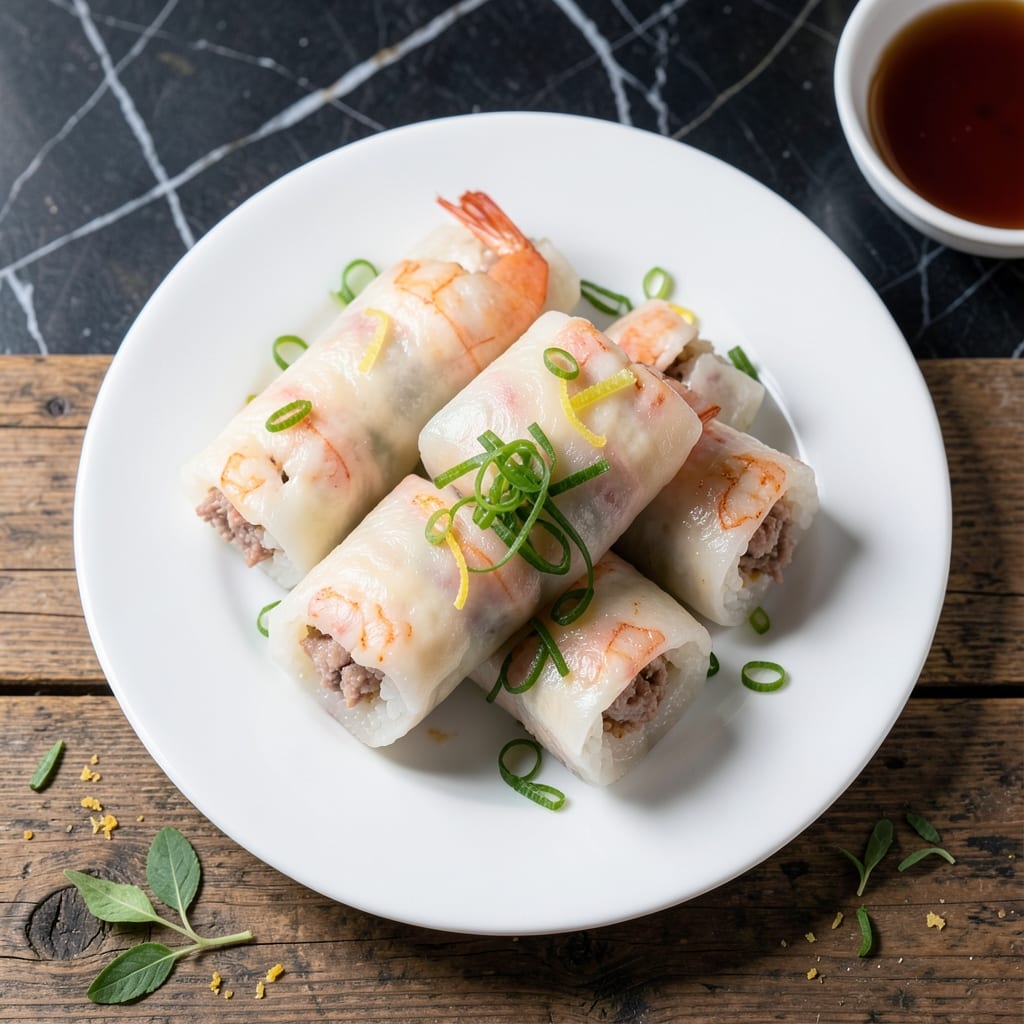
There’s something deeply satisfying about mastering traditional dim sum at home. This steamed rice roll dish captures the silky smooth texture that defines authentic Hong Kong cheung fun.
I developed this method after testing various rice flour ratios and steaming techniques to achieve the perfect delicate consistency. The key is using a well-seasoned wok with a steamer basket for even heat distribution.
What emerges is a translucent, slightly chewy rice sheet that wraps beautifully around fillings. The steaming process creates a surface that’s tender yet holds its shape when rolled.
Serve with sweet soy sauce or your favorite dim sum accompaniments. Here’s how to recreate this classic.
Ingredients for Hong Kong Rice Roll
A handful of pantry staples and fresh ingredients create this authentic dim sum classic.
| Ingredient | Amount | Notes |
|---|---|---|
| Rice Flour 🌾 | 1 ½ cups | Fine, uncooked variety essential |
| Tapioca Starch 🌾 | ½ cup | For elasticity and chew |
| Water 💧 | 2 ½ cups | Room temperature preferred |
| Salt 🧂 | ½ tsp | Fine sea salt for even distribution |
| Vegetable Oil 🫒 | 1 tbsp | Neutral flavor for greasing |
| Shrimp 🦐 | ½ lb | Peeled, deveined, chopped fine |
| Ground Pork 🥩 | ½ lb | Lean ground for filling |
| Green Onions 🧅 | 3 whole | Thinly sliced for garnish |
| Light Soy Sauce 🫙 | 2 tbsp | For seasoning filling mixture |
| Sesame Oil 🫒 | 1 tsp | Toasted for depth of flavor |
| Sugar 🍚 | 1 tsp | Balances savory notes in filling |
| White Pepper 🌶️ | ½ tsp | Ground, for authentic flavor |
| Cornstarch 🌾 | 1 tbsp | For thickening filling if needed |
| Shaoxing Wine 🍷 | 1 tbsp | Dry sherry works as substitute |
The rice flour is non-negotiable here—Bob’s Red Mill or any fine, uncooked rice flour works, but avoid glutenous rice flour (that’s for mochi). Tapioca starch adds the signature chew, so don’t skip it. For the shrimp and pork, freshness is key—hit up your local Asian market for the best selection. They’ll often have pre-chopped shrimp that saves prep time.
Out of shrimp? Chicken breast at half the quantity works well (finely minced). No pork? Shiitake mushrooms give a similar umami depth when rehydrated and chopped. Shaoxing wine is traditional, but dry sherry in a pinch is an acceptable substitute. The green onions can be swapped for chives if that’s what you have on hand.
The rice batter should be used immediately—it thickens as it sits. Leftovers (if any) keep 2 days in the fridge, but they’re best fresh. Reheat by steaming for 3-4 minutes to restore that silky texture. Don’t microwave, or they’ll turn gummy.
Why You’ll Love This Recipe
- Minimal Ingredients: I love that it only needs rice flour, tapioca starch, and a few pantry staples.
- Silky Smooth Texture: The combo of rice flour and tapioca starch gives it that signature chewy, melt-in-your-mouth feel.
- Breakfast or Snack: Honestly, I make these for dim sum Sundays and quick midweek breakfasts alike.
- Budget Friendly: A bag of rice flour and tapioca starch makes multiple batches—so cost effective.
Step-by-Step Instructions for Hong Kong Rice Rolls
Here’s how to achieve that signature silky texture and authentic flavor in your own kitchen.
Step 1: Prepare the Rice Batter
In a large mixing bowl, whisk together the 1.5 cups Rice Flour, 0.5 cup Tapioca Starch, and 0.5 tsp Salt until fully combined. I always sift the dry ingredients first to prevent any lumps in the final product.
Slowly pour in the 2.5 cups Water while whisking continuously until you achieve a smooth, milk-like consistency. The batter should be thin enough to pour but thick enough to coat the back of a spoon. Let it rest for 10-15 minutes to allow the starches to fully hydrate.
Step 2: Create the Savory Filling
In a bowl, combine the 0.5 lb Ground Pork, 0.5 lb Shrimp, 2 tbsp Light Soy Sauce, 1 tsp Sesame Oil, 1 tsp Sugar, and 0.5 tsp White Pepper. Mix thoroughly until the mixture becomes slightly sticky.
For extra tenderness, add the 1 tbsp Shaoxing Wine and 1 tbsp Cornstarch, then stir well. I like to let this sit for 5 minutes while I heat the pan—this helps the flavors meld. Cook the mixture in a non-stick skillet over medium heat until fully cooked through, breaking it into small pieces as it browns.
Step 3: Steam the Rice Rolls
Lightly grease a shallow, heatproof dish (about 9×13 inches) with 1 tbsp Vegetable Oil. Pour a thin layer of the rice batter into the dish, swirling to coat the bottom evenly. The layer should be about ⅛-inch thick—any thicker and it won’t steam properly.
Place the dish in a steamer with boiling water and cover tightly. Steam for 3-4 minutes until the surface is set and slightly translucent. Carefully remove the dish and add a spoonful of the cooked filling in a line down the center. Roll it up gently but firmly, using a spatula to help lift the edges if needed.
Step 4: Finish and Garnish
Slice the rolled rice noodle into 2-inch pieces using a sharp knife. I find it easiest to do this while the roll is still warm but not piping hot. The texture should be silky smooth with a slight chew from the tapioca starch.
Arrange the pieces on a serving plate and garnish with the 3 whole Green Onions, thinly sliced. For best results, serve immediately while still warm. The rolls should have a delicate, almost jelly-like texture that’s characteristic of authentic Hong Kong-style rice rolls.
Pro Tips For Making Hong Kong Rice Roll
- Steam the Batter: Spread the rice flour and tapioca starch batter thin on a greased tray and steam for 2-3 minutes—any longer and the rolls turn rubbery. I learned this the hard way after my first batch came out chewy.
- Use Hot Water: Mix the rice flour and tapioca starch with hot water (about 180°F) to eliminate lumps and get a smooth, silky batter. Cold water just doesn’t cut it.
- Skip the Overmixing: Stir just until the batter is combined—overmixing develops too much gluten in the rice flour, making the rolls tough instead of tender.
- Oil the Surface: Brush a thin layer of vegetable oil on your steaming surface before pouring the batter. Sounds simple, but it prevents sticking and makes rolling a breeze.
Common Mistakes When Making Perfect Results
Overworking the Batter
Once you mix the rice flour and tapioca starch with water, resist the urge to keep stirring. Overworking develops gluten-like strands that make your rolls tough instead of silky. I learned this the hard way in my tiny Boston kitchen—10-15 minutes of rest is all it needs. 💡
Thick Batter Issues
If your batter sits too long, it thickens and won’t spread evenly. The solution? Use it immediately after mixing, or thin it with a splash of water. The ideal consistency should be like heavy cream—thin enough to swirl but thick enough to coat.
Improper Steaming
Boiling water in your steamer is essential before adding the dish. If the water isn’t hot enough, your rolls will steam unevenly. I use a bamboo steamer over my wok, ensuring the lid fits tightly to trap steam. 3-4 minutes at full boil is perfect.
Overfilling the Rolls
It’s tempting to add extra filling, but too much makes rolling impossible and causes tears. Stick to 1-2 tbsp of filling per roll, placed in a thin line down the center. Less is truly more here—your rolls will hold together better.
Sticking Problems
Even with oil, rice batter can stick to the dish. To prevent this, use a nonstick pan or a well-seasoned wok. I also keep a spray bottle of water nearby to loosen any stubborn spots before rolling. This saves tears and frustration.
Premature Slicing
Let your rolls cool for 2-3 minutes after steaming before slicing. Cutting too soon causes them to stick together and lose their shape. Use a sharp knife dipped in hot water for clean cuts every time. ✨
Nutrition Facts
Frequently Asked Questions
Can I make these without a bamboo steamer?
Yes! Use a metal steamer basket or even a sieve placed over a pot of boiling water. Just ensure it’s large enough to hold your dish and that the lid fits tightly to trap the steam.
What can I use instead of shrimp in the filling?
Chicken or firm tofu work well as alternatives. For a vegetarian version, finely chopped mushrooms add a meaty texture. Always cook fillings thoroughly before rolling.
How do I store leftovers?
Keep in an airtight container in the fridge for up to 2 days. Reheat by steaming for 3-4 minutes to restore the silky texture. Avoid microwaving as it can make them gummy.
Why did my rolls turn out tough?
This usually happens from overworking the batter or using too much rice flour. Stick to the recipe ratios and let the batter rest for 10-15 minutes before using.

- Ground Beef Rice and Beans Recipe: Slow-Simmered Savory Harmony - October 17, 2026
- Guyanese Fried Rice Recipe: Caribbean Spice With Wok-Charred Aromatics - October 17, 2026
- Hakka Thunder Tea Rice Recipe: Wok-Charred Herbal Infusion - October 17, 2026