
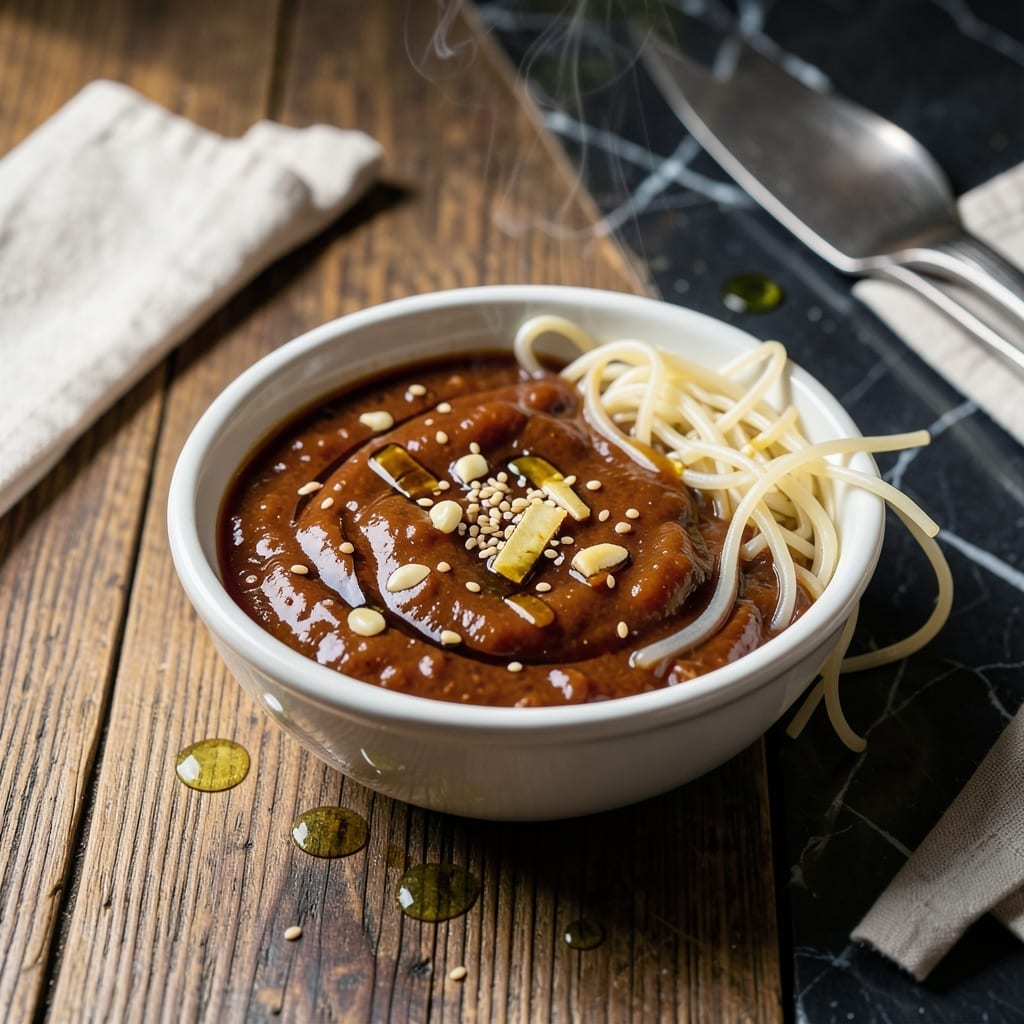
This sauce delivers the authentic wok flavor that transforms plain rice noodles into restaurant-quality stir fry. No shortcuts—just the perfect balance of salty, sweet, and umami.
With simple pantry staples and 5 minutes of mixing, you’ll have a versatile sauce that stores beautifully in the fridge for up to two weeks.
Ingredients for Rice Noodle Stir Fry Sauce
Nine pantry staples create that bold umami punch for restaurant-quality noodles.
| Ingredient | Amount | Notes |
|---|---|---|
| Soy Sauce 🥢 | ½ cup | Use low-sodium for control |
| Oyster-Free Vegetarian Oyster Sauce 🍶 | ¼ cup | Essential for umami depth |
| Rice Vinegar 🍚 | 3 tbsp | Balances sweetness nicely |
| Dark Brown Sugar 🟤 | 2 tbsp | Packed for richness |
| Fresh Garlic Cloves 🧄 | 4 cloves | Minced finely for even flavor |
| Fresh Ginger Root 🌿 | 1 tbsp | Grated for maximum infusion |
| Toasted Sesame Oil 🫒 | 1 tbsp | Adds nutty aroma |
| Sriracha Sauce 🌶️ | 1 tbsp | Adjust to heat preference |
| Lime Juice 🍈 | 1 tbsp | Freshly squeezed for brightness |
The vegetarian oyster sauce is key here—Kikkoman or Lee Kum Kee vegetarian versions are widely available at most supermarkets. Soy sauce should be freshly opened for best flavor (it loses potency over time). I grab mine from Asian markets where turnover is high. The brown sugar adds depth, but coconut sugar works too if you prefer a less refined option.
No vegetarian oyster sauce? Mushroom stir-fry sauce at one-to-one ratio gets you close. Sriracha too spicy? Sweet chili sauce adds the same color without the heat. The ginger and garlic can be swapped for 1 tbsp each of powdered versions in a pinch (fresh is better though). Sesame oil is non-negotiable for that authentic aroma.
This keeps beautifully in the fridge for 2 weeks (the lime juice helps preserve it). For longer storage, freeze in ice cube trays—perfect single-serving portions. Always give it a good shake before using as ingredients may separate.
Why You’ll Love This Recipe
- 5-Minute Mix: I just dump soy sauce, vegetarian oyster sauce, rice vinegar, sugar, and minced garlic in a bowl and stir. No cooking required.
- Umami Bomb: The combo of soy and vegetarian oyster sauce gives that deep, savory punch I crave in every bite.
- Weeknight Hero: Honestly, I toss this with noodles and whatever veggies I have—dinner’s ready before the kids finish arguing over who sits where.
- Stretches Far: One batch makes enough for two meals, so I get a second night off cooking. Between us, that’s the real win.
Step-by-Step Instructions for Rice Noodle Stir Fry Sauce
This method delivers the authentic, complex flavors that define a perfect wok sauce.
Step 1: Bloom the Aromatics in Oil
Heat a small saucepan over medium-low heat. Add the 1 tablespoon Toasted Sesame Oil and let it warm until it shimmers slightly. This activates the oil’s nutty aroma, which forms the foundation of your sauce.
Add the 4 cloves Fresh Garlic Cloves (minced finely) and 1 tablespoon Fresh Ginger Root (grated). Cook for 1-2 minutes, stirring constantly, until the garlic turns light golden at the edges. The ginger should release its pungent fragrance. Don’t let the garlic brown—it’ll turn bitter.
Step 2: Build the Umami Base
Pour in the 0.5 cup Soy Sauce and 0.25 cup Oyster-Free Vegetarian Oyster Sauce. The mixture will bubble vigorously as it hits the hot pan. Let it simmer for 2 minutes to meld the flavors together.
This combination delivers the deep, savory backbone essential for authentic stir fry flavor. The oyster-free vegetarian oyster sauce contributes a rich, slightly sweet complexity that balances the saltiness of the soy sauce. Stir occasionally to prevent sticking.
Step 3: Balance the Sweet, Sour, and Heat
Add the 2 tablespoons Dark Brown Sugar (packed), 3 tablespoons Rice Vinegar, and 1 tablespoon Sriracha Sauce. Stir well to dissolve the sugar completely. The mixture will look glossy and slightly syrupy.
The brown sugar adds caramelized depth, while the rice vinegar cuts through the richness with its mild acidity. The sriracha introduces a subtle heat that builds gradually. Simmer for 3-4 minutes until the sauce thickens slightly and coats the back of a spoon.
Step 4: Finish with Brightness
Remove the saucepan from heat and stir in the 1 tablespoon Lime Juice. The fresh citrus lifts all the flavors, adding a bright, zesty note that prevents the sauce from tasting flat. Taste and adjust the balance if needed.
Let the sauce cool to room temperature. It should have a glossy texture and a complex flavor profile that hits all the right notes: salty, sweet, sour, umami, and a touch of heat. This sauce will keep in the refrigerator for up to 5 days.
Pro Tips For Making Rice Noodle Stir Fry Sauce
- Bloom the Garlic: Cook the minced garlic in oil over medium-low heat for 30-45 seconds until fragrant but not brown. I learned this the hard way—burnt garlic makes the sauce bitter.
- Balance the Sweet: Use dark brown sugar for depth, but add it slowly while tasting—about 1 tablespoon at a time. The sauce should taste rich, not cloying.
- Skip the Boil: Simmer the sauce gently instead of boiling it hard to keep the flavors bright. After burning three batches, I finally figured out high heat ruins the rice vinegar’s tang.
- Thin with Water: If the sauce reduces too much, stir in 1-2 tablespoons of warm water to loosen it. Sounds weird, but it works without diluting the flavor.
Perfect Pairings for These Flavors
Protein Pairings
This sauce clings beautifully to tofu cubes—press and cube 14 oz extra-firm for optimal absorption. I also love it with shrimp (peeled and deveined, 1 lb), which soak up the flavors in 2-3 minutes of stir-frying.
Vegetable Complements
Bell peppers and snap peas add crunch and color. For texture, blanch 2 cups bean sprouts for 30 seconds before adding to the wok. The sauce’s umami depth balances their freshness perfectly.
Noodle Variations
Beyond rice noodles, this works wonderfully with udon or soba. For a low-carb option, spiralize 2 medium zucchinis and sauté for 1-2 minutes. The sauce coats them just as effectively.
Garnish Ideas
Top with chopped cilantro or green onions for freshness. For crunch, add ¼ cup crushed peanuts. A lime wedge on the side lets everyone adjust acidity to taste.
Beverage Pairings
A crisp Riesling or Sauvignon Blanc cuts through the richness. For beer, try a light pilsner or Asian lager. Non-alcoholic? Jasmine iced tea complements the flavors beautifully. 🍶
Nutrition Facts
Frequently Asked Questions
Can I use regular oyster sauce instead?
Yes, but it won’t be vegetarian. Use the same ¼ cup amount. For a vegan option, stick with vegetarian oyster sauce or sub mushroom stir-fry sauce.
How long does this sauce keep in the fridge?
The lime juice helps preserve it for up to 2 weeks in an airtight container. For longer storage, freeze in ice cube trays for 3 months.
What if my sauce is too salty?
Balance it with a touch of brown sugar or lime juice. Start with 1 teaspoon at a time and adjust. The vinegar also helps mellow saltiness.
Can I make this spicier?
Add ½-1 teaspoon of crushed red pepper flakes or extra sriracha. For smoky heat, try 1 teaspoon of gochujang paste.

- Rice Pudding Recipe With Eggs and Milk: Old-Fashioned Custard-Style Comfort - September 30, 2026
- Rice Noodle Sauce Recipe: Bold Umami Depth for Authentic Stir-Fry - September 30, 2026
- Rice Pilaf Recipe: Fragrant Basmati With Toasted Vermicelli - September 30, 2026