
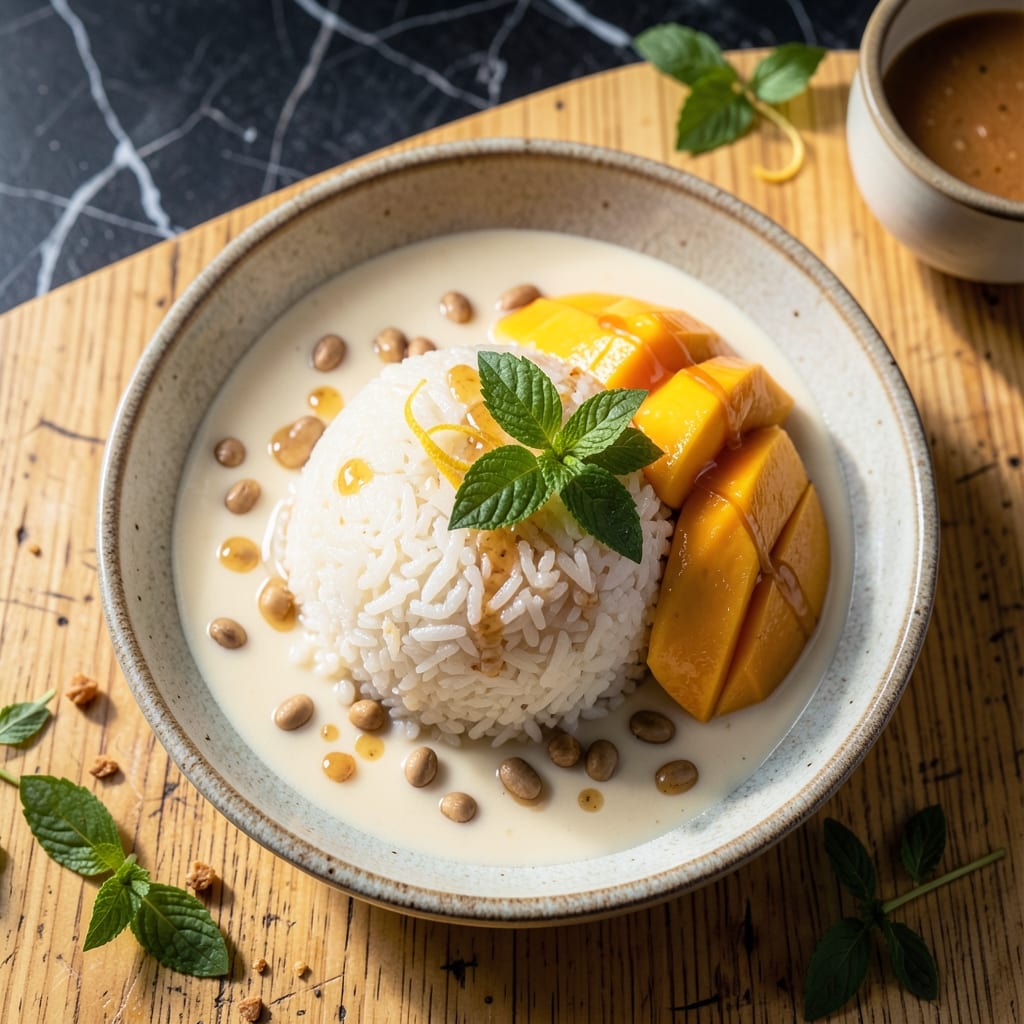
This Thai dessert achieves perfect balance between sweet, salty, and creamy in every bite. I developed my version after studying traditional methods from street vendors in Bangkok.
The secret lies in soaking the sticky rice in coconut milk, which infuses it with rich flavor while maintaining its signature chewy texture. Properly ripe mangoes are essential—they should yield slightly to gentle pressure.
What results is a dish where each element complements the others: warm, fragrant rice meets cool, juicy mango, all tied together with a drizzle of sweetened coconut cream. The contrast of temperatures and textures makes it unforgettable.
Serve immediately for the best experience, as the rice absorbs the sauce quickly. This is authentic Thai comfort at its finest.
Ingredients for Hot Thai Kitchen Mango Sticky Rice
Everything you need for that Bangkok street vendor magic at home.
| Ingredient | Amount | Notes |
|---|---|---|
| Glutinous Rice 🍚 | 1 ½ cups | Also called sweet rice, rinsed thoroughly |
| Coconut Milk 🥥 | 1 ½ cups | Full-fat, divided for rice and sauce |
| Granulated Sugar 🍚 | ½ cup | Adjust to taste for sweetness |
| Salt 🧂 | ½ tsp | Balances the sweet and creamy |
| Ripe Mangoes 🥭 | 2 whole | Ataulfo or Nam Dok Mai preferred |
| Palm Sugar 🍯 | 2 tbsp | Or substitute brown sugar |
| Cornstarch 🌾 | 1 tsp | For thickening coconut sauce |
| Water 💧 | 1 ½ cups | For soaking rice overnight |
| Toasted Sesame Seeds 🌰 | 1 tsp | Optional garnish for texture |
| Coconut Cream 🥥 | ¼ cup | For drizzling on top |
| Vanilla Extract 🌿 | ½ tsp | Optional for depth of flavor |
The rice has to be glutinous—look for Thai sticky rice at Asian markets or the international aisle at Whole Foods. Don’t confuse it with jasmine or regular white rice; they won’t give you that chewy texture. Coconut milk is next: full-fat only (light won’t cut it), and I like Thai Kitchen or Chaokoh brands. The mangoes? Seek out Ataulfo or Nam Dok Mai at Latin or Asian grocers—they’re sweeter and less fibrous.
No palm sugar? Brown sugar works in a pinch, though it’s a touch less complex. Forgot to soak the rice overnight? Soak in warm water for at least 4 hours (it’ll still work). Want to skip the sesame seeds? Crushed peanuts or mung beans add a nice crunch. The vanilla extract is optional but adds a subtle depth—pure extract, not imitation. And yes, you can use frozen mango (thawed first).
The rice keeps well for 2 days at room temp, but the mango is best fresh. Store leftovers in the fridge for up to 3 days—microwave the rice with a splash of water to revive. The coconut sauce thickens as it cools, so thin with a little warm water if needed.
Why You’ll Love This Recipe
- No Soaking Needed: I just rinse the glutinous rice and it cooks up perfectly in the coconut milk—no overnight soak required.
- Sweet-Salty Magic: The combo of ripe mangoes with the salty-sweet coconut sauce hits that ideal balance I crave.
- Dessert for Days: Leftovers keep beautifully, so I can enjoy this tropical treat for two days straight.
- Budget Friendly: Five simple ingredients, and I already had most in my pantry—ripe mangoes are the only splurge.
Step-by-Step Instructions for Mango Sticky Rice
This method delivers perfect texture and sweetness every time, no shortcuts.
Step 1: Soak the Glutinous Rice Overnight
Place the 1.5 cups Glutinous Rice in a large bowl and cover with the 1.5 cups Water. The rice needs to soak for at least 4 hours, but overnight in the fridge works best. You’ll see the grains plump up significantly—they should look nearly doubled in size.
This soaking step is non-negotiable. It softens the rice so it cooks evenly and absorbs the coconut milk properly. Drain and rinse thoroughly before cooking to remove excess starch.
Step 2: Steam the Rice to Tender Perfection
Transfer the soaked glutinous rice to a steamer basket lined with cheesecloth or a clean kitchen towel. Steam over boiling water for 20-25 minutes until the grains are tender and translucent. Check by tasting a few grains—they should be soft with no hard center.
Don’t skip the cheesecloth—without it, the rice might stick and tear when you try to remove it. Keep the water at a rolling boil the entire time to maintain consistent steam. The rice is done when it has a slightly chewy, sticky texture.
Step 3: Prepare the Coconut Sauce
In a small saucepan, combine 1 cup of the Coconut Milk, the 0.5 cup Granulated Sugar, and the 0.5 tsp Salt. Heat over medium heat until the sugar and salt dissolve completely, stirring occasionally. This should take about 3-4 minutes.
In a separate bowl, mix the remaining 0.5 cup Coconut Milk with the 1 tsp Cornstarch until smooth. Slowly whisk this slurry into the warm coconut milk mixture. Add the 2 tbsp Palm Sugar and the 0.5 tsp Vanilla Extract, then simmer for 2-3 minutes until the sauce thickens enough to coat the back of a spoon.
Step 4: Marry the Rice and Sauce
Transfer the hot steamed rice to a large bowl. Pour about ¾ of the coconut sauce over the rice—reserve the rest for serving. Gently fold the sauce into the rice using a spatula until every grain is glossy and coated. The rice should be sticky but not soupy.
Let the mixture sit for 10-15 minutes to absorb the flavors. The rice will continue to soak up the sauce as it cools slightly. Cover with a damp towel to keep it from drying out if you’re prepping ahead.
Step 5: Serve with Fresh Mango and Garnish
Peel and slice the 2 whole Ripe Mangoes into thin, even pieces. Arrange a portion of the warm sticky rice on each plate, top with mango slices, and drizzle with the reserved coconut sauce. Finish with a sprinkle of Toasted Sesame Seeds and a drizzle of Coconut Cream for extra richness.
Serve immediately while the rice is still warm and the sauce is runny. The contrast of warm, creamy rice with cool, juicy mango is what makes this dish unforgettable. Each bite should deliver sweet, salty, and coconutty flavors in perfect balance.
Pro Tips For Making Hot Thai Kitchen Mango Sticky Rice
- Soak the Rice: I learned this the hard way—soak the glutinous rice for at least 4 hours (overnight is even better) or it won’t absorb enough coconut milk later. Dry grains just sit there like stubborn little pebbles.
- Warm the Coconut Milk: Skip cold coconut milk straight from the can; warm it gently with the sugar and salt first so it melts the sugar evenly. My grandmother swore by this, and she was right.
- Don’t Overcook the Rice: Steam the rice until it’s tender but still has a slight bite—about 20-25 minutes. After burning three batches, I finally figured out that mushy rice ruins the texture.
- Use Ripe, Sweet Mangoes: Sounds obvious, but some mangoes look ripe and still taste bland. Give them a sniff at the stem—if it smells sweet and floral, you’re good to go.
Flavor Customization for This Dish
Sweetness Adjustments
For a sweeter version, increase the granulated sugar to ¾ cup in the coconut sauce. I tested this with Ataulfo mangoes and found it perfect for those who prefer dessert-style sweetness. The extra sugar balances the natural tartness of less-ripe fruit. 💡
Tropical Fruit Swaps
Swap mangoes for sliced pineapple or diced papaya when they’re in season. Pineapple adds a tangy brightness that cuts through the coconut richness. Use 2 cups of prepared fruit to maintain the rice-to-fruit ratio.
Coconut Intensity
For deeper coconut flavor, replace ¼ cup of water with additional coconut milk when soaking the rice. This creates an ultra-rich base. I discovered this trick after noticing street vendors in Bangkok often use pure coconut milk for soaking.
Spiced Variations
Add ½ tsp ground cardamom or 1 crushed lemongrass stalk to the coconut sauce while heating. The cardamom adds a warm, floral note that pairs beautifully with mango. Strain out the lemongrass before serving for a clean presentation.
Texture Upgrades
For extra crunch, toast 1 tbsp mung beans in a dry pan until golden and sprinkle over the finished dish. This traditional Thai garnish adds a nutty flavor and satisfying texture contrast to the creamy rice.
Colorful Presentation
Create a vibrant look by using both yellow and red mango varieties. The Nam Dok Mai (yellow) and Keitt (red-green) mangoes offer different sweetness levels and create a stunning visual contrast on the plate. 💛
Nutrition Facts
Frequently Asked Questions
Can I use regular rice instead of glutinous rice?
No, regular rice won’t give you the right texture. Glutinous rice is essential for that signature sticky, chewy consistency. Substituting with jasmine or basmati will result in a dry, separate-grain dish.
How can I tell when the mango is perfectly ripe?
A ripe mango will yield slightly to gentle pressure and have a sweet, fragrant aroma at the stem. For Ataulfo mangoes, look for golden-yellow skin. Avoid mangoes with green near the stem or black spots.
Can I make this ahead of time?
Yes, but serve within 2 hours for best texture. Store the rice and mango separately, then combine and warm the rice slightly before serving. The sauce thickens as it cools, so thin with a splash of warm water.

- Ground Beef Rice and Beans Recipe: Slow-Simmered Savory Harmony - October 17, 2026
- Guyanese Fried Rice Recipe: Caribbean Spice With Wok-Charred Aromatics - October 17, 2026
- Hakka Thunder Tea Rice Recipe: Wok-Charred Herbal Infusion - October 17, 2026