
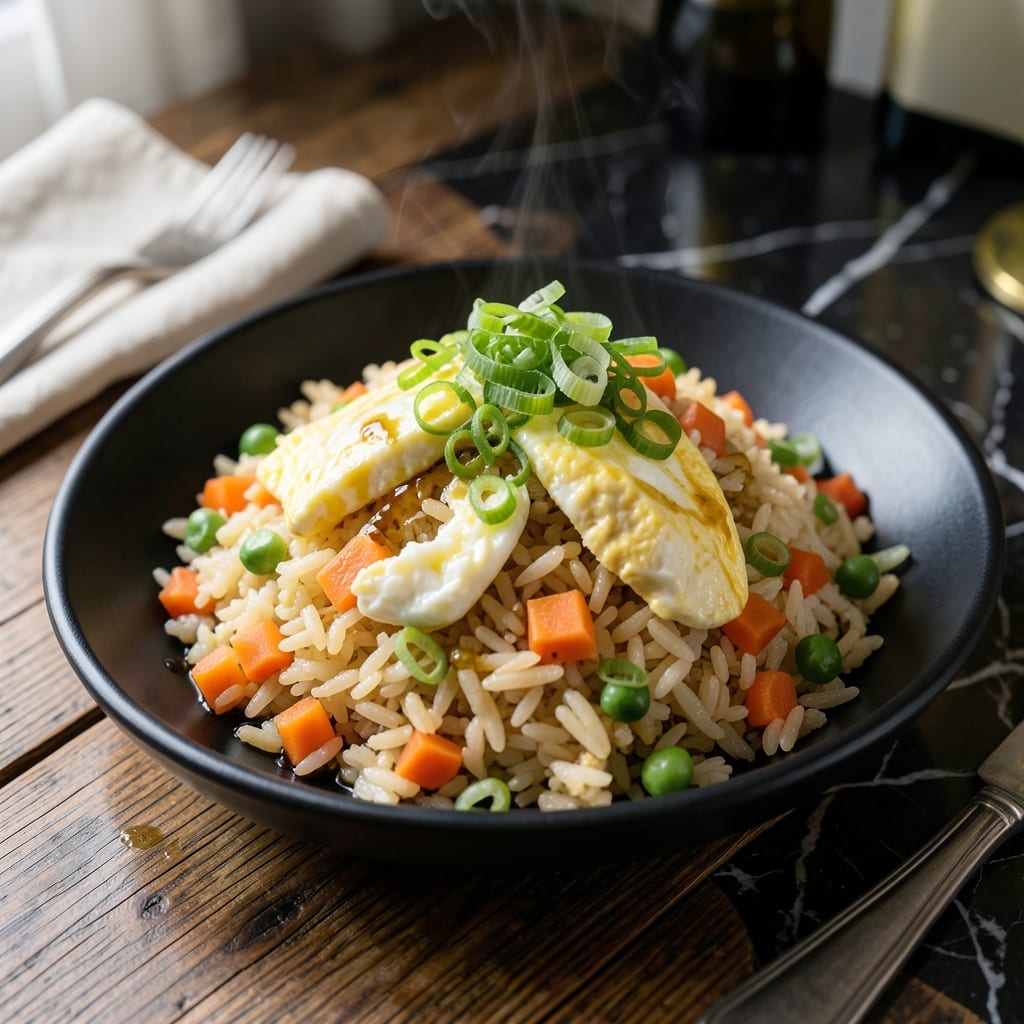
This recipe brings genuine Japanese flavors to your home kitchen with traditional wok-tossing techniques. I’ve tested it repeatedly to ensure it delivers the authentic taste you’d find in Tokyo restaurants.
The secret lies in using day-old rice and high heat to achieve that signature texture—separate grains with a slight caramelization. Each ingredient, from soy sauce to mirin, plays a crucial role in building layers of umami.
What emerges is a dish with perfectly seasoned rice, tender vegetables, and just the right balance of savory and sweet. The wok-tossed method ensures every bite is coated in flavor.
Serve it as a main course or alongside your favorite Japanese dishes. Here’s how to make it.
Ingredients for House of Japan Fried Rice
Traditional Japanese flavors start with day-old rice and a few fresh vegetables. Nothing complicated here.
| Ingredient | Amount | Notes |
|---|---|---|
| Day-Old Cooked White Rice 🍚 | 4 cups | Cooled, preferably overnight |
| Vegetable Oil 🫒 | 3 tbsp | High smoke point preferred |
| Large Eggs 🥚 | 2 whole | Beaten lightly |
| Carrot 🥕 | 1 whole | Peeled, finely diced |
| Green Onions 🧅 | 3 whole | Thinly sliced, whites and greens separated |
| Frozen Green Peas 🌱 | ½ cup | Thawed under cold water |
| Soy Sauce 🥢 | 3 tbsp | Japanese-style preferred |
| Mirin 🍶 | 1 tbsp | Sweet rice wine |
| Sake 🍶 | 1 tbsp | Optional for depth |
| Sesame Oil 🫒 | 1 tsp | Toasted, for finishing |
| Garlic Clove 🧄 | 2 cloves | Minced finely |
| Salt 🧂 | ½ tsp | Or to taste |
| Black Pepper 🌶️ | ¼ tsp | Freshly ground |
The rice is non-negotiable—day-old, cold, from the fridge. Freshly cooked rice turns to mush in the wok. For the soy sauce, Kikkoman or Yamasa are easy to find at any grocery store. Mirin and sake might require a trip to an Asian market (or the international aisle at Whole Foods), but they’re worth it for that authentic depth. If you’re in a pinch, skip the sake and bump the mirin to 2 tablespoons.
No peas? Frozen corn or diced bell peppers work fine. Vegetable oil can be swapped for peanut or canola—just avoid olive oil (wrong smoke point). Don’t have green onions? Regular onion, finely diced, gets the job done. The sesame oil is a must though (that toasty finish is key). If you’re gluten-free, tamari instead of soy sauce keeps it safe.
Fried rice keeps 3-4 days in the fridge (reheats like a dream in a skillet). The flavors actually deepen overnight. Freezing? Not ideal—rice gets gummy. Best made fresh, but leftovers still taste great for lunch the next day.
Why You’ll Love This Recipe
- One Pan Meal: I love that everything cooks in a single wok—rice, eggs, veggies—minimal cleanup, maximum flavor.
- Umami Bomb: The carrots and green onions add just the right sweetness and crunch to balance the savory eggs and rice.
- Meal Prep Hero: Honestly, it tastes even better the next day, so I make a big batch for lunches all week.
- Budget Stretcher: Using day-old rice and simple veggies means I’m not wasting food or money, and it still tastes incredible.
Step-by-Step Instructions for House of Japan Fried Rice
Here’s how to achieve authentic wok-tossed flavor with perfect texture every time.
Step 1: Prep and Scramble the Eggs
Heat 1 tablespoon vegetable oil in a large wok or skillet over medium-high heat until shimmering. Pour in the 2 whole large eggs and scramble gently with a spatula until just set but still slightly soft. This should take 30-45 seconds.
Remove the eggs from the pan and set aside on a plate. They’ll finish cooking when added back to the rice later. This separate cooking prevents them from overcooking and keeps them tender in the final dish.
Step 2: Sauté Aromatics and Vegetables
Add the remaining 2 tablespoons vegetable oil to the same pan. When hot, add the minced garlic cloves and sauté for 15 seconds until fragrant but not browned. Then add the finely diced carrot and cook for 2-3 minutes until slightly softened.
Toss in the thawed frozen green peas and the white parts of the 3 whole green onions. Stir-fry for another 1-2 minutes until the vegetables are tender but still bright in color. The pan should be hot enough to create a slight sizzle when adding ingredients.
Step 3: Combine Rice and Seasonings
Add all 4 cups day-old cooked white rice to the pan, breaking up any clumps with your spatula. The rice should sizzle when it hits the pan—this is how you know it’s hot enough for that authentic wok hei flavor.
Drizzle the 3 tablespoons soy sauce, 1 tablespoon mirin, and 1 tablespoon sake evenly over the rice. Sprinkle with 0.5 tsp salt and 0.25 tsp black pepper. Stir-fry for 3-4 minutes until the rice is heated through and starting to crisp slightly in spots.
Step 4: Finish with Eggs and Final Touches
Return the scrambled eggs to the pan, breaking them into small pieces as you incorporate them into the rice. Add the green parts of the green onions and stir-fry for another 30 seconds to combine everything evenly.
Remove from heat and drizzle with the 1 tsp sesame oil. Toss one final time to distribute the sesame oil throughout. The rice should be lightly crispy in some spots, with each grain distinct and coated with sauce. Serve immediately while hot for the best texture and flavor.
Pro Tips For Making House Of Japan Fried Rice
- Use Cold Rice: Always start with day-old, cold rice straight from the fridge—fresh rice turns mushy and sticks to the pan. I learned this the hard way after my first few attempts turned into a gluey mess.
- High Heat First: Crank the heat to medium-high before adding the oil and eggs, then keep it hot when tossing in the rice. After burning two batches, I finally figured out that lukewarm oil just steams the rice instead of frying it.
- Prep Veggies Small: Dice the carrot into tiny cubes (1/4-inch or smaller) so they soften quickly and cook evenly with the rice. Sounds tedious, but it actually changes the outcome—no one wants crunchy carrot bits in their fried rice.
- Scramble Eggs Separately: Beat the eggs with a pinch of salt and cook them first in the pan, then remove and set aside before adding the rice. I was skeptical until I tried it, but it guarantees fluffy, distinct egg bits instead of a rubbery scramble mixed into the rice.
Common Mistakes When Making house of japan fried rice
Using Fresh Rice
The biggest mistake I see is using freshly cooked rice—it turns gummy in the wok. Day-old, cold rice from the fridge is essential for that separate, slightly crispy texture. I learned this the hard way during my early attempts. 💡
Low Heat Cooking
Your pan needs to be screaming hot—medium-high to high heat—to achieve proper wok hei. Cooking on low heat results in soggy rice and steamed vegetables. If your oil isn’t shimmering when you add ingredients, your heat isn’t high enough.
Overcrowding the Pan
Trying to cook all 4 cups of rice at once in a small pan leads to uneven cooking. Use a large wok or skillet and work in batches if needed. This ensures each grain gets proper contact with the hot surface.
Overcooking the Eggs
Scramble the 2 eggs just until softly set, then remove them. Adding them back later prevents rubbery eggs. I discovered this trick after too many dry, overcooked egg bits in my early versions.
Skipping the Prep
Have all ingredients prepped and measured before you start—the cooking process moves fast. Mise en place isn’t optional here. In my tiny Boston kitchen, I learned to have everything ready or risk burning something.
Wrong Oil Choice
Avoid oils with low smoke points like olive oil. Stick with vegetable, peanut, or canola oil that can handle the high heat. The wrong oil will smoke excessively and impart bitter flavors to your dish.
Nutrition Facts
Frequently Asked Questions
Why does the rice need to be day-old?
Day-old rice has less moisture, which prevents it from turning mushy when stir-fried. Fresh rice releases too much starch, leading to clumpy results.
Can I add protein to this recipe?
Try chopped chicken, shrimp, or tofu. Cook it first, then set aside with the eggs before adding back at the end.
What if I don’t have mirin or sake?
Skip the sake and use 2 tablespoons mirin. Or substitute 1 tablespoon sugar mixed with 1 tablespoon water for mirin.
How do I store leftovers?
Keep in an airtight container in the fridge for up to 4 days. Reheat in a skillet with a splash of oil to revive the texture.

- Ground Beef Rice and Beans Recipe: Slow-Simmered Savory Harmony - October 17, 2026
- Guyanese Fried Rice Recipe: Caribbean Spice With Wok-Charred Aromatics - October 17, 2026
- Hakka Thunder Tea Rice Recipe: Wok-Charred Herbal Infusion - October 17, 2026