
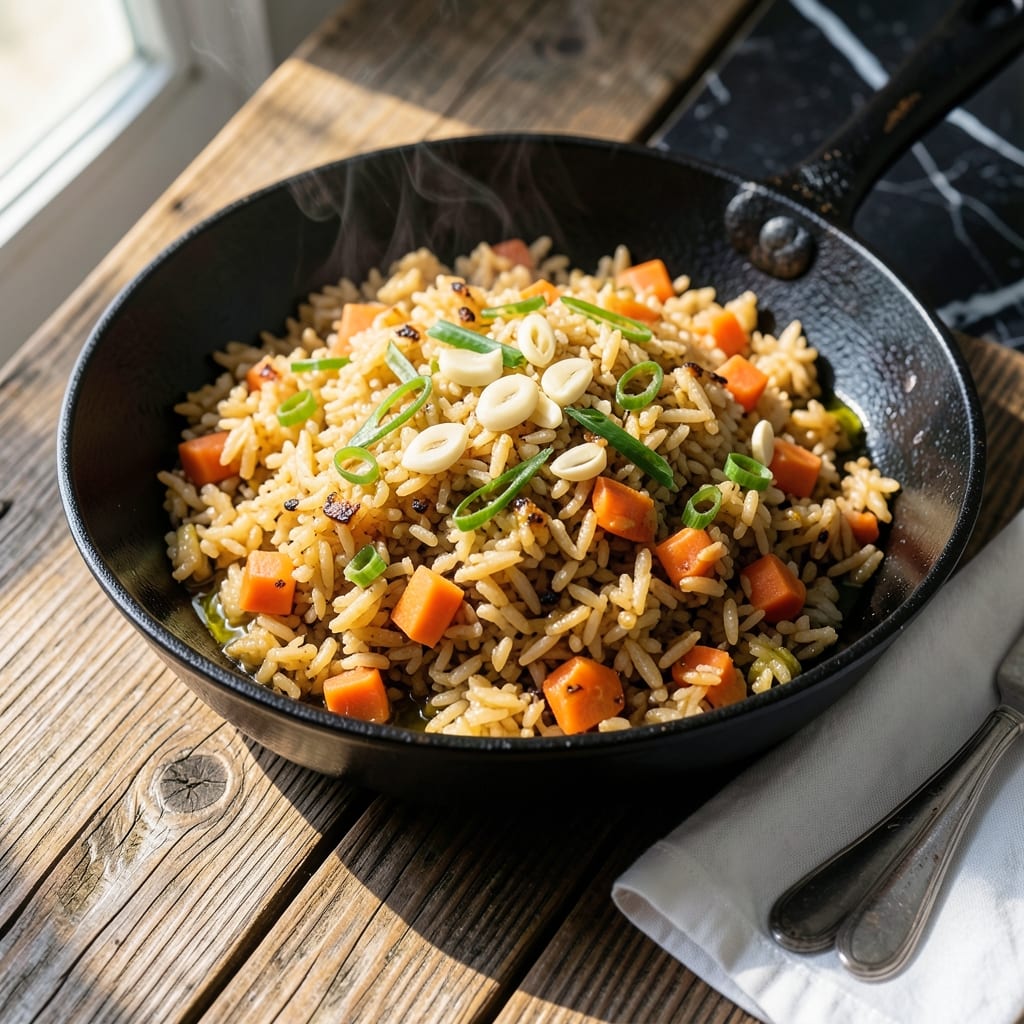
This authentic wok-tossed dish captures the true essence of Chinese takeout classics at home. The secret lies in using day-old rice and the right sequence of ingredients for that perfect savory balance.
High heat and quick cooking preserve texture while blending flavors. This version stays true to tradition with simple techniques and accessible ingredients, delivering restaurant-quality results every time.
Ingredients for House Special Fried Rice
Day-old rice and a few fresh staples deliver that classic wok-tossed savory depth at home.
| Ingredient | Amount | Notes |
|---|---|---|
| Day-Old Cooked White Rice 🍚 | 4 cups | Cold, preferably overnight |
| Vegetable Oil 🫒 | 3 tbsp | High smoke point preferred |
| Garlic Cloves 🧄 | 4 cloves | Minced finely |
| Fresh Ginger 🌿 | 1 tbsp | Peeled and grated |
| Green Onions 🧅 | 4 whole | Thinly sliced, whites and greens separated |
| Carrots 🥕 | 2 whole | Small dice, blanched |
| Frozen Peas 🌱 | 1 cup | Thawed and drained |
| Large Eggs 🥚 | 3 whole | Lightly beaten |
| Char Siu or BBQ Pork 🍖 | 1 cup | Diced, cooked |
| Cooked Shrimp 🍤 | ½ lb | Peeled and deveined |
| Light Soy Sauce 💧 | 2 tbsp | Low-sodium preferred |
| Dark Soy Sauce 💧 | 1 tbsp | For color and depth |
| Oyster Sauce 🫙 | 1 tbsp | Vegetarian oyster sauce if needed |
| Sesame Oil 🫒 | 1 tsp | Toasted, for finishing |
| White Pepper 🧂 | ½ tsp | Ground, for authenticity |
The rice is non-negotiable—day-old, cold, and dry prevents mushiness. For protein, Chinese BBQ pork (char siu) is traditional, but leftover roasted pork works. Asian markets carry pre-cooked versions if you’re short on time. Shrimp should be medium-sized, peeled, and deveined for even cooking. Look for high-smoke-point oils like peanut or avocado if you want to splurge beyond vegetable oil.
No char siu? Diced ham or rotisserie chicken makes a fine substitute. For a seafood-free version, extra shrimp or tofu keeps it hearty. Oyster sauce can be swapped with hoisin or vegetarian oyster sauce. The green onions add freshness—don’t skip the garnish. Frozen peas work in a pinch (just thaw and drain), but fresh snap peas add a nice crunch if you can find them.
Fried rice reheats well—store in an airtight container for up to 3 days. The flavors actually deepen overnight. Freeze portions for up to 3 months (thaw in the fridge before reheating). Always cook on high heat to recreate that authentic wok-hei flavor.
Why You’ll Love This Recipe
- One Pan Magic: I toss everything into a single wok—no fancy equipment, just quick cooking with what’s already in my fridge.
- Garlic-Ginger Punch: The sizzling garlic and fresh ginger hit the rice with a fragrance so good, my kitchen smells like a takeout spot.
- Weeknight Hero: Between us, this is my Tuesday night lifesaver when I need dinner fast but still want it to taste like I tried.
- Leftovers Reimagined: I always make extra rice the day before—turns last night’s carb into tonight’s star dish, no waste, all flavor.
Step-by-Step Instructions for House Special Fried Rice
Master the wok technique that delivers authentic flavor and perfect texture every time.
Step 1: Prepare and Heat the Wok
Heat a wok or large skillet over high heat until a bead of water sizzles and evaporates immediately upon contact. Add 2 tbsp Vegetable Oil and swirl to coat the surface evenly. The oil should shimmer but not smoke—this high heat is crucial for achieving that signature wok hei (breath of the wok) flavor.
Add the 4 cloves Garlic Cloves and 1 tbsp Fresh Ginger, stir-frying for 15-20 seconds until fragrant but not browned. Be vigilant; garlic burns quickly and will impart a bitter taste if overcooked. The aroma should be pungent and fresh, signaling the base flavors are ready.
Step 2: Scramble the Eggs and Add Vegetables
Push the aromatics to one side of the wok and add the remaining 1 tbsp Vegetable Oil. Pour in the 3 whole Large Eggs and scramble vigorously with a spatula until just set but still slightly runny. The eggs should form soft, curdy pieces that will distribute evenly throughout the dish.
Add the 2 whole Carrots, 1 cup Frozen Peas, and the white parts of the 4 whole Green Onions. Stir-fry for 2-3 minutes until the carrots are tender and the peas are heated through. The vegetables should retain a slight bite, ensuring they don’t turn mushy during the final tossing.
Step 3: Incorporate Proteins and Rice
Add the 1 cup Char Siu or BBQ Pork and 0.5 lb Cooked Shrimp to the wok, stirring to combine with the vegetables. Cook for 1 minute to heat the proteins through. The shrimp should turn opaque and the pork should glisten slightly from the heat.
Break up the 4 cups Day-Old Cooked White Rice with your hands to separate any clumps, then add it to the wok. Stir-fry for 3-4 minutes, pressing the rice against the hot surface to achieve slight crispiness. The rice should be hot throughout and beginning to take on a toasted aroma.
Step 4: Season and Finish
Drizzle the 2 tbsp Light Soy Sauce, 1 tbsp Dark Soy Sauce, and 1 tbsp Oyster Sauce evenly over the rice. Toss everything together for 1-2 minutes until the rice is uniformly coated and the sauces have been absorbed. The color should deepen to a rich, appetizing hue.
Remove from heat and stir in the 1 tsp Sesame Oil and 0.5 tsp White Pepper. Garnish with the green parts of the 4 whole Green Onions. The final dish should be fragrant, with each grain of rice distinct yet infused with the complex flavors of the seasonings and proteins.
Pro Tips For Making House Special Fried Rice
- Use Cold Rice: Day-old rice from the fridge works best—its drier texture soaks up flavors better and won’t turn mushy. I learned this the hard way after using fresh rice and ending up with a soggy mess.
- High Heat Only: Crank your wok or pan to smoking hot before adding oil. After burning three batches, I finally figured out that medium heat just steams the rice instead of frying it.
- Mince Ginger Fine: Fresh ginger should be minced to near-paste consistency so it distributes evenly. Sounds weird, but it works—those tiny bits of ginger in every bite make the dish.
- Separate Rice First: Break up clumps in the cold rice with your hands before it hits the pan. My grandmother swore by this, and she was right: it prevents big chunks from sticking together.
Regional Styles of These Flavors
Cantonese Style
This version stays true to Guangzhou traditions with char siu pork and shrimp as proteins. I use light and dark soy sauces for that perfect balance of saltiness and color. The key is cooking everything at high heat to achieve wok hei. 🔥
Sichuan Spicy
For heat lovers, I add 1 tbsp Sichuan peppercorns and 2 chopped Thai chilies with the aromatics. Double the garlic to 8 cloves and finish with chili oil instead of sesame. This creates that numbing spice Sichuan cuisine is famous for.
Yangzhou Classic
This eastern Chinese style focuses on luxury ingredients. I include diced ham, shrimp, and scallops with the rice. The technique involves cooking each protein separately before combining, ensuring perfect texture for every element.
Fujian Seafood
Coastal Fujian emphasizes seafood, so I use scallops, squids, and shrimp as proteins. Add 1 tsp Shaoxing wine with the sauces for depth. The result is lighter but packed with ocean flavors. 🌊
Hokkien Pork
This Taiwanese approach uses only pork belly as protein, rendered crispy first. I add dried shrimp for umami and finish with fried shallots. The texture contrast between crispy pork and soft rice is incredible.
Vegetarian Adaptation
Skip the meat and use tofu, mushrooms, and baby corn. Replace oyster sauce with vegetarian oyster sauce. I add 1 tsp mushroom sauce for extra depth. The dish remains hearty and satisfying.
Nutrition Facts
Frequently Asked Questions
Why use day-old rice for fried rice?
Fresh rice contains too much moisture, leading to mushy results. Day-old rice is drier and firmer, allowing it to absorb flavors without turning soggy during stir-frying.
Can I substitute the proteins?
Swap char siu for ham, chicken, or tofu. For seafood lovers, try scallops or squid. Just ensure proteins are pre-cooked to maintain texture.
What’s the best way to avoid soggy fried rice?
Cook on high heat and work quickly. Use a well-heated wok, add ingredients in stages, and avoid overcrowding. This keeps the rice grains separate and crisp.
How long can I store leftovers?
Store in an airtight container in the fridge for up to 3 days. Reheat in a pan with a splash of water to restore moisture and texture.

- Ground Beef Rice and Beans Recipe: Slow-Simmered Savory Harmony - October 17, 2026
- Guyanese Fried Rice Recipe: Caribbean Spice With Wok-Charred Aromatics - October 17, 2026
- Hakka Thunder Tea Rice Recipe: Wok-Charred Herbal Infusion - October 17, 2026