
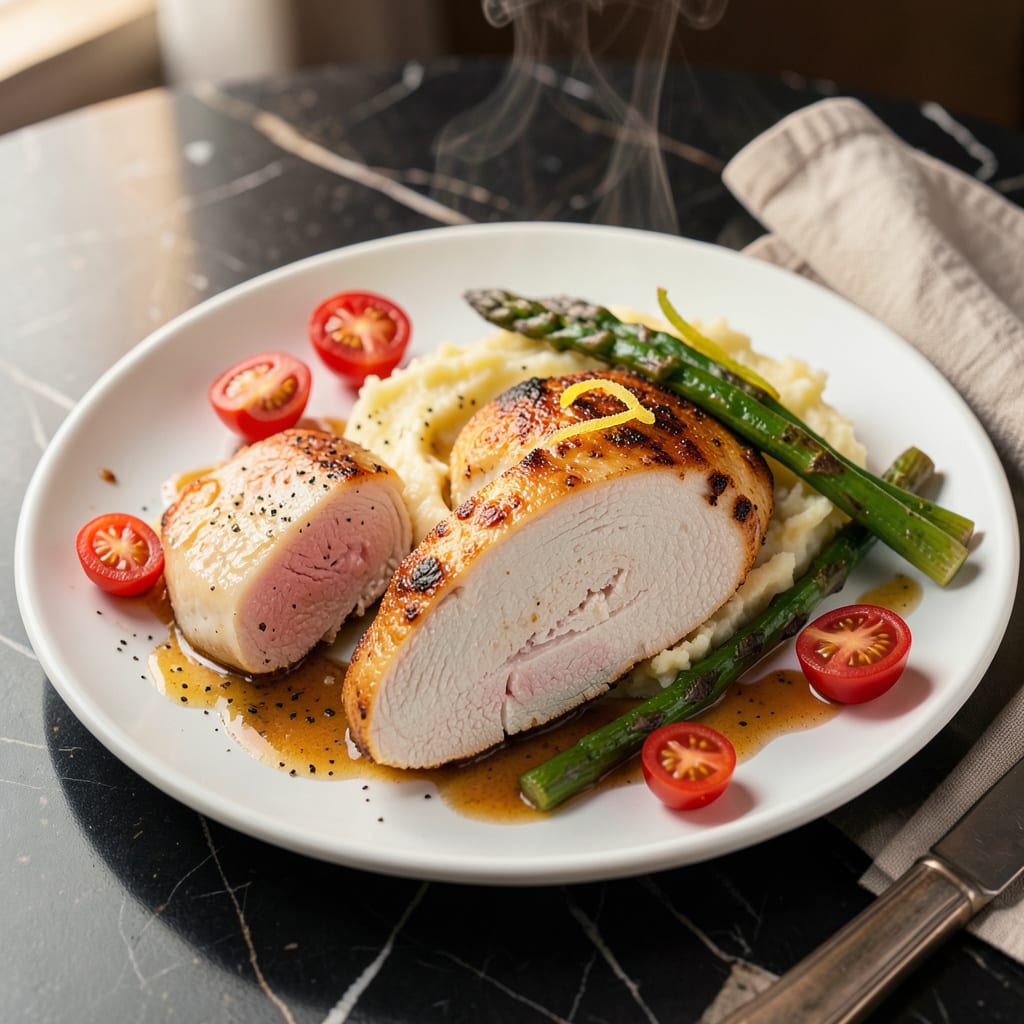
Undercooked chicken appears pink or translucent near the bone, feels rubbery or jelly-like when touched, and releases pink juices when cut. Always check the internal temperature reaches 165°F for safety.
I’ve found that identifying undercooked poultry goes beyond just color—it’s about understanding the science behind safe preparation. The protein structure in properly cooked chicken transforms from translucent to opaque white, and the fibers become firm yet tender. What many home cooks overlook is that juice color can be misleading with certain marinades, which is why I always recommend verifying with a thermometer. This simple step eliminates all guesswork and protects against foodborne illness. ✨
What’s particularly important is checking multiple spots, especially near the thickest part of the meat and where bones meet flesh. These areas often cook more slowly and can harbor bacteria if underdone. I’ve seen even experienced cooks make the mistake of relying solely on surface appearance, which can be deceptive with larger cuts or stuffed preparations. 🔥
💡 In This Article
- Visual and Physical Signs of Undercooked Chicken
- Safe Chicken Cooking Temperatures and Testing Methods
Visual and Physical Signs of Undercooked Chicken
When examining chicken for doneness, the color transformation tells a critical story. Raw chicken contains myoglobin—a protein that gives it that pinkish hue. As heat breaks down these proteins, the meat transitions from translucent pink to opaque white.
The key spot to check is where the flesh meets the bone, particularly in thighs and drumsticks, where cooking happens more slowly. I’ve noticed that even when the surface looks done, the area within 1/4 inch of the bone can still show dangerous pinkness. 🔥
The texture test reveals even more than color. Properly cooked chicken fibers should separate easily when pressed, with a firm yet springy resistance. Undercooked meat feels disturbingly rubbery or jelly-like—almost like pressing raw dough. This happens because the collagen hasn’t fully denatured (it starts breaking down at 140°F but needs 165°F to fully transform).
The connective tissues near joints remain tough and slippery when underdone, rather than melting into tender gelatin.
Juice color often surprises people—clear juices don’t always mean safe chicken. With bone-in cuts, the juices can appear clear while the meat near the bone remains undercooked. I’ve seen this frequently with large roasted chickens where the outer meat cooks faster than the interior. The fork test helps here: insert a fork and twist slightly.
If the fibers resist separation or feel gummy, it needs more time. Properly cooked meat will pull apart cleanly with minimal effort. ✨
Bone appearance offers another reliable clue. In fully cooked chicken, the bones should appear clean and white where they meet the flesh. Any remaining pink or red near the bone (especially in dark meat) indicates undercooking. This happens because bones conduct heat differently than muscle tissue.
The temperature gradient means the meat closest to the bone often lags behind the outer layers by 10-15°F during cooking. 💫
Marinades and brines can mask these visual cues dramatically. Soy sauce, tomato-based mixtures, or even turmeric can stain the meat, making pink areas harder to spot. That’s why I always recommend cutting into the thickest part to check—particularly with boneless breasts that might appear uniformly white on the outside while remaining unsafe inside.
The thumb test helps here: press the meat and compare resistance to your hand’s fleshy base (relaxed = rare, tense = well-done).
What many overlook is how carryover cooking affects doneness. Chicken continues cooking internally after removal from heat, with temperatures rising another 5-10°F during resting. This means pulling it at exactly 165°F can result in overcooking. I aim for 160°F when removing from heat, knowing it will reach the safe zone while resting.
This preserves moisture while ensuring safety. ⚡
The smell test serves as a final verification. Raw chicken has a faint metallic, almost bloody odor, while properly cooked meat smells clean and appetizing. Any lingering raw meat scent—particularly when cutting into the thickest portion—signals the need for more cooking time.
This sensory check works beautifully alongside the visual and texture tests for complete confidence. 🌟

- Jollof Rice Sauce Recipe: West African Tomato and Spice Infusion - September 25, 2026
- Japanese Rice Soup Recipe: Umami-Rich Comfort in a Bowl - September 25, 2026
- Homemade Cream Of Rice Recipe: Silk-Smooth Breakfast in Minutes - September 25, 2026