
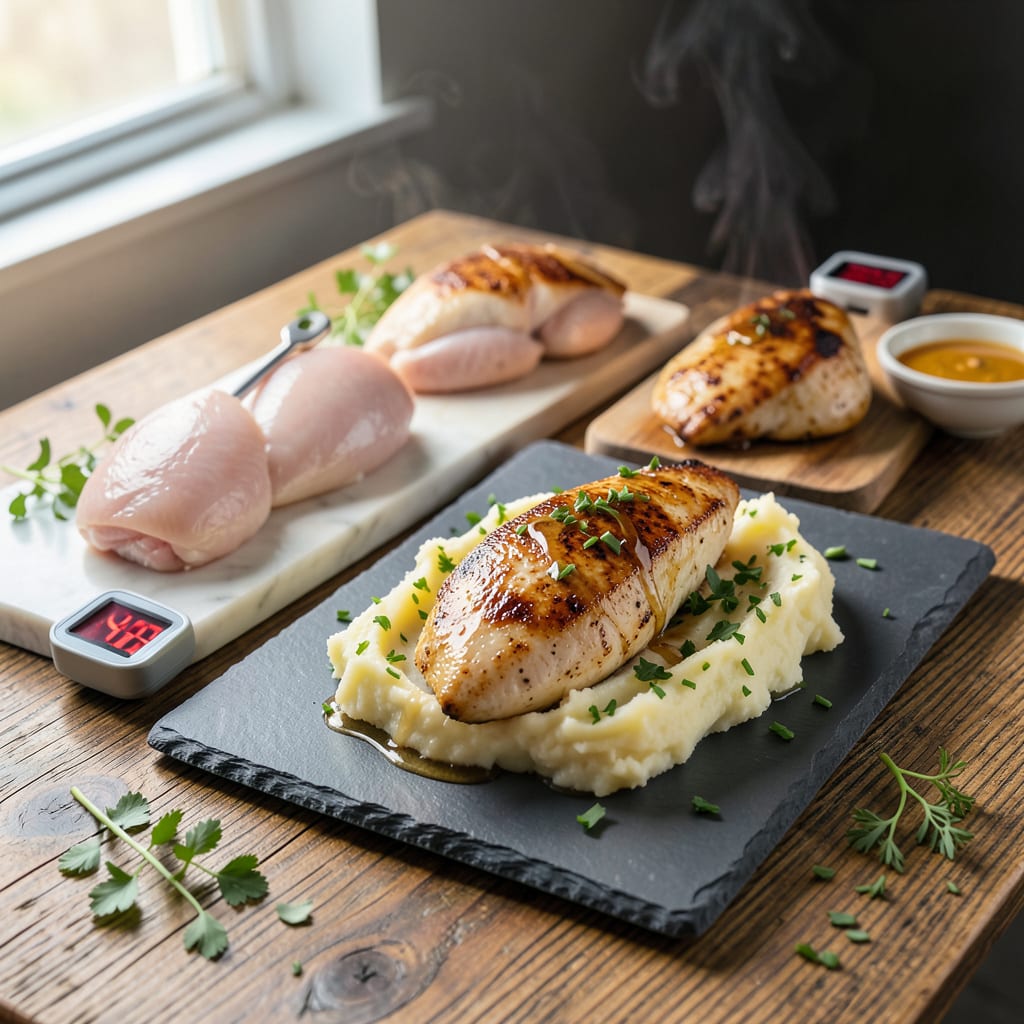
Frozen chicken should never be left out for more than 2 hours at room temperature, or 1 hour if the temperature exceeds 90°F. Beyond this, harmful bacteria like Salmonella can multiply rapidly, making it unsafe to eat.
This isn’t just about food going bad—it’s about food safety becoming compromised at an alarming rate. 🔥 The USDA’s guidelines exist because chicken enters what’s called the “danger zone” between 40°F and 140°F, where bacteria growth accelerates exponentially. What many don’t realize is that freezing only pauses bacterial activity—it doesn’t eliminate existing bacteria. Once thawed, those bacteria wake up hungry and ready to multiply, turning your chicken into a potential health hazard faster than you might expect.
I’ve seen people make the mistake of assuming frozen chicken is “protected” because it was previously frozen. The reality is that thawing creates the perfect storm—moisture from melting ice plus room temperature creates ideal conditions for bacteria to thrive. This is why proper thawing methods aren’t just recommendations; they’re essential food safety practices that can prevent serious foodborne illnesses.
💡 In This Article
- Why Frozen Chicken Thaws Dangerously at Room Temperature
- Safe Thawing Methods for Frozen Chicken to Avoid Spoilage
Why Frozen Chicken Thaws Dangerously at Room Temperature
The moment frozen chicken hits room temperature, it enters what food scientists call the temperature danger zone—the range between 40°F and 140°F where bacteria multiply most aggressively. Here’s what’s actually happening: As ice crystals melt, they release moisture that creates a perfect breeding ground for bacteria.
Salmonella and Campylobacter, which may have been dormant during freezing, become active again and can double in number every 20-30 minutes in these conditions. 🔥
Freezing only pauses bacterial growth—it doesn’t kill existing bacteria. When chicken thaws, any bacteria present before freezing (or introduced during packaging) wake up and start reproducing immediately. The surface temperature rises fastest, creating a warm, moist environment where bacteria can thrive.
Unlike fresh chicken that might have lower initial bacterial loads, thawed chicken often contains more moisture from melted ice, accelerating bacterial growth even further.
Room temperature thawing becomes particularly dangerous because the outer layers warm up long before the center thaws. This creates a temperature gradient where the surface sits in the danger zone for hours while the inside remains frozen.
Studies show that chicken left at 70°F can develop unsafe bacterial levels in as little as 90 minutes, while the same chicken at 90°F might become hazardous in under an hour. ✨
The USDA’s 2-hour rule (1-hour at 90°F+) accounts for this rapid multiplication. What makes thawed chicken riskier than fresh? The freezing-thawing cycle damages cell walls, releasing more nutrients that feed bacterial growth. This is why properly thawed chicken should be cooked immediately—it’s already had one strike against it in the bacterial growth game.
Consider this comparison: Fresh chicken at room temperature might take 4-6 hours to reach dangerous bacterial levels, while thawed chicken can hit that point in half the time. The melting ice creates a watery environment that helps bacteria spread across the surface.
That’s why you’ll notice thawed chicken often feels slimier than fresh—it’s not just texture, it’s bacterial activity beginning. 💫
Temperature isn’t the only factor—humidity plays a role too. In humid environments (like a crowded kitchen), bacteria multiply even faster because moisture in the air prevents surface drying. This is why summer picnics are particularly risky—high temperatures combined with humidity create the worst-case scenario for bacterial growth on thawing chicken.
The takeaway? Every minute counts when chicken sits at room temperature. The bacterial growth curve isn’t linear—it’s exponential. What seems safe at 1.5 hours could be dangerous by 2 hours, especially if your kitchen runs warm. This isn’t just about food spoilage—it’s about preventing foodborne illnesses that can hospitalize vulnerable individuals. ⚡

- Jollof Rice Sauce Recipe: West African Tomato and Spice Infusion - September 25, 2026
- Japanese Rice Soup Recipe: Umami-Rich Comfort in a Bowl - September 25, 2026
- Homemade Cream Of Rice Recipe: Silk-Smooth Breakfast in Minutes - September 25, 2026