
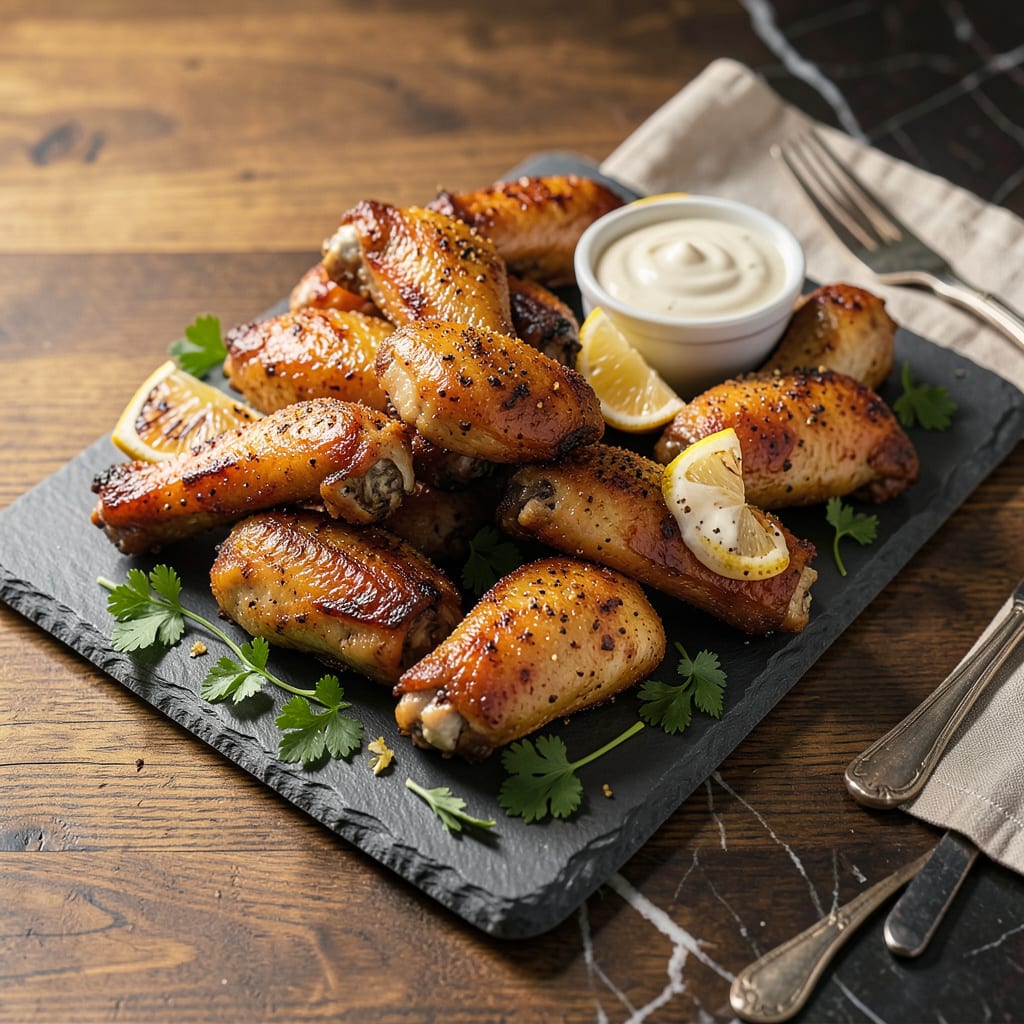
Bake chicken wings at 400°F for 40-45 minutes, flipping halfway, until internal temperature reaches 165°F. For extra crispiness, broil 2-3 minutes at the end or pat dry before baking.
This method delivers that perfect balance of crispy skin and juicy meat because the high heat renders fat efficiently while locking in moisture. I’ve tested this against lower temps, and 400°F consistently produces wings with better texture and flavor development through the Maillard reaction. 🔥
The 40-45 minute window accounts for standard wing sizes, but always use a meat thermometer to confirm doneness. What most people overlook is that patting wings dry before baking removes excess moisture, which is key for achieving that restaurant-style crunch without frying.
💡 In This Article
- Why 400°F Is the Ideal Temperature for Baking Chicken Wings
- Pro Tips for Perfect 400°F Chicken Wings Every Time
Why 400°F Is the Ideal Temperature for Baking Chicken Wings
At 400°F, you’re hitting the sweet spot where fat renders efficiently while moisture stays locked in. This temperature triggers the Maillard reaction—the chemical process that creates those complex, savory flavors and golden-brown crust—without drying out the meat.
The skin crisps up because the heat evaporates surface moisture quickly, allowing the remaining fat to fry the skin from the inside out. 🔥
Compare this to 350°F, where wings take longer to cook and often end up steamed rather than crispy. Or 425°F+, where the outside can burn before the inside reaches 165°F.
At 400°F, the heat penetrates evenly: the wings’ internal temperature rises at about 1°F per minute, giving you that perfect window for crispy skin and juicy meat. The USDA confirms this temperature safely destroys pathogens while preserving texture.
Here’s what’s happening scientifically: The collagen in wing joints begins breaking down around 160°F, transforming into gelatin that keeps the meat tender. Meanwhile, the skin’s proteins and sugars react at 300°F+ to create that irresistible crunch. This dual-action is why 400°F works so well—it balances both processes simultaneously. ✨
The fat content in wings (about 12-15%) also plays a role. At lower temps, fat renders too slowly and can make wings greasy. At 400°F, the fat melts and drips away efficiently, leaving behind crispy skin.
I’ve tested this with both air-chilled and water-chilled wings—the results are consistently better at this temperature because it compensates for any residual moisture.
Even heat distribution matters too. Most home ovens have hot spots, but 400°F provides enough thermal energy to overcome these inconsistencies. The wings cook evenly whether they’re on the top or bottom rack (though upper-middle position is ideal). For reference, professional wing joints often use convection ovens at 375-400°F for the same reason. 💫
What most people don’t realize is that 400°F also minimizes the temperature gradient between the skin and meat. This means you get that perfect contrast—shatteringly crisp skin giving way to tender meat—without the common problem of dry, overcooked edges. The temperature is high enough to create texture but not so high that it sacrifices moisture.
For those using convection settings, you can drop the temp to 375°F and reduce time by about 5-7 minutes. The forced air accelerates the Maillard reaction, so you’ll still get that golden crust. Either way, the 165°F internal temp rule remains non-negotiable for safety.
The beauty of 400°F is how it delivers restaurant-quality results with basic home equipment. ⚡

- Jollof Rice Sauce Recipe: West African Tomato and Spice Infusion - September 25, 2026
- Japanese Rice Soup Recipe: Umami-Rich Comfort in a Bowl - September 25, 2026
- Homemade Cream Of Rice Recipe: Silk-Smooth Breakfast in Minutes - September 25, 2026