
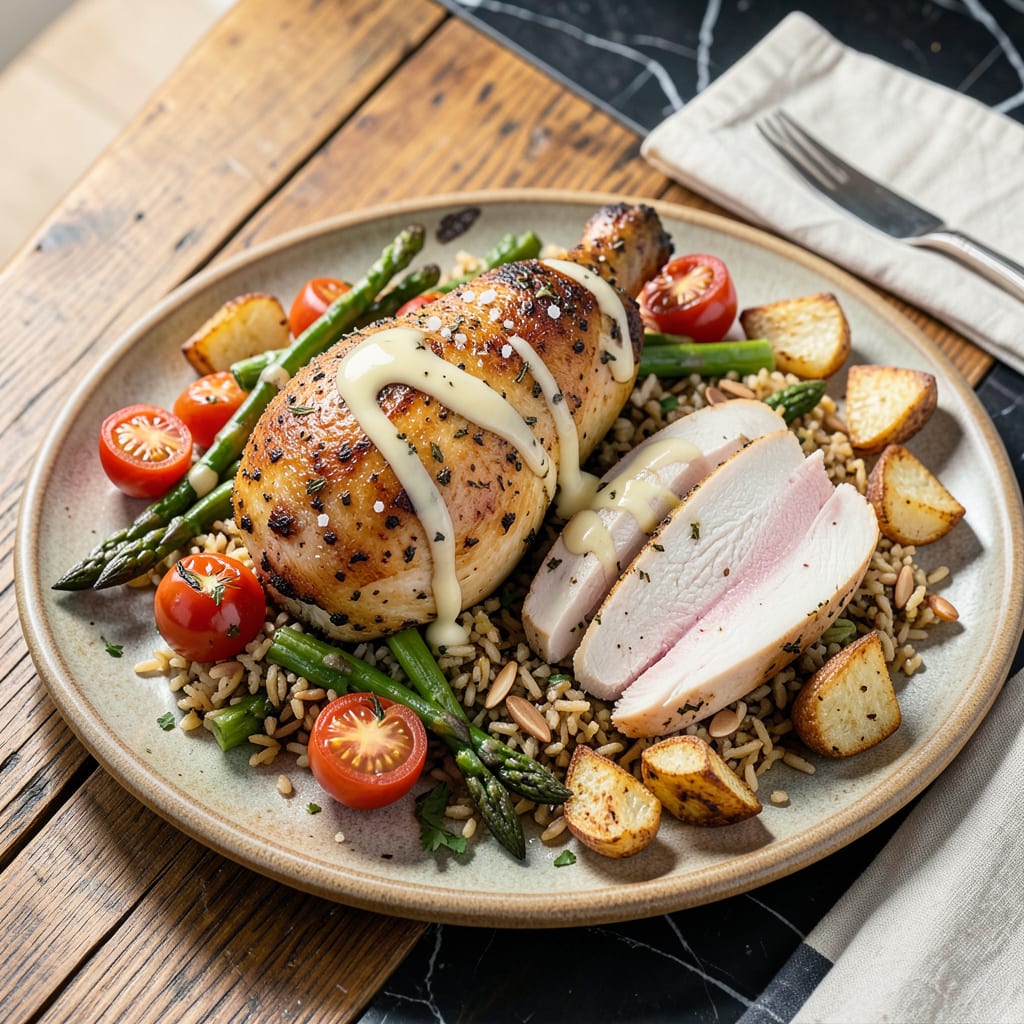
Plan for ½ to ¾ pound (8–12 oz) of bone-in chicken per person, or ⅓ to ½ pound (6–8 oz) for boneless cuts. Adjust for appetites—larger servings for hearty eaters or bone-in pieces, smaller for light meals or boneless breasts.
Getting portions right means balancing waste and satisfaction. Bone-in cuts like thighs or drumsticks lose about 30% of their weight when cooked, while boneless breasts shrink less. I always consider the meal’s context: a summer BBQ with heavy sides might need 6 oz per person, but a protein-focused dinner could require 12 oz for hearty appetites. 🔥
What trips people up is forgetting about leftovers or underestimating how much guests actually eat. For buffet-style gatherings, I bump portions by 20% to account for second helpings. Meal preppers should calculate 5 servings per pound of boneless chicken to maximize efficiency without sacrificing quality.
💡 In This Article
- Why Chicken Portions Vary by Cut and Cooking Method
- Chicken Serving Guide for Meals, Parties, and Meal Prep
Why Chicken Portions Vary by Cut and Cooking Method
The difference between bone-in and boneless portions comes down to edible yield. A bone-in thigh might weigh 8 oz raw, but 30% of that is inedible bone and connective tissue.
That same thigh cooked yields only about 5.5 oz of meat—which is why I always calculate portions based on what actually ends up on the plate, not the package weight. Dark meat like thighs also contains more fat (10-12%) than breasts (1-3%), which renders out during cooking and further reduces the final weight.
Cooking method dramatically impacts shrinkage. Grilling or roasting at 375°F+ causes moisture loss through evaporation—boneless breasts can lose 25% of their weight, while bone-in pieces retain slightly more due to the bone acting as an insulator. Poaching or braising in liquid minimizes shrinkage to about 10-15% because the moisture stays trapped.
What surprises most people is that a 4 oz raw boneless breast might cook down to just 3 oz, which is why I always start with slightly more than the desired serving size. 🔥
Whole chickens present a unique challenge because of their uneven composition. A 4-pound bird yields about 2.5 pounds of edible meat after removing bones, skin, and excess fat—that’s only 62% usable portion. The breast meat alone accounts for about 30% of the total weight, while legs and thighs make up 25% each.
When carving, I factor in that wings and backs contribute minimal meat but add visual bulk to the platter, which can mislead portion calculations.
Here’s what most home cooks overlook: fat content affects both weight and satisfaction. Dark meat’s higher fat renders during cooking, creating a richer mouthfeel that makes 6 oz feel as substantial as 8 oz of lean breast.
The collagen in connective tissues also breaks down into gelatin at 160°F+, adding unctuousness that enhances perceived portion size. For meal prep, I recommend calculating 1.25 pounds of raw bone-in chicken per person to account for these factors, while boneless cuts can be closer to 1:1 raw-to-cooked ratios. ✨
The preparation style changes everything too. Butterflied or spatchcocked chickens cook more evenly but expose more surface area to heat, increasing moisture loss by about 5-8% compared to roasting whole. Marinated chicken retains 10-15% more weight because the liquid creates a protective barrier.
When smoking at 225°F, the low-and-slow process can reduce yield by up to 30% over 4-6 hours, which is why competition pitmasters start with 40% more raw weight than they need to serve. 💫
For precise planning, I use this quick conversion chart:
- Boneless skinless breasts: 6 oz raw = 4.5 oz cooked (25% loss)
- Bone-in thighs: 8 oz raw = 5 oz cooked (37% loss)
- Wings: 4 oz raw = 2.5 oz cooked (38% loss, mostly bone)
- Whole chicken: 1 lb raw = 9 oz usable meat (42% inedible)
Pro tip: Weigh your cooked portions once to understand your specific shrinkage rates—ovens and grills vary, and this simple step eliminates guesswork for future meals. 🌟

- Jollof Rice Sauce Recipe: West African Tomato and Spice Infusion - September 25, 2026
- Japanese Rice Soup Recipe: Umami-Rich Comfort in a Bowl - September 25, 2026
- Homemade Cream Of Rice Recipe: Silk-Smooth Breakfast in Minutes - September 25, 2026