
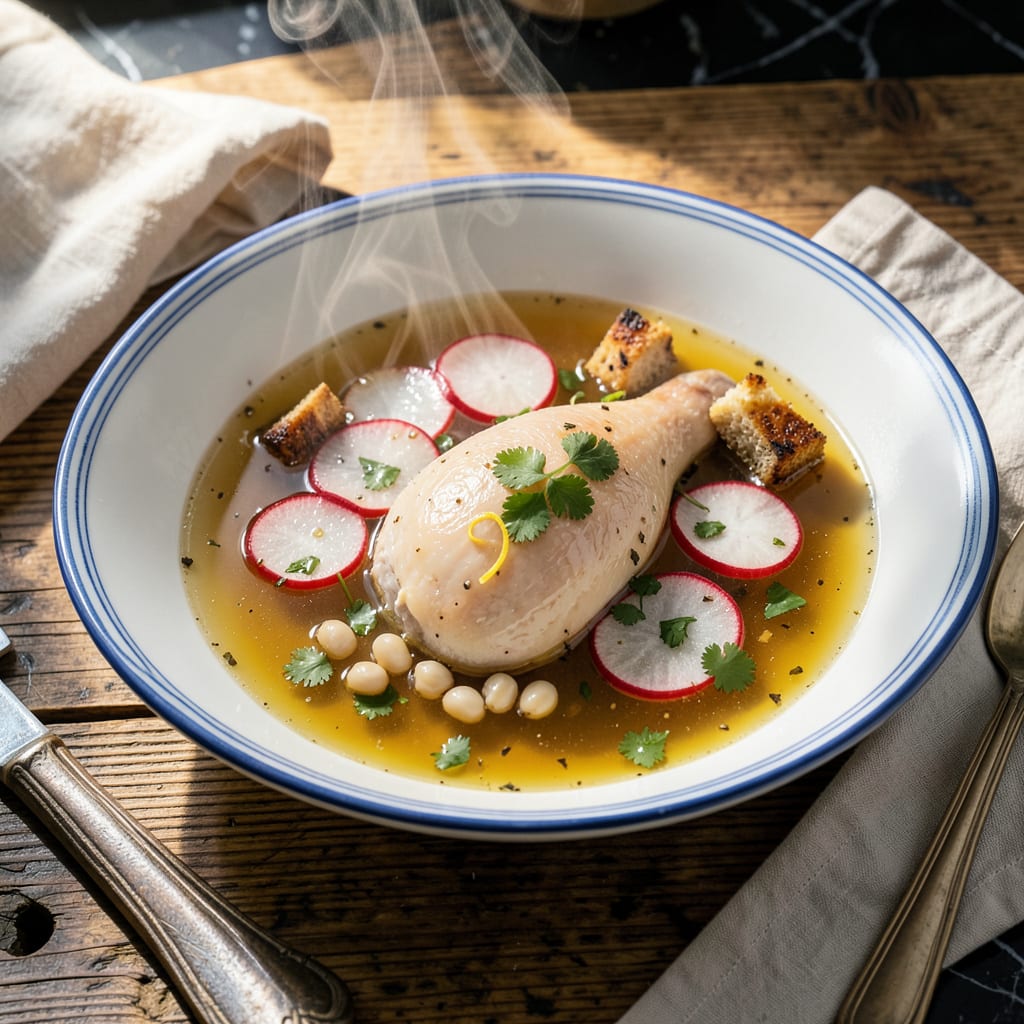
I’ll be real with you—homemade chicken broth doesn’t have to mean simmering bones for hours. Using bouillon as your base cuts the time down to just 30 minutes while still delivering that rich, savory foundation you need for soups, risottos, and braised dishes. This method changed my cooking game when I realized I could have restaurant-quality broth without the all-day commitment.
The secret is all in the ratio and a few smart additions. Bouillon (whether cubes, powder, or paste) gives you instant depth, but we’re not stopping there. A quick sauté of onions, carrots, and celery—plus some fresh herbs if you’ve got them—transforms that simple bouillon into something complex and aromatic. It’s the kind of shortcut that actually makes your food taste homemade, not like it came from a box.
What you end up with is a golden, fragrant broth that’s way more flavorful than anything you’d get from a carton. The bouillon provides the salt and chicken essence, while the vegetables and herbs add layers that make it taste like it simmered all day. I use this as the base for everything from chicken noodle soup to deglaing pans for sauces—it’s that versatile.
Best part? You control everything—the salt level, the richness, even the herbs. Want it lighter? Use less bouillon. Need more depth? Add a parmesan rind while it simmers. This isn’t just broth; it’s your new cooking secret weapon.
📚 In This Guide
- What You’ll Need
- Instructions
- Tips and Common Mistakes
What Youll Need
- ● Core Ingredients: 4 cups water (or low-sodium stock for extra depth)
- ● 2-3 chicken bouillon cubes (or 2 tbsp powdered bouillon)
- ● 1 tbsp olive oil or butter (for sautéing aromatics)
- ● Aromatics (Essential for Flavor!): 1 small yellow onion, diced
- ● 2 garlic cloves, minced
- ○ 1 carrot, chopped (optional but recommended)
- ○ 1 celery stalk, chopped (optional)
- ● Seasonings & Extras: 1 bay leaf
- ● ½ tsp black peppercorns (or ¼ tsp ground pepper)
- ○ 1 tsp dried parsley or 2 tbsp fresh (optional)
- ○ 1 tsp apple cider vinegar (brightens flavor, optional)
- ● Tools: Medium saucepan or pot (2-3 quart capacity)
- ● Wooden spoon for stirring
- ● Fine-mesh strainer (if you prefer clear broth)
- ● Chef’s knife & cutting board
Step-by-Step Instructions for Chicken Bouillon to Make Broth
Here’s how to transform simple bouillon into rich, flavorful broth in no time.
Select Your Bouillon Base
I always start with high-quality bouillon cubes or powder—this makes all the difference in your final broth. For 4 servings, you’ll need enough bouillon to make 4 cups of liquid according to package instructions. I prefer low-sodium options so I can control the salt level myself.
Check the package for specific measurements, but typically you’ll need 4 cups of hot water to dissolve the bouillon completely. The water should be hot but not boiling—about 180°F works perfectly. This temperature helps extract maximum flavor from the bouillon without breaking down its components too quickly.
Dissolve and Simmer for Depth
Pour your hot water into a medium saucepan and add the bouillon cubes or powder. Stir continuously until completely dissolved—this usually takes about 1-2 minutes. You’re looking for a smooth, uniform liquid with no visible granules or chunks remaining.
Once dissolved, bring the mixture to a gentle simmer over medium heat. Reduce the heat to low and let it simmer uncovered for 15 minutes. This gentle cooking process allows the flavors to meld and develop complexity. You’ll notice the aroma becoming richer and more pronounced as it cooks.
Enhance with Aromatics
Here’s where you can elevate your broth from basic to exceptional. Add a few classic aromatics: 1 small onion (quartered), 2 celery stalks (cut into chunks), and 1 carrot (roughly chopped). These vegetables add natural sweetness and depth to your broth.
You might also consider adding 2 garlic cloves (smashed), a bay leaf, and 5-6 peppercorns. Let everything simmer together for another 10-15 minutes until the vegetables soften and release their flavors. The broth should take on a golden hue and develop a more complex aroma.
Strain and Finish
After simmering, remove the saucepan from heat and let it cool for 5 minutes. This brief rest allows any solids to settle at the bottom. Place a fine-mesh strainer over a clean bowl or large measuring cup and carefully pour the broth through to remove all the vegetable pieces and spices.
Press gently on the solids with a spoon to extract any remaining liquid, but don’t force it—you want your broth to remain clear. At this point, your broth is ready to use. For a richer result, you can return the strained broth to the saucepan and simmer for another 5 minutes to concentrate the flavors slightly.
Store or Use Immediately
If using right away, keep the broth warm over low heat. For storage, let it cool completely to room temperature—this usually takes about 30 minutes. Then transfer to airtight containers. The broth will keep in the refrigerator for up to 5 days or can be frozen for 3 months.
When reheating, bring it to a gentle simmer—never boil vigorously, as this can make the broth cloudy and affect the flavor. Taste before using and adjust seasoning if needed, though with quality bouillon, you likely won’t need to add anything. This homemade broth will add incredible depth to soups, sauces, and any recipe calling for chicken broth.
Tips and Common Mistakes for Perfect Homemade Broth
Transforming bouillon into rich broth is simpler than you think—these practical insights will ensure yours turns out flavorful every time.
Temperature Precision: The 180°F water temperature in Step 1 isn’t arbitrary. Water that’s too hot (boiling) breaks down bouillon too quickly, while lukewarm water won’t fully dissolve it. I use an instant-read thermometer to verify the temperature—it makes a noticeable difference in flavor extraction during those critical 1-2 minutes of dissolving.
Simmering Strategy: When reducing to low heat for the 15-minute simmer in Step 2, you should see just a few small bubbles breaking the surface—never a rolling boil. This gentle heat allows flavors to develop without evaporating too much liquid. If your broth reduces too quickly, add a splash of water to maintain the original volume.
Aromatic Timing: Don’t rush the 10-15 minutes with vegetables in Step 3. The onions should turn translucent at the edges, and carrots should soften slightly but still hold their shape. This is when they release their natural sugars into the broth. I often let mine go the full 15 minutes for maximum flavor infusion.
Straining Technique: During the 5-minute rest in Step 4, resist the urge to stir—this lets all the sediment settle to the bottom. When straining, use a fine-mesh sieve and press the vegetables gently with a spoon, but don’t mash them. This prevents cloudy broth while still extracting all the flavorful liquid.
Pro Tips for Chicken Bouillon To Make Broth
- Transforming bouillon into rich broth is simpler than you think—these practical insights will ensure yours turns out …
- Temperature Precision: The 180°F water temperature in Step 1 isn’t arbitrary. Water that’s too hot (boiling) breaks d…
- Simmering Strategy: When reducing to low heat for the 15-minute simmer in Step 2, you should see just a few small bub…
Frequently Asked Questions
Can I use chicken bouillon cubes instead of powder to make broth?
Bouillon cubes work just like powder—simply dissolve 1 cube per 1 cup of hot water. For a richer flavor, crush the cube before adding or simmer it for 2-3 minutes. Adjust salt later if needed, as cubes can be saltier than powder.
How long does homemade bouillon broth last in the fridge?
Store your broth in an airtight container for 4-5 days in the fridge. For longer storage, freeze it for up to 3 months. Pro tip: Portion into ice cube trays for easy single-serving use!
What’s the best chicken bouillon-to-water ratio for broth?
The standard ratio is 1 teaspoon powder (or 1 cube) per 1 cup water. For a bolder taste, use 1.5 teaspoons—just taste as you go! Low-sodium bouillon? Add a pinch of salt to balance flavors.
Can I make vegetarian “chicken” broth with bouillon?
Yes! Opt for vegetarian or vegan “chicken-style” bouillon (brands like Edward & Sons or Orrington Farms work great). Simmer with mushrooms, onions, and herbs for extra depth. Check labels for hidden animal products if needed.
Why does my bouillon broth taste too salty or weak?
Too salty? Dilute with water or unsalted broth, or add a peeled potato to absorb excess salt while simmering. Weak flavor? Boost with a splash of soy sauce, garlic powder, or a parmesan rind (remove before serving).
With just chicken bouillon and a few pantry staples, you’ve unlocked the secret to a rich, flavorful broth in record time—no hours of simmering required! 🎉 Whether you’re whipping up soups, sauces, or risottos, this shortcut delivers depth and warmth without sacrificing taste. Now that you’ve mastered the basics, experiment with herbs (think thyme or bay leaves) or a splash of acid (like lemon juice) to make it your own.
Ready to put your broth to work? Try it in our 5-Minute Creamy Chicken Noodle Soup—your taste buds will thank you! 🍜

- Jollof Rice Sauce Recipe: West African Tomato and Spice Infusion - September 25, 2026
- Japanese Rice Soup Recipe: Umami-Rich Comfort in a Bowl - September 25, 2026
- Homemade Cream Of Rice Recipe: Silk-Smooth Breakfast in Minutes - September 25, 2026