
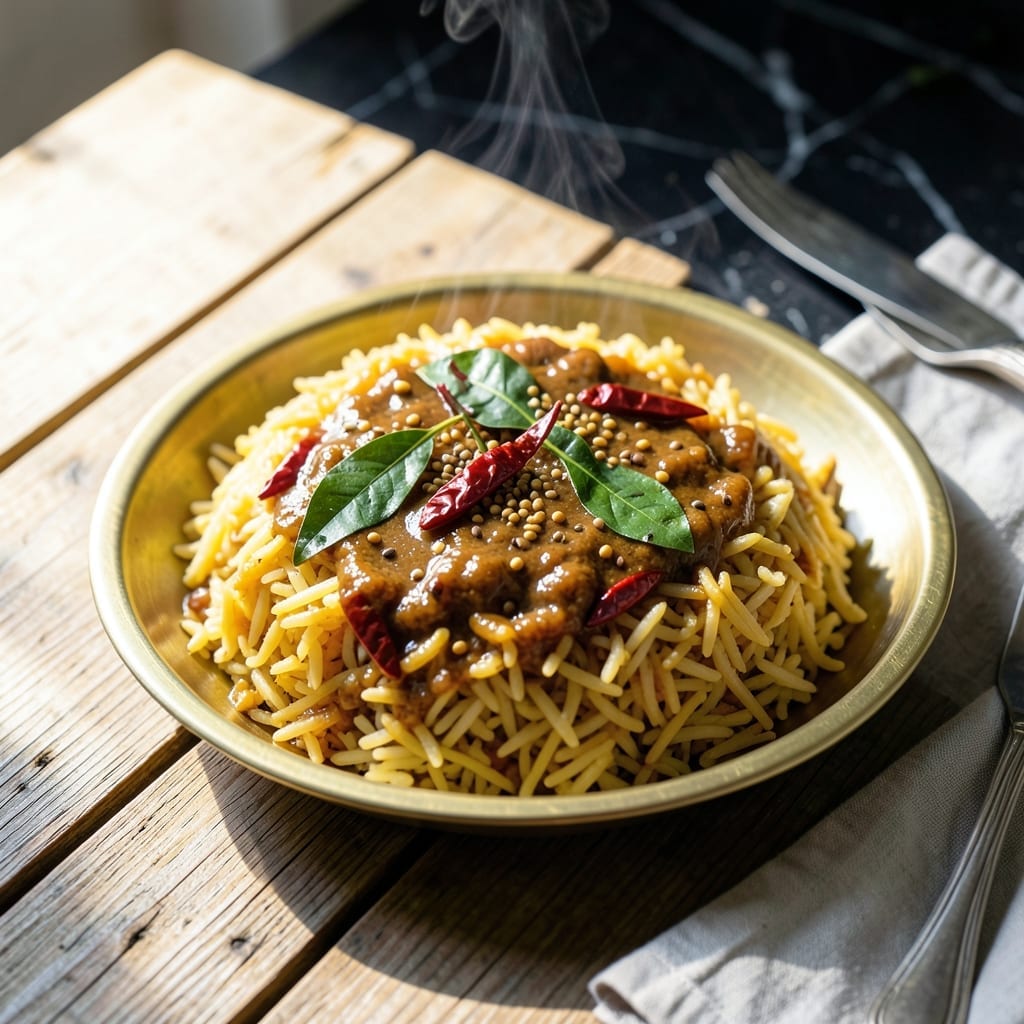
This tamarind-infused rice dish brings South Indian flavors to your table with minimal effort. The balance of tangy, sweet, and spicy notes makes it irresistible.
The secret lies in blooming whole spices in hot oil before adding the tamarind pulp. This creates a fragrant base that transforms simple rice into something extraordinary.
You’ll end up with grains that are perfectly cooked, lightly sticky, and packed with complex flavors. Each bite delivers the signature tang of tamarind with warming spices.
Serve it as a main or alongside curries for a complete meal.
Ingredients for Imli Rice
Simple rice meets bold South Indian flavors with tamarind and whole spices.
| Ingredient | Amount | Notes |
|---|---|---|
| Basmati Rice 🍚 | 2 cups | Rinsed until water runs clear |
| Tamarind Pulp 🍈 | ½ cup | Seedless, soaked in warm water |
| Mustard Seeds 🌿 | 1 tsp | Black or yellow variety |
| Cumin Seeds 🌿 | 1 tsp | Whole, not ground |
| Dried Red Chilies 🌶️ | 2 whole | Broken into pieces |
| Curry Leaves 🍃 | 10 pieces | Fresh preferred, optional |
| Turmeric Powder 🌶️ | ½ tsp | For vibrant color |
| Jaggery 🍚 | 2 tbsp | Or substitute brown sugar |
| Salt 🧂 | 1 ½ tsp | Adjust to taste |
| Peanuts 🥜 | ¼ cup | Raw or roasted |
| Vegetable Oil 🫒 | 3 tbsp | Or use coconut oil |
| Asafoetida 🌿 | ¼ tsp | Optional, for umami depth |
| Water 💧 | 4 cups | For cooking rice |
The tamarind pulp is non-negotiable here. Indian grocery stores carry the best quality—look for seedless blocks without added sugar. Patel Brothers or H-Mart are reliable if you have one nearby. Basmati rice should be aged (check the label) for that perfect, non-sticky texture. The curry leaves add an authentic touch but can be skipped—just don’t skip the mustard and cumin seeds. Fresh is best, but dried curry leaves work in a pinch.
No tamarind? Lime juice plus a pinch of sugar mimics the tang (but use sparingly). Jaggery can be swapped for brown sugar or coconut sugar—they’ll dissolve just as well. Out of peanuts? Cashews or almonds add a similar crunch. For the oil, coconut oil leans into the South Indian vibe, but any neutral oil works. Skip the asafoetida if you don’t have it—just add a pinch of garlic powder instead.
Leftover rice keeps in the fridge for 3-4 days—just reheat with a splash of water. The tamarind pulp can be stored in the freezer for up to 6 months. Always rinse the rice well to avoid sticky grains. That’s it.
Why You’ll Love This Recipe
- One-Pot Wonder: I love how this comes together in a single pot—just temper the mustard and cumin, toss in the tamarind, and let the rice soak up all that tangy spice.
- Tangy Comfort: The tamarind pulp gives it this bright, lip-smacking sourness that cuts through the richness of the rice. Honestly, it’s the kind of flavor that makes you go back for seconds.
- Lunchbox Star: Here’s what sold me—it tastes even better the next day, so I pack leftovers for lunch without worrying about soggy rice.
- Pantry Friendly: Between us, I always have basmati and tamarind on hand, so this is my go-to when I need something flavorful without a special grocery trip.
Step-by-Step Instructions for Tangy Tamarind Pilaf
Here’s how I make this flavorful dish with perfect texture every time.
Step 1: Prepare and Cook the Rice
Rinse the 2 cups Basmati Rice thoroughly under cold water until the water runs clear. This removes excess starch and prevents the grains from sticking together. Drain well in a fine-mesh strainer.
In a large pot, bring the 4 cups Water to a rolling boil. Add the drained rice and reduce heat to low. Cover and simmer for 12-15 minutes until the water is absorbed and the rice is tender but not mushy. Fluff with a fork and set aside.
Step 2: Bloom the Spices in Hot Oil
Heat the 3 tbsp Vegetable Oil in a large skillet over medium heat. Add the 1 tsp Mustard Seeds and 1 tsp Cumin Seeds. Cook for 30-45 seconds until the mustard seeds begin to sputter and pop.
Quickly add the 2 whole Dried Red Chilies, 10 pieces Curry Leaves, 0.25 tsp Asafoetida, and 0.25 cup Peanuts. Stir constantly for 1-2 minutes until the peanuts turn light golden brown and the spices release their aroma. Be careful not to burn the spices.
Step 3: Create the Tangy Tamarind Sauce
Soak the 0.5 cup Tamarind Pulp in 1 cup of warm water for 10 minutes to soften, then mash it with your fingers to dissolve the pulp. Strain the mixture to remove any seeds or fibers.
Add the tamarind liquid to the skillet with the spices. Stir in the 0.5 tsp Turmeric Powder, 2 tbsp Jaggery, and 1.5 tsp Salt. Cook over medium heat for 5-7 minutes until the sauce thickens slightly and becomes glossy and syrupy.
Step 4: Combine Rice and Sauce
Add the cooked rice to the skillet with the tamarind sauce. Gently fold everything together with a spatula, ensuring the rice is evenly coated with the sauce. Cook for an additional 2-3 minutes over low heat to allow the flavors to meld.
Taste and adjust seasoning if needed. The rice should have a balance of tangy, sweet, and spicy flavors with each grain distinct and fragrant. The peanuts should add a subtle crunch to every bite.
Pro Tips For Making Imli Rice
- Soak the Basmati: Give your basmati rice a 20-minute soak in cold water before cooking—it prevents the grains from breaking and gives that perfect fluffiness imli rice needs.
- Toast the Spices: Heat the mustard and cumin seeds in hot oil until they start to pop, then add the dried red chilies for just 10 seconds. I learned this the hard way—burnt spices turn the whole dish bitter.
- Strain the Tamarind: Always strain the tamarind pulp through a sieve to remove seeds and fibers, or you’ll end up with stringy bits in your rice that ruin the texture.
- Adjust Tang Last: Add the tamarind pulp in stages and taste as you go—some pulps are stronger than others, and you can’t take it out once it’s in. I was skeptical until I tried it, but it makes the flavor consistent every time.
Regional Styles of imli rice
South Indian Classic
In Tamil Nadu, this dish is called Puliyodarai and is a staple for festivals and special occasions. The tamarind is always fresh, never concentrated, and the rice is typically cooked in a traditional uruli ( wide bronze pot). I love how the tangy-sweet balance is more pronounced in this version. 🌟
Maharashtrian Twist
Here they call it Pulav and add 1 tsp goda masala to the tempering. I also see grated coconut as a garnish, which adds a wonderful texture contrast. The peanuts are often replaced with cashews for a richer flavor profile.
Karnataka Style
This version includes 1 tbsp sesame oil in the tempering and finishes with a sprinkle of roasted sesame seeds. The tamarind pulp is mixed with 1 tbsp grated jaggery for a more balanced sweet-tangy taste. I find this style particularly aromatic.
Andhra Variation
Known as Pulihora, this version is spicier with the addition of 1 tbsp red chili powder and 1 tsp black peppercorns to the tempering. The rice is often cooked with a pinch of saffron for color and aroma.
Goan Influence
In Goa, they add 1 tsp vinegar to the tamarind mixture for extra tang. The tempering includes 1 tsp coriander seeds along with the mustard and cumin. I love how the coastal influence makes this version slightly more pungent. 💫
Nutrition Facts
Frequently Asked Questions
Can I use regular rice instead of basmati?
Yes, but basmati gives the best texture. Long-grain white rice works as a substitute, though the grains may be slightly stickier. Avoid instant rice as it turns mushy.
How do I adjust the tanginess?
Start with 0.5 cup tamarind pulp and taste before adding all. For more tang, soak an extra 1 tbsp in warm water. Balance with extra jaggery if needed.
What if I don’t have curry leaves?
Skip them—the dish will still taste great. For extra aroma, add 1 tsp dried mint or 1 bay leaf to the tempering. Curry leaves are traditional but optional.
How long can I store leftovers?
Keep in an airtight container in the fridge for 3-4 days. Reheat with a splash of water to restore moisture. Freezing isn’t recommended as it affects the rice texture.

- Jollof Rice Sauce Recipe: West African Tomato and Spice Infusion - September 25, 2026
- Japanese Rice Soup Recipe: Umami-Rich Comfort in a Bowl - September 25, 2026
- Homemade Cream Of Rice Recipe: Silk-Smooth Breakfast in Minutes - September 25, 2026