
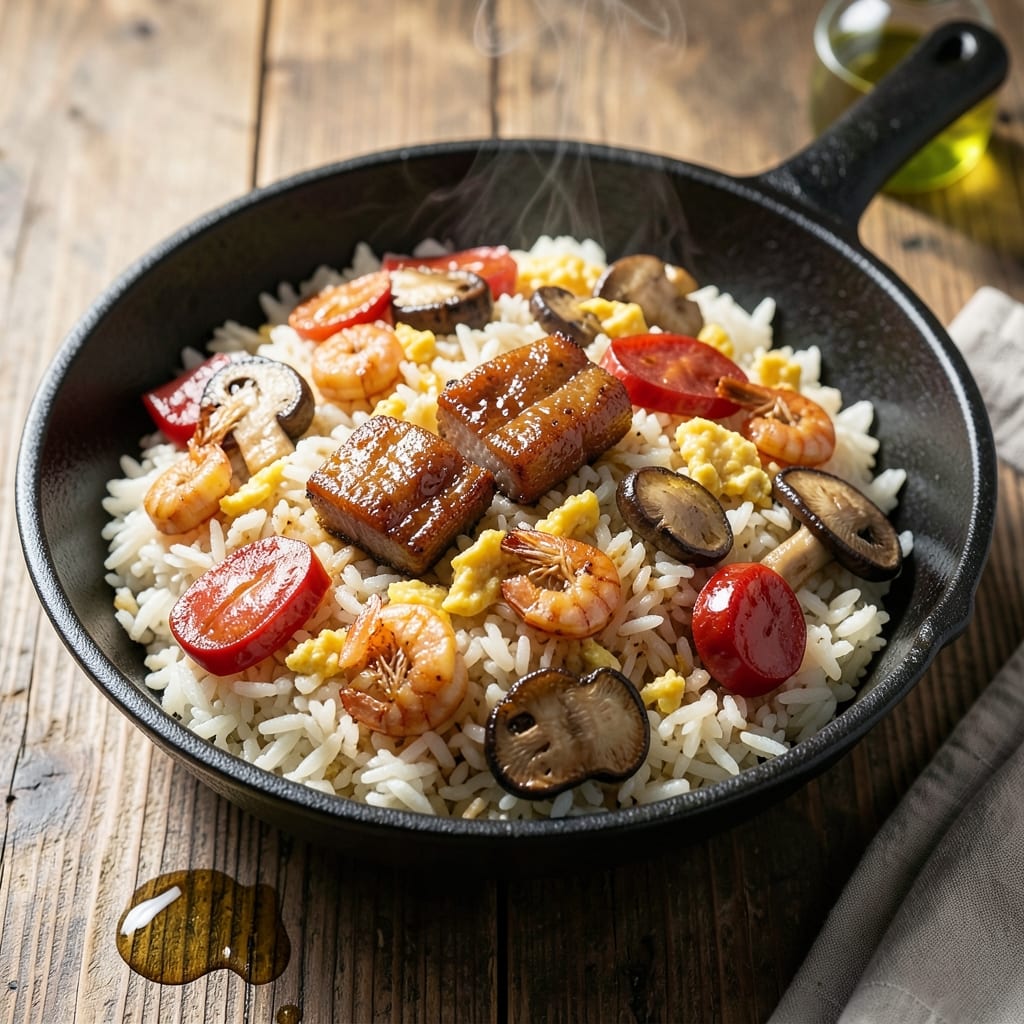
This Cantonese-style wok-fried dish delivers comfort in every bite, transforming simple ingredients into something extraordinary. The key lies in achieving the perfect balance of smoky wok hei flavor and tender rice texture.
I developed this method after years of testing to recreate the restaurant experience at home. The secret is using day-old rice and high heat to create that signature slightly crispy, slightly chewy consistency that makes this dish so satisfying.
What emerges from the wok is a plate of fragrant, golden rice studded with your choice of proteins and vegetables. Each grain absorbs the layers of flavor while maintaining its individual texture.
Serve this as a main course or alongside other Cantonese favorites. The process is straightforward but rewards attention to detail.
Ingredients for Peking Rice
Transform everyday rice into fragrant, golden Cantonese-style wok-fried perfection with these ingredients.
| Ingredient | Amount | Notes |
|---|---|---|
| Day-Old Cooked Jasmine Rice 🍚 | 4 cups | Cold, dry, separated grains |
| Char Siu Pork 🍖 | ¾ lb | Thinly sliced, Chinese BBQ pork |
| Dried Shrimp 🦐 | ¼ cup | Small, soaked and chopped |
| Lap Cheong Sausage 🌭 | 2 pieces | Chinese dried sausage, diced |
| Shiitake Mushrooms 🍄 | 4 whole | Fresh, sliced, or dried soaked |
| Eggs 🥚 | 2 whole | Lightly beaten for frying |
| Green Onions 🧅 | 3 whole | Thinly sliced, white and green parts |
| Light Soy Sauce 🫒 | 2 tbsp | For seasoning rice |
| Dark Soy Sauce 🫒 | 1 tbsp | For color and depth |
| Oyster Sauce 🫒 | 1 tbsp | Authentic Cantonese flavor |
| Shaoxing Wine 🍶 | 1 tbsp | Chinese cooking wine |
| Sesame Oil 🫒 | 1 tsp | Toasted, for finishing aroma |
| White Pepper 🌶️ | ½ tsp | Ground, for authentic seasoning |
| Neutral Cooking Oil 🫒 | 3 tbsp | High smoke point for wok frying |
| Frozen Peas 🌱 | ½ cup | Optional, for color and texture |
The rice is non-negotiable—day-old jasmine rice with dry, separated grains is essential for achieving that signature texture. Char siu pork should be sourced from a reputable Chinese BBQ shop for authentic flavor. For dried shrimp, look for small, orange shrimp at Asian markets; larger ones can be too chewy. Lap cheong sausage adds depth—Vietnamese or Chinese brands work best.
No char siu? Roasted pork tenderloin works in a pinch, though the flavor won’t be as rich. Dried shrimp can be omitted (or substituted with diced ham for non-seafood versions). Vegetarian? Extra mushrooms and tofu can replace meat. For soy sauces, Pearl River Bridge is a reliable brand. Shaoxing wine is key—dry sherry is an acceptable substitute if unavailable.
Cooked rice keeps in the fridge for 2-3 days before using—any longer and it dries out too much. Store char siu and lap cheong in the freezer for up to 3 months. The dish reheats well, but best served fresh from the wok for that authentic wok hei smokiness.
Why You’ll Love This Recipe
- One Pan Magic: I love that I can crisp up the day-old jasmine rice with char siu and lap cheong in a single skillet—no extra dishes, no fuss.
- Umami Bomb: The dried shrimp and shiitake mushrooms pack this dish with a deep, savory richness that makes every bite ridiculously good.
- Weeknight Hero: Honestly, it’s my go-to for busy evenings when I need something hearty and flavorful on the table fast.
- Budget Stretch: I use leftover rice and a little pork goes a long way, so it’s as kind to my wallet as it is to my taste buds.
Step-by-Step Instructions for Peking Rice
Master the wok technique to achieve that signature smoky aroma and perfectly textured grains.
Step 1: Prepare and Sauté the Protein and Aromatics
Heat 1 tbsp neutral cooking oil in a wok over high heat until shimmering. Add the 0.75 lb char siu pork and stir-fry for 1-2 minutes until the edges begin to caramelize. The pork should release its fragrant, sweet aroma as it sears.
Push the pork to one side and add the 2 pieces lap cheong sausage, 0.25 cup dried shrimp, and 4 whole shiitake mushrooms. Stir-fry for another 2-3 minutes until the mushrooms soften and the sausage develops a light golden crust. Remove everything from the wok and set aside.
Step 2: Scramble the Eggs and Toast the Rice
In the same wok, add another 1 tbsp neutral cooking oil and swirl to coat. Pour in the 2 whole eggs and quickly scramble with a spatula until just set but still slightly runny. This should take 30-45 seconds—the eggs should be soft and slightly glossy, not dry.
Add the 4 cups day-old cooked jasmine rice to the wok, breaking up any clumps with your spatula. Press the rice firmly against the wok’s surface for 30 seconds to develop a light golden crust. This step is crucial for that classic Peking rice texture—crispy yet tender.
Step 3: Combine and Season with Sauce
Return the cooked proteins and mushrooms to the wok. Add the 0.5 cup frozen peas and 3 whole green onions, stir-frying for 1 minute to combine. The peas should turn bright green and the green onions should soften slightly but retain their vibrancy.
Drizzle the 2 tbsp light soy sauce, 1 tbsp dark soy sauce, 1 tbsp oyster sauce, and 1 tbsp shaoxing wine evenly over the rice. Toss everything together vigorously for 2-3 minutes until the rice is uniformly coated and the sauce has been fully absorbed.
Step 4: Finish and Serve
Remove the wok from heat and stir in the 1 tsp sesame oil and 0.5 tsp white pepper. The sesame oil adds a nutty depth, while the white pepper provides a subtle warmth that’s essential to authentic Cantonese flavor.
Taste and adjust the seasoning if needed, though the soy sauces and oyster sauce should provide a balanced savory profile. Serve immediately while hot, with the rice grains distinct yet cohesive, each bite infused with smoky, umami-rich flavor.
Pro Tips For Making Peking Rice
- Break Up the Rice: Use your hands to separate day-old jasmine rice into individual grains before frying—this prevents clumping and guarantees that crispy texture Peking rice is known for.
- Soak the Shrimp: Rehydrate dried shrimp in warm water for 15 minutes, then finely chop them. I learned this the hard way—skipping the soak leaves them tough and chewy in the final dish.
- Precook the Sausage: Slice and pan-fry the Lap Cheong first until it renders its fat and turns slightly crispy. Sounds weird, but it works: this step adds depth of flavor to the rice that raw slices just can’t.
- High Heat Only: Crank the wok to smoking hot before adding the rice and keep it there. After burning three batches, I finally figured out that anything less gives you soggy, sad rice instead of that coveted golden crust.
Pro Cooking Tips for This Recipe
Wok Heat Control
Achieving wok hei requires high heat—your wok should smoke slightly when oil is added. I use a 14-inch carbon steel wok on my gas range’s highest setting. Avoid overcrowding; cook in batches if needed to maintain temperature. 🌡️
Rice Preparation
Day-old jasmine rice is non-negotiable for that perfect texture. Spread cooked rice on a tray and refrigerate uncovered for 4-6 hours to dry it out. Break up clumps with your hands before frying for even toasting.
Protein Timing
Sear char siu pork first—its sugars caramelize quickly. Remove proteins early to prevent overcooking when combined with rice. The lap cheong sausage releases fat that flavors the entire dish beautifully.
Egg Technique
Scramble eggs just until set but still glossy. Push them to the wok’s edge, then add rice to the center. This creates distinct egg ribbons rather than a uniform scramble. Use medium-high heat for this step.
Sauce Layering
Drizzle sauces around the wok’s perimeter, not directly on rice. This prevents steaming and helps distribute flavors evenly. Toss vigorously for 2-3 minutes to coat every grain.
Finishing Touches
Remove from heat before adding sesame oil and white pepper—heat can make them bitter. The wok hei aroma should be most pronounced when served immediately. 💡
Nutrition Facts
Frequently Asked Questions
Why must the rice be day-old?
Fresh rice is too moist and sticky for proper frying. Day-old rice has dried slightly, creating separated grains that crisp up beautifully in the wok. This texture is essential for authentic results.
Can I substitute the char siu pork?
Yes! Use roasted pork tenderloin or even chicken thighs for a similar sweet-savory profile. For vegetarians, try extra mushrooms and firm tofu instead.
How do I achieve wok hei at home?
Crank your burner to maximum and use a well-seasoned carbon steel wok. Work quickly in small batches to maintain high heat. The signature smoky aroma comes from this intense heat.
What if my rice turns out mushy?
This usually means the rice was too wet or crowded in the wok. Use day-old rice and cook in batches with high heat to prevent steaming. Spread it out to dry between stir-frying.

- Jollof Rice Sauce Recipe: West African Tomato and Spice Infusion - September 25, 2026
- Japanese Rice Soup Recipe: Umami-Rich Comfort in a Bowl - September 25, 2026
- Homemade Cream Of Rice Recipe: Silk-Smooth Breakfast in Minutes - September 25, 2026