
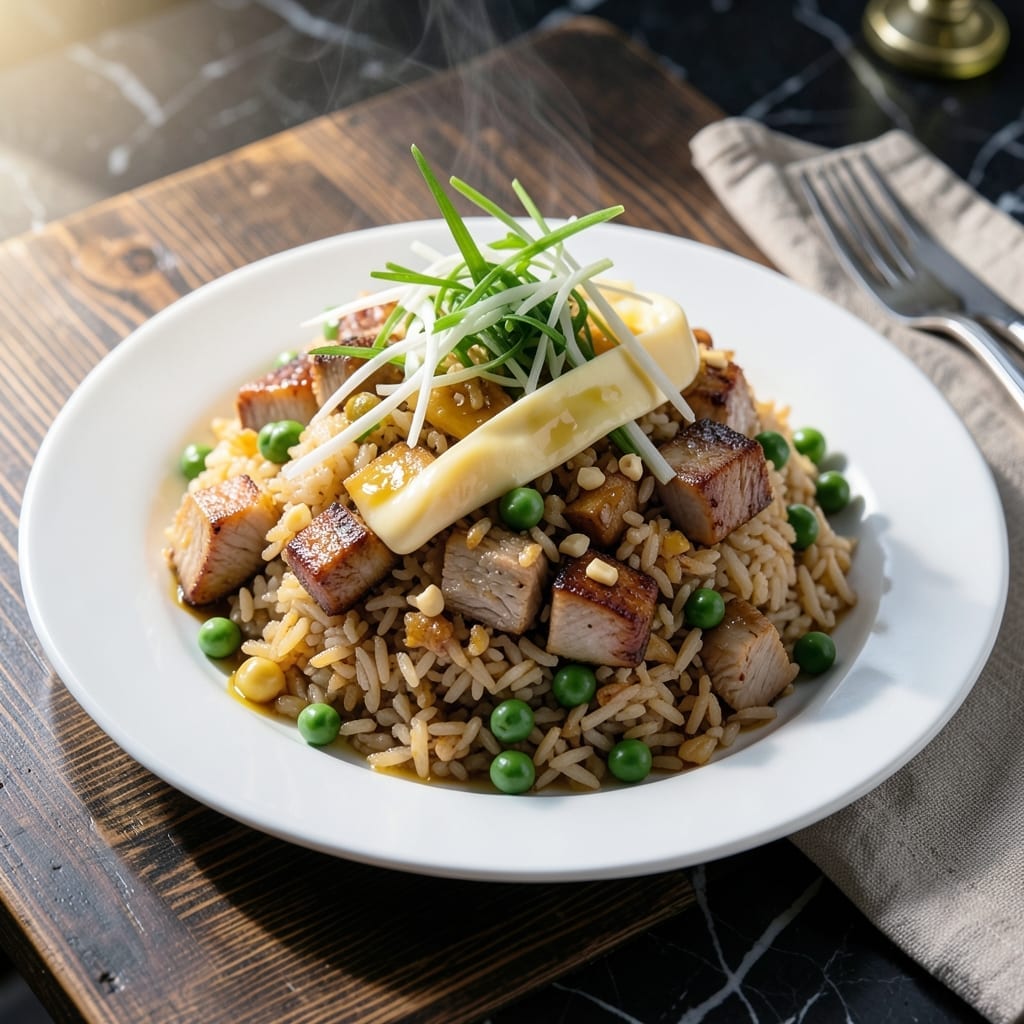
This recipe delivers the authentic wok-charred flavor of Chinese restaurant fried rice at home. Every grain is separate, savory, and packed with smoky depth.
I’ve refined the technique to ensure perfect texture and taste without special equipment. The key is high heat, day-old rice, and a precise balance of soy and sesame.
Ingredients for Chinese Restaurant Pork Fried Rice
Authentic Chinese restaurant flavor starts with day-old rice, tender pork, and bold sauces for depth.
| Ingredient | Amount | Notes |
|---|---|---|
| Day-Old Cooked White Rice 🍚 | 4 cups | Chilled, preferably overnight |
| Pork Shoulder 🥩 | ½ lb | Diced into small cubes |
| Large Eggs 🥚 | 2 whole | Lightly beaten for scrambling |
| Green Onions 🧅 | 4 whole | Thinly sliced, whites and greens separated |
| Garlic Cloves 🧄 | 3 cloves | Minced finely |
| Frozen Peas 🌱 | ¾ cup | Thawed, no need to cook |
| Carrots 🥕 | 2 whole | Finely diced |
| Soy Sauce 💧 | 2 tbsp | Low-sodium preferred for balance |
| Dark Soy Sauce 💧 | 1 tbsp | For color and depth |
| Sesame Oil 🫒 | 1 tbsp | Toasted variety for authentic flavor |
| Vegetable Oil 🫒 | 3 tbsp | High smoke point for wok frying |
| Oyster Sauce 🍶 | 1 tbsp | Optional but adds umami richness |
| Salt 🧂 | ½ tsp | Adjust to taste at the end |
| White Pepper 🧂 | ¼ tsp | Ground, for traditional seasoning |
| Shaoxing Wine 🍷 | 1 tbsp | Or substitute dry sherry |
The pork is critical for authentic texture. Pork shoulder offers the right fat-to-meat ratio—avoid lean cuts like tenderloin. Most Asian markets sell it pre-diced, or ask your butcher to cube it. For the rice, jasmine or long-grain white works best; day-old and cold prevents mushiness. Shaoxing wine adds complexity, but dry sherry from any grocery store is a fine substitute.
No pork? Chicken thighs or shrimp work well—adjust cooking time accordingly. For a vegetarian version, swap in extra-firm tofu (pressed and cubed). Missing oyster sauce? Hoisin or fish sauce can fill the umami gap. The green onions can be swapped for scallions or chives. Fresh garlic is non-negotiable though—pre-minced lacks the punch.
Leftovers keep well for up to 3 days in the fridge. Reheat in a hot pan with a splash of water to revive the texture. For longer storage, freeze for up to 3 months. The rice will absorb flavors over time, making it even tastier.
Why You’ll Love This Recipe
- One Pan Wonder: I toss everything into the wok and let the day-old rice soak up the garlic and pork flavors.
- Crave-Worthy Bites: The crispy pork shoulder and fluffy eggs make every forkful ridiculously good.
- Meal Prep Hero: I double the batch and reheat portions all week—still tastes fresh.
- Budget Friendly: Pork shoulder stretches far, and I use leftovers for another meal.
Step-by-Step Instructions for Chinese Pork Fried Rice
Master the wok technique and timing for restaurant-quality results at home.
Step 1: Prepare and Velouté the Pork Shoulder
Heat 1 tablespoon of the vegetable oil in a wok over high heat until shimmering. Add the 0.5 lb Pork Shoulder and spread into a single layer. Let it sear undisturbed for 30-45 seconds until the bottom develops a golden crust.
Stir-fry the pork for 3-4 minutes until evenly browned and cooked through. The cubes should be caramelized at the edges but remain tender inside. Add 1 tablespoon Shaoxing Wine and 1 tablespoon soy sauce, tossing to coat as the liquid reduces completely. Transfer to a plate and set aside.
Step 2: Scramble the Eggs and Aromatics
Return the wok to high heat and add 1 tablespoon of the vegetable oil. Pour in the 2 whole Large Eggs and immediately scramble with a spatula, breaking them into small, soft curds. Cook for 20-30 seconds until just set but still slightly runny.
Push the eggs to one side and add the remaining 1 tablespoon vegetable oil to the empty space. Add the 3 cloves garlic cloves and the white parts of the 4 whole Green Onions, stir-frying for 15-20 seconds until fragrant. The garlic should be pale golden, not browned, to avoid bitterness.
Step 3: Combine Rice and Vegetables
Add the 2 whole Carrots and 0.75 cup Frozen Peas to the wok. Stir-fry for 1-2 minutes until the carrots soften slightly and the peas are heated through. The carrots should retain a slight bite for texture contrast.
Break up any clumps in the 4 cups Day-Old Cooked White Rice with your hands and add it to the wok. Stir-fry for 2-3 minutes, pressing the rice against the hot surface to create light charring. This step develops the signature wok hei flavor. Distribute the rice evenly to ensure each grain gets exposed to the heat.
Step 4: Season and Finish
Return the cooked pork shoulder to the wok. Drizzle the 2 tbsp Soy Sauce, 1 tbsp Dark Soy Sauce, 1 tbsp Oyster Sauce, and 0.5 tsp Salt around the edges of the wok. Stir-fry for 1-2 minutes until all ingredients are uniformly coated and the rice takes on a deep, glossy sheen.
Remove from heat and stir in the 1 tbsp Sesame Oil and 0.25 tsp White Pepper. Toss in the green parts of the green onions and mix once more. The final dish should have distinct charred bits, vibrant color from the vegetables, and a balanced savory depth from the layered sauces.
Pro Tips For Making Chinese Restaurant Pork Fried Rice
- Use Cold Rice: Day-old rice from the fridge works best—fresh rice turns mushy. Spread it on a tray first if it’s clumped together.
- Velvet the Pork: Toss pork shoulder with 1 tsp cornstarch and 1 tbsp soy sauce before cooking; it stays tender and browns better.
- Eggs Last: Push everything to the sides, add a little more oil, then scramble the eggs in the center before mixing in.
- High Heat Only: Crank the wok or skillet to smoking hot and cook in small batches—overcrowding steams the rice instead of frying it.
Health Benefits of This chinese restaurant pork fried rice
Balanced Nutrition
This dish packs high-quality protein from the pork shoulder—about 25 grams per serving—to support muscle repair and energy. The eggs add 6 grams of protein each, making it a satisfying meal that keeps you full for hours. 💪
Complex Carbohydrates
The white rice provides 45 grams of complex carbs per cup, offering sustained energy without a heavy, sluggish feeling. Day-old rice has a lower glycemic impact than freshly cooked, helping maintain steady blood sugar levels.
Vitamin-Rich Vegetables
Carrots and peas contribute vitamin A (from carrots) and vitamin K (from peas), supporting vision and immune function. The green onions add a dose of vitamin C and antioxidants for cellular health.
Healthy Fats
Sesame oil brings heart-healthy unsaturated fats, including omega-6 fatty acids, which support brain function and reduce inflammation. The vegetable oil used for frying adds minimal saturated fat compared to other cooking methods.
Low-Calorie Option
At approximately 450-500 calories per serving, this dish is lighter than many takeout versions. Using low-sodium soy sauce and controlling oil amounts keeps it balanced without sacrificing flavor. 🥗
Essential Minerals
The soy sauce and oyster sauce provide iron and zinc, crucial for blood health and metabolism. Dark soy sauce also contains small amounts of calcium and magnesium, supporting bone and muscle function.
Nutrition Facts
Frequently Asked Questions
Why use day-old rice for this dish?
Day-old rice is drier and firmer, which prevents it from turning mushy when stir-fried. Fresh rice contains more moisture and tends to clump together.
Can I substitute another protein for pork?
Yes! Chicken thighs, shrimp, or tofu work well. Adjust cooking times: shrimp take 2-3 minutes, chicken 5-6 minutes. Keep the pork seasoning the same for consistent flavor.
How do I get that smoky wok flavor at home?
Use high heat and press the rice against the wok surface to create charring. A well-seasoned wok or cast-iron skillet helps. Avoid overcrowding the pan.
Is dark soy sauce necessary?
It adds color and depth, but you can use all regular soy sauce. The dish will be lighter in color but still flavorful. Add 1 teaspoon of sugar to mimic dark soy’s sweetness.

- Jollof Rice Sauce Recipe: West African Tomato and Spice Infusion - September 25, 2026
- Japanese Rice Soup Recipe: Umami-Rich Comfort in a Bowl - September 25, 2026
- Homemade Cream Of Rice Recipe: Silk-Smooth Breakfast in Minutes - September 25, 2026