
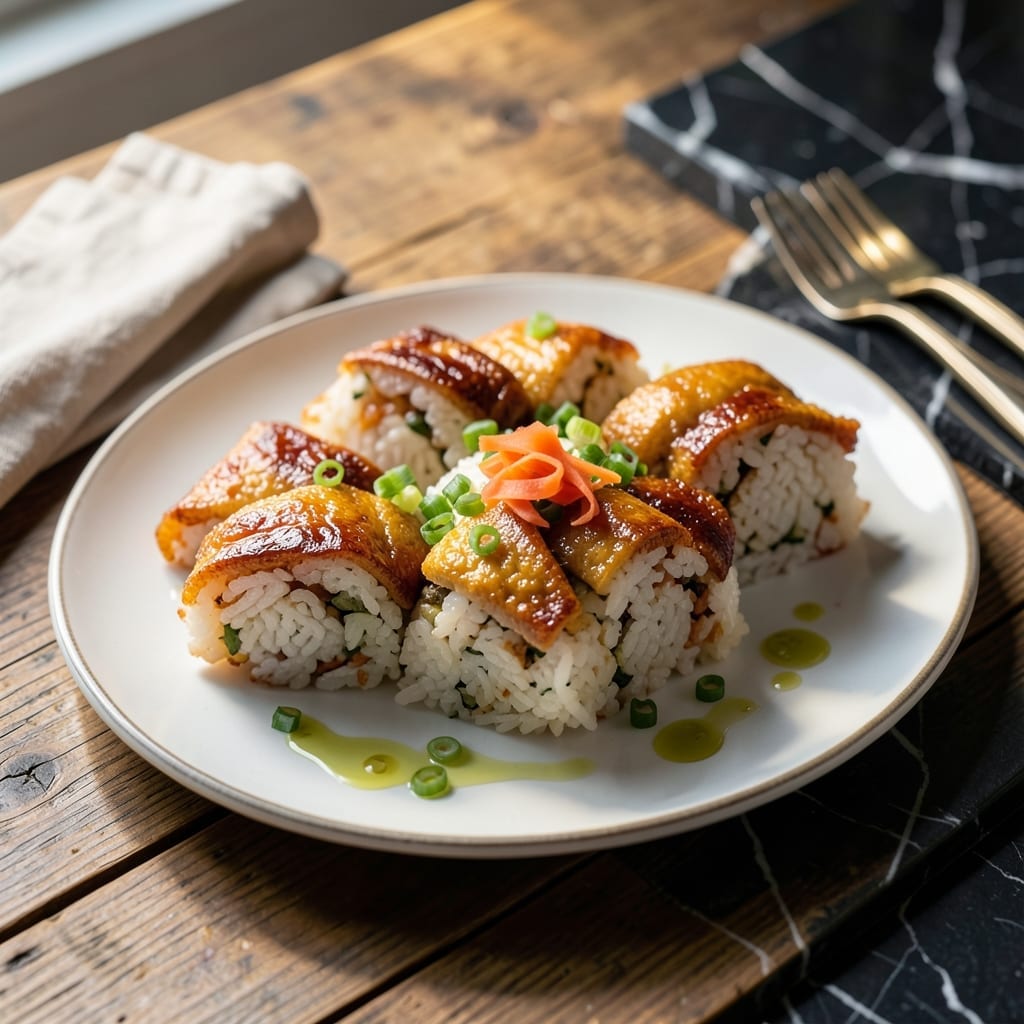
Mastering inari sushi begins with the rice—a perfect balance of sweetness and vinegar tang that defines this dish. I developed this method after testing multiple ratios to achieve authentic flavor without overpowering the delicate fried tofu pockets.
The secret is using short-grain rice and a precise vinegar-sugar-salt mixture applied while the rice is still hot. This ensures every grain absorbs the seasoning evenly, creating that signature sticky yet slightly glossy texture essential for inari sushi.
What you get is seasoned rice that holds its shape in the pockets while delivering the ideal sweet-savory contrast. The technique is straightforward but demands attention to temperature and timing for perfect results every time.
This foundation transforms simple ingredients into an elevated dish that captures the spirit of traditional Japanese sushi.
Ingredients for Inari Sushi Rice
Eleven ingredients transform into the sweet, tangy foundation for authentic inari sushi pockets.
| Ingredient | Amount | Notes |
|---|---|---|
| Japanese Short-Grain Rice 🍚 | 2 cups | Rinsed until water runs clear |
| Rice Vinegar 🍶 | ½ cup | Unseasoned variety essential |
| Granulated Sugar 🍚 | 3 tbsp | Dissolved completely in vinegar |
| Kosher Salt 🧂 | 1 ½ tsp | Diamond Crystal preferred |
| Water 💧 | 2 ¼ cups | For cooking rice |
| Fried Tofu Pockets 🧈 | 8 pieces | Inari age, drained of excess oil |
| Sushi Nori Sheets 🌿 | 2 sheets | Cut into strips for garnish |
| Sesame Seeds 🌰 | 1 tbsp | Toasted for garnish |
| Green Onions 🧅 | 2 whole | Thinly sliced for garnish |
| Pickled Ginger 🌸 | ¼ cup | For serving alongside |
| Soy Sauce 🥢 | ¼ cup | For dipping |
The rice is non-negotiable—Japanese short-grain only. I swear by Koshihikari or Nishiki brands from any Asian market (or the international aisle at Whole Foods). The vinegar must be unseasoned—seasoned rice vinegar has sugar and salt added, which throws off your ratios. For sugar, regular granulated is perfect (organic if you’re avoiding GMO). The tofu pockets? Mitsuba or Nasoya brands are widely available and consistently good.
No rice vinegar? White wine vinegar at half the amount plus a pinch of sugar gets you close. Out of short-grain? Sushi rice is the same thing—just don’t use jasmine or basmati. For a gluten-free option, tamari instead of soy sauce. The sesame seeds can be skipped, but they add that perfect crunch. Want extra umami? A splash of mirin in the vinegar mixture takes it to another level.
The seasoned rice keeps 2 days in the fridge (store in an airtight container). The tofu pockets are best used the same day they’re opened. Leftovers? Repurpose as onigiri—shape into triangles and wrap with nori. The pickled ginger lasts months in its jar, so don’t stress about using it all at once.
Why You’ll Love This Recipe
- One Pot Wonder: I just toss the rice, vinegar, sugar, and salt into the rice cooker and walk away—no babysitting required.
- Sticky Sweet Balance: The rice vinegar and sugar create that signature sushi rice tang with just the right hint of sweetness.
- Meal Prep Magic: I make a big batch on Sunday and use it for bento boxes, onigiri, or quick inari pockets all week.
- Pantry Staples: Between us, I always have these ingredients on hand, so it’s my go-to when I need a cheap, filling meal.
Step-by-Step Instructions for Inari Sushi Rice
This method delivers the ideal balance of sweetness and tang that makes inari sushi irresistible.
Step 1: Rinse and Cook the Japanese Short-Grain Rice
Place the 2 cups Japanese Short-Grain Rice in a fine-mesh strainer and rinse under cold water, swirling with your hand, until the water runs completely clear. This removes excess starch and ensures the grains stay separate after cooking.
Combine the rinsed rice with the 2.25 cups Water in a rice cooker or heavy pot. Cook according to your rice cooker’s instructions or bring to a boil, then reduce to a simmer, cover, and cook for 15 minutes. Remove from heat and let it steam, covered, for another 10 minutes.
Step 2: Prepare the Sweet Vinegar Seasoning
While the rice cooks, combine the 0.5 cup Rice Vinegar, 3 tbsp Granulated Sugar, and 1.5 tsp Kosher Salt in a small saucepan. Heat over low heat just until the sugar and salt dissolve completely—do not let it boil.
This seasoning is the soul of your inari rice. The unseasoned rice vinegar provides the clean acidity needed to balance the sweetness, while the Diamond Crystal kosher salt ensures even distribution without overpowering the delicate flavors.
Step 3: Season the Rice While Warm
Transfer the hot cooked rice to a large, shallow wooden or glass bowl. Using a rice paddle or silicone spatula, gently fold in the warm vinegar mixture in a slicing motion. Be thorough but gentle to avoid crushing the grains.
Fan the rice with a hand fan or piece of cardboard as you fold to cool it quickly and give it that characteristic glossy sheen. You want the rice to be sticky but not mushy, with each grain distinct yet cohesive. The rice should be at room temperature before assembling.
Step 4: Fill the Fried Tofu Pockets
Take each of the 8 pieces Fried Tofu Pockets and gently open them along the seam. Fill each pocket with a generous portion of the seasoned rice, pressing lightly to compact it without over-packing. The inari age should be drained of excess oil to prevent a greasy texture.
Arrange the filled pockets seam-side down on a serving platter. The rice should hold its shape but still be tender when bitten into. This is where the magic happens—the sweet, tangy rice contrasts beautifully with the soft, savory tofu pockets.
Step 5: Garnish and Serve with Accompaniments
Cut the 2 sheets Sushi Nori Sheets into thin strips and sprinkle over the inari sushi along with the 1 tbsp Sesame Seeds and thinly sliced 2 whole Green Onions. The nori adds a subtle oceanic note, while the sesame seeds provide a nutty crunch.
Serve immediately with the 0.25 cup Pickled Ginger and 0.25 cup Soy Sauce on the side for dipping. The pickled ginger cleanses the palate between bites, and the soy sauce enhances the umami depth of the dish.
Pro Tips For Making Inari Sushi Rice
- Rinse the Rice: Wash the Japanese short-grain rice 3-4 times until the water runs nearly clear—this removes excess starch and prevents mushy sushi rice.
- Heat the Vinegar: Warm the rice vinegar, sugar, and salt mixture slightly before mixing into cooked rice so the sugar dissolves evenly and the seasoning absorbs better.
- Skip the Overmixing: After adding the vinegar mixture, gently fold the rice with a rice paddle using cutting motions—don’t stir aggressively or you’ll smash the grains into paste.
- Use a Fan: While mixing the seasoning, point a fan at the rice to cool it faster—this gives it that signature glossy finish without making it soggy.
Common Mistakes When Making This Recipe
Skipping the Rinse
Never skip rinsing the 2 cups Japanese Short-Grain Rice—this removes excess starch that would make your rice gummy rather than sticky. I learned this the hard way during my first attempt, which ended with a mushy mess. Rinse until the water runs completely clear. 💡
Using Seasoned Vinegar
Always use unseasoned rice vinegar for the 0.5 cup measurement. Seasoned vinegar already contains sugar and salt, which throws off the delicate balance of your seasoning mixture. This is a mistake that can make your rice overly sweet or salty.
Overheating the Seasoning
When dissolving the 3 tbsp Granulated Sugar and 1.5 tsp Kosher Salt in the vinegar, keep the heat on low. Boiling can concentrate the flavors and alter the balance you’re aiming for. Just warm it until the sugar and salt disappear.
Packing Too Tightly
When filling the 8 pieces Fried Tofu Pockets, avoid over-packing the rice. Pressing too firmly can make the pockets burst or turn the rice into a dense block. A gentle touch ensures each bite has the perfect texture.
Skipping the Cooling Step
Don’t rush the cooling process after seasoning the rice. Fanning while folding helps achieve that glossy sheen and prevents the rice from becoming mushy. Patience here ensures the grains stay distinct yet cohesive.
Ignoring the Drain
Always drain the Fried Tofu Pockets thoroughly before filling. Excess oil can make the rice greasy and ruin the texture. I use a paper towel to blot them gently—it makes all the difference. ✨
Nutrition Facts
Frequently Asked Questions
Can I use a different type of rice?
Stick with Japanese short-grain for authentic texture. Other varieties like jasmine or basmati won’t achieve the right stickiness. Sushi rice works perfectly as it’s the same thing.
How long can I store the seasoned rice?
Keep it in an airtight container in the fridge for up to 2 days. For best results, use it fresh for the ideal texture and flavor.
What if I don’t have rice vinegar?
Substitute with white wine vinegar at half the amount plus a pinch of sugar. It won’t be identical but will get you close in a pinch.
Can I make this ahead of time?
Prepare the rice and tofu pockets separately, then assemble just before serving. This prevents the pockets from getting soggy.

- Mujadara Rice and Lentils Recipe: Earthy Spiced Lentils With Caramelized Onions - November 1, 2026
- Naija Fried Rice Recipe: Street-Style Spice With Veggie Crunch - November 1, 2026
- Mushy Rice Recipe: Fluffy Grains Transformed in Minutes - November 1, 2026