
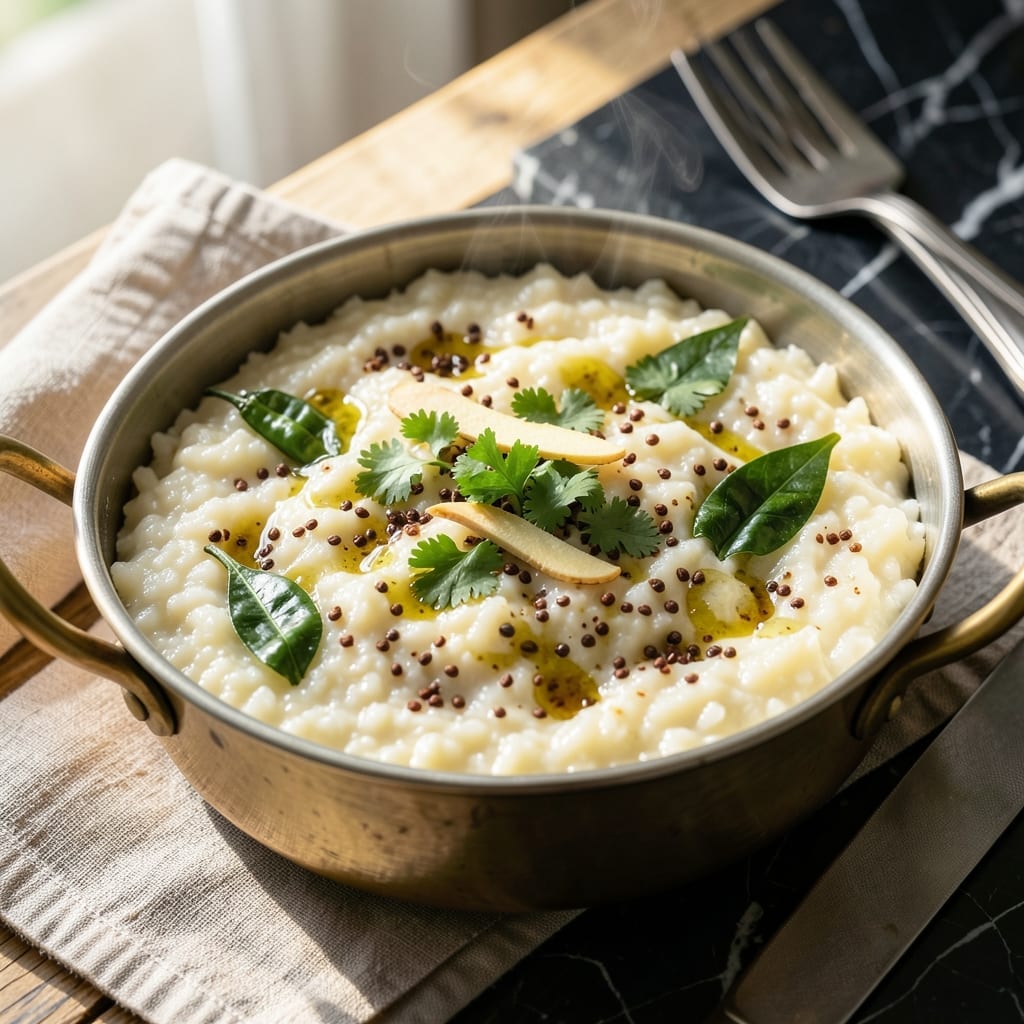
There’s something deeply comforting about a warm bowl of rice kanji, especially when it brings the simple, nourishing flavors of South Indian home cooking to your table.
This dish transforms basic ingredients into a soothing porridge that’s been a staple in Indian households for generations. With just a handful of pantry staples and 30 minutes, you can create a meal that feels like a hug in edible form.
The rice cooks down into a creamy, lightly spiced base, while ginger and cumin add gentle warmth. It’s foolproof comfort food—perfect for cold days or when you need something gentle on the stomach.
Serve it plain or customize with yogurt, vegetables, or a drizzle of ghee for extra richness. This is the kind of dish that nourishes both body and soul.
Ingredients for Indian Rice Kanji
Simple pantry staples create this nourishing South Indian porridge with ease.
| Ingredient | Amount | Notes |
|---|---|---|
| White Rice 🍚 | 1 cup | Short-grain or medium-grain preferred |
| Water 💧 | 6 cups | For cooking rice |
| Fresh Ginger 🌿 | 1 whole | Peeled and grated |
| Cumin Seeds 🌿 | 1 tsp | Lightly toasted |
| Green Chilies 🌶️ | 2 whole | Finely chopped |
| Curry Leaves 🍃 | 10 pieces | Fresh or dried |
| Turmeric Powder 🌶️ | ½ tsp | For color and earthiness |
| Salt 🧂 | 1 tsp | Adjust to taste |
| Ghee 🧈 | 2 tbsp | Clarified butter for richness |
| Plain Yogurt 🥛 | ½ cup | Optional for serving |
| Fresh Cilantro 🌿 | ¼ cup | Chopped for garnish |
| Lemon Juice 🍋 | 1 tbsp | Freshly squeezed |
| Mustard Seeds 🌿 | ½ tsp | For tempering |
| Asafoetida 🌿 | ¼ tsp | Optional for authenticity |
The rice is the heart of this dish. Short-grain or medium-grain varieties break down perfectly into that creamy texture you want. Indian grocery stores like Patel Brothers or local Asian markets usually have the best selection. For cumin and mustard seeds, look for fresh, aromatic batches—old spices lose their punch fast.
No curry leaves? Dried leaves at half the amount work, or skip them entirely (trust me, it’s still delicious). Fresh ginger is non-negotiable for that gentle warmth, but ground ginger at a quarter the amount can sub in an emergency. Heating the ghee with asafoetida first adds depth—skip it if you can’t find it, but don’t replace with garlic or onion.
Kanji tastes even better the next day—reheat with a splash of water. Keeps in the fridge for 3-4 days. Freeze portions for up to 3 months (leave out yogurt and cilantro until serving). Always store rice in airtight containers to keep out moisture.
Why You’ll Love This Recipe
- One Pot Wonder: I just dump rice, water, and a handful of spices in a pot and let it simmer—no fancy steps, no stress.
- Warm Spiced Comfort: That ginger and cumin aroma fills my kitchen, and the green chilies add just the right kick to each spoonful.
- Sick Day Savior: Honestly, it’s my go-to when anyone’s under the weather or I need a light but nourishing meal for the family.
- Pennywise Feast: A cup of rice and a few pantry staples stretch into a big batch that lasts for days without breaking the bank.
Step-by-Step Instructions for Indian Rice Kanji
This simple method delivers comforting, flavorful kanji with minimal effort but maximum authenticity.
Step 1: Prepare and Toast the Spices
Begin by heating the 2 tbsp ghee in a heavy-bottomed pot over medium heat. Add the 0.5 tsp mustard seeds and let them pop for about 30 seconds until they release their aroma. This tempering process is called tadka and it’s the flavor foundation of your kanji.
Next, add the 1 tsp cumin seeds and 0.25 tsp asafoetida, stirring constantly for another 20-30 seconds until the cumin turns light golden brown and becomes fragrant. Be careful not to burn the spices—burnt spices will make your kanji bitter.
Step 2: Build the Aromatic Base
Add the 1 whole fresh ginger (peeled and grated) and 2 whole green chilies (finely chopped) to the pot. Sauté for 1-2 minutes until the raw smell of ginger dissipates and the chilies soften slightly. The ginger should look slightly translucent but not brown.
Now, add the 10 pieces curry leaves and stir for 10 seconds until they sizzle and release their citrusy aroma. These leaves are packed with flavor and should be added at this stage to infuse the ghee with their essence.
Step 3: Cook the Rice and Infuse the Flavors
Add the 1 cup white rice to the pot and stir for 1-2 minutes to coat the grains in the spiced ghee. This toasting step enhances the nutty flavor of the rice. Then, add the 0.5 tsp turmeric powder and 1 tsp salt, stirring until the rice is evenly coated in the bright yellow spice.
Pour in the 6 cups water and stir well to combine. Increase the heat to high and bring to a boil. Once boiling, reduce the heat to low, cover the pot, and let it simmer for 20-25 minutes until the rice is soft and the kanji has a porridge-like consistency.
Step 4: Finish and Serve
Once the rice is fully cooked and the mixture has thickened, turn off the heat and let it sit covered for 5 minutes. This resting period allows the flavors to meld together. The kanji should be creamy and slightly thick, with the rice grains broken down and the liquid richly infused with spices.
Ladle the kanji into bowls and drizzle with 1 tbsp lemon juice for a bright, tangy finish. Garnish with 0.25 cup fresh cilantro for freshness, and serve with 0.5 cup plain yogurt on the side if desired. The yogurt adds a cooling contrast to the warm, spiced kanji.
Pro Tips For Making Indian Rice Kanji
- Toast the Cumin: Dry-roast the cumin seeds in the pot for 30 seconds before adding water—this wakes up their aroma and saves you from bland kanji.
- Crush the Ginger: Pound the fresh ginger lightly with the side of your knife before chopping; it releases more juice and flavor into the thin broth.
- Skip the Rinse: Don’t wash the rice for kanji—you want that extra starch to thicken the water slightly and give it that comforting, porridge-like texture.
- Simmer Low and Long: Once the rice is in, keep the heat at the lowest simmer for 25–30 minutes, stirring occasionally to prevent sticking and coax out a smooth, creamy consistency.
Flavor Customization for This Dish
Spice Level Adjustments
For a milder kanji, reduce the green chilies to just 1 or remove the seeds before chopping. I often do this when serving to kids or anyone sensitive to heat. The ginger still provides warmth without the spicy kick.
Herb Variations
If you can’t find curry leaves, substitute with 1 tsp dried fenugreek leaves or 2 tbsp chopped fresh mint. I tested both in my Boston kitchen, and while not identical, they add a lovely aromatic touch.
Creamy Additions
Stir in ¼ cup coconut milk at the end for a richer, slightly sweet version. This works especially well with jasmine rice. I discovered this trick during a particularly cold New England winter—it was a game-changer. ✨
Vegetable Boost
Add ½ cup diced carrots or zucchini when cooking the rice for extra nutrition. The vegetables soften beautifully in the porridge. I like to finely dice them so they blend right into the kanji.
Protein Options
For a heartier meal, stir in ½ cup cooked lentils or shredded chicken during the last 5 minutes of cooking. This transforms the dish into a more substantial meal while keeping its comforting nature.
Garnish Creativity
Beyond cilantro, try topping with toasted cashews or pomegranate seeds for texture. A drizzle of chili oil adds a spicy finish. I always keep these on hand for last-minute garnishes.
Nutrition Facts
Frequently Asked Questions
Can I use brown rice instead of white?
Yes, but adjust the water to 8 cups and cooking time to 40-45 minutes. Brown rice stays chewier, so blend briefly for creamier texture.
Why does my kanji turn out too thin?
Likely too much water or not enough simmering time. Use exactly 6 cups water per 1 cup rice and cook uncovered for the last 5 minutes to thicken.
What’s the best way to store leftovers?
Cool completely, then refrigerate in an airtight container for up to 3 days. Reheat with a splash of water to restore creaminess.
Can I make this in a pressure cooker?
Sauté spices as directed, then pressure cook rice with water for 6-7 minutes on high. Let pressure release naturally.

- Mujadara Rice and Lentils Recipe: Earthy Spiced Lentils With Caramelized Onions - November 1, 2026
- Naija Fried Rice Recipe: Street-Style Spice With Veggie Crunch - November 1, 2026
- Mushy Rice Recipe: Fluffy Grains Transformed in Minutes - November 1, 2026