
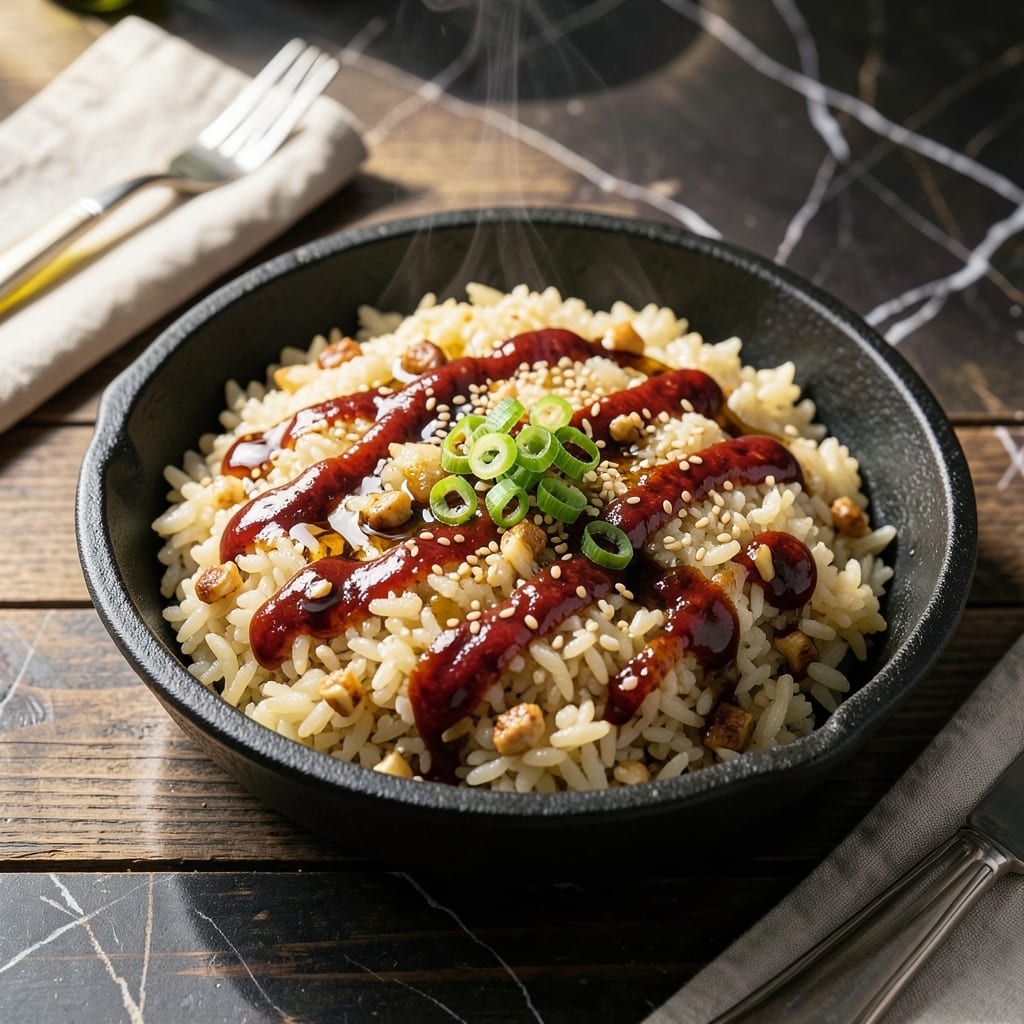
This Korean garlic rice delivers restaurant-quality results with simple ingredients and traditional techniques. The key is toasting the rice in oil until it develops a nutty aroma and golden color before adding the garlic and seasonings.
I’ve perfected this method to ensure every grain stays separate and flavorful, with just the right balance of savory, spicy, and umami notes. The fermented spice element comes from gochujang, which adds depth without overpowering.
What you get is a dish that’s hearty yet light, with each bite packed with bold flavors. The rice absorbs the seasonings beautifully, creating a satisfying texture that pairs well with any protein or vegetable topping.
Ready in under 30 minutes, this recipe turns ordinary rice into something extraordinary. Let’s get started.
Ingredients for Korean Garlic Rice
Restaurant-quality results start with these carefully selected traditional ingredients for bold, balanced flavors.
| Ingredient | Amount | Notes |
|---|---|---|
| Jasmine Rice 🍚 | 2 cups | Uncooked, rinsed until clear |
| Garlic Cloves 🧄 | 6 cloves | Minced finely for even distribution |
| Neutral Oil 🫒 | 3 tbsp | High smoke point preferred |
| Gochujang 🌶️ | 2 tbsp | Korean fermented chili paste |
| Soy Sauce 🥢 | 2 tbsp | Low-sodium or regular |
| Sesame Oil 🫒 | 1 tsp | Toasted for nutty aroma |
| Granulated Sugar 🧂 | 1 tsp | Balances spice and umami |
| Toasted Sesame Seeds 🌰 | 1 tbsp | For garnish and crunch |
| Green Onions 🧅 | 3 whole | Thinly sliced for freshness |
| Vegetable Stock 🥕 | ½ cup | Low-sodium preferred |
| Ground Black Pepper 🌶️ | ½ tsp | Freshly ground for best flavor |
| Red Pepper Flakes 🌶️ | ½ tsp | Adjust for heat preference |
The rice is fundamental—jasmine rice is ideal for its fragrant, slightly sticky texture. Korean markets or well-stocked Asian grocery stores carry the best varieties. Gochujang is non-negotiable for that fermented depth; look for Sempio or CJ brands for authentic flavor. Neutral oil with a high smoke point, like avocado or grapeseed, prevents burning during toasting.
No gochujang? Sriracha mixed with a bit of miso paste can work in a pinch, though the flavor won’t be identical. Vegetable stock can be swapped for water, but you’ll lose some depth. For a gluten-free version, use tamari instead of soy sauce. The sesame oil can be omitted if needed, but it adds that signature nutty aroma.
Cooked rice keeps in the fridge for 3-4 days in an airtight container. The toasting process actually improves as it sits, making leftovers even better. Gochujang and sesame oil last months in the pantry, but check labels for exact shelf life.
Why You’ll Love This Recipe
- One Pot Wonder: I toss everything into a single pan—jasmine rice, minced garlic, and a splash of oil—then let it work its magic.
- Umami Bomb: The gochujang and soy sauce hit that perfect balance of spicy, savory, and slightly sweet.
- Feeds the Crowd: Between us, this stretches a humble pot of rice into a full meal that satisfies even the hungriest eaters.
- Leftovers Win: Honestly, it tastes even better the next day—those garlic notes deepen overnight.
Step-by-Step Instructions for Korean Garlic Rice
Master the technique for achieving perfectly balanced spice, umami, and aromatic depth in every grain.
Step 1: Prepare and Cook the Jasmine Rice
Rinse the 2 cups Jasmine Rice under cold water until the water runs clear to remove excess starch. This prevents the grains from becoming gummy during cooking. Use a fine-mesh strainer for best results.
Cook the rice according to package instructions, typically using a 1:1.25 rice-to-water ratio. Once done, fluff with a fork and let it cool slightly. The grains should be separate and tender, not mushy. Spread it on a tray to cool faster if needed.
Step 2: Sauté the Garlic and Build the Base
Heat 3 tbsp Neutral Oil in a large skillet or wok over medium-high heat. Add the 6 cloves Garlic Cloves, minced finely, and sauté for 30-45 seconds until fragrant but not browned. Garlic burns easily, so keep it moving.
Stir in the 2 tbsp Gochujang and 2 tbsp Soy Sauce, breaking up any clumps in the fermented paste. Cook for 1 minute to meld the flavors. The mixture will darken slightly and become glossy as the sugars in the gochujang caramelize.
Step 3: Combine Rice and Seasonings
Add the cooked jasmine rice to the skillet, breaking up any clumps with your spatula. Drizzle in the 0.5 cup Vegetable Stock and sprinkle with the 1 tsp Granulated Sugar, 0.5 tsp Ground Black Pepper, and 0.5 tsp Red Pepper Flakes.
Stir-fry over medium-high heat for 3-4 minutes until the rice is evenly coated and the liquid has been absorbed. The grains should glisten with the sauce, and the edges may begin to crisp slightly. Taste and adjust seasoning if needed.
Step 4: Finish with Aromatic Oils and Garnish
Remove the skillet from heat and stir in the 1 tsp Sesame Oil. This adds a nutty depth that ties all the flavors together. The oil’s aroma will bloom immediately from the residual heat, so work quickly.
Transfer the rice to a serving dish and garnish with the 1 tbsp Toasted Sesame Seeds and thinly sliced 3 whole Green Onions. The contrast of the crunchy seeds and fresh onions against the warm, spiced rice completes the dish. Serve immediately while the flavors are vibrant.
Pro Tips For Making Korean Garlic Rice
- Pre-cook the rice: Use day-old jasmine rice—freshly cooked rice is too moist and will turn mushy when stir-fried. I learned this the hard way after my first attempt turned into a sticky mess.
- Low and slow garlic: Cook the minced garlic in neutral oil on medium-low heat until golden, about 2-3 minutes. After burning three batches, I finally figured out that high heat makes it bitter.
- Balance the gochujang: Mix the gochujang with soy sauce before adding to the rice—it distributes the heat and salt evenly. Sounds weird, but it works.
- Press for crisp: When frying, press the rice down with a spatula and let it sit undisturbed for 1-2 minutes to develop a crispy bottom layer. My grandmother swore by this, and she was right.
Pro Cooking Tips for korean garlic rice
Rice Prep Perfection
Always rinse your jasmine rice until the water runs clear—this removes excess starch so your grains stay separate. I use a fine-mesh strainer for this. Cook it with a 1:1.25 rice-to-water ratio for ideal texture. 💡
Garlic Control
When sautéing 6 cloves garlic in 3 tbsp neutral oil, keep the heat at medium-high and stir constantly. Garlic burns in 45 seconds if left unattended, turning bitter. You want it fragrant but pale golden.
Gochujang Technique
Break up 2 tbsp gochujang clumps before adding to the pan—this ensures even distribution. Cook it with 2 tbsp soy sauce for 1 minute to deepen the flavor. The paste should darken slightly but not stick.
Toasting Mastery
Stir-fry the rice for 3-4 minutes until the edges crisp slightly. This creates that signature nutty aroma. Add ½ cup vegetable stock gradually to prevent sogginess. The liquid should absorb completely.
Finishing Touches
Remove from heat before adding 1 tsp sesame oil—this preserves its delicate aroma. Stir quickly, then garnish with toasted sesame seeds and green onions for freshness. Serve immediately for best texture. 🔥
Equipment Tip
Use a wok or large skillet with high sides to prevent spillage during stir-frying. A wooden spatula helps break up rice clumps without scratching your pan. I prefer carbon steel for even heat distribution.
Nutrition Facts
Frequently Asked Questions
Can I use leftover rice for this?
Day-old rice works even better since it’s drier. Break up any clumps before adding to the pan. This helps achieve that perfect crispy texture.
What can I use instead of gochujang?
Mix 1 tbsp sriracha with 1 tsp miso paste for a similar flavor profile. The combination gives both heat and umami, though the fermented depth will differ slightly.
How do I make it less spicy?
Reduce the gochujang to 1 tbsp and omit the red pepper flakes. You can also add a splash of honey to balance the heat.
Can I add protein to this dish?
Certainly! Try topping with a fried egg, bulgogi beef, or sautéed shrimp. Add proteins at the end to keep them from overcooking.

- Mujadara Rice and Lentils Recipe: Earthy Spiced Lentils With Caramelized Onions - November 1, 2026
- Naija Fried Rice Recipe: Street-Style Spice With Veggie Crunch - November 1, 2026
- Mushy Rice Recipe: Fluffy Grains Transformed in Minutes - November 1, 2026