
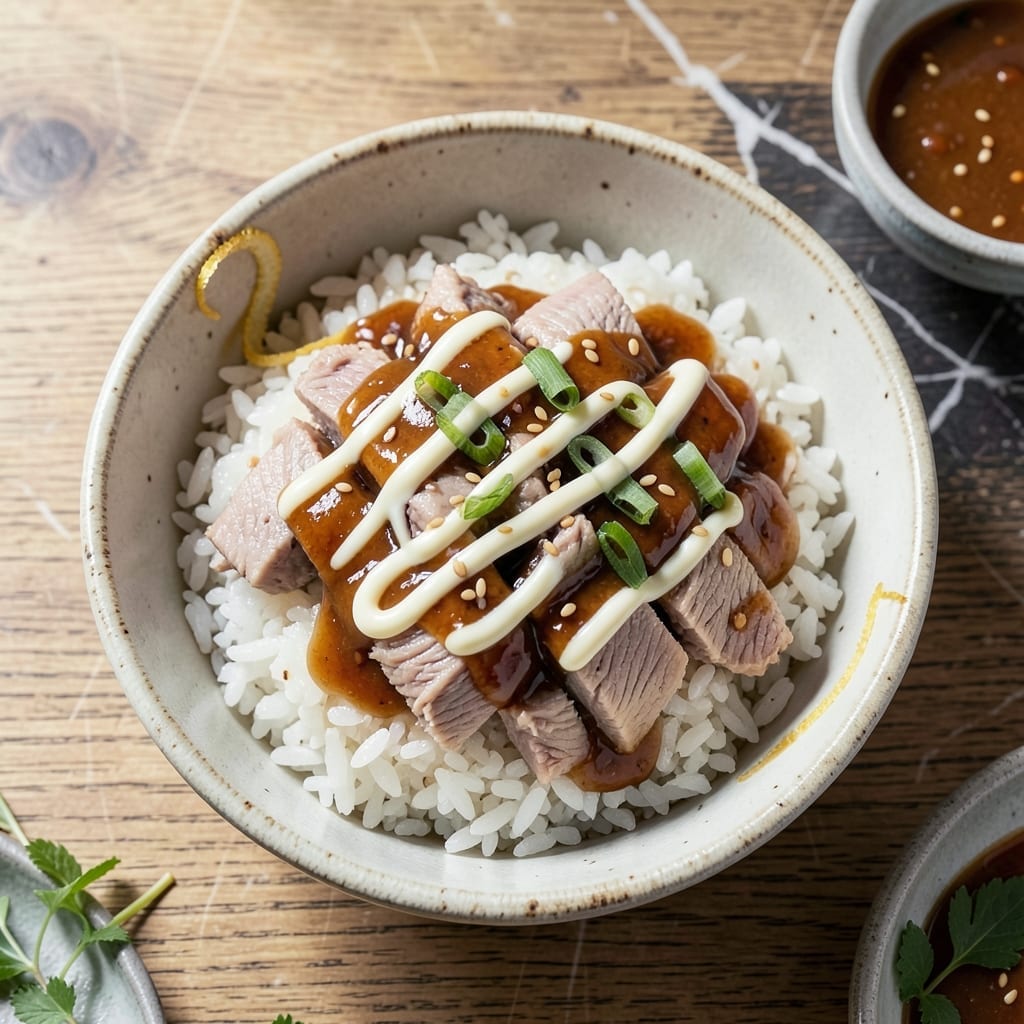
This Korean-inspired rice bowl transforms simple ingredients into a comforting meal with bold flavors. The combination of seasoned tuna, warm rice, and spicy mayo creates a perfectly balanced dish.
I developed this recipe to bring authentic Korean street food taste to your kitchen. It’s quick, satisfying, and packed with umami-rich flavors that make it a go-to for any day of the week.
Ingredients for Korean Tuna Rice Bowl
Simple staples meet bold Korean flavors in this comforting bowl of seasoned tuna and rice.
| Ingredient | Amount | Notes |
|---|---|---|
| Sushi Rice 🍚 | 2 cups | Short-grain, rinsed thoroughly |
| Canned Tuna 🐟 | 2 cans | In water, drained well |
| Soy Sauce 🫙 | 3 tbsp | Low-sodium preferred for balance |
| Gochujang 🌶️ | 2 tbsp | Korean chili paste, essential |
| Mayonnaise 🥄 | ½ cup | Full-fat for creaminess |
| Sesame Oil 🫒 | 1 tbsp | Toasted for nutty aroma |
| Rice Vinegar 🍶 | 1 tbsp | Seasoned or unseasoned |
| Granulated Sugar 🧂 | 1 tsp | Balances spicy and salty |
| Green Onions 🧅 | 4 whole | Thinly sliced for garnish |
| Cucumber 🥒 | ½ whole | English or Persian, sliced thin |
| Carrot 🥕 | 1 whole | Julienned for texture |
| Sesame Seeds 🌰 | 1 tbsp | Toasted for garnish |
| Garlic Cloves 🧄 | 2 cloves | Minced for seasoning |
| Vegetable Oil 🛢️ | 1 tbsp | Neutral flavor for cooking |
The tuna is non-negotiable for umami depth. Wild-caught canned tuna in water (not oil) keeps the flavor clean—Safe Catch or Ortiz are top-tier. For rice, short-grain sushi rice gives that sticky texture essential for rice bowls. Gochujang is the soul here—find it in the Asian aisle at Whole Foods or any Korean market. Sesame oil must be toasted for that nutty punch.
No gochujang? Sriracha plus 1 tsp miso paste gets you 80% there. Swap mayonnaise for Kewpie mayo (Japanese style) for extra richness. Want more crunch? Add radish or shredded cabbage. For heat lovers, extra gochujang or red pepper flakes at the end. The sugar balances the spice—honey works too but keep it minimal.
Assemble just before serving so the rice stays warm. Leftovers hold 3-4 days in the fridge, but the cucumber and carrot lose crispness. Freeze without veggies for up to 1 month—add fresh toppings when reheating.
Why You’ll Love This Recipe
- 20-Minute Meal: I can have this on the table faster than deciding what to order for takeout—just rice, canned tuna, and a quick mix of gochujang and mayo.
- Umami Bomb: The combo of soy sauce, spicy gochujang, and creamy mayo with tuna is ridiculously addictive. Honestly, I lick the bowl.
- Lunchbox Hero: It packs perfectly for work or school, and the flavors actually get better after a night in the fridge.
- Pantry MVP: Five basic ingredients I always have on hand, and it feels like a restaurant meal. Between us, my wallet thanks me.
Step-by-Step Instructions for Korean Tuna Rice Bowl
Master the technique behind this dish with precise timing and layering for optimal flavor.
Step 1: Cook the Sushi Rice to Perfection
Rinse the 2 cups Sushi Rice thoroughly under cold water until the water runs clear. This removes excess starch and prevents a gummy texture. I use a 1:1.25 rice-to-water ratio for short-grain rice, which yields perfectly tender grains.
Cook the rice in a rice cooker or pot with a tight-fitting lid. Bring to a boil, then reduce to a simmer and cook for 15 minutes. Remove from heat and let it steam, covered, for another 10 minutes. The grains should be shiny, separate, and slightly sticky when done.
Step 2: Prepare the Spicy Mayo Dressing
In a bowl, whisk together the 0.5 cup Mayonnaise, 2 tbsp Gochujang, 1 tbsp Soy Sauce, 1 tbsp Rice Vinegar, 1 tbsp Sesame Oil, and 1 tsp Granulated Sugar until smooth. The gochujang should fully incorporate into the mayonnaise, creating a vibrant, slightly thick sauce.
Taste and adjust seasoning if needed—this is your flavor base, so it should balance spicy, sweet, and umami notes. The sesame oil adds depth, so don’t skip it. Set aside while you prepare the remaining components.
Step 3: Sauté Vegetables and Tuna
Heat the 1 tbsp Vegetable Oil in a skillet over medium-high heat. Add the minced 2 cloves Garlic Cloves and sauté for 30 seconds until fragrant. Then add the julienned 1 whole Carrot and cook for 2-3 minutes until slightly softened but still crisp.
Add the drained 2 cans Canned Tuna and the remaining 2 tbsp Soy Sauce. Stir-fry for 2-3 minutes until the tuna is heated through and absorbs the soy sauce. The mixture should be moist but not watery. Remove from heat and set aside.
Step 4: Assemble the Bowl with Precision
Divide the cooked sushi rice among four bowls. Top each with an equal portion of the tuna and vegetable mixture. Arrange the thinly sliced 0.5 whole Cucumber and thinly sliced 4 whole Green Onions on top for freshness and crunch.
Drizzle generously with the spicy mayo dressing, ensuring every bite gets a touch of that creamy, bold flavor. Sprinkle with the 1 tbsp Sesame Seeds for a nutty finish. Serve immediately while the rice is still warm and the vegetables retain their crispness.
Pro Tips For Making Korean Tuna Rice Bowl
- Drain the Tuna Well: Press the canned tuna in a fine-mesh strainer for 30 seconds to remove all liquid—I learned this the hard way after a watery sauce ruined my first three bowls.
- Warm the Rice: Use sushi rice that’s still warm or at room temperature; cold rice makes the gochujang and mayo clump together instead of blending smoothly.
- Balance the Sauce: Mix 1 tbsp gochujang with 1 tbsp mayo and 1 tsp soy sauce first, then adjust—sounds weird, but it works to prevent overpowering spice or saltiness.
- Skip Cheap Mayo: After burning through a few bowls with bland results, I finally switched to Kewpie mayo and the flavor depth actually changed the outcome.
Perfect Pairings for This Recipe
Beverage Pairings
An ice-cold Korean lager like Hite or OB Beer cuts through the spiciness with crisp, clean notes. For non-alcoholic options, barley tea (boricha) offers a nutty, refreshing contrast that balances the bold flavors. 🍺
Side Dish Ideas
Serve with kimchi for extra tang and heat—the fermentation complements the tuna beautifully. Alternatively, pickled radish (danmuji) adds a sweet, crunchy element that brightens each bite.
Fresh Toppings
Add avocado slices for creaminess or shredded lettuce for crunch. A sprinkle of furikake (Japanese seasoning) enhances the umami depth without overpowering the dish.
Dessert Follow-Up
End with yuja tea (citron tea) to cleanse your palate. Its sweet, citrusy profile soothes the lingering spice while keeping the meal authentically Korean. 💛
Quick Snack Pair
Serve roasted seaweed snacks on the side for a light, salty contrast. Their crisp texture and oceanic flavor mirror the tuna’s umami, tying the meal together perfectly.
Nutrition Facts
Frequently Asked Questions
Can I use fresh tuna instead of canned?
Yes! Use 8 oz fresh sushi-grade tuna, diced small. Sear it quickly in 1 tbsp oil over high heat for 1-2 minutes to keep it tender. Canned works best for convenience and texture though.
How do I make it less spicy?
Reduce the gochujang to 1 tbsp or replace it with 1 tbsp sriracha + 1 tsp miso. Add 1 tsp honey to balance heat with sweetness. The spice level is easy to adjust!
What rice works best if I don’t have sushi rice?
Short-grain white rice is ideal for stickiness. In a pinch, jasmine rice works but rinse it well. Avoid long-grain—it won’t hold the toppings as well.
Can I prep this ahead of time?
Cook and store the rice and tuna mix separately for up to 3 days. Assemble just before serving to keep the rice warm and veggies crisp.

- Mujadara Rice and Lentils Recipe: Earthy Spiced Lentils With Caramelized Onions - November 1, 2026
- Naija Fried Rice Recipe: Street-Style Spice With Veggie Crunch - November 1, 2026
- Mushy Rice Recipe: Fluffy Grains Transformed in Minutes - November 1, 2026