
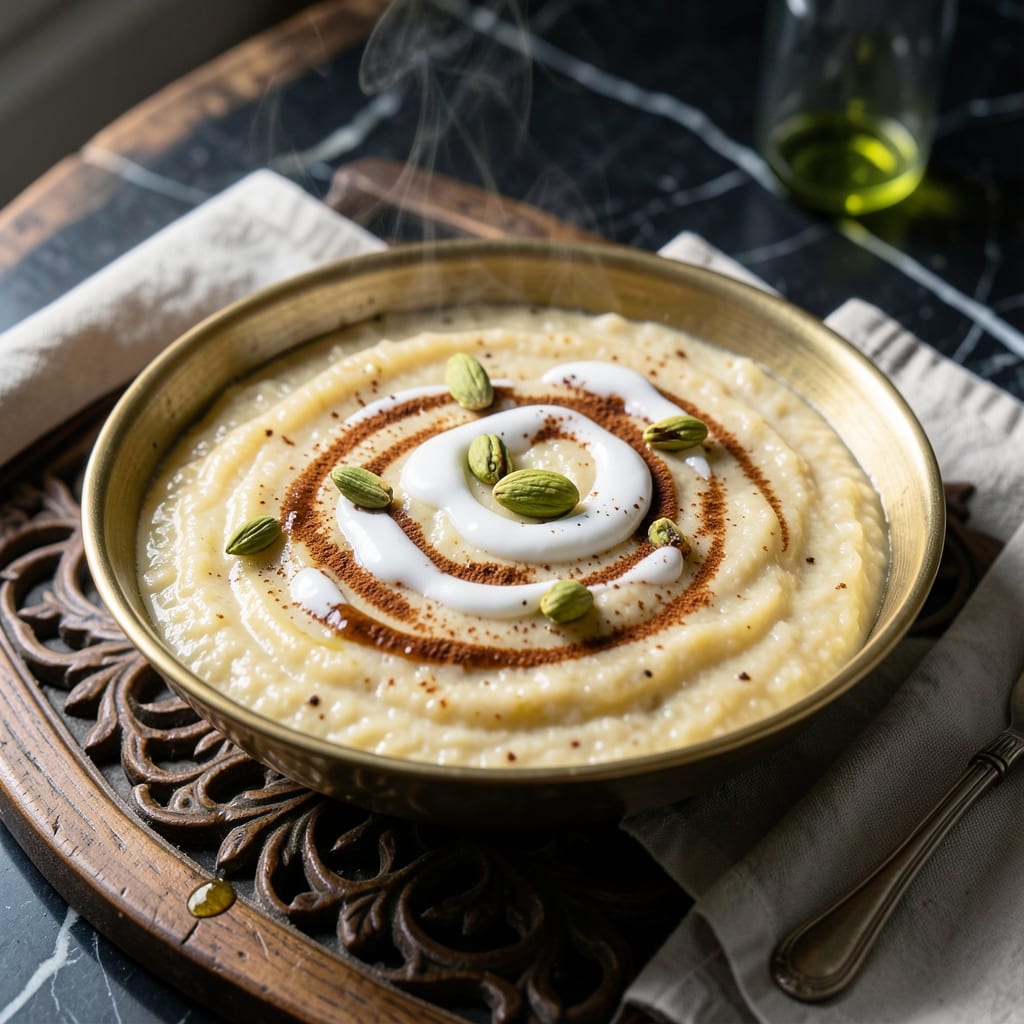
This cardamom-infused rice pudding brings the creamy comfort of Indian tradition to your kitchen. I tested this recipe in my small Boston apartment, perfecting the balance of spices and texture.
The secret lies in slow cooking rice with milk until it transforms into a velvety pudding. Cardamom pods release their aromatic essence during simmering, creating a dessert that’s fragrant and rich.
What emerges is a luxurious, creamy kheer with perfectly soft rice grains suspended in spiced milk. Each bite delivers warm cardamom notes and gentle sweetness that lingers.
Serve warm or chilled, garnished with nuts and raisins. This timeless dessert deserves a place in your repertoire.
Ingredients for Indian Rice Pudding Recipe Kheer
Rich milk, fragrant cardamom, and tender rice come together for this timeless dessert.
| Ingredient | Amount | Notes |
|---|---|---|
| Basmati Rice 🌾 | ½ cup | Rinsed until water runs clear |
| Whole Milk 🥛 | 4 cups | Full-fat for creaminess |
| Heavy Cream 🥛 | ½ cup | Optional for extra richness |
| Sugar 🍚 | ¾ cup | Adjust to taste preference |
| Green Cardamom Pods 🌿 | 8 pieces | Lightly crushed to release seeds |
| Ground Cinnamon 🌿 | ½ tsp | Ceylon for authentic flavor |
| Chopped Pistachios 🌰 | ¼ cup | For garnish, lightly toasted |
| Chopped Almonds 🌰 | ¼ cup | For garnish, lightly toasted |
| Raisins 🍇 | ¼ cup | Soaked in warm water |
| Rose Water 💧 | 1 tsp | Optional for floral aroma |
| Ghee 🧈 | 2 tbsp | Clarified butter for authenticity |
| Vanilla Extract 🌿 | 1 tsp | Pure extract preferred |
| Saffron Threads 🌼 | ¼ tsp | Soaked in warm milk |
| Salt 🧂 | ¼ tsp | Balances sweetness |
The milk is everything here. Whole milk from a local dairy gives the creamiest texture—avoid ultra-pasteurized if you can find it. For the cardamom, green pods from an Indian grocery store pack more aroma than pre-ground. Basmati rice is traditional, but any short-grain works (just adjust cooking time). Freshly crushed pods release way more flavor than store-bought powder.
Need to make it faster? Evaporated milk cuts cooking time in half. No cardamom? A mix of cinnamon and nutmeg at half the amount gets you close. For a lighter version, 2% milk works but won’t be as luxurious. The ghee can be swapped with unsalted butter if that’s what you’ve got. Saffron’s expensive, so skip it if needed—just add a pinch of turmeric for color.
This keeps beautifully—actually tastes better the next day. Good for 3-4 days in the fridge. Freeze without nuts for up to 1 month (add fresh garnish when serving). Warm it gently with a splash of milk to revive.
Why You’ll Love This Recipe
- One Pot Wonder: I love that it all comes together in a single pot—just basmati rice, milk, and a handful of cardamom pods simmering away.
- Rich Cardamom Sweetness: The warm, floral aroma from the green cardamom pods infusing the creamy milk makes every bite feel like a hug.
- Festive Favorite: Between us, it’s my go-to for potlucks, holidays, or even a cozy Tuesday dessert.
- Stretches for Days: Honestly, it tastes even better the next day, and the leftovers keep beautifully in the fridge.
Step-by-Step Instructions for Indian Rice Pudding
This traditional method delivers an ultra-creamy texture with authentic aromatic depth every time.
Step 1: Toast the Rice and Infuse the Milk
Heat the 2 tbsp ghee in a heavy-bottomed pot over medium heat until shimmering. Add the 0.5 cup basmati rice and toast for 2-3 minutes until the grains turn opaque white and emit a nutty aroma. This step prevents the rice from turning mushy during the long cooking process.
Lightly crush the 8 pieces green cardamom pods to release their seeds, then add them to the pot along with the 4 cups whole milk. Stir well and bring to a gentle simmer. The milk will gradually absorb the cardamom’s floral notes as it cooks.
Step 2: Simmer Until Rice is Tender
Reduce the heat to medium-low and let the mixture simmer uncovered for 30-35 minutes, stirring frequently to prevent sticking. You’ll notice the rice gradually softening and the milk reducing slightly. The mixture should thicken enough to coat the back of a spoon.
Add the 0.25 tsp saffron threads (soaked in 2 tbsp warm milk for 5 minutes) during the last 10 minutes of cooking. The saffron will lend its distinctive golden hue and subtle earthy flavor to the pudding. The rice should be tender but still hold its shape when pressed between your fingers.
Step 3: Sweeten and Enrich the Pudding
Stir in the 0.75 cup sugar, 0.5 tsp ground cinnamon, and 0.25 tsp salt. Cook for another 5 minutes to allow the sugar to dissolve completely. Taste and adjust sweetness if needed—the salt balances the sugar beautifully.
Pour in the 0.5 cup heavy cream and 1 tsp vanilla extract, stirring constantly. This is where the pudding transforms into its signature creamy consistency. The mixture should now be thick enough that you can see the path of your spoon for a moment before it disappears.
Step 4: Add Final Aromatics and Nuts
Remove the pot from heat and stir in the 1 tsp rose water. This delicate floral note is the hallmark of authentic kheer, but be careful not to overdo it. Let the pudding cool slightly—it will continue to thicken as it cools.
In a dry pan, lightly toast the 0.25 cup chopped pistachios, 0.25 cup chopped almonds, and 0.25 cup raisins for 2-3 minutes until fragrant. This enhances their natural oils and adds a satisfying crunch to contrast the creamy pudding. Serve the kheer warm or chilled, topped with the toasted nuts and raisins.
Pro Tips For Making Indian Rice Pudding Recipe Kheer
- Simmer Low and Slow: Keep the heat at its lowest—milk scalds easily, and burnt milk ruins kheer. I learned this the hard way after scraping blackened bits off the pot.
- Rinse the Rice: Wash basmati rice until the water runs clear to remove excess starch, or your kheer will turn gummy instead of creamy.
- Crush Cardamom Lightly: Bruise the green cardamom pods just enough to split them open, but don’t grind them—this releases flavor without bitter flecks in your pudding.
- Add Cream at the End: Stir in heavy cream during the last 10 minutes of cooking to prevent curdling and give the kheer a rich, velvety finish.
Regional Styles of These Flavors
North Indian Style
This version is the most common across Punjab and Delhi, where kheer is a staple at celebrations. I use full-fat buffalo milk when I can find it at my local Indian grocery—it creates an even richer texture than regular whole milk. The key is cooking it low and slow for 45-60 minutes until it reaches a thick, creamy consistency. 💛
South Indian Variation
In Tamil Nadu and Kerala, they often use jaggery instead of sugar for a deep, caramel-like sweetness. I substitute ¾ cup grated jaggery for the sugar in my recipe. They also add coconut milk along with regular milk for a lighter, tropical flavor profile.
Bengali Payesh
Bengal’s version, called payesh, is traditionally made with gobindo bhog rice, a short-grain variety. I order this online when I want authenticity. The spice mix often includes bay leaves and cloves along with cardamom. I toast 2 bay leaves and 4 cloves with the rice for extra depth.
Hyderabadi Special
The royal cuisine of Hyderabad adds a luxurious touch with khoya (milk solids). I fold in ¼ cup khoya at the end for an ultra-creamy texture. They also use kesar (saffron) more liberally—sometimes up to ½ tsp for a deep golden color and intense aroma.
Maharashtrian Godsheer
In Maharashtra, they often make a quicker version using rice flour instead of whole rice. I whisk ¼ cup rice flour into warm milk to create an instant thick base. This version is popular during festivals when time is limited.
Kashmiri Zarda
This festive version incorporates food coloring for a vibrant look. I add a pinch of yellow and orange food color during cooking. It’s often garnished with silver leaf and served at weddings. The flavor remains the same, but the presentation is stunning. ✨
Nutrition Facts
Frequently Asked Questions
What kind of rice works best?
Basmati is traditional for its long grains and delicate flavor. Short-grain rice works too but may need 5-10 minutes less cooking. Always rinse until water runs clear to remove excess starch.
Can I make this dairy-free?
Yes! Use coconut milk or almond milk instead of dairy. The texture will be slightly different but still delicious. Add 1 tbsp cornstarch to help thicken.
Why did my kheer turn out watery?
It needs more simmering time. Cook uncovered on medium-low heat until it coats the back of a spoon, about 45-60 minutes. Stir frequently to prevent scorching.
How long does it keep?
It stays fresh in the fridge for 3-4 days in an airtight container. The flavors deepen overnight. Warm gently with a splash of milk before serving.

- Mujadara Rice and Lentils Recipe: Earthy Spiced Lentils With Caramelized Onions - November 1, 2026
- Naija Fried Rice Recipe: Street-Style Spice With Veggie Crunch - November 1, 2026
- Mushy Rice Recipe: Fluffy Grains Transformed in Minutes - November 1, 2026