
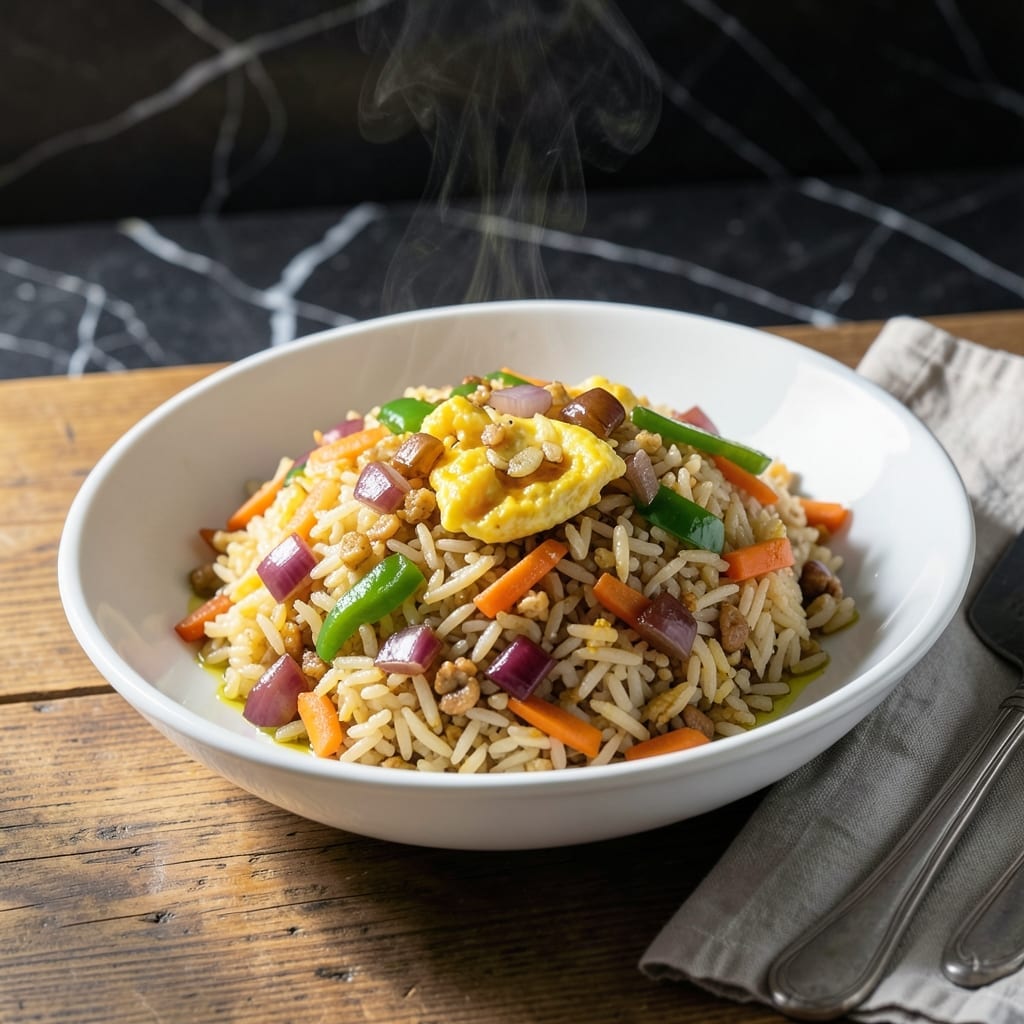
This fried rice delivers the bold, wok-charred flavors of Indochinese cuisine with a professional yet approachable technique. The dish balances heat, tang, and umami in every bite, transforming simple rice into something extraordinary.
I developed this recipe after testing various spice blends and cooking methods to achieve that signature charred aroma. High heat and quick cooking are key to replicating the texture and depth found in restaurant versions.
What you get is a dish with smoky edges, tender vegetables, and a sauce that clings perfectly to each grain. The combination of soy, chili, and vinegar creates a complex flavor profile that keeps you coming back.
Serve it as a main course or alongside your favorite protein. This is restaurant-quality fried rice made in your own kitchen.
Ingredients for Indochinese Fried Rice
Pantry staples plus a few fresh veggies. Bold flavors start with simple ingredients.
| Ingredient | Amount | Notes |
|---|---|---|
| Jasmine Rice 🍚 | 4 cups | Day-old, cooked and chilled |
| Vegetable Oil 🫒 | 3 tbsp | High smoke point preferred |
| Garlic Cloves 🧄 | 4 cloves | Minced finely for even distribution |
| Fresh Ginger 🌿 | 1 tbsp | Peeled and grated |
| Red Onion 🧅 | 1 whole | Diced into small pieces |
| Carrots 🥕 | 2 whole | Julienned or finely diced |
| Green Bell Pepper 🌶️ | 1 whole | Diced into small cubes |
| Green Onions 🧅 | 3 whole | Sliced, white and green parts separated |
| Soy Sauce 💧 | 3 tbsp | Low-sodium for better control |
| Dark Soy Sauce 💧 | 1 tbsp | For depth and color |
| Chili Sauce 🌶️ | 2 tbsp | Sriracha or similar |
| Rice Vinegar 💧 | 1 tbsp | Balances the heat and umami |
| Sesame Oil 🫒 | 1 tsp | Toasted, for finishing |
| Eggs 🥚 | 3 whole | Beaten lightly for scrambling |
| White Pepper 🧂 | ½ tsp | Ground, for authentic flavor |
The rice is non-negotiable—day-old jasmine gives you that perfect texture (fresh rice turns mushy). Vegetable oil with a high smoke point is key for that wok-charred aroma. I grab mine from Whole Foods or any Asian market—look for pure, unrefined options. The soy sauces matter too: low-sodium for seasoning, dark for that deep color. Don’t skip the dark soy (it’s what gives restaurant rice that signature look).
No chili sauce? Sriracha or sambal oelek work in a pinch. Can’t find dark soy? Regular soy plus a pinch of brown sugar gets you close. Fresh ginger is ideal, but ground ginger at half the amount works if you’re desperate. The veggies can be swapped—try zucchini or snap peas instead of bell pepper. Just keep the dice small so everything cooks evenly.
Leftover rice? Make extra—it keeps in the fridge for 3 days (perfect for fried rice). Prep the veggies ahead (store in airtight containers) to save time. The finished dish reheats well, but honestly it’s best fresh off the wok. Keeps in the fridge for 2-3 days if you must store it.
Why You’ll Love This Recipe
- One Pan Wonder: I love that I only need a single wok and a handful of ingredients like jasmine rice and fresh ginger to pull this off.
- Flavor Bomb: The garlic, ginger, and red onion combination hits differently—sweet, spicy, and umami all at once.
- Weeknight Hero: Honestly, it’s my go-to for busy evenings when I need something fast, filling, and family-friendly.
- Budget Stretcher: A little rice and veggies go a long way, and leftovers taste even better the next day for lunch.
Step-by-Step Instructions for Indochinese Fried Rice
Here’s the method I use to achieve that signature wok-hei flavor with perfect texture every time.
Step 1: Prep and Par-Cook the Vegetables
Heat 1 tbsp Vegetable Oil in a wok over high heat until it shimmers. Add the diced Red Onion, julienned Carrots, and diced Green Bell Pepper. Stir-fry for 2-3 minutes until the vegetables soften slightly but retain a crisp bite.
The goal is to take the raw edge off without fully cooking them—they’ll finish in the final stir-fry. I keep them moving constantly to prevent burning. Transfer the partially cooked vegetables to a plate and set aside.
Step 2: Scramble the Eggs and Aromatics
Add another 1 tbsp Vegetable Oil to the wok. Pour in the beaten Eggs and scramble quickly until just set but still slightly runny. Remove the eggs and set aside with the vegetables.
In the same wok, add the remaining 1 tbsp Vegetable Oil. Add the minced Garlic Cloves and grated Fresh Ginger, stir-frying for 30 seconds until fragrant but not browned. This builds the aromatic foundation that defines the dish.
Step 3: Combine and Season for Maximum Flavor
Add the 4 cups Jasmine Rice to the wok, breaking up any clumps with your spatula. Stir-fry for 2 minutes until the rice is heated through and slightly crispy in spots.
Return the vegetables and eggs to the wok. Drizzle in the 3 tbsp Soy Sauce, 1 tbsp Dark Soy Sauce, 2 tbsp Chili Sauce, and 1 tbsp Rice Vinegar. Toss everything together vigorously for 3-4 minutes until uniformly coated and hot.
Step 4: Finish and Garnish Like a Pro
Sprinkle the 0.5 tsp White Pepper over the rice and give it one final toss. The white pepper adds that authentic Indochinese warmth without overpowering. Remove from heat and drizzle with the 1 tsp Sesame Oil.
Garnish with the sliced Green Onions, separating the white and green parts for visual contrast. The sesame oil adds a final aromatic note that ties all the bold flavors together. Serve immediately while the rice retains that coveted smoky aroma from the wok.
Pro Tips For Making Indochinese Fried Rice
- Use Day-Old Rice: Fresh rice is too moist and will turn mushy when fried. I learned this the hard way—spread leftover jasmine rice on a tray and refrigerate it overnight for perfect, separate grains.
- Prep Aromatics Fine: Mince the garlic, ginger, and red onion as finely as possible. Sounds tedious, but it actually changes the outcome by distributing flavor evenly in every bite.
- Hot Pan, Quick Stir: Crank the heat to high and keep the ingredients moving—this prevents the rice from steaming instead of frying. After burning three batches, I finally figured out that speed is non-negotiable here.
- Salt the Rice First: Season the jasmine rice lightly with salt before frying. My grandmother swore by this, and she was right: it builds layers of flavor that taste better than just dumping soy sauce at the end.
Serving Suggestions for This Recipe
Fresh Garnishes
I always finish this dish with extra sliced Green Onions—both white and green parts—for a pop of color and sharpness. A sprinkle of toasted sesame seeds adds nutty crunch that contrasts beautifully with the tender rice and veggies.
Protein Pairings
Add grilled shrimp or chicken satay on the side for a complete meal. The smoky char from grilled proteins complements the wok-charred flavors. For vegetarians, crispy tofu cubes tossed in a bit of soy sauce work perfectly. 🔥
Condiment Bar
Set out small bowls of extra Chili Sauce, lime wedges, and fish sauce so everyone can adjust heat and tang to taste. I love letting guests customize their plate—it makes the meal interactive.
Fresh Accompaniments
A simple cucumber salad with rice vinegar and a pinch of sugar cuts through the richness. Or try pickled vegetables—the acidity balances the bold spices. Both add a refreshing contrast.
Serving Temperature
This dish is best served piping hot straight from the wok—that’s when the aromas are most vibrant. If making ahead, reheat quickly in a wok or skillet over high heat with a splash of water to restore moisture.
Family-Style Presentation
I serve it in a large ceramic bowl with wooden serving utensils for that communal feel. The steam rising from the bowl as it hits the table is half the experience. It reminds me of Nonna’s Sunday dinners. 💛
Nutrition Facts
Frequently Asked Questions
Can I use fresh rice instead of day-old?
No, fresh rice contains too much moisture and will turn mushy. Day-old rice has dried slightly, allowing it to fry up with that perfect separated texture. Spread freshly cooked rice on a tray and refrigerate for 1-2 hours if you’re in a pinch.
What can I substitute for dark soy sauce?
Mix 1 tbsp regular soy sauce with 1 tsp brown sugar or 1 tsp molasses. This mimics the depth and color of dark soy. The sugar caramelizes slightly during cooking, adding that characteristic richness.
How do I get that smoky wok flavor at home?
Use a well-seasoned wok or cast iron skillet over high heat. Let the oil get very hot before adding ingredients, and don’t stir too often—let the rice char slightly between stirs. A splash of sesame oil at the end boosts the aroma.
Can I make this dish ahead of time?
It’s best served fresh, but you can prep ingredients in advance. Cook and chill the rice, chop all vegetables, and mix sauces the day before. The actual stir-frying should be done just before serving for optimal texture.

- Mujadara Rice and Lentils Recipe: Earthy Spiced Lentils With Caramelized Onions - November 1, 2026
- Naija Fried Rice Recipe: Street-Style Spice With Veggie Crunch - November 1, 2026
- Mushy Rice Recipe: Fluffy Grains Transformed in Minutes - November 1, 2026