
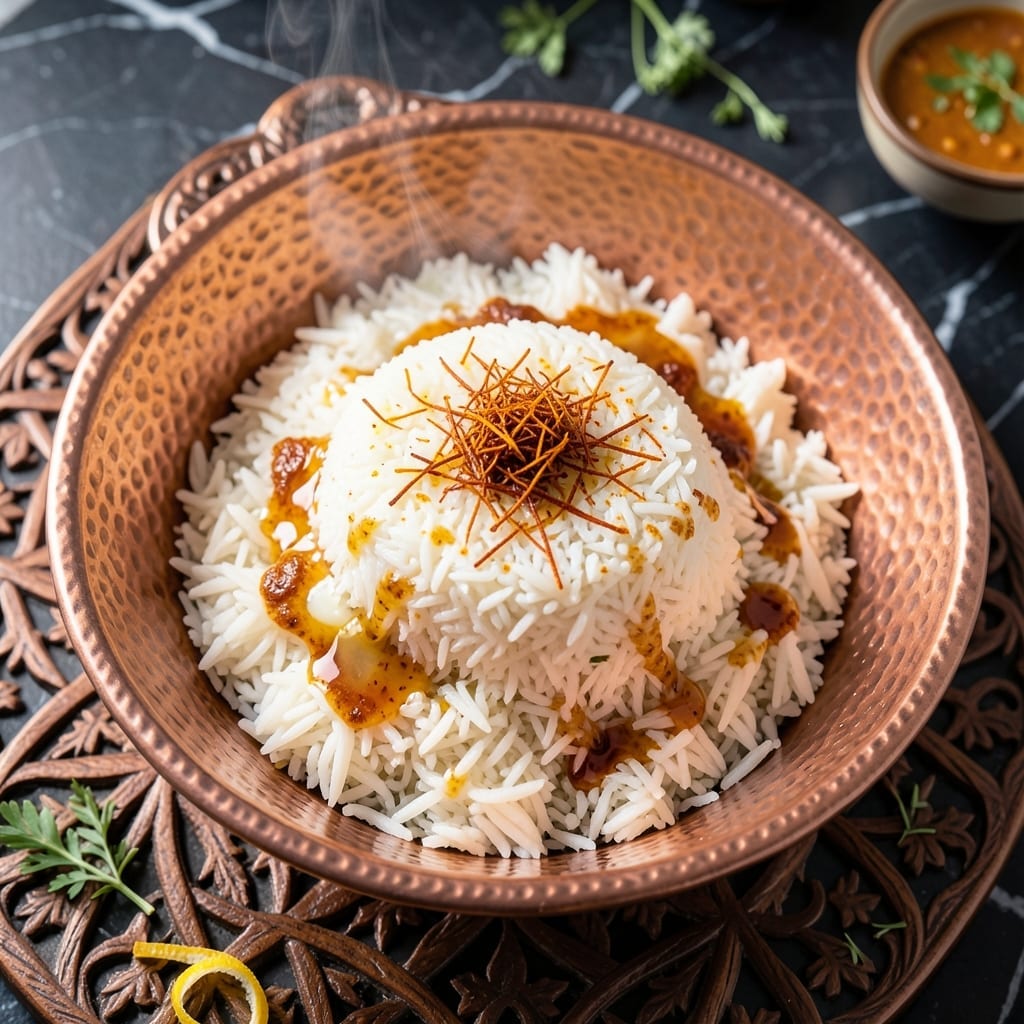
This traditional Persian rice dish delivers perfectly crispy tahdig with fragrant saffron-infused basmati grains. The method requires patience but rewards with restaurant-quality results every time.
I’ve refined this technique through years of practice, focusing on the essential parboiling and layering steps that create the signature golden crust. The saffron adds a luxurious aroma and golden hue that defines authentic Iranian rice.
What emerges from the pot is a stunning combination: fluffy, separate grains on top and a shatteringly crispy tahdig layer on the bottom. The visual contrast is as impressive as the taste.
Serve this with stews, grilled meats, or as part of a Persian feast. The crispy layer is always the most coveted part of the meal.
Ingredients for Iranian Rice
Basmati rice, saffron, and a few pantry staples create this fragrant Persian masterpiece.
| Ingredient | Amount | Notes |
|---|---|---|
| Basmati Rice 🍚 | 2 cups | Rinsed until water runs clear |
| Saffron Threads 🌼 | ¼ tsp | Crushed between fingers before steeping |
| Hot Water 💧 | ¼ cup | For steeping saffron threads |
| Salt 🧂 | 1 tbsp | Diamond Crystal preferred for consistency |
| Unsalted Butter 🧈 | ½ cup | Melted, for tahdig layer |
| Vegetable Oil 🫒 | ¼ cup | Neutral flavor, high smoke point |
| Plain Yogurt 🥛 | ½ cup | Full-fat for richness in tahdig |
| Cardamom Pods 🌿 | 4 whole | Lightly crushed, optional for aroma |
| Bay Leaf 🍃 | 1 whole | For infusing parboiling water |
| Ground Cumin 🌿 | ½ tsp | Toasted briefly for depth |
| Garlic Cloves 🧄 | 2 cloves | Smashed, optional for parboiling |
| Rose Water 🌹 | 1 tsp | Food-grade, for floral aroma |
The saffron is non-negotiable for authentic flavor and color. Persian markets or Middle Eastern grocery stores often sell it in bulk at better prices than mainstream supermarkets. Look for deep red threads with a strong aroma—avoid the powdered version, which is often diluted. The basmati rice should be aged (check packaging for ‘aged’ label) for optimal length and separation after cooking.
No saffron? A pinch of turmeric plus a drop of rose water mimics the color and some aroma, but the flavor won’t be the same. Vegetable oil can replace butter in the tahdig for a dairy-free version. Cardamom and cumin are traditional but optional—skip them if you prefer a purist approach. The yogurt in the tahdig layer adds tang and helps crisping—Greek yogurt works too.
Store saffron threads in an airtight container away from light for up to 2 years. Basmati rice keeps indefinitely in a cool, dry place. The cooked rice reheats well—sprinkle a little water and cover with foil before warming to restore moisture.
Why You’ll Love This Recipe
- I’ll be real: the rice tastes just as good the next day, reheated with a little extra butter.
- Set It and Forget It: I just soak the basmati, boil, and let the steam work its magic—no stirring, no stress.
- Golden Luxury: That saffron-infused butter gives every grain a rich, floral aroma that’s honestly restaurant-worthy.
- Crowd Pleaser: Between us, it’s my go-to for dinner parties or a quiet Tuesday night—pairs with everything.
Step-by-Step Instructions for Fragrant Saffron-Infused Basmati with Crispy Tahdig
Master the technique for perfectly fluffy rice with a golden, crispy bottom layer every time.
Step 1: Prepare and Steep the Saffron
Begin by crushing the 0.25 tsp Saffron Threads between your fingers and placing them in a small bowl. Pour the 0.25 cup Hot Water over the crushed threads and let it steep for 15 minutes. The water will turn a deep golden-orange, releasing the saffron’s aromatic compounds.
This step is crucial for evenly distributing the saffron’s color and flavor throughout the 2 cups Basmati Rice. The steeping time allows the saffron to fully infuse the water, ensuring every grain of rice absorbs its signature floral notes.
Step 2: Parboil the Rice with Aromatics
In a large pot, bring 4 quarts of water to a boil. Add the 1 tbsp Salt, 1 whole Bay Leaf, 4 whole Cardamom Pods, 0.5 tsp Ground Cumin, and 2 cloves Garlic Cloves to the water. Stir in the rinsed 2 cups Basmati Rice and cook for 5-6 minutes until the grains are slightly softened but still firm to the bite.
Drain the rice immediately in a fine-mesh strainer and discard the whole spices. The rice should be al dente at this stage, as it will finish cooking during the steaming process. Be sure to shake the strainer gently to remove excess water, which prevents a soggy tahdig.
Step 3: Create the Tahdig Layer
In a non-stick or heavy-bottomed pot, combine the 0.5 cup Unsalted Butter and 0.25 cup Vegetable Oil over medium heat until the butter is fully melted. Remove from heat and stir in the 0.5 cup Plain Yogurt and 1 tsp Rose Water until smooth. This mixture forms the base of the tahdig, the coveted crispy crust.
Spread a thin layer of this yogurt-butter mixture across the bottom of the pot. Arrange a portion of the parboiled rice on top, pressing it gently into the mixture to ensure even contact. This step guarantees the tahdig will develop its characteristic golden-brown, crispy texture during cooking.
Step 4: Steam to Perfection
Add the remaining parboiled rice to the pot, piling it into a pyramid shape. Drizzle the steeped saffron water evenly over the rice, allowing it to seep into the layers. Use the handle of a wooden spoon to poke 4-5 holes into the rice, creating vents for steam to escape.
Cover the pot with a clean kitchen towel and place the lid on top, securing it tightly. Cook over low heat for 40-45 minutes. The towel absorbs excess steam, preventing condensation from dripping back into the rice and ensuring the tahdig stays crisp. You’ll know it’s ready when the edges are golden brown and the rice is fluffy.
Remove from heat and let it rest, covered, for 5 minutes before carefully inverting onto a serving platter to reveal the crispy tahdig layer.
Pro Tips For Making Iranian Rice
- Soak the Rice: Give the basmati rice a good 30-minute soak in warm water—this removes excess starch and prevents clumping.
- Bloom the Saffron: Crush the saffron threads and steep them in 2 tablespoons of hot water for 10 minutes to release the color and flavor.
- Layer the Butter: Dot the bottom of the pot with unsalted butter before adding the rice to help form that golden, crispy tahdig layer.
- Resist the Stir: I learned this the hard way—once the rice is cooking, don’t stir or you’ll break the grains and ruin the texture.
Regional Styles of iranian rice
Tehran-Style Chelow
In Iran’s capital, they perfect plain white rice with a stunning tahdig crust. The key is using only water, salt, and oil for the parboil, then steaming with a towel-lined lid. This version highlights the rice’s natural flavor and the crispy bottom layer.
Shiraz Saffron Polo
Southern Iran favors richer polo styles. Here, I mix the steeped saffron water directly into the parboiling water for deeper color. The rice gets a golden hue throughout, not just on top. Often served with lamb or chicken stews.
Isfahan Jewel Rice
This central Iranian specialty layers rice with barberries and sliced almonds. I sprinkle them between rice layers before steaming. The tart berries and crunchy nuts create a beautiful contrast with the fragrant basmati. It’s traditionally served at celebrations. ✨
Gilan Green Herb Rice
Northern Iran’s lush region adds fresh herbs like dill, parsley, and cilantro to the parboiling water. The result is a vibrant green rice that pairs perfectly with fish from the Caspian Sea. I use 2 cups chopped herbs for every 1 cup rice.
Kerman Cumin Rice
Eastern Iran incorporates ground cumin and black cumin seeds for an earthy flavor. I toast the cumin in oil before adding to the parboiling water. This style often accompanies hearty meat dishes like ghormeh sabzi.
Tabriz Sweet Rice
This northwestern variation adds caramelized onions and raisins to the rice layers. The sweetness balances savory stews. I sauté 1 large onion until deep brown and ½ cup raisins in butter before mixing into the rice. 💛
Nutrition Facts
Frequently Asked Questions
Why do I need to parboil the rice first?
Parboiling removes excess starch and firms the grains. This prevents mushiness and ensures the final dish has perfectly separate, fluffy rice with a crispy tahdig layer.
Can I use a different type of rice?
Basmati is ideal for its long grains and fragrance. Jasmine rice works in a pinch, but the texture won’t be as light. Avoid short-grain varieties—they turn sticky and won’t crisp properly.
How do I prevent the tahdig from burning?
Use medium-low heat and a heavy pot. The towel under the lid absorbs steam, preventing soggy rice. Check at 40 minutes—if it’s browning too fast, reduce heat slightly.
What if my saffron water isn’t deep orange?
Your saffron may be old or low quality. Use more threads next time or steep longer. For color, add a pinch of turmeric, but the flavor won’t match authentic saffron.

- Jamaican Jollof Rice Recipe: Island Spice in Every Bite - October 18, 2026
- Hamburger Rice Hot Dish Recipe: Midwest Comfort in One Pan - October 18, 2026
- Iranian Cabbage Rice Recipe: Aromatic Herbs and Spiced Layers - October 18, 2026