
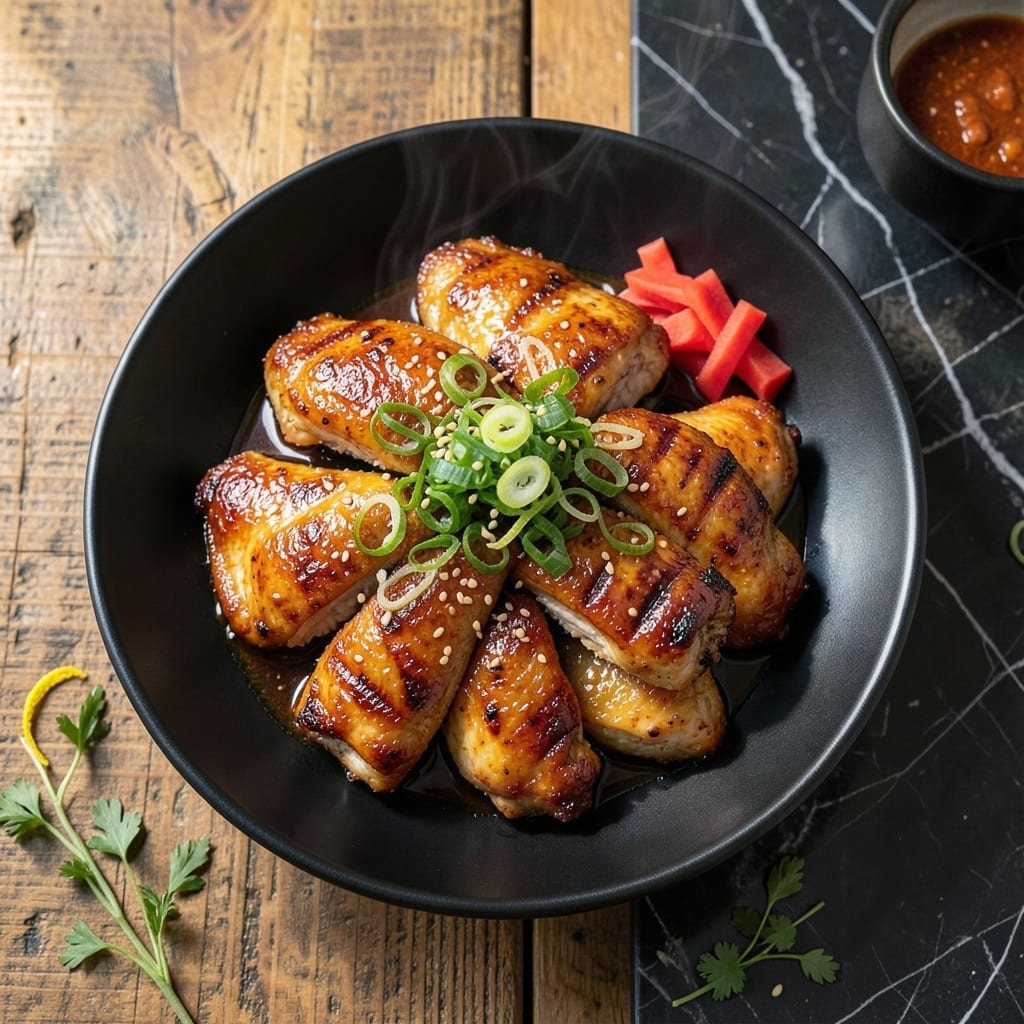
This recipe transforms ordinary chicken into an extraordinary dish with its signature smoky-sweet yakitori glaze. The secret lies in the traditional Japanese tare sauce, which delivers layers of umami, sweetness, and depth in every bite.
I’ve refined this method to ensure the chicken stays juicy while achieving a perfectly caramelized exterior. The glaze is brushed on during cooking, creating that iconic sticky, glossy finish that makes this dish irresistible.
What you’ll get is tender, flavorful chicken with a glossy, finger-licking glaze that’s balanced and complex. It’s a dish that brings the authentic taste of Japanese street food right to your kitchen.
Serve it with steamed rice and pickled vegetables for a complete meal. Here’s how to make it.
Ingredients for Japanese Barbecue Chicken
Transform chicken with smoky-sweet yakitori glaze using these authentic Japanese ingredients.
| Ingredient | Amount | Notes |
|---|---|---|
| Chicken Thighs 🍗 | 2 lb | Boneless, skin-on preferred |
| Soy Sauce 🫒 | ½ cup | Low-sodium for balance |
| Mirin 🍶 | ⅓ cup | Sweet rice wine |
| Sake 🍶 | ⅓ cup | Dry Japanese rice wine |
| Brown Sugar 🍚 | ¼ cup | Packed, for caramelization |
| Garlic Cloves 🧄 | 4 cloves | Minced for depth |
| Fresh Ginger 🌿 | 1 tbsp | Grated, peeled |
| Green Onions 🧅 | 4 whole | Thinly sliced, for garnish |
| Vegetable Oil 🫒 | 2 tbsp | High smoke point for grilling |
| Sesame Seeds 🌰 | 1 tbsp | Toasted, for garnish |
| Rice Vinegar 🍶 | 1 tbsp | Balances sweetness |
| Red Pepper Flakes 🌶️ | ½ tsp | Optional, for heat |
The chicken matters here—skin-on, bone-in thighs stay juiciest and crisp up perfectly on the grill. Look for thighs with even fat distribution at Whole Foods or your local butcher. The soy sauce should be Japanese-style (like Kikkoman or San-J), not Chinese, for the right flavor profile. Mirin and sake are non-negotiable for authenticity; find them in the Asian aisle at most supermarkets.
No mirin? Dry sherry plus ½ tsp sugar per tbsp works. Sake can be swapped for dry white wine. Brown sugar is key—don’t use white, as it lacks the molasses depth. For a gluten-free version, tamari replaces soy sauce 1:1. The ginger and garlic are the base of the glaze, so don’t skip them. Fresh is best, but paste works in a pinch.
The glaze keeps in the fridge for 1 week in an airtight jar. Chicken is best served fresh off the grill but reheats well—store cooked pieces in a sealed container for 3-4 days. Toast sesame seeds just before serving for maximum crunch.
Why You’ll Love This Recipe
- One Pan Magic: I just toss everything in a pan—chicken, soy sauce, mirin, sake, brown sugar—and let the oven do the work.
- Sweet-Savory Bliss: That sticky glaze from the brown sugar and soy sauce? I could drink it with a spoon.
- Weeknight Hero: Honestly, it’s my go-to for busy Tuesdays when I need dinner fast but still crave restaurant-quality flavor.
- Budget Stretcher: Chicken thighs stay juicy and cheap, and the sauce is pantry staples I always have on hand.
Step-by-Step Instructions for Japanese Barbecue Chicken
This method ensures tender chicken with a glossy, caramelized glaze every time.
Step 1: Prepare the Yakitori-Style Marinade
In a medium bowl, combine the 0.5 cup soy sauce, 0.33 cup mirin, 0.33 cup sake, 0.25 cup brown sugar, minced 4 cloves garlic cloves, and 1 tbsp fresh ginger. Whisk vigorously until the brown sugar fully dissolves and the mixture appears smooth.
The combination of mirin and sake creates the authentic sweet-savory balance characteristic of yakitori. I always let this marinade sit for 5 minutes after mixing to allow the flavors to meld before using it on the chicken.
Step 2: Marinate the Chicken Thighs
Place the 2 lb chicken thighs in a large resealable plastic bag or shallow dish. Pour the marinade over the chicken, ensuring all pieces are well coated. Seal or cover and refrigerate for at least 2 hours, or preferably overnight for deeper flavor penetration.
For the best results, turn the chicken occasionally during marination to ensure even distribution of the flavors. The skin-on thighs will absorb the marinade while maintaining their moisture, which is crucial for the final texture.
Step 3: Grill the Chicken to Perfection
Preheat your grill to medium-high heat (about 375-400°F). Remove the chicken from the marinade, letting excess drip off, and discard the used marinade. Lightly brush the grill grates with 2 tbsp vegetable oil to prevent sticking.
Grill the chicken for 6-7 minutes per side, basting occasionally with reserved marinade (set aside before raw chicken contact) until the internal temperature reaches 165°F and the skin develops a deep, caramelized char. Watch for flare-ups from the sugar in the marinade.
Step 4: Rest and Garnish
Transfer the grilled chicken to a clean platter and let it rest for 5-10 minutes. This allows the juices to redistribute throughout the meat, ensuring each bite is moist and flavorful.
While the chicken rests, thinly slice the 4 whole green onions. Sprinkle the chicken with the green onions, 1 tbsp sesame seeds, 1 tbsp rice vinegar, and 0.5 tsp red pepper flakes if using. The rice vinegar adds a subtle tang that balances the sweetness of the glaze.
Pro Tips For Making Japanese Barbecue Chicken
- Score the Thighs: Cut 2-3 shallow slits into each chicken thigh before marinating so the soy-mirin glaze penetrates deeper and crisp up better on the grill.
- Reduce the Sauce: Simmer the leftover marinade (soy, mirin, sake, brown sugar) for 3-4 minutes until syrupy, then brush it on while grilling—this prevents raw chicken juices from contaminating your sauce.
- Skip the Skin Trimming: I learned this the hard way—leaving the skin on keeps the meat juicy and adds that sticky, caramelized texture when charred over high heat.
- Use Boneless Thighs: They cook faster and more evenly than bone-in, so you get that perfect glaze without worrying about undercooked spots near the bone.
Storing and Reheating japanese barbecue chicken
Refrigerator Storage
Let the chicken cool for no more than 2 hours before transferring to an airtight container. It will keep in the fridge at 40°F or below for up to 3-4 days. The flavors actually deepen as the glaze continues to penetrate the meat. ❄️
Freezer Storage
For longer storage, freeze cooked chicken in a single layer on a baking sheet first, then transfer to a freezer bag. This prevents pieces from sticking together. It stays fresh for up to 3 months—I recommend using quart-sized freezer bags for portion control.
Stovetop Reheating
Place chicken in a skillet over medium-low heat with 2 tbsp water or chicken broth. Cover and warm for 5-7 minutes, turning occasionally. This method keeps the meat moist and prevents the glaze from burning. 🔥
Oven Reheating
Preheat oven to 325°F and place chicken on a wire rack over a baking sheet. Heat for 10-12 minutes until warmed through. This maintains the crispy skin texture that makes this dish special.
Microwave Option
For quick reheating, microwave individual portions on 50% power for 1-2 minutes. Add a damp paper towel to prevent drying. While convenient, this method may soften the skin slightly.
Nutrition Facts
Frequently Asked Questions
Can I use chicken breast instead of thighs?
Yes, but thighs stay juicier and crisp up better. If using breast, reduce grilling time to 5-6 minutes per side to prevent dryness. Brining the breast for 30 minutes before marinating helps maintain moisture.
What if I don’t have mirin or sake?
Substitute mirin with 2 tbsp sugar + 2 tbsp water + 1 tbsp rice vinegar per 0.33 cup. For sake, use dry white wine or 1 tbsp vinegar + 0.33 cup water. The flavor won’t be identical but still delicious.
How do I prevent the glaze from burning?
Grill over medium-high heat and baste frequently with reserved marinade. Move chicken to a cooler part of the grill if flare-ups occur. Avoid direct high heat for long periods.
Can I bake this in the oven?
Broil on high for 8-10 minutes per side, basting often. Place chicken on a wire rack over a baking sheet for even cooking and crispy skin.

- Jollof Rice Sauce Recipe: West African Tomato and Spice Infusion - September 25, 2026
- Japanese Rice Soup Recipe: Umami-Rich Comfort in a Bowl - September 25, 2026
- Homemade Cream Of Rice Recipe: Silk-Smooth Breakfast in Minutes - September 25, 2026