
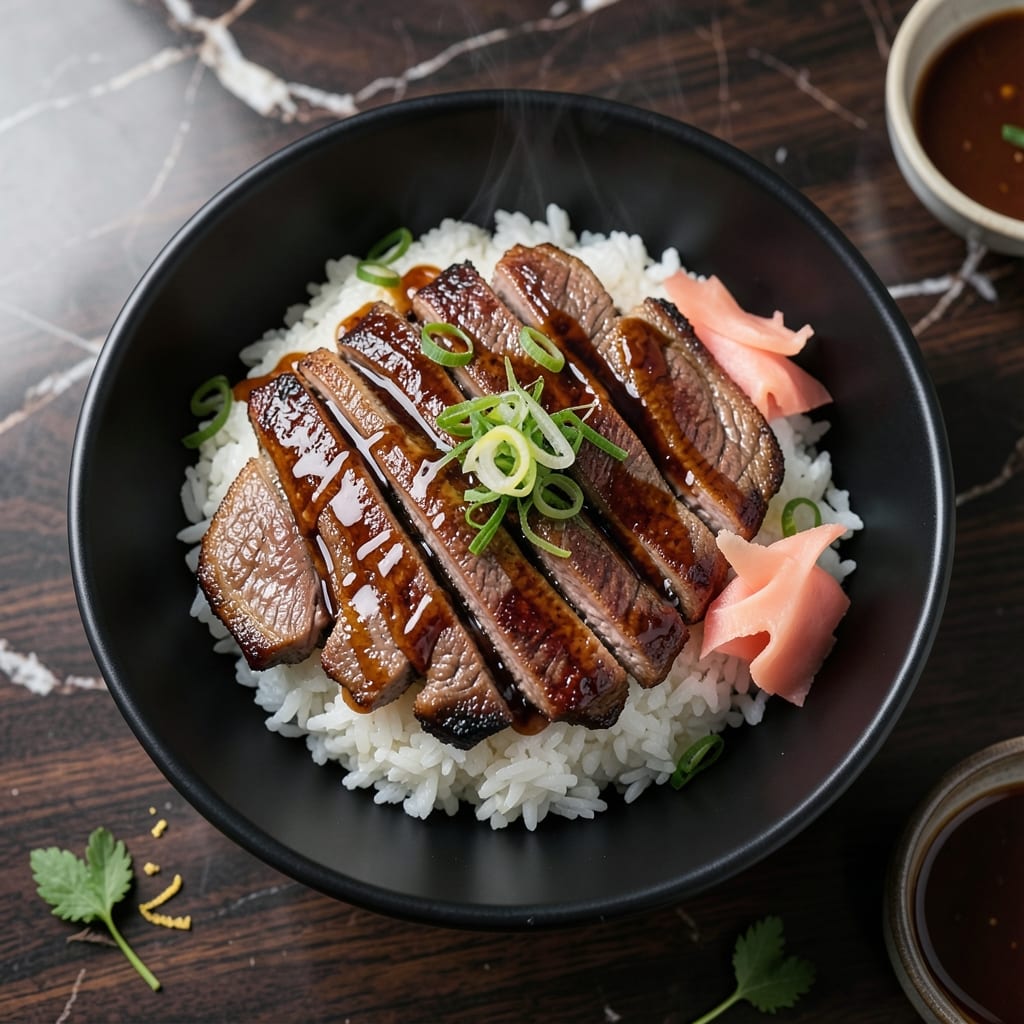
This Japanese-inspired rice bowl brings together tender beef and a glossy teriyaki glaze over perfectly steamed grains. The balance of sweet and savory flavors makes it a standout dish.
The beef is marinated and seared to lock in juices, then finished with a homemade teriyaki sauce that coats every piece. Steamed rice serves as the ideal base to soak up the rich, caramelized glaze.
This method ensures the beef stays juicy while the sauce thickens to a perfect consistency. The result is a meal that’s both satisfying and restaurant-quality.
Serve hot with steamed vegetables or a sprinkle of sesame seeds for extra texture and visual appeal.
Ingredients for Japanese Beef Teriyaki Rice Bowl
Ribeye, rice, and a glossy teriyaki glaze come together for this vibrant bowl.
| Ingredient | Amount | Notes |
|---|---|---|
| Ribeye Steak 🥩 | 1 ½ lb | Thinly sliced against grain |
| Soy Sauce 💧 | ½ cup | Low-sodium preferred for balance |
| Brown Sugar 🍚 | ¼ cup | Packed for sweetness depth |
| Mirin 🍶 | 3 tbsp | Sweet rice wine essential |
| Sake 🍶 | 3 tbsp | Dry variety for cooking |
| Fresh Ginger 🌿 | 1 tbsp | Grated for zing |
| Garlic Cloves 🧄 | 3 cloves | Minced for aroma |
| Jasmine Rice 🍚 | 2 cups | Uncooked, rinsed before steaming |
| Cornstarch 🌾 | 1 tbsp | For sauce thickening |
| Vegetable Oil 🫒 | 2 tbsp | High smoke point for searing |
| Green Onions 🧅 | 4 whole | Thinly sliced for garnish |
| Sesame Seeds 🌰 | 2 tsp | Toasted for nutty flavor |
| Water 💧 | 4 cups | For rice cooking |
The beef is everything here. Ribeye gives you the perfect marbling for juicy slices—flank or sirloin work too but need more careful cooking. Whole Foods has great pre-sliced options if you’re short on time. Look for meat with good fat streaks (that’s flavor). For authentic teriyaki, mirin and sake are non-negotiable—skip the pre-made sauces.
No mirin? 1 tbsp sugar plus 1 tbsp water per tablespoon gets you close. Sake can be swapped with dry white wine (or skip and add extra soy). Brown sugar can be honey or maple syrup if you’re in a pinch. The rice should be jasmine or short-grain—long-grain stays too separate. For gluten-free, use tamari instead of soy sauce.
The cooked rice keeps 4-5 days in the fridge, but the beef is best fresh. Leftovers reheat well though—30 seconds in a skillet brings it back to life. The teriyaki sauce thickens as it cools, so thin with water if needed. Always garnish fresh (those green onions wilt fast).
Why You’ll Love This Recipe
- I’ll be real: the beef tastes even better the next day, and it stretches to two meals when served over rice.
- One Pan Wonder: I sear the ribeye, then let the soy, mirin, and sake simmer right in the same pan—no extra dishes to wash.
- Umami Bomb: The brown sugar caramelizes with the soy and sake, coating every bite of steak in that sticky-sweet teriyaki glaze.
- Meal Prep Hero: Honestly, it reheats like a dream—pack it for lunch and the rice soaks up even more flavor by noon.
Step-by-Step Instructions for Japanese Beef Teriyaki Rice Bowl
Master the technique behind this dish with precise timing and professional execution.
Step 1: Prepare the Teriyaki Sauce Base
Combine the 0.5 cup soy sauce, 0.25 cup brown sugar, 3 tbsp mirin, and 3 tbsp sake in a saucepan. I always use low-sodium soy sauce here to control the saltiness—it lets the other flavors shine without overpowering them.
Heat over medium heat until the brown sugar fully dissolves, stirring occasionally. This takes about 3-4 minutes. You’ll notice the mixture start to bubble gently at the edges when it’s ready. Remove from heat and set aside—this base will develop depth as it reduces later.
Step 2: Sear the Ribeye and Aromatics
Heat the 2 tbsp vegetable oil in a large skillet over high heat until shimmering. Add the thinly sliced 1.5 lb ribeye steak in a single layer, working in batches if needed to avoid crowding. Sear for 2-3 minutes per side until deeply browned but not fully cooked through.
Transfer the ribeye to a plate. In the same skillet, add the 1 tbsp fresh ginger and 3 cloves garlic cloves. Sauté for 45 seconds until fragrant—their aromas should be pronounced but not burnt. These form the flavor foundation that ties the sauce to the beef.
Step 3: Finish the Teriyaki Glaze and Coat the Beef
Return the ribeye to the skillet with any accumulated juices. Pour the sauce base over the beef and bring to a simmer. In a small bowl, mix the 1 tbsp cornstarch with 2 tbsp water to create a slurry, then stir it into the sauce.
Cook for 3-4 minutes until the sauce thickens to a glossy, syrup-like consistency that coats the back of a spoon. The ribeye should be fully cooked through and glazed evenly. This reduction concentrates the flavors and creates that signature sticky teriyaki texture.
Step 4: Cook the Jasmine Rice and Assemble
While the beef cooks, prepare the 2 cups jasmine rice. Rinse it thoroughly until the water runs clear, then combine with the 4 cups water in a pot. Bring to a boil, then reduce to low heat, cover, and simmer for 15 minutes. Remove from heat and let steam, covered, for 10 minutes.
The rice should be tender and the water fully absorbed. Fluff with a fork before serving. To assemble, place a generous scoop of rice in each bowl, top with the glazed ribeye, and drizzle any remaining sauce from the pan over the top.
Step 5: Garnish and Serve
Thinly slice the 4 whole green onions and sprinkle over the bowls along with the 2 tsp sesame seeds. I toast the sesame seeds lightly in a dry pan first to enhance their nutty aroma—just 1-2 minutes over low heat until fragrant.
Serve immediately while the beef is still glistening and the rice is steaming. Each bite should deliver tender beef, sticky-sweet sauce, and the subtle nutty crunch of sesame seeds against the fluffy rice.
Pro Tips For Making Japanese Beef Teriyaki Rice Bowl
- Sear Before Sauce: Get a hard sear on the ribeye first in a screaming hot pan—this builds flavor before the teriyaki sauce goes in. I learned this the hard way after wondering why my beef tasted bland despite the sauce.
- Reduce the Sauce: Simmer the soy sauce, brown sugar, mirin, and sake for 3-4 minutes until it thickens slightly—this keeps it from turning into a watery mess on your rice.
- Slice Against Grain: After resting the steak, slice it thinly against the grain so every bite is tender, not chewy. Sounds basic, but it actually changes the outcome.
- Use Cold Ribeye: Pat the ribeye dry and start with it cold from the fridge—this helps get a better crust without overcooking the inside. My grandmother swore by this, and she was right.
Dietary Considerations for This Recipe
Gluten-Free Adaptation
For a gluten-free version, swap the soy sauce for tamari, which is naturally gluten-free. I recommend San-J brand for consistent flavor. Ensure all other ingredients, like mirin and sake, are labeled gluten-free as some brands may contain wheat. 💡
Low-Sodium Option
Use low-sodium soy sauce and reduce the brown sugar to 2 tbsp to cut sodium without sacrificing flavor. Balance the sweetness by adding 1 tsp honey instead. This keeps the dish heart-healthy while maintaining its signature taste.
Dairy-Free Note
This dish is naturally dairy-free, but always check your mirin and sake labels, as some brands may contain trace dairy. Stick to trusted names like Kikkoman for peace of mind.
Vegetarian Variation
Replace the ribeye steak with extra-firm tofu or portobello mushrooms. Press and drain tofu for 30 minutes before slicing, then sear as you would the beef. The teriyaki glaze works beautifully with plant-based proteins.
Nut Allergy Consideration
Skip the sesame seeds garnish if nut allergies are a concern. Instead, use black sesame seeds (if tolerated) or toasted nori strips for a similar visual and textural contrast.
Always verify cross-contamination risks with your ingredient sources.
Nutrition Facts
Frequently Asked Questions
Can I use a different cut of beef?
Yes, flank or sirloin work well too. Ribeye is ideal for marbling, but others need careful cooking to stay tender. Slice thinly against the grain for best results.
How do I make the sauce thicker?
Mix 1 tbsp cornstarch with 2 tbsp water to create a slurry. Stir it into the simmering sauce and cook for 3-4 minutes until glossy.
Can I prepare this ahead of time?
The rice keeps for 4-5 days in the fridge, but the beef is best fresh. Reheat leftovers in a skillet for 30 seconds to revive.
What if I don’t have mirin or sake?
Replace mirin with 1 tbsp sugar plus 1 tbsp water. Skip sake or use dry white wine. These swaps maintain balance.

- Mujadara Rice and Lentils Recipe: Earthy Spiced Lentils With Caramelized Onions - November 1, 2026
- Naija Fried Rice Recipe: Street-Style Spice With Veggie Crunch - November 1, 2026
- Mushy Rice Recipe: Fluffy Grains Transformed in Minutes - November 1, 2026