
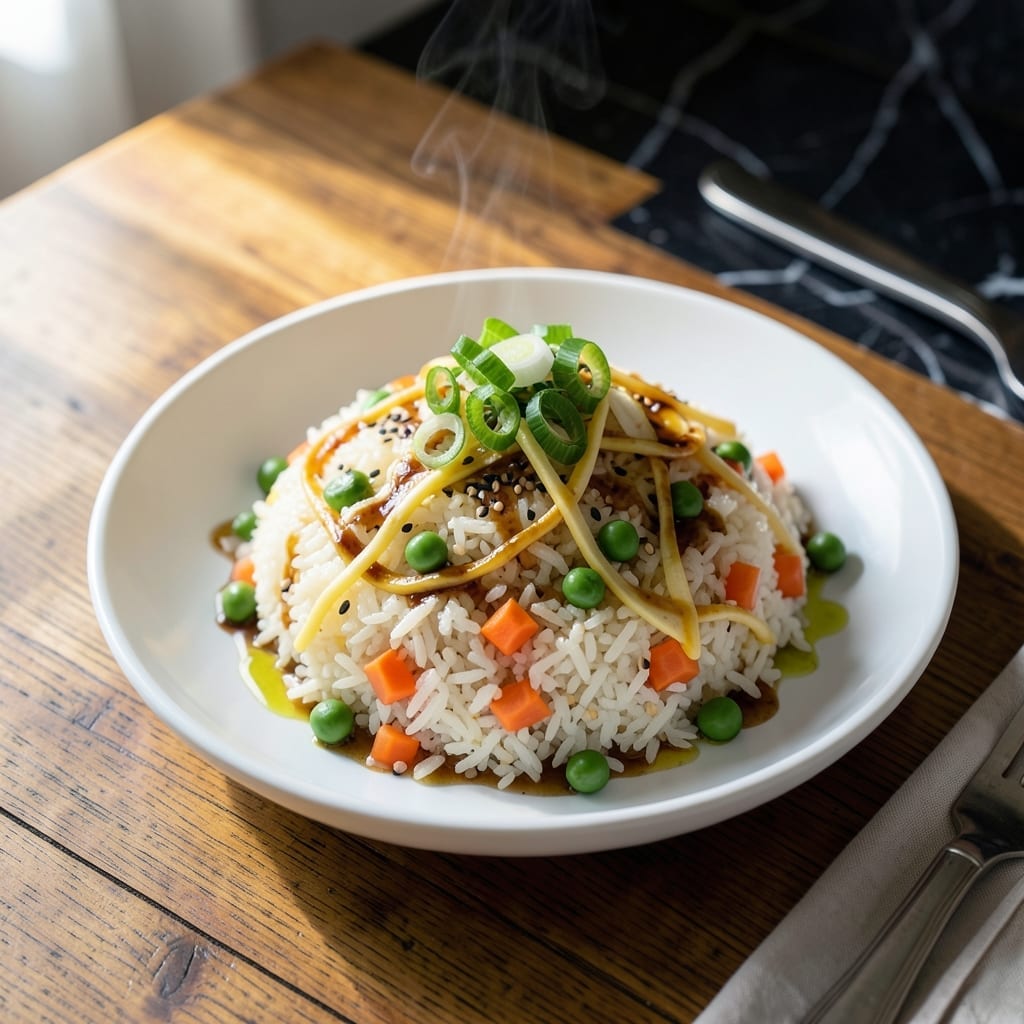
This fried rice delivers the authentic taste of Japanese chahan with that coveted wok-charred flavor right from your home kitchen. The secret lies in using day-old rice and cooking over high heat to achieve that signature texture and depth.
What sets this version apart is the balance of savory, slightly sweet, and umami notes from traditional ingredients like soy sauce and mirin. The technique ensures each grain stays separate while absorbing maximum flavor from the seasonings.
You’ll end up with perfectly charred bits of rice, tender vegetables, and just the right amount of moisture. This dish proves you don’t need a restaurant kitchen to achieve professional results.
Serve as a side or main dish, with or without protein. Here’s how to make it.
Ingredients for Japanese Chahan Fried Rice
Day-old rice and a handful of pantry staples bring this dish to life.
| Ingredient | Amount | Notes |
|---|---|---|
| Day-Old Cooked White Rice 🍚 | 4 cups | Cold, dry grains preferred |
| Vegetable Oil 🫒 | 2 tbsp | High smoke point for frying |
| Garlic Cloves 🧄 | 3 cloves | Minced for even distribution |
| Fresh Ginger 🌿 | 1 tbsp | Peeled and grated |
| Green Onions 🧅 | 3 whole | Thinly sliced, whites and greens separated |
| Carrot 🥕 | 1 whole | Peeled and finely diced |
| Frozen Peas 🌱 | ½ cup | Thawed before cooking |
| Large Eggs 🥚 | 2 whole | Lightly beaten |
| Soy Sauce 💧 | 3 tbsp | Japanese-style preferred |
| Mirin 🍶 | 1 tbsp | Sweet cooking rice wine |
| Sesame Oil 🫒 | 1 tsp | For finishing aroma |
| Salt 🧂 | ½ tsp | Adjust to taste |
| Black Pepper 🌶️ | ¼ tsp | Freshly ground preferred |
| Nori Sheets 🍱 | 1 sheet | Cut into thin strips for garnish |
The rice is everything here. Use yesterday’s takeout leftovers or spread freshly cooked rice on a tray to cool and dry—day-old is non-negotiable. For the soy sauce, Kikkoman is the classic choice, but any Japanese brand works. Mirin can be tricky to find—look in the Asian aisle or at an Asian market. Don’t confuse it with mirin cooking wine, which has added salt.
No mirin? 1 tbsp sugar mixed with 1 tbsp water and 1 tbsp rice vinegar does the trick. Swap the carrots and peas for whatever veg you’ve got—bell peppers or corn work great. Want extra umami? Add 1 tsp dashi powder with the sauces. If you’re vegetarian, skip the eggs and add crumbled tofu for protein.
Leftover chahan keeps 3-4 days in the fridge. Reheat in a skillet over medium heat with a splash of water to revive the grains. It freezes well too—up to 3 months. Pack single portions for quick lunches (worth the extra minute).
Why You’ll Love This Recipe
- 20-Minute Meal: I can have this on the table faster than takeout arrives—day-old rice fries up in a flash.
- Garlic-Ginger Punch: The combo of fresh ginger and garlic with those green onions makes every bite ridiculously good.
- Weeknight Hero: Between us, this is my go-to for using up fridge odds and ends while keeping everyone happy.
- Budget Stretcher: One batch feeds my family for two meals, and it costs pennies compared to ordering in.
Step-by-Step Instructions for Japanese Chahan Fried Rice
Here’s how I nail that authentic wok-hei flavor right in my own kitchen every time.
Step 1: Prep Your Ingredients for Maximum Flavor
Start by breaking up the 4 cups day-old cooked white rice with your hands. Cold, dry grains are crucial—they won’t turn mushy when stir-fried. Thinly slice the 3 whole green onions, keeping whites and greens separate. Peel and finely dice the 1 whole carrot, and thaw the 0.5 cup frozen peas in warm water.
Mince the 3 cloves garlic cloves and peel and grate the 1 tbsp fresh ginger. Lightly beat the 2 whole large eggs with a pinch of the 0.5 tsp salt. Having everything prepped and ready is key—this dish comes together fast once you start cooking.
Step 2: Scramble the Eggs for Silky Texture
Heat 1 tbsp vegetable oil in a wok or large skillet over medium-high heat until shimmering. Pour in the beaten eggs and let them sit for 10 seconds before gently scrambling with a spatula. You want soft, custardy curds—not dry, rubbery eggs.
Remove the eggs just before they’re fully set (they’ll finish cooking with the rice) and set aside. Wipe the wok clean with a paper towel—this prevents any egg residue from burning and keeps your chahan looking pristine.
Step 3: Stir-Fry Aromatics and Vegetables
Return the wok to heat and add the remaining 1 tbsp vegetable oil. Add the white parts of the green onions, garlic cloves, and fresh ginger. Stir-fry for 30 seconds until fragrant but not browned—burnt garlic turns bitter.
Add the diced carrot and cook for 2 minutes until slightly softened. Toss in the thawed frozen peas and the cooked eggs. The peas just need to heat through, so 1 minute is plenty.
Step 4: Combine Rice and Seasonings for Perfect Balance
Increase heat to high and add the broken-up day-old cooked white rice. Press down with your spatula to ensure all grains contact the hot surface. Drizzle the 3 tbsp soy sauce and 1 tbsp mirin evenly over the rice.
Stir-fry aggressively for 3-4 minutes until the rice is heated through and you hear that characteristic sizzling sound of wok-hei developing. Season with the remaining 0.5 tsp salt and 0.25 tsp black pepper. The rice should be lightly crispy in spots with a beautiful golden color.
Step 5: Finish and Garnish Like a Pro
Remove from heat and stir in the 1 tsp sesame oil—this adds the final aromatic touch. Taste and adjust seasoning if needed. Transfer to serving plates and garnish with the green onion tops and thin strips of 1 sheet nori sheets.
The nori adds that unmistakable umami depth that makes chahan so addictive. Serve immediately while the rice is still sizzling hot—the texture changes as it cools. Each bite should deliver that perfect balance of savory, slightly sweet, and nutty flavors with just the right amount of chew.
Pro Tips For Making Japanese Chahan Fried Rice
- Use Cold Rice: I learned this the hard way—fresh rice turns to mush. Day-old, fridge-cold rice fries up with that perfect, separate grain texture chahan needs.
- Crank the Heat: High heat is non-negotiable here. About 2 tablespoons of oil in a screaming-hot wok or skillet guarantees that signature slightly charred, smoky flavor.
- Prep Aromatics Fine: Mince the garlic and ginger to near-paste consistency—sounds tedious, but it distributes flavor evenly and prevents unpleasant chunky bites in your rice.
- Skip the Crowding: Cook in batches if needed. Overloading the pan steams the rice instead of frying it, and nobody wants soggy chahan.
Creative Variations of This japanese chahan fried rice
Kimchi Spice Boost
Add ½ cup finely chopped kimchi with the vegetables for a fiery, tangy twist. The fermented cabbage brings probiotics and complex flavors. I also mix in 1 tbsp gochujang with the soy sauce for extra depth. 🌶️
Seafood Luxury
Swap vegetables for ½ lb cooked shrimp or scallops, adding them just before the rice goes in. The seafood absorbs the flavors beautifully. A sprinkle of tobiko (flying fish roe) on top adds texture and visual appeal.
Curry Powder Fusion
Stir in 1 tbsp Japanese curry powder when adding the rice for a warm, aromatic variation. The curry powder pairs perfectly with the soy and mirin. This version reminds me of the curry rice dishes popular in Japanese home cooking.
Breakfast Style
Increase eggs to 4 and add 2 strips cooked bacon, crumbled. Top with a fried egg for a rich, satisfying breakfast. The runny yolk mixes into the rice for extra decadence.
Vegetable Medley
Use 1 cup mixed diced bell peppers, zucchini, and mushrooms instead of carrots and peas. The mushrooms add meaty texture while keeping it vegetarian. I often add 1 tsp shiitake powder for extra umami.
Spam Musubi Twist
Add ½ cup diced Spam with the vegetables for a Hawaiian-Japanese fusion. The salty Spam contrasts beautifully with the sweet mirin. Garnish with furikake instead of nori for a different texture. 💛
Nutrition Facts
Frequently Asked Questions
Why must the rice be day-old?
Fresh rice contains too much moisture, causing it to clump and turn mushy when stir-fried. Day-old grains are dry and firm, allowing them to absorb flavors and develop that coveted wok-charred texture.
Can I substitute mirin?
Yes! Mix 1 tbsp sugar + 1 tbsp water + 1 tbsp rice vinegar for a quick stand-in. This mimics mirin’s sweet, tangy profile without altering the dish’s balance.
How do I prevent soggy fried rice?
Cook over high heat and avoid overcrowding the pan. Press the rice into the surface to create crispy bits, and stir-fry in batches if needed. The key is constant motion and high temperature.
What protein works best?
Shrimp, chicken, or Spam are classic choices. For vegetarians, crumbled tofu or extra eggs add protein. Always cook proteins separately before combining with rice to avoid steaming.

- Mujadara Rice and Lentils Recipe: Earthy Spiced Lentils With Caramelized Onions - November 1, 2026
- Naija Fried Rice Recipe: Street-Style Spice With Veggie Crunch - November 1, 2026
- Mushy Rice Recipe: Fluffy Grains Transformed in Minutes - November 1, 2026