
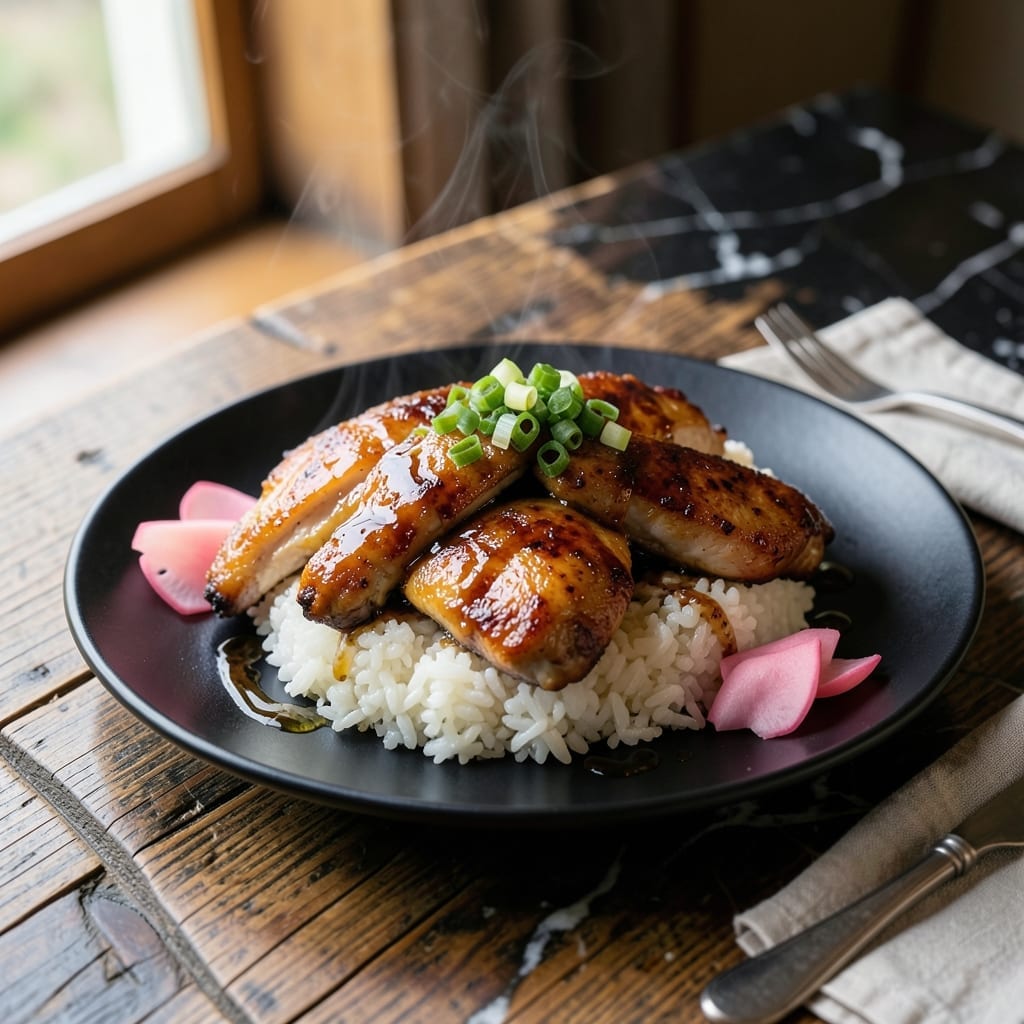
This umami-rich donburi bowl delivers authentic Japanese comfort in every bite. A simple yet precise simmering technique transforms ordinary chicken into tender, flavorful morsels bathed in a savory-sweet sauce.
The secret lies in the perfect balance of soy sauce, mirin, and dashi, creating a richly seasoned base that infuses every piece of chicken. Served over steamed rice, this dish offers a satisfying meal with minimal effort.
What emerges is a bowl where the chicken becomes fall-apart tender, soaking up the deeply flavorful sauce. Each mouthful delivers layers of umami that define traditional Japanese home cooking.
Ready in under 30 minutes, this recipe brings restaurant-quality results to your kitchen table.
Ingredients for Japanese Chicken
A handful of Japanese pantry staples plus chicken create this comforting bowl of perfection.
| Ingredient | Amount | Notes |
|---|---|---|
| Chicken Thighs 🍗 | 1 ½ lb | Boneless, skin-on preferred |
| Steamed White Rice 🍚 | 4 cups | Cooked, short-grain preferred |
| Soy Sauce 🥢 | ½ cup | Japanese variety recommended |
| Mirin 🍶 | ¼ cup | Sweet cooking rice wine |
| Dashi Stock 🍜 | 1 cup | Homemade or instant granules |
| Granulated Sugar 🍚 | 2 tbsp | Balances savory flavors |
| Sake 🍶 | 2 tbsp | Dry Japanese rice wine |
| Fresh Ginger 🌿 | 1 tbsp | Peeled and grated |
| Garlic Cloves 🧄 | 3 cloves | Minced finely |
| Green Onions 🧅 | 4 whole | Thinly sliced for garnish |
| Neutral Oil 🛢️ | 1 tbsp | For searing chicken |
| Sesame Seeds 🌰 | 1 tsp | Toasted, for garnish |
The chicken thighs are non-negotiable here—skin-on, bone-in renders fat that enriches the sauce (though boneless works in a pinch). Japanese soy sauce like Kikkoman or Yamasa has the right balance of salt and umami. For dashi, instant granules from Ajinomoto dissolve easily and taste authentic. Look for mirin labeled ‘hon-mirin’ if you want the real deal.
No sake? Dry white wine at half the amount works, though the flavor shifts slightly. Mirin can be swapped with 1 tbsp sugar + 3 tbsp water per tablespoon. If using chicken breast, pound to even thickness so it doesn’t dry out. The ginger and garlic should be fresh—jarred pastes lack complexity (worth the extra minute to prep).
The cooked chicken keeps in its sauce for 3-4 days—reheat gently to avoid drying. Dashi and mirin are fridge staples that last months unopened. Always store ginger in the freezer; it grates perfectly straight from frozen (no peeling needed).
Why You’ll Love This Recipe
- One Pan Meal: I just sear the thighs, pour in the soy-mirin-dashi mix, and let it simmer while the rice steams—hardly any cleanup.
- Umami Bomb: The dashi and mirin give the chicken this deep, savory-sweet glaze that’s ridiculously good over rice.
- Feeds the Crew: I make a big batch on Sunday and we’re set for lunches—tastes even better the next day.
- Budget Winner: Chicken thighs stay cheap, and a little soy and mirin stretch a long way.
Step-by-Step Instructions for Umami-Rich Simmered Donburi Bowl
This method ensures tender chicken and a deeply flavorful sauce that soaks perfectly into the rice.
Step 1: Sear the Chicken Thighs for Maximum Flavor
Heat the 1 tbsp neutral oil in a large skillet over medium-high heat. Once shimmering, add the 1.5 lb chicken thighs skin-side down. I prefer skin-on for the crispy texture it adds to the final dish.
Sear undisturbed for 5-6 minutes until the skin turns deep golden brown and releases easily from the pan. Flip and sear the other side for 3-4 minutes. This initial browning builds a flavor foundation that enhances the umami depth of the dish.
Step 2: Build the Simmering Sauce Base
Remove the chicken and set aside. In the same skillet, add the 1 tbsp fresh ginger and 3 cloves garlic cloves, cooking for 1 minute until fragrant. The residual oil and chicken fond will infuse these aromatics with rich flavor.
Pour in the 0.5 cup soy sauce, 0.25 cup mirin, 1 cup dashi stock, 2 tbsp granulated sugar, and 2 tbsp sake. Stir well to combine, scraping up any browned bits from the bottom of the pan. This liquid will transform into a glossy, savory-sweet sauce.
Step 3: Simmer the Chicken Until Tender
Return the chicken to the skillet, skin-side up. Reduce heat to medium-low and let the mixture simmer gently for 20-25 minutes. The sauce should reduce slightly but remain liquid enough to coat the chicken.
You’ll know it’s done when the chicken is fork-tender and the sauce has thickened enough to leave a light glaze on the back of a spoon. Turn the chicken occasionally to ensure even cooking and coating.
Step 4: Shred and Combine with Rice
Remove the chicken from the sauce and shred it into bite-sized pieces using two forks. Return the shredded chicken to the skillet and stir to coat it thoroughly in the sauce. Let it simmer for an additional 2-3 minutes to absorb the flavors.
Divide the 4 cups steamed white rice among serving bowls. Top each portion with the chicken and a generous spoonful of the sauce. The rice should be hot to soak up the liquid effectively.
Step 5: Garnish and Serve Immediately
Sprinkle each bowl with the 4 whole green onions, thinly sliced, and the 1 tsp sesame seeds. The green onions add a fresh contrast to the rich, savory chicken, while the sesame seeds provide a subtle nutty crunch.
Serve while hot, ensuring each bite includes a mix of tender chicken, flavorful sauce, and steamed rice. The dish should be aromatic, with a balance of sweet, salty, and umami notes in every mouthful.
Pro Tips For Making Japanese Chicken
- Sear Skin First: Crank the heat to medium-high and render the chicken thigh skin until crisp—about 5-7 minutes. I learned this the hard way: skipping this step leaves you with flabby skin and weak flavor. —
- Deglaze With Mirin: After browning the chicken, pour in 2 tablespoons of mirin to scrape up those sticky brown bits. Sounds weird, but it works: those bits carry tons of umami that’ll deepen your sauce. —
- Skip the Boil: Simmer the chicken in the soy-mirin-dashi mixture—never let it reach a rolling boil. After burning three batches, I finally figured out that high heat turns the sauce bitter and the chicken tough. —
- Slice Against Grain: Once cooked, slice the thighs against the grain into 1-inch pieces. My grandmother swore by this, and she was right: it makes each bite tender and easier to pair with rice.
Troubleshooting This Dish
Sauce Too Thin
If your sauce remains watery after simmering, uncover the pan and increase heat to medium-high. Boil for 3-5 minutes while stirring frequently. I find this reduces excess liquid without burning the sugars in the mirin. 🔥
Chicken Not Tender
Undercooked chicken often means the heat was too high. Next time, lower to medium-low and extend simmering to 25-30 minutes. Also, ensure the sauce covers the chicken pieces at least halfway during cooking.
Sauce Too Salty
Balance an overly salty sauce by adding 1-2 tbsp water or dashi and 1 tsp sugar. Simmer for 5 minutes to incorporate. I’ve rescued many batches this way—just adjust gradually to avoid over-diluting.
Burnt Garlic or Ginger
If your aromatics burn, they’ll impart bitterness. Always cook them over medium heat for just 1 minute. Remove the pan from heat if the garlic starts browning too quickly.
Sauce Not Absorbing
If the sauce sits on top of the rice, the rice may be too cool. Serve the chicken over piping hot rice and let it sit for 2 minutes before eating. The steam helps the sauce soak in beautifully.
Uneven Cooking
To prevent some pieces from drying out while others are undercooked, ensure all chicken pieces are similar in size. I trim larger thighs to match smaller ones. Turn the chicken every 5-7 minutes during simmering for even cooking. 💡
Nutrition Facts
Frequently Asked Questions
Can I use chicken breast instead of thighs?
Yes, but adjust the cooking time. Chicken breast dries out faster, so reduce simmering to 12-15 minutes. Pound thicker pieces to 1-inch thickness for even cooking. Thighs are preferred for their richer flavor and moisture.
What can I substitute for mirin?
Mix 1 tbsp sugar with 3 tbsp water per tablespoon of mirin. Alternatively, use dry white wine with a pinch of sugar. The sweetness balances the soy sauce’s saltiness.
How do I store leftovers?
Store in an airtight container with the sauce for up to 3-4 days. Reheat gently on the stove over low heat to prevent drying. Avoid microwaving, as it can toughen the chicken.
Why is my sauce bitter?
Bitterness usually comes from burnt garlic or ginger. Cook aromatics over medium heat for only 1 minute and stir constantly. If it happens, start fresh with new ingredients.

- Jollof Rice Sauce Recipe: West African Tomato and Spice Infusion - September 25, 2026
- Japanese Rice Soup Recipe: Umami-Rich Comfort in a Bowl - September 25, 2026
- Homemade Cream Of Rice Recipe: Silk-Smooth Breakfast in Minutes - September 25, 2026